Water Pollution & Montane Scrub
The latest news on nature and conservation in Britain.
Welcome to Inkcap Journal, a newsletter about nature and conservation in Britain. Not a member? Sign up for a 30-day free trial.
National news
Housing | The government has announced plans to weaken legislation on water pollution to allow for more house building. According to the Department for Levelling Up, the EU-era laws on nutrient neutrality are blocking 100,000 new homes, and scrapping them will deliver an £18 billion boost to the economy while still “protecting the environment”. The announcement was met with a fierce backlash from environmental organisations. The Wildlife Trusts branded it a “disgraceful move”, while the countryside charity CPRE said the plans represented a “huge threat” to the country’s waterways. The Office for Environmental Protection warned that the proposed changes would be “a regression” in legal environmental protection, and wrote an open letter calling for transparency over the expected impacts. Meanwhile, the RSPB issued a Tweet calling Michael Gove, Rishi Sunak and Thérèse Coffey dishonest, stating that “You lie, and you lie, and you lie again. And we’ve had enough.” The Tweet garnered widespread praise for taking a bold stance for the environment – which was quickly quashed when the society issued an apology for “attacking the people not the policy”. Figures including George Monbiot have expressed frustration at the retraction, which was reported by the BBC and the Guardian. The initial news was widely covered by national outlets, with further commentary from the Wildlife Trusts, the Guardian, and the Times.
LIARS!@RishiSunak @michaelgove @theresecoffey you said you wouldn’t weaken environmental protections.
— RSPB England 🌍 (@RSPBEngland) August 30, 2023
And yet that’s just what you are doing.
You lie, and you lie, and you lie again.
And we’ve had enough. 🧵 pic.twitter.com/ZHlRmd5po3
Funding | The UK has contributed £10m to a new global fund supporting developing countries to meet international biodiversity targets. Alongside Canada, the UK is one of the first countries to contribute to the fund, which was an important part of the COP15 agreement. Nature minister Trudy Harrison said that the initial contribution “showcases the UK’s ongoing dedication to protecting our planet’s natural diversity”, and spotlights vital international collaboration towards a sustainable future. However, the Guardian reports that the fund is still undercapitalised by $40m, despite being agreed by all parties at the Conference in December. It will need to secure funding to make up the deficit by the end of the year to formally launch, according to the rules of the Global Environment Facility, which governs the fund. ENDS also reported the news.
Peatland | Defra has awarded £16m of funding to twelve projects restoring peatlands across England. Peatlands contain over half of the country’s terrestrial carbon stores and provide habitat for many specialist species, yet 87% of England’s peatlands are degraded and damaged. The funded projects are situated along the length of the country, from Somerset to North Yorkshire. In Dorset, £750,000 will be used to restore mire and fen habitat at 16 sites within the Dorset Heaths, while in County Durham plans are afoot to restore more than 1,000 hectares of degraded habitat in the Great North Bog. Other targeted areas include the eastern Fens, two separate projects in the Peak District, and the uplands of Cumbria.
In other news:
- Presenter Chris Packham has been reported to police after sniffing a wild goshawk chick on The One Show, reports the Times. The complaint centres on whether the BBC had a licence to disturb the protected species.
- A smalltooth sand tiger shark has been found in British waters for the first time, likely due to the marine heatwave, reports the Times.
- Former Defra secretary George Eustice has been cleared to set up an environmental consultancy, reports ENDS.
- NatureScot’s licensing regime has seen more than 5,200 hares culled in the past five years, according to ENDS.
- Species could be lost from England’s rivers due to a lack of water quality inspections, reports the Telegraph.
Across the country
Cornwall | The National Trust has purchased a 55-acre site bordering Tintagel, the medieval castle where King Arthur was conceived – at least, according to legend. Stretching from Barras Nose to Bossiney, the site includes the historically significant area of Smith’s Cliff and links up two other National Trust-owned headlands, creating a coastal corridor almost three miles long. The plan is now to restore the land, creating a mosaic of grassland, scrub and trees, with grazing taking place on the steeper cliff slopes. The work will provide new habitats for various species currently found in the area, including skylark, fulmar, rock sea lavender, golden samphire and the nationally-rare black headed mining bee. The Guardian and Cornwall Live covered the news.
St Kilda | Some 61% of St Kilda’s seabirds have disappeared over the last 24 years, according to a census carried out by the National Trust for Scotland. The remote archipelago was abandoned by people around a century ago, but has remained a haven for birdlife. Now that population too is under threat. Kittiwakes have seen the largest fall, with numbers 84% lower than the last survey in 1999, while numbers of guillemots and razorbills have declined by more than 35%. The reasons for the declines are not fully understood, although climate change and a drop in prey, such as sandeels, have likely played a role. Ellie Owen, one of the Trust’s senior seabird officers, said that “closing Scotland’s waters to the foreign-based sandeel fishery would be a powerful step to helping our seabirds.” The BBC and the Herald covered the news.
Isle of Man | The Isle of Man government has created virtual tours of the island’s glens to offer wider access to its natural wonders. The Isle of Man is the only nation in the world to have UNESCO Biosphere status in its entirety, and is home to 18 picturesque mountain and coastal glens. Working with a local video production company, the government’s Department of Environment, Food and Agriculture (DEFA) filmed 360 degree footage of the glens to help remove barriers to experiencing the more rugged areas of the island. DEFA minister Clare Barber said the virtual tours open up "a world of possibilities for individuals with illnesses or disabilities, who may find it challenging to visit these beautiful locations in person". The BBC covered the news. Separately, the Jersey government has launched an online tool which allows users to explore the island’s tree canopy, reports the BBC.
In other news:
- Ecologists have warned that work to remove Welsh coal tips could endanger some of Wales’ rarest wildlife, reports the BBC. A feature in Inkcap Journal explored these unusual biodiversity havens last year.
- A retired couple in County Durham have transformed an old farm containing two coal mines into a nature reserve, reports the Northern Echo.
- A landowner in south London will need to replant 131 trees after illegally felling their predecessors, reports the BBC.
- Surrey County Council has arranged a three-week road closure to undertake roadworks to save a historic oak in Addlestone, reports Get Surrey. Meanwhile, a controversial road scheme in Huddersfield involving the removal of 120 trees has been abandoned: the BBC has the story.
- One of the UK’s rarest bumblebees, the brown-banded carder, has been discovered in Braunton, Devon, thanks to the creation of road verges, according to the Bumblebee Conservation Trust.
- Yorkshire Water is launching a team dedicated to improving the health of rivers in the area, reports the Northern Echo.
- Archeologists investigating a high area of Dartmoor believe they may have unearthed a Stone Age viewpoint used for spotting prey, reports the BBC.
- The Scottish government has set up three protection zones in Lewis after confirmation of bird flu cases, reports the BBC.
- Twitchers have raced to Cornwall to catch sight of two rare seabirds, a red-footed and a brown booby, which were spotted west of Scilly, reports the Bristol Post.
- Conservationists have discovered a colony of endangered hazel dormice at a nature reserve in Hove, reports the BBC.
- The home of nature author Roger Deakin – a 16th century cottage in Suffolk – has been put on the market for £1.5m, reports the BBC.
- A rare species of fern has been discovered for the first time in Kincardineshire, reports the Angus County.
- A rewilding project near Skipton has transformed a bare hillside into a young woodland with more than 300,000 trees, reports the BBC.
- A conservation initiative has released more than 600 glow-worms at a rewilding site in Devon to boost the county’s declining population, reports Devon Live.
- The Welsh-based Field Studies Council has completed a five-year project to train a new generation of biological recorders, reports the Swansea Bay News.
- An environmental group has warned that lapwings could become extinct in Wales if more solar farms are built, reports the South Wales Argus.
Reports
Targets | A report by the environmental coalition Scottish Environment LINK outlines how it thinks nature recovery targets should function in Scotland. The Scottish government has committed to introducing statutory nature recovery targets in the upcoming Natural Environment Bill, with a consultation expected soon: this would put nature recovery on the same legal footing as climate change. The report recommends that targets should address species abundance, distribution, and extinction risk, as well as habitat quality and the drivers of biodiversity decline. It also stresses the importance of including a clear date for achieving effective regeneration of biodiversity, with milestones leading up to that point. Bruce Wilson, head of policy at the Scottish Wildlife Trust, said the introduction of targets is “an incredible opportunity” which could “mark the turning point for Scotland’s threatened species and habitats.”
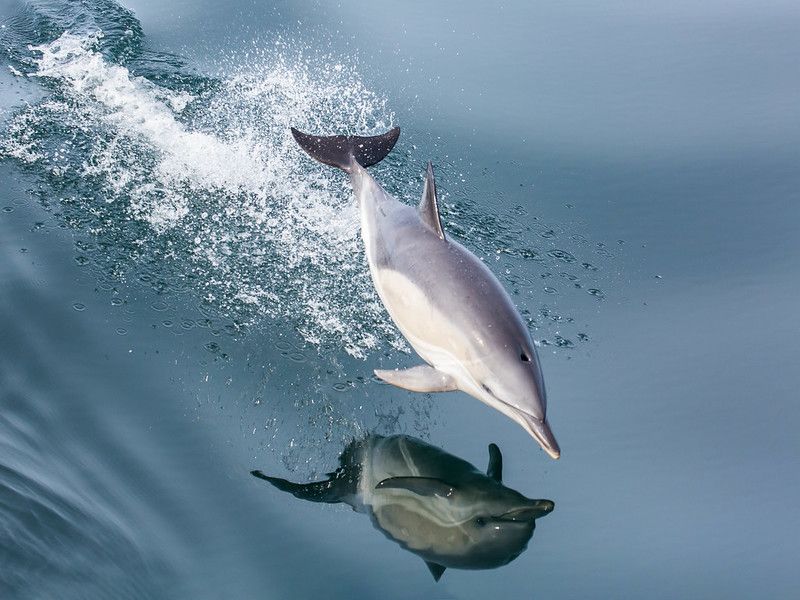
Chemicals | Cancer, birth defects, stillbirths and infertility are among the many problems that chemical pollutants are causing for whales and dolphins, according to a report from Whale and Dolphin Conservation. Toxic Tides, Troubled Whales outlines current understanding of the impact of ‘forever chemicals’ on marine life. While many of these pollutants are now banned or regulated, the careless disposal of old products that contain them means that they continue to leach into the ocean today. Top predators are particularly at risk as the chemicals build up across the food chain. The report itself is rather dense, but the main findings and recommendations are spelled out neatly by Pine Eisfeld-Pierantonio, WDC’s marine pollution coordinator, in a blog.
Consumption | The Joint Nature Conservation Committee has published a report on the environmental footprint of resource consumption in Wales. Research reveals that Wales’ consumption footprint is currently twice the estimated biocapacity of Wales: “in other words, if the entire world population lived like the citizens of Wales, humanity would require 2.08 Earths”. The report found that Wales’ consumption of agricultural crops in 2018 alone was associated with the predicted loss of 1.2 to 1.6 species, and between 670 to 880 hectares of tropical and subtropical deforestation. However, it also highlights that “the situation is improving”, with trends decreasing since 2004. The authors hope the report can be used to target action in sectors associated with the highest footprints.
Science
Seals | A study published in the Journal of the Marine Biological Association uses citizen science reports to investigate grey seal strandings in Cornwall and the Isles of Scilly. Researchers analysed an extensive dataset of stranding reports from 2000 to 2020 to better understand the presence of grey seals at their southernmost breeding areas. They found that stranding reports increased by 474% during the period, indicating a significant increase in numbers. The authors said that the study demonstrates the value of long-term citizen science data to provide cost-effective information on highly mobile marine mammals, in contrast to the associated costs of tracking by aerial surveys or marine cruises.
Transition | A full-scale agroecological transition is possible in the EU – but only if consumers adopt more plant-based diets, according to a study published in Frontiers in Sustainable Food Systems. However, without this shift, such a transition would be a double-edged sword for biodiversity, causing a dramatic increase in the EU’s dependence on global food markets and the consequent expansion of agricultural land across the rest of the world. The authors point out that supporting this transition would require significant adjustments to the Common Agricultural Policy, including more direct measures to pay farmers for the ecosystem services they provide.
Nuclear | Bavarian boars are dangerously radioactive – and researchers finally know why. It has long been assumed that the contamination of their flesh was due to the disaster at the Chernobyl nuclear power plant in 1986. However, scientists found that samples of boar meat contained high levels of caesium-135 – a radioactive element that is more closely associated with weaponry than nuclear reactors. Caesium migrates underground over time, which means that most animals avoid elevated exposure. Wild boar, however, are continually excavating this toxic legacy as they rootle around in the soil for truffles. The study was published in Environmental Science & Technology and was widely covered in the media, including by the Times and Yale Environment 360.
Driftwood
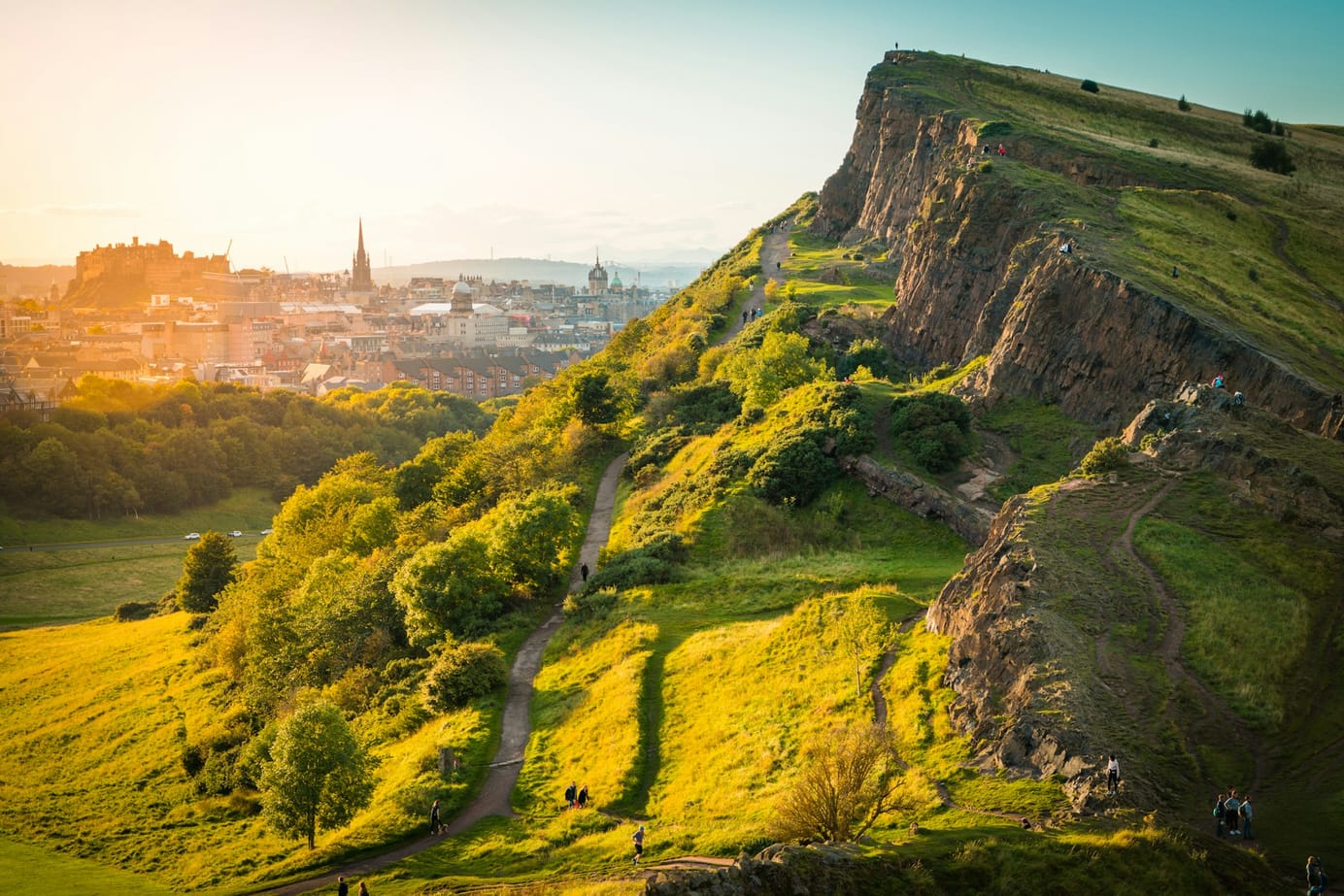
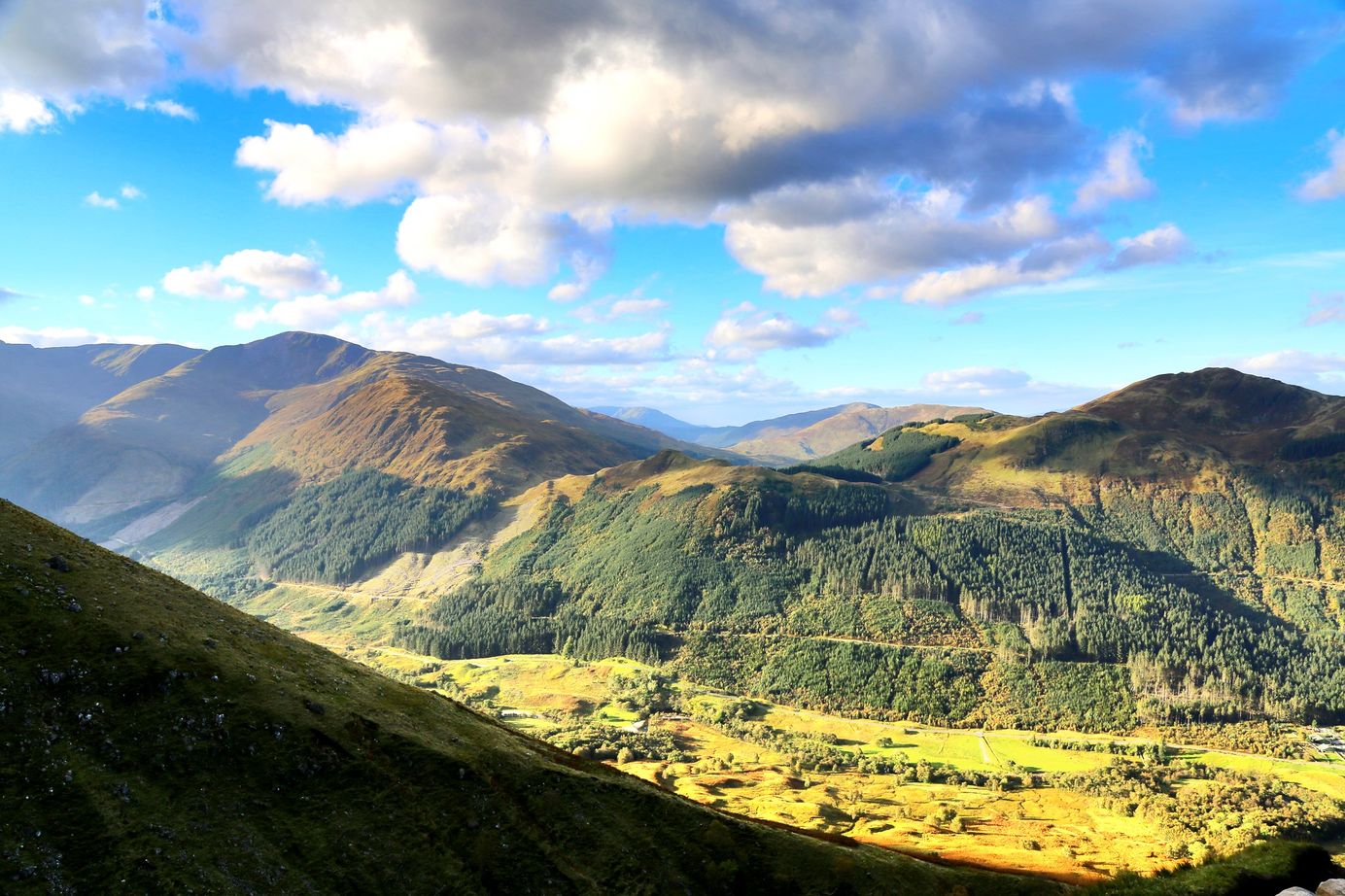
Woodland | Trees have been discovered growing at record-breaking heights in the Scottish Highlands – a sign that woodland restoration that might be possible across these mountainous landscapes, in the right conditions. Over thousands of years, the natural altitudinal treeline has vanished, nibbled away by grazers high in the hills, creating the bare vistas that define the scenery today. Naturally, however, these places would host a type of habitat known as montane willow scrub, and the identification of these high-flying trees – including a rowan at West Affric and a birch on Ben Nevis – shows the potential for a comeback. Sarah Watts, a researcher in plant ecology and conservation at the University of Stirling, explains the wider implications of the discovery in a feature for the Conversation.
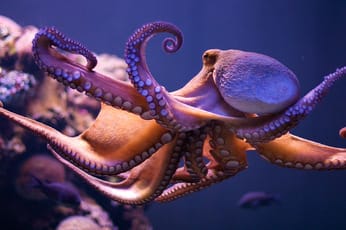
Rewilding | There’s social pressure to farm in a particular way, says fund manager and conservationist Ben Goldsmith in an interview in the Times – “but when Iris died, I thought, to hell with it.” Instead, he decided to prioritise what they both loved: nature and wildlife. His journey towards rewilding his Somerset farm following the tragic death of his young daughter is the subject of his new book, God is an Octopus. He describes the farm as a magical place: “once a great wood pasture… the last redoubt of Celtic shamanism.” Goldsmith also features in an article in the Financial Times, examining the trend among the wealthy for buying up land – or devoting their own – to large-scale nature restoration. The piece covers the controversial use of carbon credits and the role of local people in such projects.
Farming | Helen Rebanks may be best known as the wife of Cumbrian farmer and writer James Rebanks, but now she is “reclaiming the role” of ‘farmer’s wife’, according to a feature in Wicked Leeks. Her new book, The Farmer’s Wife: My Life in Days, contains “something of a memoir”, delving into the “glue” that women represent in many British farms, but it also discusses issues such as the capitalist culture of sustainability. The focus of the book is the family kitchen table, and Rebanks re-emphasises the importance of domestic choices made during activities such as cooking, shopping and eating: “The issue is that cooking at home is given such low standing. I’m now on a mission to raise its status,” she says.
Further reading:
- In a series on food security by the Times, this article takes a look at farmers swapping fields for vertical agriculture, while another piece profiles a strawberry farm in Essex that is problem-solving around climate change and drought.
- The RSPB's calendar competition is now open for entries – submit your best wildlife photographs here.
- Residents of British towns and cities are unhappy with council efforts to “rewild” urban areas, according to a feature in the Guardian.
- A BBC article joins foraging tutor Jordan McKeating as he finds edible plants from burdock roots to common sorrel in Carlisle’s central city park.
- In light of its announcement last week of a new £6m rewilding programme, a blog by the Wildlife Trusts outlines the dangers of pitting food security against nature recovery.
- You can now read the first issue of the Paperboats Zine, a new publication dedicated to nature writing from a collective of writers, which is “Scotland based and global in outlook”.
- For the Guardian, author Rebecca Smith writes about the invisible stories of women in the history of rural Britain.
- Urban great tits tend to have paler plumage than their forest-dwelling relatives, according to research published in the Journal of Animal Ecology.
- Patrick Barkham writes briefly in the Guardian about the record number of peacock and red admiral butterflies to emerge this summer.
- The Natural History Museum has released a preview of images for the 2023 Wildlife Photographer of the year award. The Guardian and the Times both showcase an arresting selection.
- A BBC feature explores trials in Scotland to bring back modern varieties of flax, which is in demand from the fashion industry as it looks for ways to reduce its carbon footprint.
- A growing number of countries are considering making ecocide a crime, according to an article in the Guardian; in Scotland, Labour MSP Monica Lennon is trying to introduce an ecocide bill.
- Not-for-profit organisation A Greener Future has published a report investigating the carbon impacts of festivals, from the emissions associated with audience travel to festival food and drink.
Happy days
Bog snorkelling | Last weekend, one of Britain’s most unique competitions took place in Powys: the World Bog Snorkelling Championship. Exactly as it sounds, the competition involves donning flippers, mask and a snorkel, and paying £20 for the chance to swim 120 yards along a muddy trench cut into the peatbog. People travel from across the globe to attend the event, which also functions as a charity fundraiser: you can see pictures here in the Shropshire Star. A BBC feature explains how the wacky competition helped one woman from Ireland recover from major surgery.

Subscribe to our newsletter
Members receive our premium weekly digest of nature news from across Britain.
Comments
Sign in or become a Inkcap Journal member to join the conversation.
Just enter your email below to get a log in link.