Vanishing Orchards & Stonehenge Grassland
The latest news on nature and conservation in Britain.
Welcome to Inkcap Journal, a newsletter about nature and conservation in Britain. This is the Friday digest, rounding up all the week's news, science, reports, comment and more.
National news
Orchards | The number of “traditional” orchards in England and Wales has dropped by 80% since 1900, according to new research from the National Trust. The southwest of England has been hardest hit, with the loss of an area equivalent to almost twice the size of Bristol. In urban areas, losses are the result of housing and other developments, whereas in the countryside the reduction is due to expanding farmland. The story was covered widely, including by the BBC, Countryfile, the Guardian and the Daily Mail. Separately, scientists have found that today’s apples are bigger, less acidic, less bitter and store better than their wild ancestors. Sky News reports on the research. Finally, the Guardian reports on a new citizen science project to track flowering fruit trees to determine whether climate change is affecting blooming patterns.
Parks | The public wants wildlife restoration to be the number one priority for England’s National Parks and Areas of Outstanding Natural Beauty (AONBs), according to polling undertaken by the RSPB. This view was held more strongly among people who lived within these areas than those who didn’t. More than 80% of people would be happy to see changes in how the landscapes looks to achieve greater natural abundance. “People rightly expect these landscapes to be thrumming with life and are alarmed when they find out that’s often not the case,” says Alice Hardiman, head of policy for RSPB England. “The polling shows that they do not want these places to be preserved as they are today, in their nature-depleted state. They want them brought back to life.”
Rivers | Scotland’s rivers, lochs and wetlands are benefitting from £3.7m spent on restoration, thanks to NatureScot’s Biodiversity Challenge Fund. Over the past three years, the organisation has spent the funding in 27 freshwater and river restoration projects across Scotland, using nature-based solutions to help reverse biodiversity loss and mitigate the effects of climate change. One of the largest funding awards went to the Forth Rivers Trust to restore and improve the headwaters of the River Teith catchment, a Special Area of Conservation. NatureScot CEO Francesca Osowska said: “Through the Scottish Government’s new Nature Restoration Fund, we’ll be able to support many more large-scale projects to help put Scotland’s rivers back on the road to recovery.”
In other news:
- The Spring Statement was this week, but there’s not much to say about it. The Guardian has a list of five green policies that the Chancellor should have included.
- In Scotland, wildfire alerts have been raised to the highest level, reports the Times.
- Foresters are increasingly diversifying the trees they plant, using species that can better adapt to climate change, reports the BBC.
- The Royal Horticultural Society has launched a study into which species are best for tackling the climate crisis and pollution, reports the Guardian.
Across the country
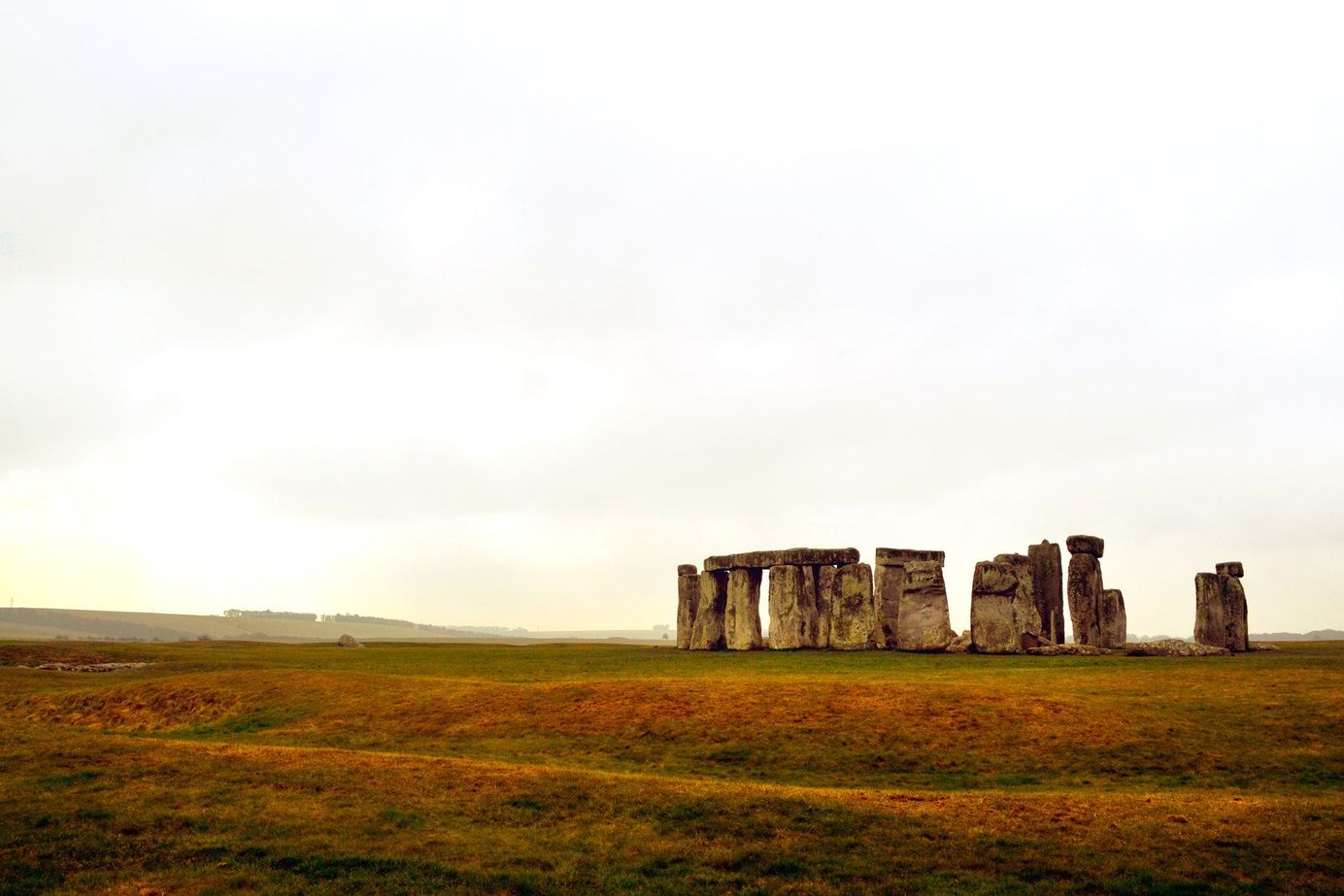
Salisbury | The National Trust has acquired around 170 hectares of land near Stonehenge, which it plans to restore to the original chalk grassland habitat, reports the Guardian. Following the restoration work, this will give visitors an insight into how the approach to the stone circle would have looked like for pilgrims thousands of years ago. In recent years, the area has been used for arable farming and has been damaged by ploughing; the acquisition by the National Trust means that the sites have been removed from Historic England’s at-risk register. “By returning them to species-rich chalk grassland we’re both making a home for nature, and ensuring the stories this landscape holds will be here for everyone to discover and enjoy long into the future,” says Nick Snashall, the Trust’s archaeologist for the Stonehenge and Avebury world heritage site.
Wirral | The RSPB has been left “shocked and saddened” after a fire swept through its reedbeds on the Wirral peninsula last Sunday – an incident that investigators say was started deliberately. The full extent of the damage is still being assessed, but the area was home to bearded tits, Cetti’s warblers and bittern, while marsh harriers were also beginning to build their nests on the land now lost to fire. The Guardian covered the story. It will now be a year or two before the reeds will support breeding birds again, reported the BBC.
Our reserve team has now assessed the damage caused by Saturday night’s tragic #fire at Neston Reedbed near #Parkgate. About 10 hectares of the marsh was burnt in the fire, including all the reedbed vegetation and some areas of saltmarsh vegetation.
— RSPB Burton Mere Wetlands (@RSPB_BurtonMere) March 22, 2022
(1/6) pic.twitter.com/FdHhS13DrO
Cairngorms | A new report from Cairngorms Connect shows what the project has achieved since it was launched in 2018 – the very first years of a 200-year vision for the National Park. According to the update, there are now young native woodlands spreading across open moorlands, while peatlands and bogs are also showing signs of recovery. More than 1,100 hectares of new woodlands have been created, and a new tree nursery is helping to protect the threatened communities of montane scrub and other missing tree species. The Herald and the Scotsman cover the story.
Elsewhere:
- North York Moors National Park will become one of the country’s most protected areas from fracking, reports the Northern Echo.
- Scientists are using drones to survey the waters around the Isle of Man and document blue carbon sinks, reports the BBC.
- An ancient woodland in South Lanarkshire linked to Mary Queen of Scots and Robert Burns has reopened to the public after a community buyout, reports the Scotsman.
- A new study in Kielder Forest, Northumberland, will aim to boost pine marten numbers, reports the Independent.
- Two white-tailed eagles released on the Isle of Wight in 2020 have returned after more than a year, according to BirdGuides. The police are also investigating the “sudden death” of another sea eagle in Hampshire, following the death of two others last month, reports ENDS.
- Farmers in the Yorkshire Dales are discussing how they can work together to benefit nature, reports the Northern Echo.
- Conservationists have expressed concerns over plans to build Wales’ first tidal lagoon on the Dee Estuary, according to BirdGuides.
- The National Trust and Dorset Wildlife Trust are planning to restore Brownsea Island to the Dorset heathland of Thomas Hardy’s novels, reports the Guardian.
- Some of Devon’s rarest plants will be moved to a new site away from sea level rise as part of an Environment Agency restoration project on the Lower Otter.
- Natural Resources Wales is investigating a pollution incident in a River Rhymney tributary in southeast Wales, with upwards of 300 fish killed.
- Eastern Moors Partnership is organising the planting of 30,000 trees on Totley Moor, Sheffield, to kickstart biodiversity recovery, reports the Star.
- Campaigners are fighting to save High Lane woodland in Stansted from the axe to make way for 30 homes, reports Bishop’s Stortford Independent.
- Dorset Wildlife Trust has announced its new strategy for a “wilder Dorset” by 2030.
Reports
Finance | Nature loss threatens financial stability, according to a new report by NGFS (Network for Greening the Financial System) and INSPIRE (The International Network for Sustainable Financial Policy Insights, Research, and Exchange). It is the third and final report in a series examining how central banks should act in response to biodiversity loss. This report considers current gaps in knowledge, sets out a research agenda and makes recommendations for action by bankers to mitigate biodiversity loss. Also this week, the Parliamentary Office of Science and Technology (POST) published a briefing on the financial risks of nature loss. The report states that these risks are embedded in the financial system but are little understood or addressed by the institutions; it outlines potential mechanisms to improve company-level reporting and mitigation of both the financial risks, and nature loss itself.
Agriculture | The Institute for Government think-tank has released a report examining the government’s post-Brexit plans to redirect its £2.4b agriculture budget to encourage better environmental outcomes. The report outlines four key areas that the Institute believes the government must tackle to make the reforms a success, including: addressing trade-offs between competing objectives and visions for the reforms; managing the delivery risks of the new scheme; doing more to ensure long-term value for money; and addressing the incoherence between agricultural reforms and the government’s wider policy agenda, including net zero, levelling up and food security.
Trees | The Environment, Food and Rural Affairs Committee (EFRA) has published a report reviewing the government’s tree-planting ambitions. It states that, if the government is to achieve its aim of creating 30,000 hectares of new woodland every year by 2025, then more comprehensive targets, better finance schemes and more accurate data mapping are urgently required. It also advises the government to look at expanding domestic tree production, the forestry sector workforce and increasing the amount of domestic timber used in the UK. A focus on the “'right tree in the right place' will be critical throughout” according to EFRA. In response to the report, the organisation Small Woods is calling on Defra and the Forestry Commission to work with sector stakeholders such as themselves to address the current gaps identified by the committee.
Science
Audio | As more of the world’s population moves to urban areas, fewer people have the opportunity to engage with biodiverse natural places. In response to concerns about an “extinction of experience”, academics are exploring ways how storytelling reconnects the public to the natural world. Led by a team from the University of Exeter, a study in Global Environmental Change analysed data from over 7,500 people who listened to the BBC’s award-winning audio series, Forest 404: an eco-thriller podcast depicting a dystopian world devoid of nature. The findings showed that audio featuring the sounds of wildlife and landscape, such as birdsong or waves crashing, was more therapeutic than audio without; and that listeners with memories triggered by the sounds were more likely to find them restorative – and importantly, exhibited greater motivation to preserve the natural world they represented. The Evening Standard covered the research.
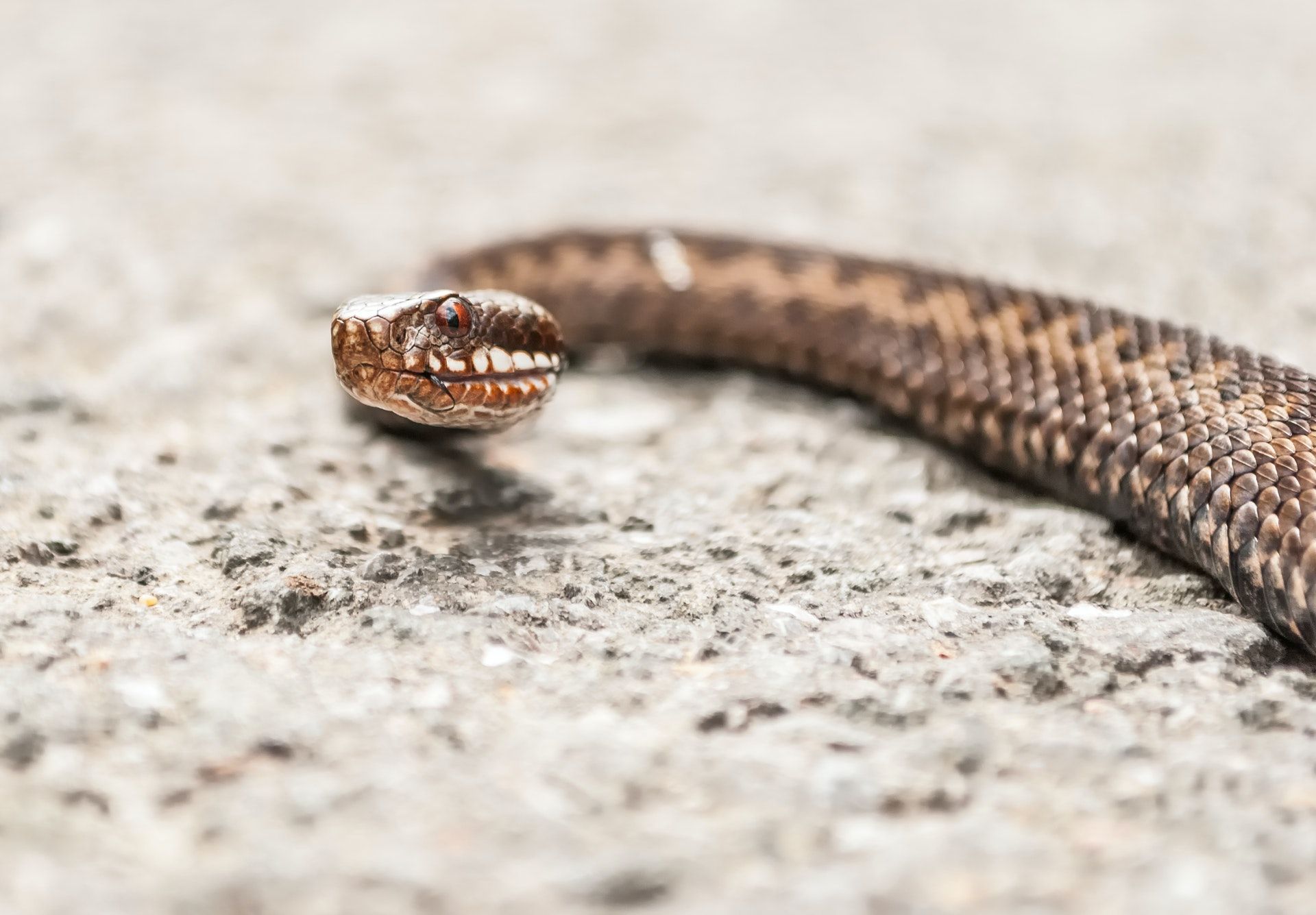
Phobias | People who feel more connected to nature are less likely to experience snake and spider phobias, according to a study published in People and Nature. Researchers from universities in Hungary, Czech Republic and Portugal used questionnaires to assess over a thousand participants’ fear of snakes and spiders and their self-perceived connectedness to nature, and found a strong inverse correlation between the two. The researchers also collected demographic data from the participants and found that those living in less urban environments, and people of older ages, were less likely to fear snakes and spiders. The authors are hoping that future research will explore whether their findings would hold true for other animal phobias, or apply to other cultures around the world.
Restoration | As forest restoration is scaled up globally, policymakers must consider the trade-off between environmental goals and timber production targets, according to a study in Science. Researchers examined data from 264 studies in 53 countries to assess various ecosystem services. The authors conclude that carbon storage, water provisioning, and especially soil erosion control and biodiversity benefits are all delivered better by native forests, but that plantations produce more wood. Co-author Professor Andrew Balmford said: “This is the first time that the relative performance of different forest restoration approaches in delivering forests’ most salient services has been assessed simultaneously.”
Driftwood
Red List | Almost all people with an interest in nature and biodiversity have heard of the IUCN Red List, the inventory which categorises all species according to their threatened status. But how many have heard of the woman responsible for it? The Red List has existed in some form since the mid-1960s, but early iterations were highly subjective and prone to political and economic influencing. In the early 1990s, ecologist Georgina Mace gathered a group of like-minded colleagues in a backroom of the London Zoological Society and invited them to collaborate on a project to rework the Red List, based on objective, evidence-based data — resulting in the foundational tool of modern conservation used globally today. This fascinating article in Atlas Obscura explores Mace’s life and career as part of the series ‘31 Days of Women Who Changed the World’.
Reforesting | Britain, one of the most treeless countries in Europe, is soon going to have a lot more trees – but it will be necessary to learn from past mistakes, writes environmental journalist Fred Pearce in the Telegraph. New forests need to be ecologically diverse – not single-species plantations – because of the benefits to wildlife, and because such forests are more resilient to threats such as diseases, wildlife and droughts, which will intensify with climate change. “But if the rules for planting begin to sound a bit onerous, maybe there is a better way. Not to plant at all,” writes Pearce. “Often it is better just to create room for trees to regenerate naturally, self-seeding from nearby woodlands.”
Herons | The Financial Times celebrates the women who helped to found modern nature conservation by campaigning against the trade in wild bird plumage in the 19th century. In particular, herons and egrets became symbols of this new fight against the exploitation of wildlife for fashion, with battles launched on both sides of the Atlantic. In England, Etta Lemon and Emily Williamson co-founded the RSPB (the latter got involved after the British Ornithologists Union turned down her application because she was female) while Harriet Hemenway and Minna Hall set up the forerunner of America’s Audubon Society to pursue similar aims.
Further reading:
- BBC Wildlife looks at the potential for restoring royal land, and in another feature examines the reintroduction of bison in Kent.
- Both ITV and the National continue their coverage of the debate over tree-planting on Welsh farms.
- Alicia Hayden writes for the British Trust for Ornithology about her growing portfolio of bird paintings.
- The Telegraph profiles efforts to halt the decline of swifts and house martins.
- Countryfile has a list of the best poetry books on nature and the British countryside.
Happy days
Storks | The introduction of white storks to the Knepp Estate in West Sussex may have divided opinion (we covered the controversy at the time), but it is nonetheless exciting to see a new live camera on their nest, allowing you to watch their comings and goings from the comfort of your own home. There was, alas, not much to be seen at time of writing – but maybe you’ll be in luck at time of reading.

Subscribe to our newsletter
Members receive our premium weekly digest of nature news from across Britain.
Comments
Sign in or become a Inkcap Journal member to join the conversation.
Just enter your email below to get a log in link.