Net Zero & Small Farms
The latest news on nature and conservation in Britain.
Welcome to Inkcap Journal, a newsletter about nature and conservation in Britain. This is the Friday digest, rounding up all the week's news, science, reports, comment and more. Sign up to receive a free one-month trial.
National news
Net-zero | The government has published its long-awaited net-zero strategy, setting out how it plans to meet its legally binding emissions targets by 2050. The strategy covers everything from power to transport to heating, but most relevant to the natural world is what it has to say on land use, forestry and agriculture. Carbon Brief has published a characteristically in-depth account: “Farming, as well as land use more generally, have been identified as some of the weakest areas of the net-zero strategy, with fewer concrete targets for the coming decades than other sectors,” according to its review. If you want something a little more digestible, try the BBC. CPRE said that the strategy was “too tentative” and failed to make use of the carbon-capturing opportunities that come from restoring the landscape. The Wildlife Trusts said that the strategy “falls short of tackling both the nature and climate emergencies”. In his newsletter, climate expert Joss Garman points out that there is no emissions target for farming and that the grouse moor lobby will be allowed to continue burning peatlands. For further analysis of what the strategy means for peatland restoration, check out this thread from Rewilding Britain’s Guy Shrubsole.
Y'day I said the Net Zero Strategy pledges to restore only 40% of our peat (c280k hectares out of c680k ha):https://t.co/vMQCHtFdxq
— Guy Shrubsole (@guyshrubsole) October 20, 2021
As @mattadamw points out, this misses out shallow peat. So the restoration pledge covers just 20% of all peat: even worse!
A brief thread... pic.twitter.com/1o8uFA47Pf
Scotland | Some 603 of Scotland’s wildlife species and 531 of its natural habitats are in “poor” condition, according to an investigation by The Ferret ahead of COP26. The Ferret analysed data from wildlife agency NatureScot, which monitors 1,800 protected sites across Scotland. Species in decline include wildcats, hedgehogs, capercaillie, black grouse and the Arctic skua, while rising sea temperatures could result in the loss of white-beaked dolphins in the ocean and fewer salmon in rivers. The Ferret also reported that climate change has impacted 43 protected sites, including the Isle of May and Bass Rock in the Firth of Forth. They found that the majority of protected areas affected by climate change are coastal areas with seabird and wader bird populations. The investigation featured in the Herald. Other data also analysed by The Ferret, this time from the Scottish Environment Protection Agency, revealed that more than 400 industrial sites in Scotland have been ranked “unsatisfactory” on pollution.
Environment Bill | In a development branded ‘hugely disappointing’ by environmental campaigners, the government has rejected the majority of Lords’ amendments to the Environment Bill. Inkcap Journal covered these amendments last month; on Wednesday, the Commons debated which of them to accept. Among those rejected were binding interim targets on nature restoration, a duty on water companies to reduce sewage discharge into rivers (though the vote prompted a Tory rebellion), tighter laws to tackle air pollution, increased independence for the Office of Environmental Protection, and setting soil health targets by 2022. GreenerUK has published an explainer of the 15 key amendments here. According to Ruth Chambers, who live-tweeted the debate, there was some “good news” on ancient woodland, with the government agreeing to a consultation on strengthening protections. She ended her thread with an additional note of optimism, reminding that votes at this stage “don't imply or inhibit any further action on these important issues.” The news was covered by the BBC, the Guardian and ENDS Report.
In other news:
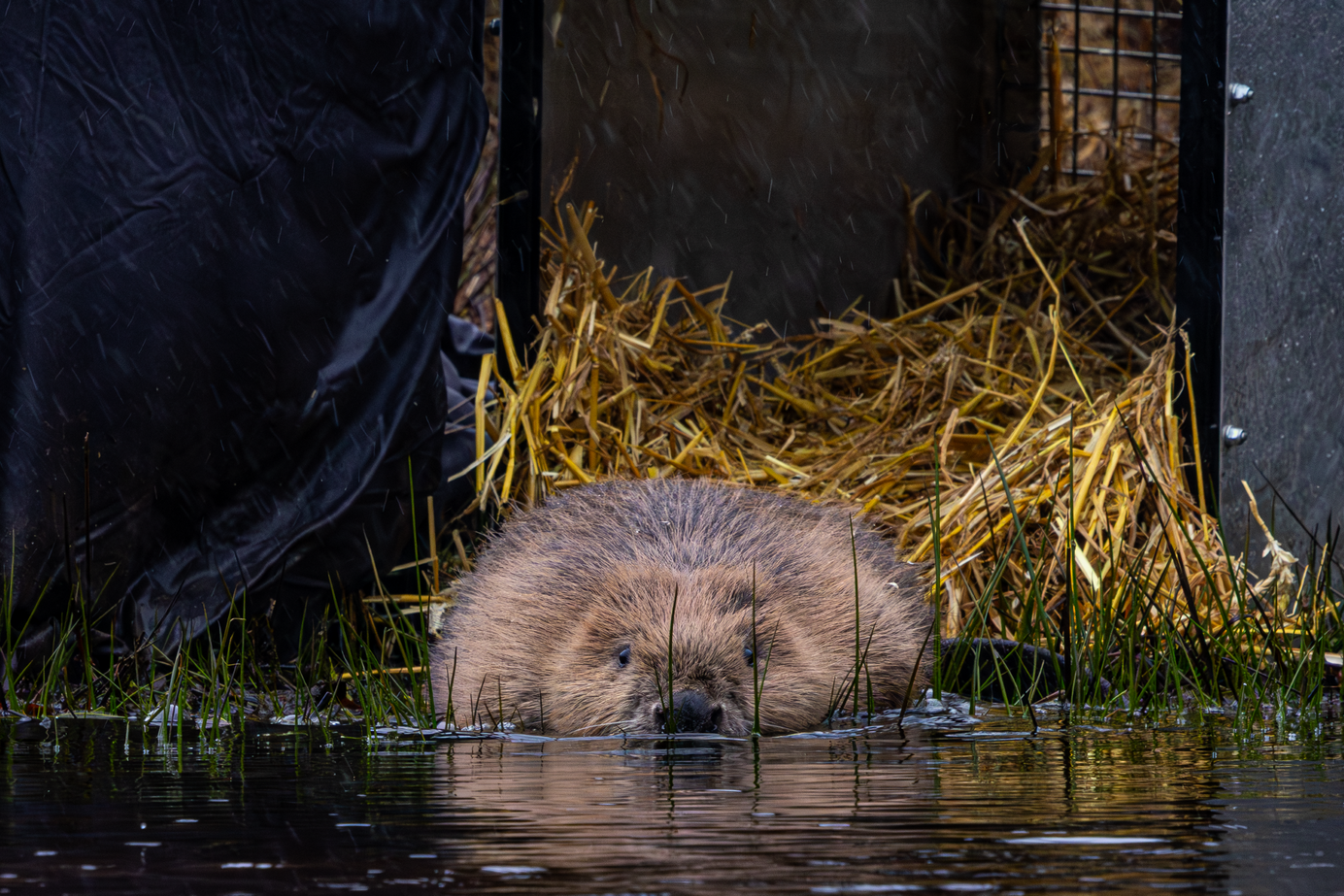
- A judge in Scotland has ruled that all licensed beaver killings must stop and all previous killings have been unlawful – a blow for NatureScot and a win for Trees for Life (and beavers).
- More than £1.3million of Welsh Government funding for tree planting has gone to applicants outside of Wales, in what was labelled a “land grab” by Plaid Cymru. Wales Farmer reports.
- The Treasury has published a roadmap that means businesses must start disclosing their environmental impacts.
- The Senedd has unanimously backed calls for legislation to ensure that energy projects provide benefits for the communities where they are located, reports Nation.Cymru.
- The Scottish Gamekeepers Association is calling for penalties and even criminal charges for fish farmers following mass escape events, reports the Herald.
Across the country
Norfolk | Plans to reintroduce white-tailed eagles at Wild Ken Hill estate have been put on hold indefinitely, much to the disappointment of conservationists. The plans were greenlit by Natural England in May, with 60 eagles set to be released across 10 years, starting in 2022. It would be the first time the birds had lived in the area for 200 years. However, the team at Wild Ken Hill issued a statement on their website, explaining they had “taken the difficult decision to focus on other aspects of our nationally-significant nature and regenerative farming project.” There was some speculation that the reversal was in response to opposition from local shooting interests. The news was covered by the Guardian and Eastern Daily Press.
Cornwall | The Cornwall Wildlife Trust has found an unusual partner in their efforts to revitalise the large Penhale dune system: the British Army. Restoration work will begin this week with the Army removing patches of scrub from overgrown areas of sand dunes as part of a training exercise using JCB diggers, reports the Trust. This will help to expose areas of bare sand and low grass habitat, which dune plants and animals rely upon. Jon Cripps, Penhale Dunes Ranger at Cornwall Wildlife Trust said: "It’s fantastic that we’ve been able to find a way for the military’s training to have a real, positive impact on the habitat here. It’s a win-win-win; for Cornwall Wildlife Trust, for The Army, and for wildlife."
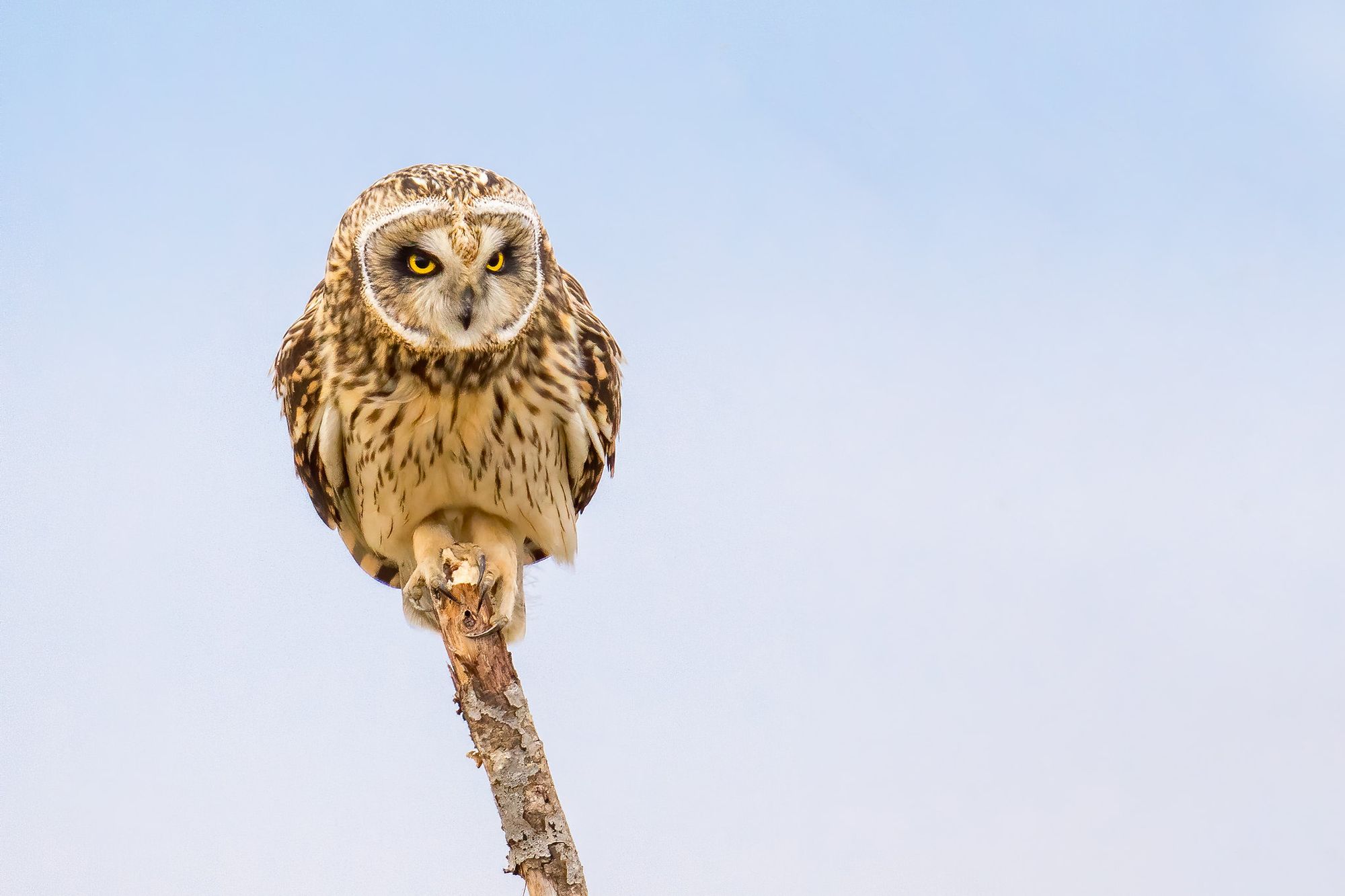
Teesdale | The police and RSPCA are appealing to the public for information after a short-eared owl was found shot dead earlier this year in Teesdale. Despite being an amber-listed species, short-eared owls are still widely targeted in UK uplands and numbers are declining nationally. The Northern Echo and Chronicle Live covered the news. Also this week, another Scottish hen harrier has disappeared under suspicious circumstances in England, reports the RSPB. The tagged harrier, a young female called Reiver, stopped transmitting from Ninebanks, an area dominated by driven grouse moors in Northumberland; she is the third Scottish satellite-tagged hen harrier to disappear in similar circumstances in England this year.
Elsewhere:
- More than 3,000 critically endangered pine hoverfly larvae are being released in the Cairngorms, reports the Press and Journal.
- Llanymynech Golf Club, along the England-Wales border, has been given a £91,000 grant to safeguard its butterflies, reports the Border Counties Advertizer.
- A new tree disease has been found in Cornwall – a fungus-like pathogen known to affect species including western hemlock, Douglas fir, tanoak and several pines.
- Forestry England has launched a crackdown on illegal mushroom pickers in the New Forest, reports the Telegraph.
- Nottingham County Council has announced plans to make Sherwood Forest “the world’s first 5G-connected forest”, with visitors using augmented reality headsets to view an immersive Robin Hood film as they walk across the landscape.
- Woodland Trust Scotland hopes to raise £8m to buy an estate in Wester Ross, where they want to create a “superhighway” for red squirrels, reports the BBC.
- Rare chalk downlands across the South Downs are to be restored thanks to a £2m grant from the National Lottery Heritage Fund, reports the BBC.
- A man has been jailed for destroying protected woodlands in Kent, while, in Norfolk, a couple has been fined £400 for digging up 8,000 bluebells.
- A rare moth is threatened with local extinction, as a planning application for two warehouses in Hertfordshire looks increasingly likely to go ahead.
- A plan for exploratory oil drilling on the Isle of Wight has been refused, reports the BBC.
Reports
Rewilding | Rewilding and ‘re-peopling’ can and must go hand in hand, according to a report by Rewilding Britain. The report focuses on the rural economy, and makes the case for employment built around the restoration and rewilding of nature. The charity’s central suggestion is for the creation of Nature-Based Economies across 30% of Britain by 2030: these localised economies would support a just economic transition alongside large-scale restoration and rewilding. “By nurturing place-based jobs and promoting small and medium enterprises built on regenerative principles, we can ensure that these [rural and coastal] communities benefit from wider green investment,” the charity states. The report was covered by the John O’Groat Journal.
Biodiversity | Defra has published its annual update of the UK’s Biodiversity Indicators. These are important metrics reporting on the state of the UK’s biodiversity, its current pressures and actions being taken in response. Bats have done well, rising by 47% since 1999; there has also been a rapid expansion in recent years of Marine Protected Areas. However, the news was broadly worrying, with various indicators deteriorating over both the long- and the short-term. “Biodiversity loss in the UK is sometimes portrayed as something which happened in the past, but which has now been stabilised: as these measures show, this is simply not the case,” wrote Fiona Burns, senior conservation scientist at the RSPB, in a blog. Defra also published the English Biodiversity Indicators this week, which covers much of the same ground as the UK Indicators.
Chalk Streams | The Chalk Stream Restoration Group have published a strategy outlining a course of action to protect and enhance England’s threatened chalk streams. The group – which brings together partners including the Environment Agency, Natural England, Defra, water companies and environmental organisations – recommends enhanced status to help drive investment in infrastructure, and restoring physical habitat and biodiversity. As the Herts & Middlesex Wildlife Trust points out, chalk streams currently have no form of legal protection. Their blog includes a detailed run-down of some of the other recommendations from the report. The news was covered by the BBC.
Science
Grazing | What happens to biodiversity when you remove the grazers from a grazed landscape? Two recent studies attempt to address this question in the context of the British landscape. One experiment took place at the Glen Finglas estate in Scotland – the scientists looked at the impacts of maintaining, removing and tripling sheep-grazing, as well as partially replacing sheep with cattle. The other study – currently awaiting peer review – looks at the impact of grazing across 12 montane grassland sites across the UK. The changes that the scientists registered were complex, depending on precisely what metrics of biodiversity they were measuring.
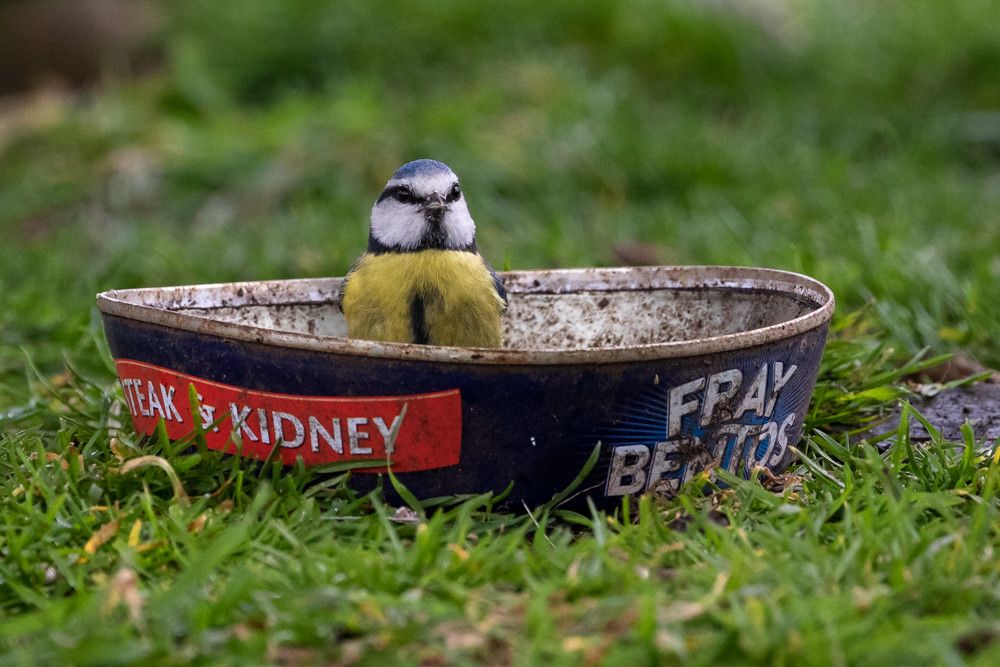
Cities | Urban great tits lay eggs earlier than their forest counterparts, and both blue and great tits lay smaller clutches in urban sites, according to a study published in Behavioral Ecology and Sociobiology. The results suggest that food availability for nestlings may be constraining urban birds, write the authors, while the cues that females usually rely on to time breeding – such as tree budburst or food availability – may be reduced in urban areas. “These results have implications for our understanding of the adaptation of wild animals to city life,” the study concludes.
Hedges | A study has shown the extent to which hedges help to combat air pollution along streets lined by houses, quantifying factors like wind speed and direction. It found that hedges can mitigate traffic-related pollution up to 1.7 metres, reducing the pollutants breathed by pedestrians, young children and cyclists. “So many factors have an impact on air quality, and there's a dearth of detailed study on the actual impact of greenery in making the air cleaner – or dirtier,” said Professor Prashant Kumar, lead author of the study.
Driftwood
Small farms | Do farms need to be enormous to be efficient? No, argues Chris Smaje in his Small Farm Future blog, drawing some interesting conclusions from his recent efforts to feed his pigs with crab apples gathered by hand. It all comes down to how we value human labour, he writes. With additional effort, small farmsteads can offer plentiful resources, but we’re often unwilling to make use of them. These inputs, though not financially rewarding, add meaning to our lives, he adds. On a similar note, there is an interesting feature in the Financial Times on the decline of family farms and the consolidation of land into large agribusinesses over time. And in the Guardian, there is an article by Jyoti Fernandes of the Landworkers’ Alliance on how farmers can be part of the solution to climate change.
Royals | Robert Watson has written in the Times strongly supporting Chris Packham’s call for the Royal Family to rewild their estates. Watson is former chairman of both the IPCC and the Intergovernmental Science-Policy Platform on Biodiversity and Ecosystem Services (IPBES), and called Packham’s petition a “refreshingly pragmatic call to action”. The Springwatch presenter delivered the petition to Buckingham Palace in person last week, surrounded by enthusiastic school children. The petition itself was signed by more than 100,000 members of the public. Inkcap Journal has covered the topic of Royal rewilding, with an article by Guy Shrubsole of Rewilding Britain and a feature on Wild Card, the group behind the campaign.
Meat | The Times wades into the thorny debate of whether eating meat can, in the right circumstances, be good for the planet. Journalist Harry Wallop looks at the climate impacts of rearing meat, and speaks to regenerative farmers who are doing things differently. The most ethical meat of all, he concludes, is wild game – venison, rabbit, hare, pigeon or grey squirrel – as any carbon they produce would have been emitted anyway. There’s a separate article listing the best sustainable butchers in the UK – and, for those still unconvinced, another article on the benefits of eating algae. Tackling similar issues is this feature in the BBC, which looks at whether Welsh farms could help the country meet its carbon targets.
Further reading:
- Oceanographic magazine has a feature on a marine biologist researching blue sharks off the coast of Pembrokeshire.
- Net-zero investors are looking to cash in on the countryside for offsets, and are boosting the value of farmlands and forests in the process, reports the Telegraph.
- Snowdonia National Park is 70 years old. The BBC has a feature on how the park has changed through time.
- How did children engage with nature during the summer holidays? The government has published its latest statistics.
- The Observer reports on the impacts on human activities on seals around the British coastline.
- ‘Green lairds’ buying land in Scotland need to realise their responsibilities, writes Hamish Trench of the Scottish Land Commission.
Happy days
Clothing | Most environmentalists reject fast fashion, but few people go so far as to produce their own clothes from scratch. But the BBC has a feature on a group of volunteers doing just that. The team planted seeds of flax and woad on a patch of unused land in Lancashire, and later harvested the crops. The flax has been broken, scutched, hackled, spun, and woven to create the fabric linen, while the woad was used to create blue dye. It’s an interesting challenge to the unsustainable, and often unethical, textiles industry.

Subscribe to our newsletter
Members receive our premium weekly digest of nature news from across Britain.
Comments
Sign in or become a Inkcap Journal member to join the conversation.
Just enter your email below to get a log in link.