Wildlife-Friendly Buildings & Herbivore Rewilding
The latest news on nature and conservation in Britain.
National news
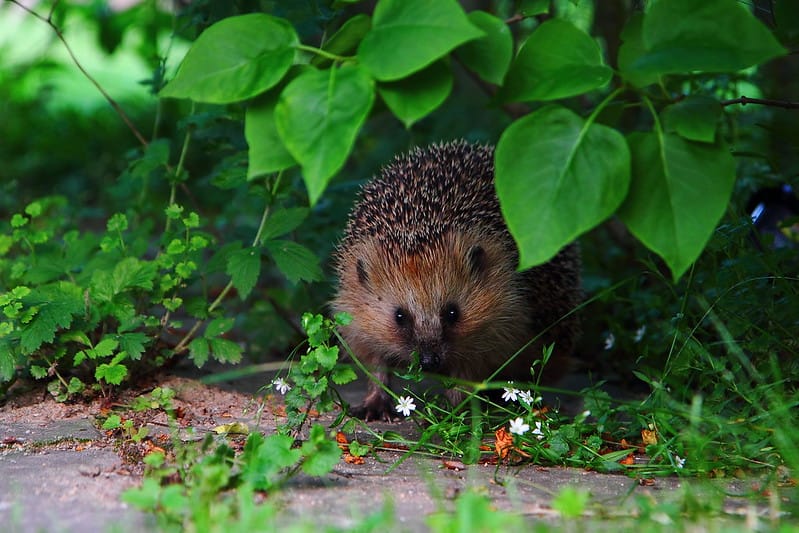
Buildings | Peers in the House of Lords have tabled a series of amendments to the Planning and Infrastructure Bill, mandating elements of wildlife-friendly design in all new buildings. The measures – backed by Conservative, Liberal Democrat, Green and crossbench peers – include bird-safe window glazing, integrated swift boxes, bat boxes, and hedgehog highways. Alexandra Freeman, the peer who tabled the bird-safe glass amendment, said such measures were an ‘easy win’ for developers since most were very low cost. She added that it was odd the UK lags behind many other countries in legislating bird-safe glass, since it is a leading manufacturer of the material and the glass can reduce the chances of collision by over 90%. The amendments will now be debated in parliament. The Guardian and BirdGuides reported the news.
Fisheries | The Scottish government has introduced new measures to strengthen the protection of marine environments in offshore Marine Protected Areas (MPAs). The legislation, which will come into force in October, introduces site-specific restrictions on damaging fishing methods such as bottom-trawling. The environmental coalition ScotLink welcomed the step after ‘years of delay’, but added that zonal restrictions ‘risk leaving important habitats exposed’ and advocated for more whole-site protection. Meanwhile, the Marine Management Organisation in England is urging fishers, environmentalists and communities to respond to a consultation on the further protection of MPAs before it closes later this month. Fishermen from areas such as Cornwall are concerned the plans will be ‘economically ruinous’, reports the BBC. Meanwhile, an editorial in the Guardian argues that bottom-trawling boats do not belong in conservation zones.
Insects | The UK’s leading insect conservation charities have issued a united declaration, calling for urgent action to address the ongoing decline of insects. The declaration was made at the inaugural Wild Summit conference in Bristol, designed to bring together nature and climate campaigners, green businesses, charities and decision-makers. The declaration argues that reversing insect decline is ‘essential, not optional’ for halting nature loss and achieving the UK’s biodiversity targets, and called on the government to become a world leader in insect recovery. BirdGuides covered the news. Also at the conference, minister for nature Mary Creagh announced measures to ensure that emergency authorisations of banned pesticides fully consider the risks to pollinators. The Independent reported the news.
In other news:
- The charity Surfers Against Sewage has launched the first app to provide real-time alerts whenever sewage is discharged in Scottish bathing waters, reports the Herald.
- RSPB Cymru has warned that stricter rules on releasing gamebirds are needed to curb bird flu and protect native wildlife, reports the BBC.
- The Reform-led Kent County Council rescinded the council’s 2019 declaration of a climate emergency. The BBC and Byline Times reported the news.
- The Conservative Environment Network has published a paper titled ‘Paradise Regained’, outlining the conservative case for restoring English nature. Read more in the Critic.
- Natural England has warned the National Drought Group that hedgehogs, salmon and bird species have been put at risk by this summer’s dry conditions, reports the Guardian.
Across the country
Staffordshire | The Wildlife Trusts have announced an 18-month project to map and analyse the benefits of restoring nature along the length of the Trent, England’s longest river from source to sea. While proposals already exist for restoring individual catchments, the Trust said that this is the first framework designed to improve a whole river system at this scale. The project will analyse the economic, environmental and social benefits of nature restoration along its 224 miles, creating a ‘transformational vision’ for the river’s future and a blueprint for restoring other rivers across England. Areas of analysis include best locations for flood risk management, increasing nature access, habitat restoration and keystone species reintroductions. The report will be published next autumn, and delivered over the next 15 years.
North Sea | Scientists from the University of Edinburgh have worked with the offshore sector to remove deep sea corals attached to oil and gas platforms in the North Sea and rehome them on an artificial reef. The corals, some of which had been growing on the legs of subsea structures for up to half a century, were under threat as old rigs were decommissioned. The scientists used remotely-operated subsea robots to dislodge and capture the corals, before attaching them to an artificial reef with cable ties and placing them close to west of Shetland oil fields, where exclusion zones will protect them from destructive fishing. Previously, such corals had either been composted or sent to landfill, and researchers hope the new initiative will help to ‘seed’ artificial sites, allowing larger colonies to recover naturally. The BBC covered the story.
Essex | A winery in East Sussex is using falcons, hawks and eagles to protect its vineyard, replacing its plastic nets, in an effort to be more sustainable. Rathfinny Wine Estate plans to use five different raptors in a trial to prevent other animals from pinching their grapes. Each bird plays a different role: the speedy cross-bred peregrine falcons will patrol the air; the agile merlin can weave between vines to deter small birds; and the larger Harris hawk and Chilean blue eagle will be used to patrol perimeters and keep larger birds such as crows and pigeons at bay. The use of raptors has already been used successfully in France’s Champagne region. The BBC covered the story.
Elsewhere:
- Natural Resources Wales has launched a consultation on the proposed Glyndŵr National Park in northeast Wales, reports the BBC. The Farmers’ Union of Wales reiterated its concerns over the impact to farming businesses.
- Forestry England has opened the UK’s largest and most advanced seedbank in Cheshire, reports the BBC.
- Campaigners in north London are launching another legal challenge against the building of a women’s football academy on wildlife-rich parkland, reports the Guardian.
- A project led by Dorset Council will restore five heathland sites to reduce the risk of wildfires, reports the BBC.
- NatureScot has said it found no signs of missing Shetland pony foals during an inspection of sea eagle nests on South Uist, reports the BBC.
- Experts have warned that the discovery of a tropical ‘hair curler slug’ in Cornish waters could signal the impact of warming waters on marine life.
- The Tara Seal Research team has said that every new seal pup born on the Tees Estuary this year has died due to a condition called mouth rot, reports the BBC.
- The Beaver Trust is running community sessions in the Loch Ness area to discuss the potential return of beavers there.
- Kent Wildlife Trust has purchased the 400-acre Hoathly Farm near Lamberhurst for what it describes as one of its most ambitious wilding projects, reports the BBC.
- Melrose Golf Course in the Borders is changing its approach to course maintenance to support a population of great crested newts, reports the BBC.
- Natural England has pulled the plug on a programme to reintroduce hen harriers to southern England after three years of unsuccessful breeding efforts, reports the Times and ENDS.
- Herts & Middlesex Wildlife Trust has reintroduced 100 water voles to the Upper River Lea near Wheathampstead.
- Conservation organisation Oyster Heaven is growing four million oysters on clay bricks to populate a reef restoration project off the Norfolk coast, reports ITV News.
- A rare holly fern has been discovered in a glacial cirque in the Eryri mountains more than 150 years after its last sighting. Elsewhere, conservationists have translocated a moss found at only one site in the UK – an Edinburgh reservoir – to two new locations, reports the Herald.
Reports
Rivers | Sewage was discharged into national park waterways at twice the rate occurring outside protected areas last year, according to a report by the Campaign for National Parks and Rivers Trust. Sewer outflows in national parks spilled for an average of 549 hours last year, while those outside parks spilled for 266 hours. One reason for this is that smaller rural works can become inundated by visitor numbers, according to the report. Dartmoor was worst afflicted, closely followed by the Norfolk Broads, South Downs and the New Forest. The report also found that more than half of the rivers in national parks failed to meet the good ecological status required by law, with fertiliser runoff and toxic pesticides also contributing to their deterioration. The Guardian and Times covered the report.
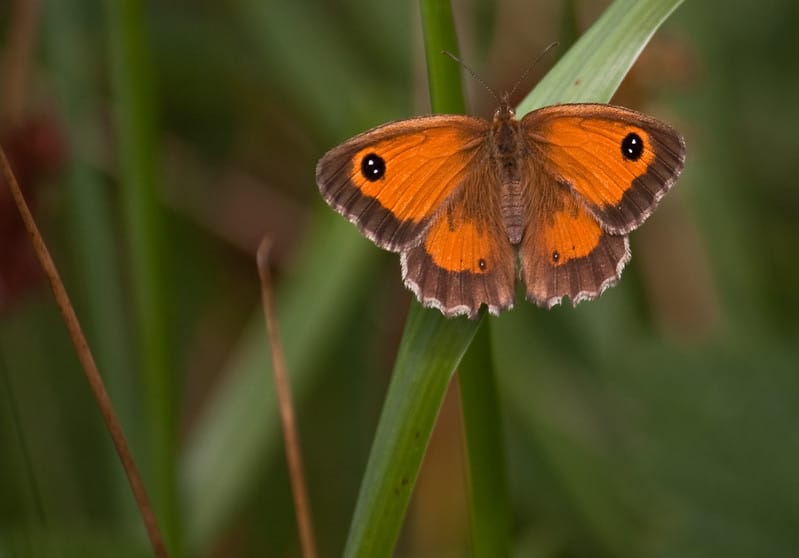
Butterflies | Butterfly numbers have ‘vastly improved’ over the last year, but urgent measures are still needed to reverse their declines. This is the main finding from Butterfly Conservation’s annual survey, the Big Butterfly Count. The survey recorded 1.7 million butterflies and moths across July and August, with participants counting an average of 10.3 butterflies during each 15-minute count. This was a marked improvement on last summer’s record low of just 7.2 – largely thanks to this year’s sunny spring and hot summer – but only ‘broadly average’ by modern standards. Head of science, Richard Fox, said that a ‘great recovery in butterfly numbers’ is unlikely without urgent action on pesticide reduction and habitat restoration, ‘regardless of how much the sun shines’. The BBC and BirdGuides covered the findings.
Protection | Figures published by Wildlife and Countryside Link reveal that only 6% of UK land is effectively conserved and managed for nature. The government is legally obliged to protect 30% of land and sea in the UK for nature by 2030, but currently, only 2.83% of England, 2.4% of Wales, and 12.6% of Scotland is well protected. The report found that the countries are all facing similar problems, including the slow expansion of protected networks, poor condition of designated sites, continued destructive practices, and a lack of monitoring. CEO of WCL Richard Benwell warned that the government risks missing its target by a ‘country mile’, and called for 2025 to be the year when ‘promises make way for delivery’. The Guardian and ENDS covered the report.
Science
Herbivores | Introducing large herbivores into ecosystems outside their native range may do more harm than good for native biodiversity, according to a study in Nature Communications. Mammals like bison and deer are increasingly used for conservation purposes – including rewilding and climate mitigation – yet the overall consequences for native wildlife have so far been unclear. To remedy that, researchers from the University of Fribourg in Switzerland studied more than 2,000 impacts of introduced herbivores across the globe. They found that negative impacts were both more common and of greater magnitude than positive impacts: in fact, only 20% of all impacts were positive. The authors therefore advise caution for projects introducing large herbivores for conservation purposes without ‘rigorous assessment’ of their effect on native communities first.
Wellbeing | Simply prompting people to notice natural features – such as birdsong, plant textures and scents – can significantly boost wellbeing, according to a study in People and Nature. Researchers at the University of Surrey divided 79 participants into three groups: one was prompted to notice natural features, another human-made features, while the third was a control group. Those focused on nature described feeling calmer and more connected to their surroundings, with slower breathing and reduced stress. The survey took place at the RHS’s Wisley’s wellbeing garden. The authors said that the research had ‘powerful implications’ for the design of public green spaces and the potential of simple interventions. The BBC covered the research.
Pine martens | Social feasibility studies are just as important as ecological ones when it comes to reintroducing species, according to a study in Human Dimensions of Wildlife. Researchers from the University of Exeter conducted an assessment designed to capture the nuances of public opinions on the reintroduction of pine martens to southwest England. They found that the participants – which included land managers, shooting representatives, conservationists and local residents – were highly polarised. In particular, they disagreed on whether reintroducing pine martens would benefit existing wildlife or further endanger threatened species. The authors argue that the results demonstrate the importance of involving local people in reintroduction efforts from the beginning. Read more in the Conversation.
Driftwood
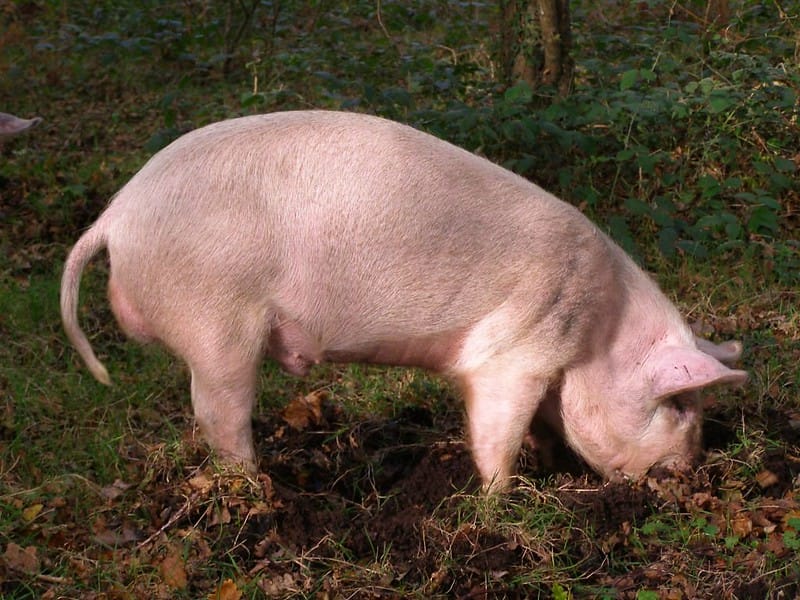
Pannage | In the New Forest, an annual tradition is underway: pannage. This is when commoners – farmers whose animals graze the common land – release hundreds of pigs to forage for acorns, chestnuts and beech mast. There are around 700 commoners in the New Forest today, and they are overseen by the Verderers, in a form of governance that has been around for almost a thousand years. But mounting threats are undermining the system, writes Will Dunn in the New Statesman, and with it the grazing animals that make the forest landscape so ‘improbably picturesque’. Growing tourism, interruptions to the subsidies upon which commoners rely, and rising house prices mean that life in the New Forest can no longer be supported ‘on the income from letting pigs wander about’.
Racism | A feature in the Times considers whether rural Britain is growing increasingly racist. Having grown up in rural Essex, broadcaster Nihal Arthanayake has been a ‘staunch defender’ of rural Britain against accusations that it is unwelcoming to ethnic minorities, but even he admits that two summers of anti-migrant protests have made parts of Britain feel increasingly hostile. This belief was recently backed up by a study from the University of Leicester, which found that racism in the countryside is ‘often more socially acceptable.’ Tim Bonner of the Countryside Alliance criticised the study for perpetuating a stereotype of ‘rural communities being reactionary and backward’, but researcher Viji Kuppan responded that the report ‘has shown there is a reluctance to speak about this. Racism exists in urban areas, but it’s dismissed and denied in rural ones.’
Land | For BBC Future, researchers Joseph Poore, Hannah Ritchie and Charles Godfray examine the causes and implications of ‘peak agricultural land’. Farming reached its largest global extent in the early 2000s, and has been declining ever since, with land reverting to grassland, trees and bush. This has been down to more efficient methods producing higher yields and the replacement of natural products with synthetic alternatives; the decline of the wool industry in particular has allowed thousands of hectares of pasture to return to nature. The trend is likely to continue, write the scientists, thanks to developments such as lab-grown foods, vertical farming and dietary change. Get it right, they add, and ‘we could be living in the first century in recent times where we leave the planet with more nature than it had before.’
Further reading:
- A feature in the Guardian explores whether culling foxes may be a necessary last resort to save Britain’s curlew.
- An article in the Times traces how the tiny barbastelle bat caused a giant political row.
- In the Critic, author Patrick Galbraith argues that, despite having a tough time, British farmers ought to ‘show a bit of mettle’.
- A feature in the BBC takes a look at how the historic and environmentally-friendly flax plant is making a comeback in Northern Ireland.
- In Wicked Leeks, read about how technology such as soil sensors and ‘earth rovers’ is aiding organic farming.
Happy days
Books | The 2025 winners of the Wainwright Prize for nature and conservation writing have been announced. Raising Hare by Chloe Dalton won Book of the Year, and Flower Block by Lanisha Butterfield and illustrated by Hoang Giant won Children’s Book of the Year. Other winners include Guy Shrubsole’s The Lie of the Land for Conservation Writing. You can explore the full list here. According to the prize, the choice of winners this year ‘marks a shift from admiration to advocacy, and the urgent fight for the wild in modern life.’

Subscribe to our newsletter
Members receive our premium weekly digest of nature news from across Britain.
Comments
Sign in or become a Inkcap Journal member to join the conversation.
Just enter your email below to get a log in link.