Wild Bird Decline & Aspen Rescue
The latest news on nature and conservation in Britain.
National news
Birds | All UK wild bird species have declined over the past five years, according to data released by the government. This is due to a combination of habitat loss, pesticide use and climate breakdown. Overall, the number of birds in the UK has declined by 2%, but in England this drop was much steeper at 7%. This is largely associated with severe decreases in farmland and woodland species, which have dropped by 9% and 10% respectively since 2018. Turtle doves and tree sparrows have fared particularly badly, likely as a result of the intensifying agricultural landscape. In addition, experts have warned that the real magnitude of overall decline is likely to be far worse, as the data does not take into account the loss of seabirds from bird flu. The Guardian reported the news.
COP29 | The 29th UN climate summit has begun in Azerbaijan, where world leaders hope to agree on actions to curb rising global temperatures. The UK has kicked off negotiations by announcing its new target of reducing emissions by 81% by 2035, in line with the recommendation from the Climate Change Committee. Energy secretary Ed Miliband said that Britain was ‘back in the business of climate leadership’. Meanwhile, environmental organisations including WWF and the IUCN have called on delegates to ensure nature is embedded within the outcomes of the summit, including concrete targets on nature-based solutions and the creation of a Climate and Nature Workstream. The RSPB explains in this blog why it is attending the summit, and calls on leaders to tackle the nature and climate crises jointly. The BBC and the Independent reported the news, and Carbon Brief has an interactive tracker of negotiating texts.
Water | Defra has launched a consultation on proposed changes to its bathing water regulations, which are intended to modernise the rules and ensure a more flexible approach. The changes include removing the fixed bathing water season dates (from May to September) so that sites can be tested year-round, and expanding the legal definition of ‘bathers’ to include water sports participants such as surfers and paddle boarders. Other measures involve introducing multiple testing points at sites, and ending the automatic de-designation of bathing water status after five consecutive years of a ‘poor’ rating. It is the first shake-up to bathing rules since 2013, and has been met with praise from campaigners as ‘steps in the right direction’. The Times and the Guardian reported the news. Meanwhile, a group of nature charities has written to Angela Rayner and Steve Reed calling for urgent action to protect the UK’s chalk streams in planning reform. Read the open letter here.
In other news:
- Liberal Democrat MP Sarah Dyke has introduced the Horticultural Peat Bill in Parliament, urging the government to ban the sale of peat by the end of 2025. The BBC reported the news.
- Defra has announced £50m in flood funding to help manage water levels for agricultural and environmental needs.
- NatureScot has announced changes to Scotland’s grouse moor licensing, which weaken the legal standing for convicting raptor persecution, reports the Guardian.
- The UK is experiencing a low fruit yield after a wet spring, with a potential impact on hungry wildlife, according to the Woodland Trust’s citizen survey.
- The number of business and industry representatives attending the biodiversity COP more than doubled this year, according to analysis by DeSmog. The Guardian covered the news.
- The percentage of UK land treated with insecticides increased by 58% between 2021 and 2023, according to government data. ENDS reported the news.
- A coalition of 54 Scottish businesses, charities and groups has written an open letter calling on the government to commission an independent analysis of the salmon farming industry, reports the Herald.
- The UK could face its first national farmers strike this Sunday in protest at the government’s inheritance tax change, reports the Times.
Across the country
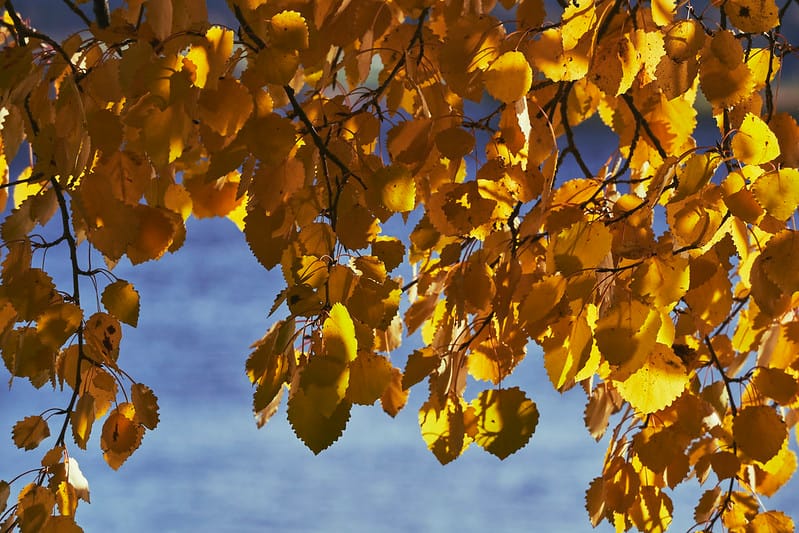
Cairngorms | One of Scotland’s rarest native trees is set to be boosted by a dedicated conservation initiative. The Cairngorms Aspen Network is a partnership between rewilding charity Trees for Life and the Cairngorms National Park Authority, which aims to map, connect and expand fragments of aspens across the Highlands. The tree was once widespread, but it has suffered from overgrazing and deforestation and is now mostly found in isolated thickets out of reach of grazing animals. Aspens are a vital part of the ecosystem, known for supporting an array of species including rare fungi, lichens and mosses, as well as feeding over 60 species of insects. The project will begin by mapping the location and condition of existing aspens in the national park – alongside the species that depend on them – to inform growing and planting plans. The Times and the BBC reported the news.
Buckinghamshire | Natural England and the Bat Conservation Trust have spoken up after public criticism of the cost of protecting rare bats on the HS2 rail line. The controversial line runs through Sheephouse Woods, home to 12 species of bats, including the rare Bechstein’s bats. Last week, the project lead for HS2, Sir Jon Thompson, told an industry conference that a protection structure costing £100m was needed to appease Natural England, even though there was ‘no evidence that high-speed trains interfere with bats’. In response, the body issued a statement that there is ‘ample evidence’ of the risk of collision, and added that the need for the structure was identified by HS2 Ltd more than ten years ago. It also pointed out that one in six UK species is currently facing extinction: ‘That is why development must be sustainable and work alongside nature recovery’. The Times and the BBC reported the news.
Solent | Natural England has launched a habitat restoration project in the North Solent national nature reserve to support seabirds. The area used to be a key breeding site for four species of terns, but none have successfully bred in the area for years, likely due to the decline in suitable natural shingle habitat. To rectify this, the team built and trialled a shingle-topped raft in April, which successfully attracted the first common terns to breed in the reserve for 20 years. Now, funded by the Solent Seascape Project, the team has created six permanent shingle islands. The area is restricted from public access and also located behind a seawall, so it will be protected from both rising sea levels and disturbance. The team hopes the islands will provide the perfect habitat when terns return from their migration next spring. Read more in this blog.
Elsewhere:
- The Environment Agency has opened the country’s largest fish pass on the River Trent in Nottinghamshire, allowing salmon, trout, eels and other species to migrate.
- The planned building of a holiday park and retirement village may be halted due to an increased number of curlew near the site in Essex, reports the BBC.
- NatureScot has launched a formal consultation on whether a third National Park for Scotland should be established in Galloway and parts of Ayrshire.
- Salisbury City Council has contributed £50,000 to a group planning to buy 35 hectares of water meadow habitat to create a nature reserve, reports the BBC.
- Fourteen rural projects in Northumberland National Park and the coastal landscape are set for a funding boost from the County Council, reports the Chronicle.
- A pub in Twickenham has changed its name to ‘The Poisoned Swan’ for a day to raise awareness of the impact of discarding cigarette butts in drains, reports the BBC.
- Farmers in Orkney are struggling to protect their crops from large numbers of greylag geese, while most environmental funding is going towards stoat eradication, reports the BBC.
- The National Trust has damaged heathland in Shropshire after trialling a new method of harvesting heather without the proper permission, reports the BBC.
- A community group has transformed a marsh in North Tyneside previously used as a ‘dumping group’ into a nature reserve, reports the Chronicle.
- Marine experts who helped reintroduce around 30,000 European flat oysters to the Firth of Forth say they are showing early signs of success. The Guardian and the Herald covered the news.
- Exmoor National Park has launched a public perception survey about plans to reintroduce white-tailed eagles to the area during a three-year project.
- Ripon Cathedral has revised its building extension plans to save a heritage tree, reports the Yorkshire Post.
- A £4,000 fine for illegal hand-diving for scallops in protected waters off Arran has been criticised as ‘a mockery’, falling far short of the gravity of the offence, reports the Herald.
- The Environment Agency is rescuing healthy native crayfish from waterways in Northumberland after discovering that individuals were suffering from fatal symptoms. Chronicle Live reported the news.
- The rewilding haven Strawberry Hill farm in Bedfordshire has been saved thanks to a £1.5m appeal, report the BBC and the Guardian.
- The Royal Zoological Society of Scotland has called for tighter restrictions on fireworks after a baby red panda at Edinburgh Zoo died from suspected stress on Bonfire Night, reports the Herald and the Scotsman.
Reports
Butterflies | The latest Scottish Biodiversity Indicator published by NatureScot reveals that butterflies are increasing in Scotland as climate change pushes them northward. The report examines trends since 1979. It reveals an overall 35% increase across the 20 species analysed, including ten species new to the country during that period. Generalist butterfly species increased by half, while specialist species remained largely stable. Red admiral, orange tip and speckled wood butterflies saw the largest increases, with the number of red admirals growing by almost ten times. Although experts said they were ‘delighted’ that generalists are thriving, they cautioned that the data only shows how species are faring at surveyed sites, many of which are nature reserves. They also added that the potential for northward expansion is likely to be limited by habitat availability and regional weather conditions. The Times and the Scotsman reported the research.

Poison | A UK-wide scheme to prevent the poisoning of wildlife by rodenticides – rat poisons – is failing, according to a report from campaign group Wild Justice. The Rodenticide Stewardship Scheme (RSS) was introduced in 2015 to try to prevent predators suffering from secondary poisoning after eating the killed rodents. Using data obtained through Freedom of Information Requests, the report analyses the results of Government laboratory tests for 366 buzzards and 173 red kites submitted for investigation in England from 2005 to 2022. The results reveal that rodenticides are now being found in the livers of the vast majority of tested buzzards and red kites, with both higher frequency and higher levels of potency than before the introduction of RSS. In light of the findings, Wild Justice is calling for urgent regulatory changes to limit the availability and use of rodenticide products. The New Scientist covered the research.
Jobs | A report by a coalition of five charities is calling on the government and the environmental sector to do more to create accessible pathways into nature-based jobs and to diversify the sector. The report, called Force of Nature, reflects on the success of a programme of paid work placements designed to offer opportunities to people from underrepresented groups. Based on their findings, the authors outline a number of recommendations, including the creation of more genuinely entry level positions in the green industry, and listening to feedback about barriers to recruitment. It also recommends the creation of a ‘National Nature Service’, through paid environmental work placements for all young people.
Science
Rainforest | Up to two-thirds of the world’s temperate rainforests could perish as a result of climate change by the end of the century, according to a study in Earth’s Future. Using maps of global tree cover, forest condition and climate data, researchers from the University of Leeds conducted the first ever worldwide assessment of the impacts of global heating on the rare habitat. They found that, under the most pessimistic warming scenario, 68% of temperate rainforests would be lost – but limiting warming to less than 2°C would see only around 10% vanish. The study also found that the UK and Ireland have among the highest potential for rainforest restoration anywhere in the world, as they host a quarter of the world’s unforested temperate rainforest climate zone. Phys.org covered the research.
Soil | Researchers from the UK have published the first high-resolution map of soil organic carbon stores in Britain. Soil organic carbon (SOC) is the carbon component of organic matter: it is a vital indicator of soil health, and represents the largest pool of terrestrial carbon. Previous SOC maps of Britain were limited by their coarse resolution, so the researchers used machine learning to generate a map at five metres resolution. They found that neutral grasslands contribute the most SOC in England and Wales, while dwarf heath shrubs, bogs and natural grasslands have higher contributions in Scotland. The findings were published in Sustainable Environment.
Invertebrates | The presence of woodland both within and upstream of urban areas helps boost the health of river invertebrate populations, according to a study in Landscape and Urban Planning. Researchers from the UK Centre for Ecology and Hydrology conducted a statistical analysis of 143 sites in England with substantial urban cover, totalling 4226 invertebrate community observations over 30 years. They found that improved invertebrate diversity was strongly linked to long-term reductions in urban pollution. Woodland proved more effective than pasture or cropland, while built or impermeable land surfaces had negative effects. The authors suggest that further analysis of specific tree species and woodland biodiversity would be valuable to distinguish varying contributions.
Driftwood
Poetry | An editorial by the Guardian argues that, in the midst of environmental crises, the poetry community is ‘rising to the challenge’. Poetry owes a debt to nature, the newspaper argues – as its muse for centuries – and now poets are working to give voice to nature during its hour of need. The most recent example is Earth Prayers: a new anthology edited by Carol Ann Duffy of 100 poems about the natural world. The poems range from classics such as Matthew Arnold’s 1867 Dover Beach to Kathleen Jamie’s What the Clyde said, after COP26. In the face of extinction threats, poetry may feel like a ‘puny adversary’, but it has changed perceptions throughout history, from the Romantics to first world war poets. The Guardian writes: ‘A poem can make us feel and understand things with a clarity sometimes lost in a blizzard of scientific data.’
Allotments | As waiting lists for allotments grow ever-longer, the charity Green Allotments is stepping in with a tantalising contest: it has pledged to buy and set up two new not-for-profit allotment sites. The sites will be located in neighbourhoods deprived of good places to grow fruit and vegetables, reports the Guardian, and will require only peppercorn rent for the local community. Deborah Burn, chief executive of the charity, said they are ‘making this offer to start changing the allotment story from one of despair to one of hope’. The charity plans to work with grant-giving organisations and private donors to establish many other sites beyond the contest. Individuals and community groups in England and Wales have until the end of November to apply, and the charity will announce the winners early next year.
Signs | A feature in the Conversation explains how a team of 12 experts from the University of Edinburgh developed British Sign Language (BSL) signs for ten of the most complicated climate terms. Unlike tangible objects like animals – in which the sign might represent its physical appearance – the team decided to base signs for these terms on a visual representation of the underlying scientific concepts. For example, the sign for ‘carbon footprint’ doesn’t combine signs for carbon and footprint, but instead shows carbon emissions being released into the atmosphere. The team, which included deaf scientists, deaf educators and sign linguists, hoped that this approach would make complex concepts immediately understandable. The article includes videos and descriptions of the ten signs, including ‘carbon sequestration’, ‘sustainability’ and ‘tipping point’.
Further reading:
- A feature in the Guardian digs into the controversy surrounding plans for a new national park in Wales.
- Global offsetting does not work for biodiversity, and markets should focus on local habitats, according to the International Advisory Panel on Biodiversity Credits. The Guardian has the full story.
- In the Conversation, read about why we should be celebrating the comeback of leeches in medicine.
- The Guardian has a feature on the botanists in Russia who saved the world’s first seed bank during the Second World War.
- An article in Positive News takes a look at a new generation of British farmers who are opening up their land for visitors to experience nature connection.
- In Wicked Leeks, read about why cider is perhaps the most eco-friendly tipple as small-scale producers come to the rescue of orchards.
- A feature in the Times spotlights the ideas of a young technophile CEO from Norway who is hoping to save the salmon farming industry with his innovations.
Happy days
Magic | Environmental activism and magic may seem like two incongruous passions, but the first female president of London’s Magic Circle, Megan Swann, is finding ways for them to work together. The 34-year-old admits that initially it was difficult to turn her tricks into something green: unsurprisingly, no one at parties wants to hear about deforestation. But she persevered, and the resulting ‘environmental magic’ is a ‘beguiling combination’, according to a feature in Positive News. Swann’s approach aims to inspire climate awareness through her routines: think endless water, producing flowers, and various forms of fire. Her act was initially designed for schoolchildren, but now she is collaborating with UCL to adapt it for adults. Swann hopes to challenge climate doomism through her magic: she believes that ‘people don’t need a lecture. They need inspiration’.

Subscribe to our newsletter
Members receive our premium weekly digest of nature news from across Britain.
Comments
Sign in or become a Inkcap Journal member to join the conversation.
Just enter your email below to get a log in link.