Wild Bird Decline & Forest Ecosystem Collapse
The latest news on nature and conservation in Britain.
National news
Birds | Defra has published data which reveals that almost all bird types in the UK are declining in abundance. The dataset tracks changes in wild bird populations from 1970 to 2022. Faring worst are woodland birds: their indicator of abundance has fallen by 37% since 1970, and by 15% in the last five years, suggesting an accelerating decline. Only three species have improved in the last five years – blackcap, nightingale and nuthatch – compared to 23 which have declined. The government said that factors causing the decline included deer browsing pressure and habitat destruction. Farmland birds have declined less steeply in recent years, but have fallen by 60% since 1970. The RSPB said there was reason for hope, however, as without targeted conservation efforts it was likely that declines would have been more severe. The charity added that some birds, which are too rare to be included, such as bitterns and white-tailed eagles, are thriving. The Guardian covered the news.
King’s Speech | On Tuesday, King Charles marked the Opening of Parliament with the King’s Speech, setting out the forthcoming programme of legislation. Prior to the speech, the Wildlife Trusts published a list of ten promises broken by the UK government, ranging from a ban on horticultural peat use to beaver reintroductions. The Trusts hoped that the speech would “herald progress for nature”, but the King had little positive news for the environment. Instead, the speech – which is written by the government, not the palace – confirmed new legislation for annual rounds of North Sea oil and gas licensing. According to analysis by the Guardian, the legislation “achieves almost nothing” practically but puts political pressure on Labour. The Wildlife Trusts called it a “disappointing outcome for nature” and summarised their key takeaways here. Environmentalists will, however, be happy to see the omission of plans to ditch nutrient neutrality rules, reports ENDS.
Fishing | The Scottish government has scrapped its controversial plans to introduce Highly Protected Marine Areas (HPMAs) in 10% of Scottish waters. The plans were paused earlier this year for revision, but now the SNP’s Net Zero minister, Mairi McAllan, has confirmed the revised plans will not progress in any form. This follows a government consultation which raised concerns from the fishing industry and island communities, who said the ban on fishing would threaten livelihoods. McAllan added that she remained “determined to protect our oceans in a way that is fair, and to find a way forward that ensures our seas remain a source of prosperity”. Members of the Scottish Fishermen’s Federation welcomed the news, but said that ministers must maintain the position and not try to bring similar measures through other routes. STV News, the Herald and the Press and Journal reported the news.
In other news:
- More than 70 environmental organisations in the UK have joined a pledge to increase diversity in the green workforce, reports the Independent and Edie.
- The National Trust has committed to bringing gardens to urban areas to create access for nature-deprived communities, reports the Guardian.
- The government has said that flood-hit farmers do not need targeted mental health support, reports the BBC. Meanwhile, farmers have urged the Scottish government to listen to their pleas on the impacts of flooding and its links to increases in beaver numbers, reports the Farmers Guardian.
- The payment rate available to farmers under the new Habitat Wales Scheme has been described as an “insult to nature”, reports Farmers Weekly.
- Princess Anne has said she is “not sure” that rewilding at scale is a good idea, reports the Telegraph.
- Campaigners have criticised Defra for failing to put practices in place to stop the import of products linked to deforestation, reports the Guardian and Carbon Pulse.
- Following exceptionally high October temperatures, it is “virtually certain” that 2023 will be the warmest year on record, according to science bodies. The BBC and the Times reported the news.
- The UK’s climate watchdog has criticised the Scottish government’s delay in publishing its climate change plan, reports the BBC.
- The Welsh government has announced a £4.6m programme to tackle flooding with nature-based solutions, reports the Wales Farmer.
- An ecocide bill proposed in the Scottish parliament could see major polluters face up to 20 years in jail, reports the BBC.
- This winter is set to be the biggest season for waxwings in at least a decade, reports BirdGuides.
- Natural Resources Wales has advised the Welsh government to regulate the release of game birds, according to Wild Justice.
Across the country
Anglesey | A recently discovered breeding colony of sandwich terns in north Wales is flourishing. The colony, located on a small, inaccessible island at the Inland Sea, was discovered last year by a local birder who prompted the RSPB Cymru to protect and monitor the site. The island is owned by the Welsh government, who purchased it in the early 2000s during the building of the A55 across Anglesey, in the hope it could become an important nesting site. Now, surveys carried out by the warden show numbers are higher than originally hoped, with 118 pairs of terns breeding last year, rearing at least 71 chicks. BirdGuides reported the news. Meanwhile, 42 little tern chicks have fledged on Horsey Island in Essex, the highest number in 17 years, reports the Shropshire Star.
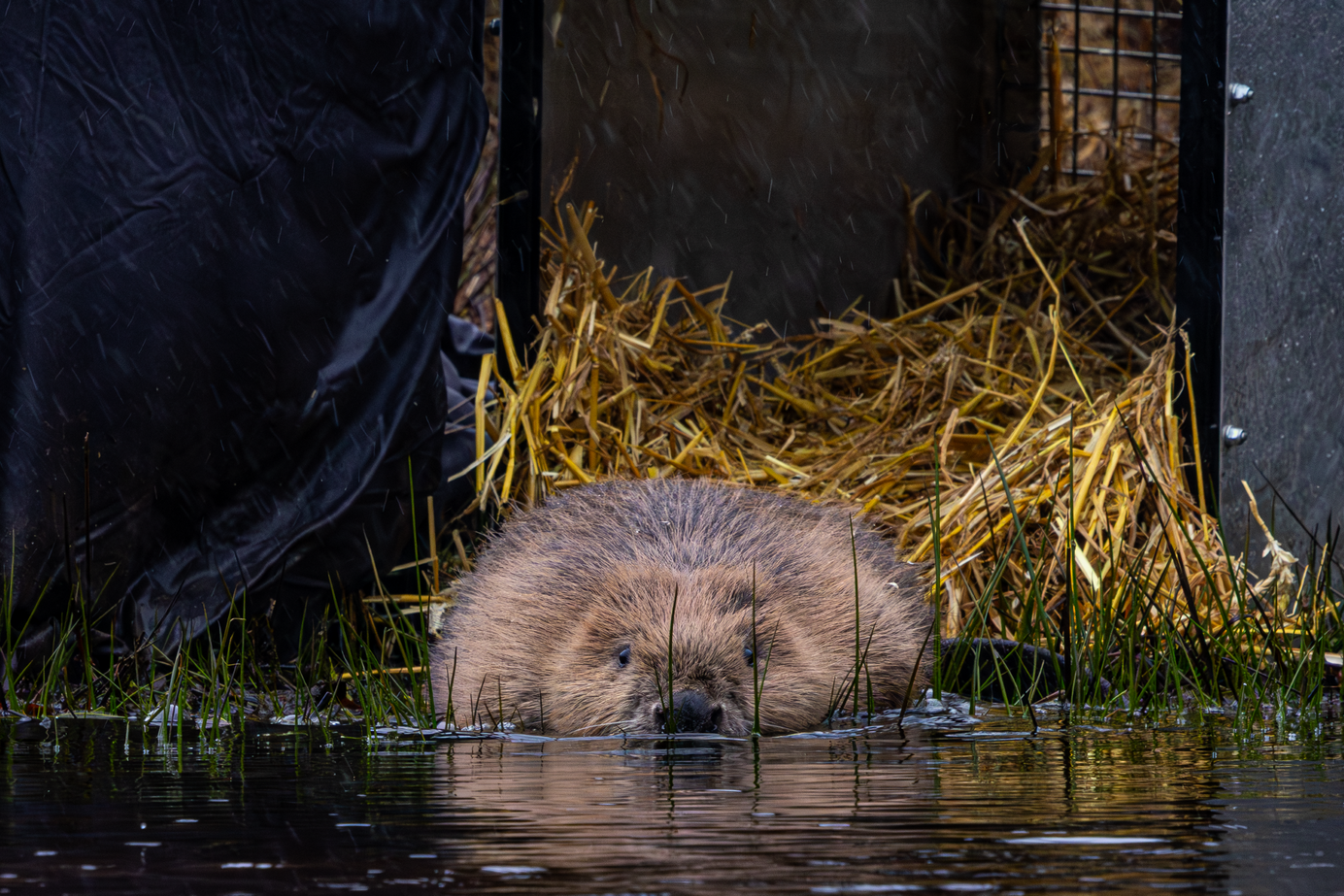
Cairngorms | Plans to reintroduce beavers to the Cairngorms are in jeopardy after farmers and landowners said they were not properly consulted. The Cairngorms National Park Authority was planning to release a small number of beavers into the park, potentially by the end of December, and said there had been months of public engagement, including a formal six-week process. However, landowners say their concerns around crop and property damage have not been addressed. Kingussie farmer, Ruaridh Ormiston, said: "The so-called consultation events have painted a very fluffy, cuddly picture of beavers, and I would love it if that were the truth.” Some environmentalists have expressed dismay on Twitter, with campaigner Jon Moses asking where beavers can be introduced, if not in Britain’s largest – and arguably wildest – national park. The BBC reported the news.
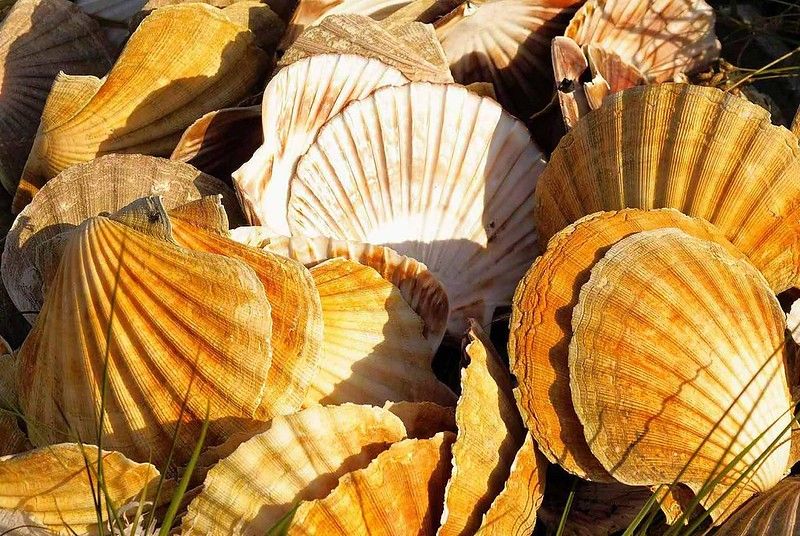
Skomer | The number of king scallops found along areas of the Pembrokeshire coast has increased 12-fold since 2000. This is in large part due to a ban on catching the scallops, which was put in place in 1990 in the Skomer Marine Conservation Zone after declines due to dredging and hand collectors. Scientists from Natural Resources Wales conducted a survey last year which involved collecting scallops to count their growth rings, before releasing them back into the waters. They found a healthy and thriving scallop population, and also discovered that the ban had improved the surrounding seabed, with more than 1,000 different creatures found – making it one of the most diverse sediment habitats in the UK.
Elsewhere:
- A man from Wiltshire has contracted sepsis, which he believes was the result of a paddle in the polluted River Kennet. The BBC and the Times covered the news.
- Plymouth City Council’s plans for the revamp of Armada Way include 200 new trees, reports the Plymouth Herald. Meanwhile, Manchester City Council’s Tree and Woodland Action Plan aims to plant 64,000 new trees by 2025.
- Over three years, the Northern Pennines AONB Partnership has restored 96 hectares of peatland in County Durham, reports the Chronicle Live.
- A petition to increase legal protection for trees after the felling of the Sycamore Gap tree has almost reached 100,000 signatures. A separate petition to save ‘Darwin’s Oak’ has passed 15,000, reports the Shropshire Star.
- Developer Centrica has announced support for a 12-mile tidal barrier across the Wash, despite opposition from environmental campaigners, reports the Telegraph.
- Kent Wildlife Trust has criticised members of the public for “thoughtlessly” setting off fireworks near a herd of grazing cattle on Gillingham nature reserve.
- The Chellow Dene wetlands in Yorkshire are set to be rewilded to help reduce flooding to nearby homes, reports the Yorkshire Post.
- CPRE, the countryside charity, has spoken out against the government’s approval of long-term oil drilling in the heart of the Lincolnshire Wolds AONB.
- Willington Wetlands in Derbyshire has welcomed a second generation of beavers, reports the BBC.
- The Norfolk Wildlife Trust has purchased a pub in the Broads with the aim of attracting more people to nature, reports the BBC.
- National Highways is spending £2m to grow wildflowers on verges of the A303 between Amesbury and Andover, according to the Highways Magazine.
- An area of Inverness set aside for nature by the Highland Council is teeming with species, including wildflowers and field voles.
- Guernsey States has put £15,000 toward replacing hundreds of trees damaged by Storm Ciarán, reports the BBC.
- Devon Wildlife Trust has launched a two-year project to save four rare species of butterfly.
- Natural Resources Wales is working to restore ponds across Flintshire to boost numbers of great crested newt and amphibian populations.
- Dorset Wildlife Trust has issued a warning after multiple sightings of Portuguese man o’ war washed up on the coast, reports the BBC.
- Banham Zoo has released almost 100 endangered white-clawed crayfish into a north Norfolk chalk stream, reports the BBC.
- The Environment Agency has launched a £30m project called ‘Tees Tidelands’ to reduce the risk of flooding and help nature recover.
Reports
Invertebrates | More than half of Britain’s endemic invertebrate species are at risk of extinction – and some may have already been lost. This is the finding of a report by Buglife, which focuses on twenty species endemic to the British Isles, meaning they are not found anywhere else in the world. Many of these species live in very small geographic ranges: the Lundy Cabbage Flea Beetle is particular to Lundy Island in the Bristol Channel, for example, while the Manx Shearwater Flea lives in the burrows of its eponymous seabird on the Island of Rum. Some – like the Ivell’s Sea Anemone, which has not been seen since 1983 – may already be extinct. The report highlights the UK’s international responsibility to prevent the extinction of endemic species, and calls for urgent research and monitoring to determine where such species survive.
Litter | A report has calculated that an average of 41 pieces of litter are found along every kilometre of public footpath in the UK. The State of Our Trails report, conducted by not-for-profit organisation Trash Free Trails, is the first study of its kind. It analysed more than 1,600 submissions by 4,500 volunteers, and found that as many as 9.1m pieces of litter could be found across the UK’s 220,000km of public rights of way. Among the most frequent brands were Coca-Cola, Lucozade, Red Bull and Walkers. Concerningly, 32% of respondents reported that the litter they found showed signs of animal interaction. The authors of the report opt to use the word ‘pollution’ rather than ‘litter’, because “there is clear and growing evidence that this human-made detritus is harmful to the health of the ecosystems that it escapes into. This is the definition of pollution”. The Guardian covered the research.
Teesside | A government-commissioned report has found it is “very unlikely” that pyridine was the cause of the mass crustacean die-off on the northeast coast in 2021. In the report, Cefas reanalysed shellfish samples using a “newly validated” testing method, and found low levels of pyridine in crab tissue and sediments. The findings support those of the previous independent review in January, which suggested a disease or parasite could have been the cause. Redcar’s MP, Jacob Young, welcomed the report, and said he hoped it would bring an end to the debate. Others weren’t so happy, however: Hartlepool councillor Rachel Creevy criticised a “lack of engagement” from the authorities, and said that their marine management is “not robust enough”. The BBC and ENDS reported the news.
Science
Forests | UK forests are facing “catastrophic ecosystem collapse” within the next 50 years, warns a study in Forestry. The research was conducted by 42 researchers, with input from 1,200 experts. They found that forests in the UK are facing a multitude of threats, including disease, worsening weather conditions and wildfires. Lead author, Dr Eleanor Tew, explained: “The problem comes when you get all of those things happening at the same time as multiple, interrelated threats. That just overwhelms the forest.” The effects can already be seen in woodlands today, through the ravaging of ash dieback disease or the destruction caused by winter storms in 2021. However, the study highlights that ecosystem collapse is not inevitable, and actions such as increasing tree diversity and promoting natural regeneration can help boost the resiliency of forests – but the forestry industry must plan in advance. The Guardian, the BBC and the Herald covered the research.
Cats | Scottish wildcats only began interbreeding with domestic cats in the late 1950s, according to a study in Current Biology. Researchers analysed genomic sequences from wild and domestic cats – including 48 felines and 258 ancient samples – to identify the domestic ancestry of modern wildcats. Although the species have existed in the UK together for around 2,000 years, interbreeding only took place around 70 years ago, likely due to the dwindling wildcat population. Interbreeding may have had short-term benefits for wildcats, including immunisation against diseases, but it is now threatening the species with extinction through ‘genetic swamping’. The Guardian and the Independent covered the research, while an article in Nature looks at the potential for ‘de-introgression’: using a breeding strategy to recover the wildcat genome.
Winter | Research by Cardiff University has found that warmer and wetter winters in the UK are likely to impact the stability of insect populations in streams and rivers. The team analysed samples from the Llyn Brianne Stream Observatory in central Wales: first sampled in 1981, it is one of the longest-running catchment projects in the world, allowing scientists to chart changes over four decades. They found that years with warmer and wetter winters due to the North Atlantic Oscillation brought profound changes to insect dynamics, destabilising the balance between population numbers. The authors warn that the results provide important clues about how species could react to climate change patterns. The paper was published in Global Change Biology.

Driftwood
Names | An announcement by the American Ornithological Society has refuelled a fierce debate in the taxonomic world. The AOS said that next year it would begin renaming the 70 to 80 species in North America that are named after people or have names deemed offensive. This means species such as Townsend’s warbler – named after John Kirk Townsend, who robbed Indigenous graves in the 1800s – will receive a new name based on the bird’s features. In a statement, AOS president, Colleen Handel, said: “There is power in a name, and some English bird names have associations with the past that continue to be exclusionary and harmful today.” Other scientists disagree, arguing that the renaming process is a waste of time and causes confusion. Other species named after famous people include a Hitler beetle, Beyoncé fly and a moth named Neopalpa donaldtrumpi because it has blond head scales and small genitalia. The Guardian, the Times and BirdGuides all covered the news.
Fishing | A BBC feature explores the technology making fishing cheaper and more sustainable. Ian Wightman, a fisherman working out of Largs harbour on the west coast of Scotland, is currently trialling devices from SafetyNet Technologies. LED lights attached to his nets can attract certain types of fish while repelling unwanted species, helping to reduce bycatch. Meanwhile, the ‘Catchcam’ allows Wightman to see what is happening underwater via an app, and an automatic data collection system measures pressure, depth and temperature around the nets. What used to take three or four days can now be achieved in a day, according to Wightman. "We are not wasting fuel, time, effort – everything is being done as efficiently as possible," he says.
Fens | In the Guardian, a feature explores one of the “largest and most ambitious restoration schemes ever launched in Europe”: the Great Fen project. Led by the Wildlife Trusts, the project has so far spent £10m purchasing large sections of farmland, which make up a 9,000-acre site around two nature reserves. The next stage will be to transform the farmland by allowing water to return to the drained fields. Project manager Kate Carver said: “For the first time this century, we will have a continuous corridor of natural wet fenland that will stretch over thousands of acres of the Great Fen.” Staff hope that the rejuvenated land will entice back a range of species, from voles to bitterns, and it will also be used to trial wet farming techniques and provide access for ecotourists.
Further reading:
- A BBC article explains why the East Atlantic Flyway wetlands must be cherished, according to the RSPB.
- Articles by the BBC and the Times report the latest news of Britain’s ‘loneliest sheep’, which has been rescued from the cliffs at Cromarty Firth.
- A blog by NatureScot explores how the Gaelic language dominates the toponymic landscape of the Flow Country.
- A feature by the BBC takes a look at the primary school in inner city Birmingham which has introduced a small farm to inspire students.
- Scotland’s first UNESCO biosphere, in Galloway and Southern Ayrshire, has been named on the ‘Cool List’: National Geographic’s 30 most exciting travel destinations for 2024.
- A Guardian feature describes the recent discovery of microfossils of ancient plankton by British palaeontologist Tom Harvey.
- You can read about the five winners of the Earthshot Prize, announced by Prince William, in this BBC article.
- A feature in Rewilding Britain looks at how the UK might learn from Denmark in reintroducing large herbivores.
- In the Press and Journal, journalist Gayle Ritchie describes the experience of a “rewilding journey” based at Glen Feshie in the Cairngorms.
- An opinion piece in the Conversation discusses how “cookie cutter” nature programmes, such as Planet Earth III, might fail to educate audiences.
- The Financial Times has a list of noteworthy new books on the environment and climate.
- An article in the Courier introduces grandmother Gillian Fyfe, who is leading efforts to introduce more fruit trees across Fife.
- Now is the time for Wales to agree to a long-term strategy for a resilient food system, according to a post by the Institute of Welsh Affairs.
- Patrick Barkham describes Slow Ways, an app mapping 140,000 miles of public right of way, in the Guardian.
Happy days
Graphics | In urban areas without green space, what is the next best thing for a nature fix? The answer, according to Catherine Borowski and Lee Baker, is giant nature-inspired artwork. The pair co-founded Graphic Rewilding in 2021 to create flower-filled installations designed to have an uplifting effect on passersby. Since then, they have created floral murals at locations including Earl’s Court Station, Lewes Castle and Westfield Shopping Centre in Shepherd’s Bush. “Where real rewilding isn’t possible, our goal is to inject the colour and diversity of nature into rundown spaces, urging people to notice – and find joy in – the world around them,” says Baker. Their work featured in Positive News.

Subscribe to our newsletter
Members receive our premium weekly digest of nature news from across Britain.
Comments
Sign in or become a Inkcap Journal member to join the conversation.
Just enter your email below to get a log in link.