Welsh Wildlife & Orchid Revival
The latest news on nature and conservation in Britain.
National news
Wales | The Welsh government has introduced a bill intended to protect nature and reverse the loss of wildlife. If passed in the Senedd, the legislation will establish an independent body to monitor, report, and enforce environmental law compliance, as already exists in England and Scotland. The bill will also enable ministers to introduce ‘ambitious’ biodiversity targets, with public bodies in Wales required to publish nature recovery action plans. Organisations including WWF Cymru and RSPB Cymru have welcomed the bill, saying it is ‘long overdue’. Others, including leader of Wales’ Green Party, Anthony Slaughter, say it does not go far enough. Slaughter described the bill as ‘recklessly weak’, while the Green Alliance said it has flaws which ‘must be corrected’, including protecting the independence of the new Office of Environmental Governance Wales. The BBC, ITV and ENDS reported the news.
Habitat | More than 5,000 of England’s most sensitive and protected natural habitats are at high risk of being destroyed by development under Labour’s new planning bill, according to legal analysis by the Guardian. The newspaper examined the threat posed by the controversial legislation to 5,251 areas, including the New Forest, Peak District moors, Surrey heaths, and the Forest of Bowland. Rivers such as the Itchen and Wensum are threatened, as well as key sites for wildlife including nightingales, badgers, otters, dormice and kingfishers. A further Guardian article features ten irreplaceable habitats currently imperilled, while analysis by economics writer Phillip Inman argues that the landmark Dasgupta review has been sidelined. Meanwhile, an opinion piece by Starmer’s former economics adviser Nick Williams defends the legislation, arguing it is a product of joined-up environmental thinking.
Ocean | Ahead of the UN Ocean Conference next week in Nice, France, the Environmental Audit Committee has called for a ban on bottom trawling, dredging and mining in Marine Protected Areas (MPAs). In a report, the group of MPs said that these destructive fishing practices are devastating the seabed and marine life across 900,000 sq km supposedly protected by nearly 180 MPA designations. Chair of the committee, Toby Perkins, said that ministers have ‘all the information they need’ to press ahead with a ban, adding that ‘our oceans cannot afford any more prevarication’. The Guardian reported the news. Meanwhile, the Wildlife Trusts has published a briefing urging the government to use the UN conference to honour its prior commitments to protect UK seas. Separately, a group of scientists from the University of Exeter and others have written a paper outlining why the high seas need protection from all forms of extraction.
In other news:
- The Wildlife Trusts has published a briefing warning the government that cutting funding for sustainable farming in the spending review would inflict an ‘unparalleled policy hammer blow’ on the countryside. ENDS reported the news.
- The government has said it supports ambitions to introduce a close season for hunting brown hare – currently the only game species which can be shot year-round, reports the Times.
- The Scottish government has announced it is ‘on track’ to meet its interim peatland restoration target, with more than 14,000 hectares restored in the last year.
- Britain has had its hottest and sunniest spring on record with conditions described by the Met Office as ‘unprecedented’, reports the Times.
- Chair of Natural England Tony Juniper has said that ministers are wrong to suggest nature is blocking development, reports the Guardian. Meanwhile, the RSPB Youth Council has written an open letter opposing the proposed planning bill.
Across the country
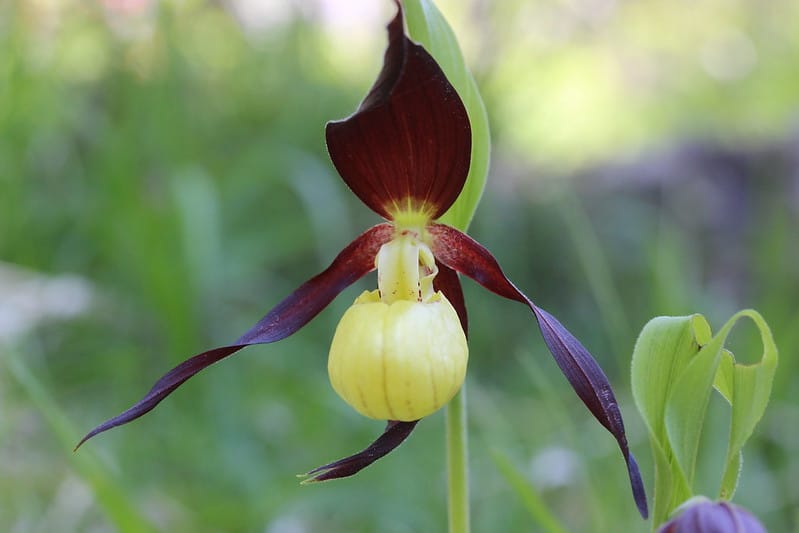
Yorkshire | Conservationists are celebrating the resurgence of the lady’s-slipper orchid, one of Britain’s rarest wildflowers. The species was driven to near-extinction by Victorian plant hunters and habitat loss, and was believed to have disappeared from the UK by the early 20th century. A single plant was discovered in a remote part of the Yorkshire Dales in 1930, and was closely guarded to prevent it being damaged or stolen. Two years ago, a project led by the Yorkshire Wildlife Trust began hand-rearing seedlings and planting these out into former habitats. The Trust has now confirmed the discovery of an entirely ‘new’ plant at one of these reintroduction sites, meaning the species has successfully produced seeds that settled and germinated. Elizabeth Cooke from Plantlife said the rescue of the orchid is ‘one of the UK’s most fascinating lost and found stories’. The Independent and Channel 4 covered the story.
Kent | Natural England has announced that North Kent Woods and Downs will be the eighth national nature reserve in the King’s Series. The landscape includes a mosaic of habitats, from wildflower meadows to rare arable plants and chalk grasslands. The 800-acre reserve will safeguard 1,700 ancient and veteran trees, as well as provide protection for species including man and lady orchids, the Maidstone mining bee, hazel dormouse and skylarks. The agency said that around 400,000 people live within five miles of the new reserve, providing better opportunities to connect with the unique landscape. Unusually, the reserve also includes one of the UK’s largest organic and carbon-negative vineyards, which Natural England claimed would bring ‘a boost for both nature recovery and the local economy’. The BBC covered the news.
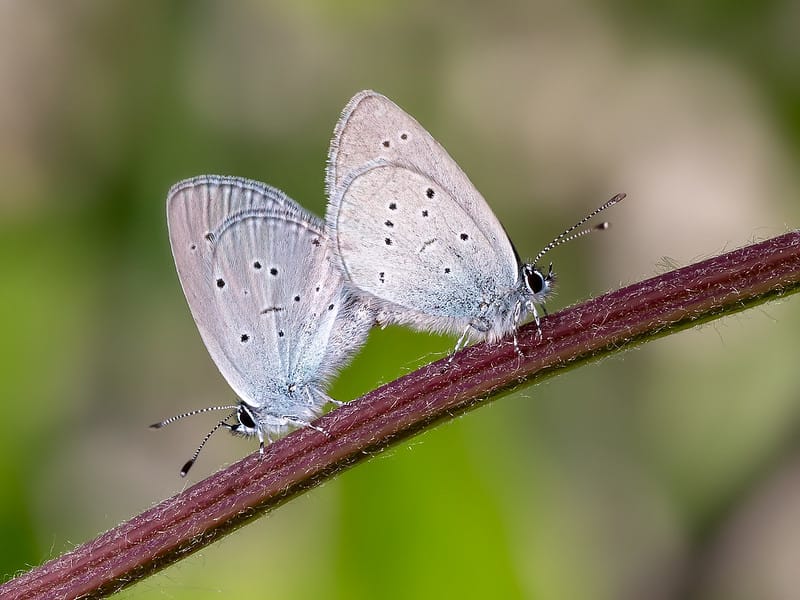
Highlands | Numbers of one of Scotland’s fastest-declining butterfly species have exploded following the warm spring weather. Volunteers for Butterfly Conservation reported finding two new colonies of the small blue – one south of Wick and one at Nairn Railway Station – while one volunteer counted 523 individuals in just 90 minutes at the Balnagown Estate near Invergordon. The small blue is the UK’s smallest resident butterfly, and its caterpillars only eat one plant – kidney vetch – with declines linked to destruction of habitat. Butterfly Conservation has been working to create small blue habitat at sites along the east coast, and staff are hopeful that this year’s population boom will help the population expand to new sites.
Elsewhere:
- Hampshire and Isle of Wight Wildlife Trust is working with six private landowners in the New Forest to plant more than 24 acres of grassland with wildflowers.
- The Upper Ouse Conservation Trust, backed by Dame Judi Dench, has raised funds to purchase a 20-acre site with wetland habitats and ancient trees, reports the BBC.
- A church in Grantham, Lincolnshire, is celebrating its first peregrine falcon chicks in 9 years, while Ely Cathedral has its first clutch in four years, and Romsey Abbey its first ever.
- The Environment Agency has transferred almost 23,000 protected glass eels from the River Severn to the Kennet chalk stream in Berkshire as part of conservation efforts.
- Newport council plans to plant 30,000 trees over the next ten years to boost tree canopy cover to a quarter of the Welsh city, reports the BBC.
- This year’s Hampton Court Palace Garden Festival in London will highlight the decline of swifts, reports the BBC.
- A project in north Northumberland has begun re-wiggling the River Breamish in what will be one of the largest river restoration projects in the UK, reports the BBC and Chronicle Live.
- RSPB Scotland has announced that the UK’s oldest wild white-tailed eagle has died on Mull aged 32.
- Rare wetland birds including cranes and great egrets have appeared at Wicken Fen within hours of the completion of a peatland restoration project, reports the BBC.
Reports
Water | The water sector in England and Wales needs stronger regulation to protect the environment and bill payers, according to the interim findings of the government’s independent Water Commission. Recommendations include clearer direction from government, better regulation, a stronger voice for local communities, and greater focus on long-term investors. The report also called for a more regional approach to managing water, and said ministers should consider making the public health of wild swimmers a legal objective for water companies. Campaigners have welcomed ‘some progress on regulation’, but overall argue that the report stops short of real reform. Meanwhile, campaigner Feargal Sharkey wrote in the Times that the review entirely fails to address underlying issues. The BBC and Times covered the report.
Saltmarsh | The UK’s saltmarshes are ‘significant’ carbon sinks, according to a report by WWF in partnership with Aviva. The report presents findings from the ‘flux tower’ on the Ribble Estuary in Lancashire. This installation continuously measures the exchange of carbon dioxide, providing data on how the habitat contributes to the UK’s climate goals. Results revealed that the carbon absorbed during spring and summer outweighs that released during autumn and winter. This is the first time that coastal habitat has been studied in this manner, and WWF are calling for saltmarshes to be included in the official UK Greenhouse Gas Inventory in the hope this will incentivise restoration and protection. The BBC and Independent covered the news.
Bats | The National Bat Monitoring Programme has published its annual report, highlighting concerns over short-term trends for the second year in a row. The report – which summarises trends for 11 of the UK’s 17 breeding bat species – found that long-term population trends (since 1999) for five species have increased, and six remain stable. The increasing species are the greater and lesser horseshoe bat, common and soprano pipistrelle, and Natterer’s bat. However, shorter term trends suggest fewer increases and some emerging declines, particularly in specific regions. For example, brown long-eared bat populations are believed to be stable in England over the last five years but declining in Wales. ENDS reported the news.
Science
Seeds | Seed mixes combining native and non-native flowering plants are best for pollinators, according to a study in Plants, People, Planet. Annual mixes are often branded as ‘pollinator-friendly’, but the choice of species is often based on anecdotal evidence. Now, a research team, including two British botanic gardens, has analysed which annual plant species are most attractive to bees and hoverflies using data from 447 scientific articles. This was followed by field trials of four commercial seed mixes to calculate the number of visits by insects. They found that seed mixes including both non-native and native flowering plants had higher establishment, longer flowering periods, a greater number of pollinator visits, and were more aesthetically pleasing to the public. The authors hope the findings can be used for evidence-based guidance in future horticultural selections. Phys.org covered the study.
Phones | A study in the Journal of Applied Ecology has revealed how smartphones can help ecologists and conservationists better balance the needs of wildlife and recreationists. Researchers from Colorado State University and the USDA Forest Service used anonymised GPS data to analyse where wildlife and people are overlapping. In one example, they compared cougar collar data with human mobility data in the Sierra Nevada mountains to pinpoint where walkers and predators were most likely to cross paths, helping to mitigate conflict. In another, smartphone data revealed where people came closest to bighorn sheep wintering zones in Wyoming’s Teton Range, allowing managers to minimise disturbance. The authors said that using phone data can help identify where human activity might fragment sensitive habitats, and also inform conservation planning for migration routes to keep landscapes connected.
Solutions | Involving communities in nature-based solutions (NBS) within urban areas leads to greater innovation, according to a study in Discover Cities. An international research team including scientists from the University of Exeter carried out interviews and workshops in three European cities. They examined external, societal and governing influences on various NBS projects, from the greening of schoolyards to the redesign of under-used green spaces and river restoration. They found that involving local residents in projects led to innovation in design and quality, as well as people gaining greater benefits from natural spaces. Projects were also more likely to be successful in supporting nature renewal when they involved policymakers from across different sectors, rather than being carried out in silos. Phys.org covered the research.
Driftwood
Farming | Author and Lake District farmer James Rebanks has criticised the lack of government support for nature-friendly farming. In a video for the RSPB, Rebanks said he had previously believed the national conversation was moving toward how to help farmers to be better stewards of landscapes, but he was now awake at night worrying. The video comes after reports that the nature-friendly farming budget will be cut in the government’s spending review, and only small farms will be allowed to apply in the future. The British countryside is ‘on the edge of a precipice’, according to Rebanks: some 70% of land mass is farmed, making government targets for restoring nature meaningless – and those behind them ‘charlatans’ – if they do not support farmers. Watch the video here, or read more in the Times.
Healing | Following the release of The Salt Path in cinemas, Lena Ferriday – a lecturer in the history of science and the environment – writes for the Conversation about the long history of healing on the English south coast. The bestselling memoir by Raynor Winn tells how her husband, Moth, was diagnosed with a terminal illness in the same week they lost their home, prompting a 630-mile year-long coastal walk from Somerset to Dorset. This journey – during which Moth’s symptoms improve – is part of a ‘much older story’ of transformation on the coast, although the emphasis has changed: during the 19th century, the emphasis was on ‘gentle movement’ rather than ‘endurance through rough landscapes’, writes Ferriday.
Water | A feature in the Financial Times looks at the ‘river custodians’ who are improving biodiversity, improving water quality and preventing flooding by improving the water on their own land. The land, in this case, generally equates to large estates, including the 800-acre Wyresdale Park in Lancashire and the 9,000-acre Castle Howard Estate in North Yorkshire. These landowners are using various forms of finance, including the money generated by Biodiversity Net Gain, to rethink their water management. At Wyresdale Park, this includes large areas of grassland along the riverbank; at Castle Howard, it has involved re-wetting the land more widely, including the creation of ponds and the planned introduction of beavers.
Further reading:
- A study by the universities of Glasgow, Bournemouth and Plymouth is investigating views of rewilding from landowners, conservationists, ecologists and archaeologists, among others. You can respond to the questionnaire here.
- The Environment Agency has created a documentary showcasing farmers in Dartmoor using nature-based techniques to combat flooding.
- The Guardian has a review of Super Natural by Alex Riley, which surveys the extraordinary adaptive ability of animals in extreme environments.
- In the Conversation, professor of hydrology Hannah Cloke explains why England’s water crisis needs more than just new reservoirs.
- An essay in Aeon explores how ‘ocean time’ – an appreciation of the immensity of the ocean’s cycles – offers ways to reimagine the world.
- For the Times, Jeremy Clarkson writes a column on why ‘farmers are the new miners’ in the nation’s political game.
Happy days
Food | A feature in Wicked Leeks looks at an emerging trend in the posh food scene: restaurateurs growing their own supply of produce. Examples include the kitchen garden at the Michelin-starred Black Swan, in North Yorkshire, established by the chef Tommy Banks, as well as Our Farm in Cumbria, which supplies the restaurants of Simon Rogan. These farms provide chefs with quality ingredients, while also reassuring customers that their food has been grown sustainably and transparently: ‘provenance has become incredibly important,’ says Banks. Rogan’s land, for instance, provides everything from garlic to Chinese artichokes to elderflower trees.

Subscribe to our newsletter
Members receive our premium weekly digest of nature news from across Britain.
Comments
Sign in or become a Inkcap Journal member to join the conversation.
Just enter your email below to get a log in link.