Tree Planting Failure & Eel Reintroduction
The latest news on nature and conservation in Britain.
Welcome to Inkcap Journal, a newsletter about nature and conservation in Britain. This is your Friday digest. Not a member? Sign up for a 30-day free trial.
National news
Trees | Statistics published by the Forestry Commission show that tree planting rates in England increased last year, but still fell well short of the government’s target. The data reveals that woodland creation increased by 40% to 3,128 hectares, despite a “difficult planting season” affected by drought conditions, according to Defra. Forestry minister Trudy Harrison said these were “record levels” of planting – but failed to mention that they account for less than half of the target, which is 7,000 hectares per year. The Woodland Trust has slammed the figures, calling the progress “near glacial”. Darren Moorcroft, chief executive of the Trust, said: “Every year our response is the same – not enough, not fast enough, not good enough.” He added that the situation could get worse if funding for planting is reduced at the end of the current parliament. Meanwhile, Scottish Forestry is investing £1m in skills training for its front-line staff as it aims to ramp up tree planting rates.
Saltmarsh | Insurance giant Aviva has announced its latest round of nature funding, in the form of £21m awarded to the Wildfowl and Wetlands Trust to restore coastal saltmarsh in the UK. Earlier this year Aviva committed £38m toward restoring temperate rainforest in Britain; the funding for WWT marks the company’s second contribution toward a £100m programme of nature-based solutions. Healthy saltmarsh functions as an excellent carbon sink, as well as benefiting natural flood protection and biodiversity, but has faced severe historic declines in the UK. The Trust said the funding would allow it to restore and manage coastal saltmarsh at landscape-scale, as well as fund research into maximising its benefits. Business Green and ENDS reported the news.
Peat | While Aviva is investing in saltmarsh, the Co-operative supermarket has announced a three-year partnership with the RSPB to fund the protection and restoration of peatland. The move is a first for a UK supermarket: the Co-op’s initial investment of £1m this year is funded through the sale of compostable carrier bags in its stores. The partnership forms part of the Co-op’s Climate Plan commitments, but it will not count towards its carbon reduction targets or be used as an ‘offset’. Work will initially focus on two separate areas of RSPB-owned upland peatland in Powys and Shetland, equivalent to around 400 football pitches, where the team will create the conditions needed for the habitat to recover.
In other news:
- Labour has reneged on its pledge to invest £28bn per year until 2030 on green projects, reports the BBC.
- Firefighter chiefs are looking to expand the number of specially-trained units as wildfires become more prevalent in the UK, reports the BBC.
- Chair of Natural England, Tony Juniper, has said the government will miss its biodiversity targets at the current rate of change, reports the Guardian.
- Woodland conservation charities are asking members of the public to water urban trees amid rising temperatures and dry spells, reports the Independent.
- Defra has launched a consultation on plans to expand its storm overflows reduction plan to include coastal and estuarine waters, reports ENDS.
- Businesses in Wales are concerned that stricter regulations for pheasant and partridge shooting could result in job losses in rural areas, reports the BBC.
- Welsh climate change minister, Julie James, has retracted her suggestion of banning artificial grass, reports the BBC and Wales Online.
- The British Trust for Ornithology has warned that the number of deaths caused by bird flu is rising in threatened gull and tern colonies.
- Defra has been “flooded” with four times the number of bathing water applications in the last year than it received in the previous five combined, reports ENDS.
- Defra has announced that no sandeel fishing will be allowed in UK waters for the third year in a row to benefit the wider marine ecosystem.
Across the country
Somerset | The Sustainable Eel Project is planning to release millions of eels into Somerset’s wetland habitats, where their populations have been declining dramatically since the 1980s. As part of the first phase of the project, twelve tanks of baby eels are being placed in schools across Wedmore. They will be looked after by the schoolchildren for three to six weeks until they are mature enough to be released into a local river. Wilder Wedmore member, Geoff Carrs, said the scheme would help children – and adults – learn more about eels in their local environment. “Eels are such an important part of the social history and fabric of the levels,” he added. The BBC reported the story.

Bedfordshire | The route for the Bedford – Cambridge section of the new East West Rail (EWR) could threaten rare Red List species, according to local campaigners. A spokesperson for the £5bn rail project said the chosen route offered an “environmentally sustainable solution”, but campaigners argue that species such as skylark and yellowhammer could disappear from the area entirely. The land affected also contains ancient bluebell woodland, as well as nesting habitat for rare bats and great crested newts. Mark Cuzner, director of the EWR Alliance, said the ecological impact was one of “the biggest challenges” of the scheme, but so far it had created more than 20 biodiversity “compensation sites”. The BBC covered the news.
Devon | Devon is the latest location to benefit from the Wildlife Trusts’ Atlantic rainforest recovery programme. The Trust has started work on creating new rainforest habitat at a 75-acre site near Totnes, where it acquired a 105-year lease. It will introduce species including sessile oak, birch, rowan, holly, alder, willow and hazel across two-thirds of the land. However, the planted trees could take decades – even a century – to mature into a forest. Some environmentalists have commented on Twitter that coverage of the project is misleading by suggesting it will produce something resembling an ancient rainforest. The Guardian reported the news.
Elsewhere:
- A mile-long stretch of river in the Lake District has been re-wiggled by the National Trust to reduce the risk of flooding, reports the Hull Daily Mail. In less positive news, the upper River Derwent in Borrowdale is now almost completely dry, reports the Guardian.
- The Environment Agency has prosecuted a Lincolnshire agricultural firm after a fertiliser leak killed more than 135,000 fish.
- Industry experts have raised concerns over low water levels in Loch Ness during the protracted dry spell affecting Scotland, reports the Guardian.
- The Victorian garden at Oxburgh Hall, a 15th century manor in Norfolk, is being adapted to help it cope with climate change, reports the BBC.
- A man has been arrested on suspicion of causing a “tree massacre” in south London, reports the BBC.
- Weymouth Town Council has refused requests to remove rotting seaweed from its beach, instead inviting visitors to “embrace the raw beauty of nature in its unaltered form”, reports the BBC.
- The RSPCA is appealing for information after the discovery of an osprey in Durham that had been shot with an airgun, reports BirdGuides.
- Local residents are concerned by exceptionally low water levels in the River Granta, a rare chalk stream in Cambridge, reports the BBC.
- Wildcat kittens bred in captivity have been released into the Cairngorm National Park in the first of a series of trial releases to save the species, reports the BBC and the Herald.
- A rare blue-cheeked bee-eater was spotted on Shetland for the second time on record, reports the Shetland Times.
- Researchers have discovered recreational drugs, pesticides and medicine in seawater samples taken off the south coast of England, reports the BBC.
- The Dartmoor Pony Heritage Trust has been given permission by Natural England to increase the size of a herd at Bellever to help restore its habitat, reports the BBC.
- In Exeter, a “secret” orchard which grew from an Environment Agency flood defence scheme has become a thriving community destination.
Reports
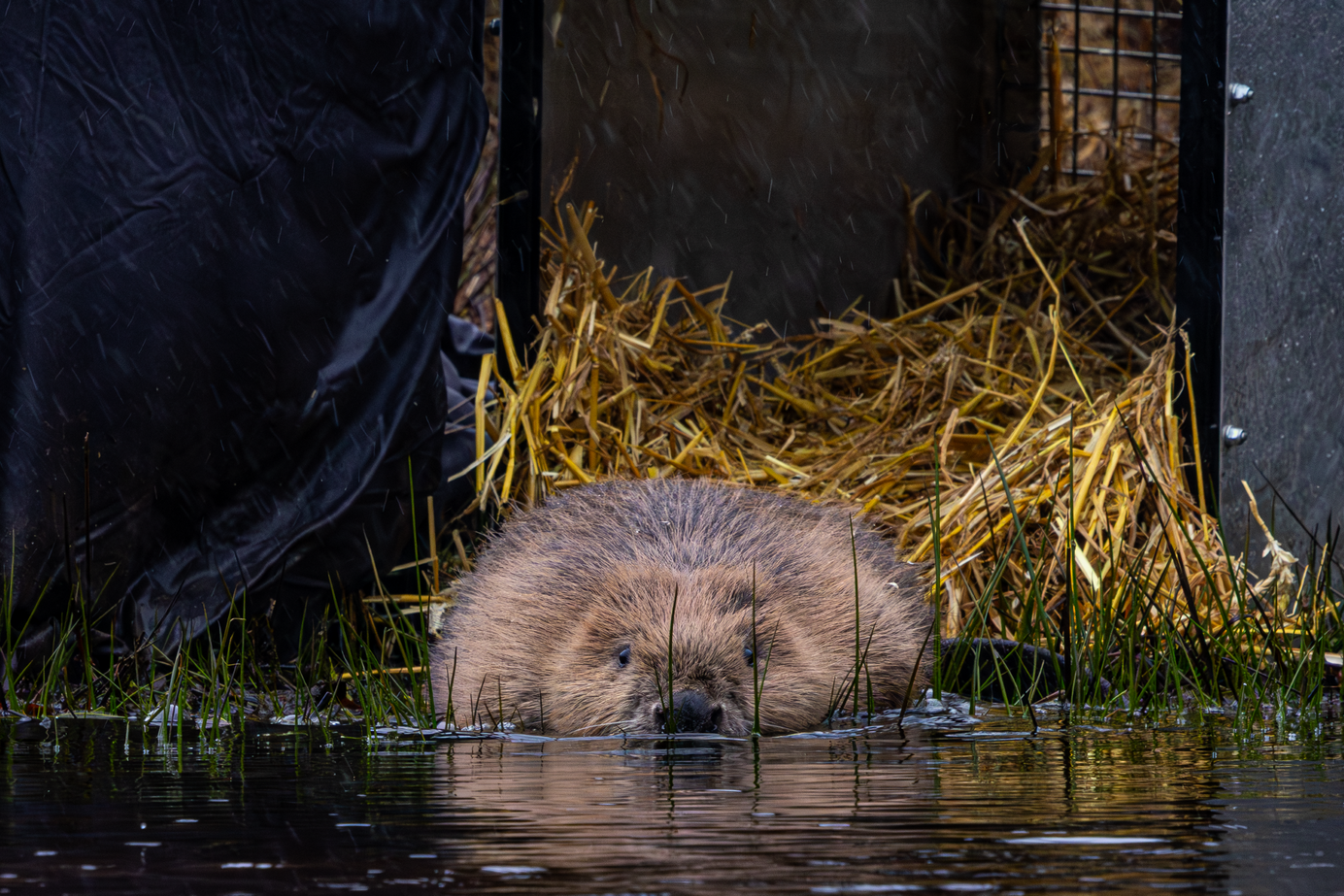
Beavers | NatureScot has published its Beaver Management Report for 2022. The report reveals that the percentage of beavers trapped and moved rather than lethally controlled has “significantly increased” from the previous year, from 28% to 42%. The number of beavers killed under licence decreased from 87 in 2021 to 63. The report also highlights the increasing expansion of beaver populations in Scotland, claiming that “if this trajectory continues, it is expected that there could be as many as 10,000 beavers in Scotland by 2030”. The Beaver Trust issued a response, saying it was “encouraging” to see increased levels of translocations, but they “remain disappointed” that the number of beavers killed under licence still exceeded the number translocated. The Times, the Herald, the Independent and the Ferret covered the news.
Capital | Also from NatureScot, this report analyses the state of the country’s natural capital. The Natural Capital Asset Index measures the quality and quantity of Scotland’s nature by assessing habitats and their contributions to human wellbeing, providing one way of representing the value of nature in traditional economic markets. The results show that overall, the value of Scotland’s natural capital remained stable in 2021: there were slight improvements for woodland and agricultural land; a marginal decline for grasslands; and little change for coastal, heathland, and wetland habitats.
Soil | The Joint Nature Conservation Committee has published a report laying the groundwork for developing an indicator framework of soil health for England. The government’s Environmental Improvement Plan emphasises the importance of healthy soils, and commits to establishing a national indicator. This proof-of-concept study, developed in concert with Cranfield University, trialled the use of four key ecosystem services as indicators of soil health: climate regulation through carbon storage; water regulation through runoff reduction; soil biodiversity; and food and fibre production potential for agriculture. It also outlines ideas to create an interactive dashboard to visualise results, making the complex indicator as user-friendly as possible.
Science
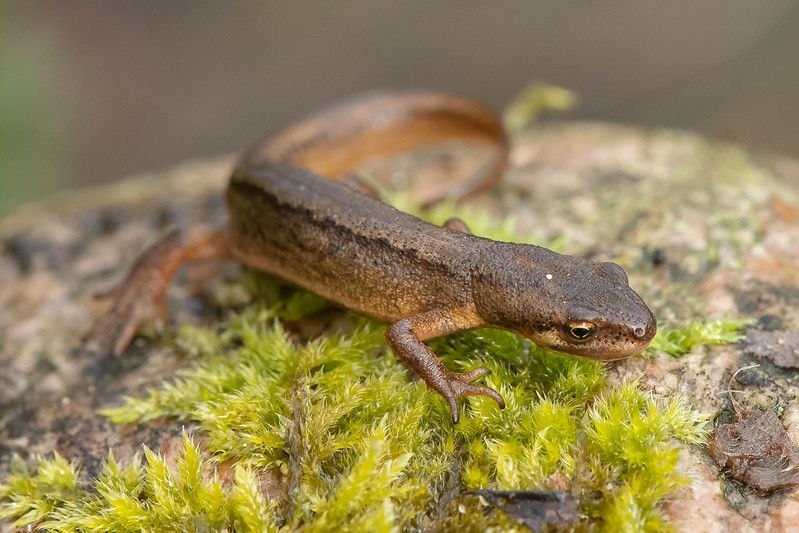
Newts | Conservation-trained detective dogs could be used to locate endangered great crested newts, according to a study published in PLOS ONE. Newts are a protected species in the UK, but difficulties detecting them during their terrestrial phase – when they shelter in underground burrows and rocky crevices – have restricted conservation efforts, including a requirement for developers to search for newts prior to construction projects. To counter this issue, PhD student Nicola Jayne Glover trained her springer spaniel, Freya, to detect live newt odour. Over 16 trial runs, she found the spaniel could identify the presence of great crested newts within two metres with 87% accuracy, including differentiating them from frogs and other species of newt. The Guardian covered the research.
Altitude | The altitudinal records for eleven tree species in Britain have been broken, according to a study published in British and Irish Botany. The paper, authored by conservation manager and PhD student Sarah Watts, analysed data from a citizen science project which recorded trees growing above 900m. Some species appeared more than 200m above their previous known limits. The highest individuals were a rowan at 1150m and a sitka spruce at 1125m, both in east Inverness-shire. The study noted that, out of the 72 trees recorded, 56% were sitka spruce, highlighting the ability of this non-native species to spread into high elevation habitats. Watts concluded that the findings were “too restricted to draw broad conclusions on the impacts of climate warming”, but stated that continued research could assist with woodland restoration projects in the mountains. The BBC featured the research.
Glow-worms | Artificial lighting is making it harder for glow-worms to mate, according to a study in the Journal of Experimental Biology. By using a Y-shape maze equipped with a female-mimicking LED light, British zoologists demonstrated that the percentage of males reaching the “female” declined as the intensity of artificial illumination increased. These effects reversed rapidly when artificial lighting was removed. The authors said the results highlight the potentially devastating consequences of night-time artificial lighting for glow-worm populations in the UK and globally, with one adding that glow-worms could be considered a “canary in the coal mine” for other nocturnal insect species. The Express and Star covered the research.
Driftwood
Dartmoor | ENDS has released a documentary on the ecological degradation of Dartmoor. Wilderness: the wounding of England’s Last Great Wild Places examines how failure to effectively invest in natural heritage and work with farmers has brought Dartmoor “to its ecological knees”, according to the release. Analysis by ENDS revealed that, since 2009, £30.3m has been paid to Dartmoor farms containing SSSI sites, under government stewardship schemes aimed at improving nature in priority areas. However, more than 80% of SSSIs in the National Park are considered to be in poor health.
Vegetables | An article in the BBC explains how one woman from Wales has teamed up with the Soil Association to teach people how to grow vegetables from overseas. Carol Adams from Aberdare said she started growing okra and callaloo after feeling guilty driving 50 miles to Cardiff every time she wanted a taste of her home in the Bahamas. Now, she is running ‘Back to Our Roots’ classes with the charity to teach others in Wales how to grow vegetables from their own cultures, adding that it was “something practical that people of colour can do to help mitigate climate change.” Jodie Jamal, from Cardiff, said the classes have the added benefit of bringing people together to learn about other cultures and what they eat through the growing process.
Herbaria | An article in the Conversation explores the problematic history of how colonialism has shaped natural history collections around the world. In particular, herbaria – collections of pressed, dried plant specimens – are largely a European creation, amassed by imperial powers when expanding their colonies. Today, over 60% of herbaria and 70% of specimens are in developed countries with colonial histories. This means that many former colonial powers have more plant diversity in their collections than they do in nature, while the inverse is true for former colonies. The author writes that “herbaria should be part of the ongoing movement to decolonise cultural institutions”, and argues for improved access to the information held privately in herbaria worldwide.
Further reading:
- A feature in BBC Travel looks at how the growing popularity of Spain’s Camino de Santiago has spurred the restoration of the UK’s own medieval pilgrimage highway.
- This BBC article explores whether Yr Wyddfa, Wales’ highest mountain, can achieve its target of being plastic free.
- In the Guardian, Patrick Barkham writes about why illegal reintroductions of butterflies could endanger other species.
- An article in the Times covers comments made by Ray Mears on the challenges of reintroducing lynx and wolves.
- The Guardian looks ahead to the publication of Wilding, a rewilding handbook by the couple behind Knepp Estate.
- Also in the Guardian is a review of the latest David Attenborough show, Our Planet II, which is described as characteristically “astonishing”.
- As part of its series on Scotland’s secret owners, this article in the Ferret discusses why land ownership in Scotland matters.
- For Countryfile, author Nicola Chester writes about both the privileges and the hardships of growing up in a rural area.
- Glyphosate use is rising in UK farming while overall pesticide use is falling, according to a piece by Wicked Leeks magazine.
Happy days
Manchester | The Manchester argus butterfly is flourishing once again in its eponymous home area after disappearing over a century ago. The construction of the Liverpool – Manchester railway in the 19th century saw the large-scale drainage of the city’s surrounding peatland, eliminating the large heath butterfly along with its habitat. In the last three years, however, the Greater Manchester Wetlands Partnership has been restoring the wetland mosaic – and has successfully reintroduced the argus along with it. Two releases in 2020 and 2022 have established a population which is breeding its own, with a third release planned for this summer to boost its expansion. The BBC covered the story.

Subscribe to our newsletter
Members receive our premium weekly digest of nature news from across Britain.
Comments
Sign in or become a Inkcap Journal member to join the conversation.
Just enter your email below to get a log in link.