Tory Conference & Great Bustards
The latest news on nature and conservation in Britain.

Welcome to Inkcap Journal, a newsletter about nature and conservation in Britain. This is the Friday digest, rounding up all the week's news, science, reports, comment and more. Sign up to receive a free one-month trial.
National news
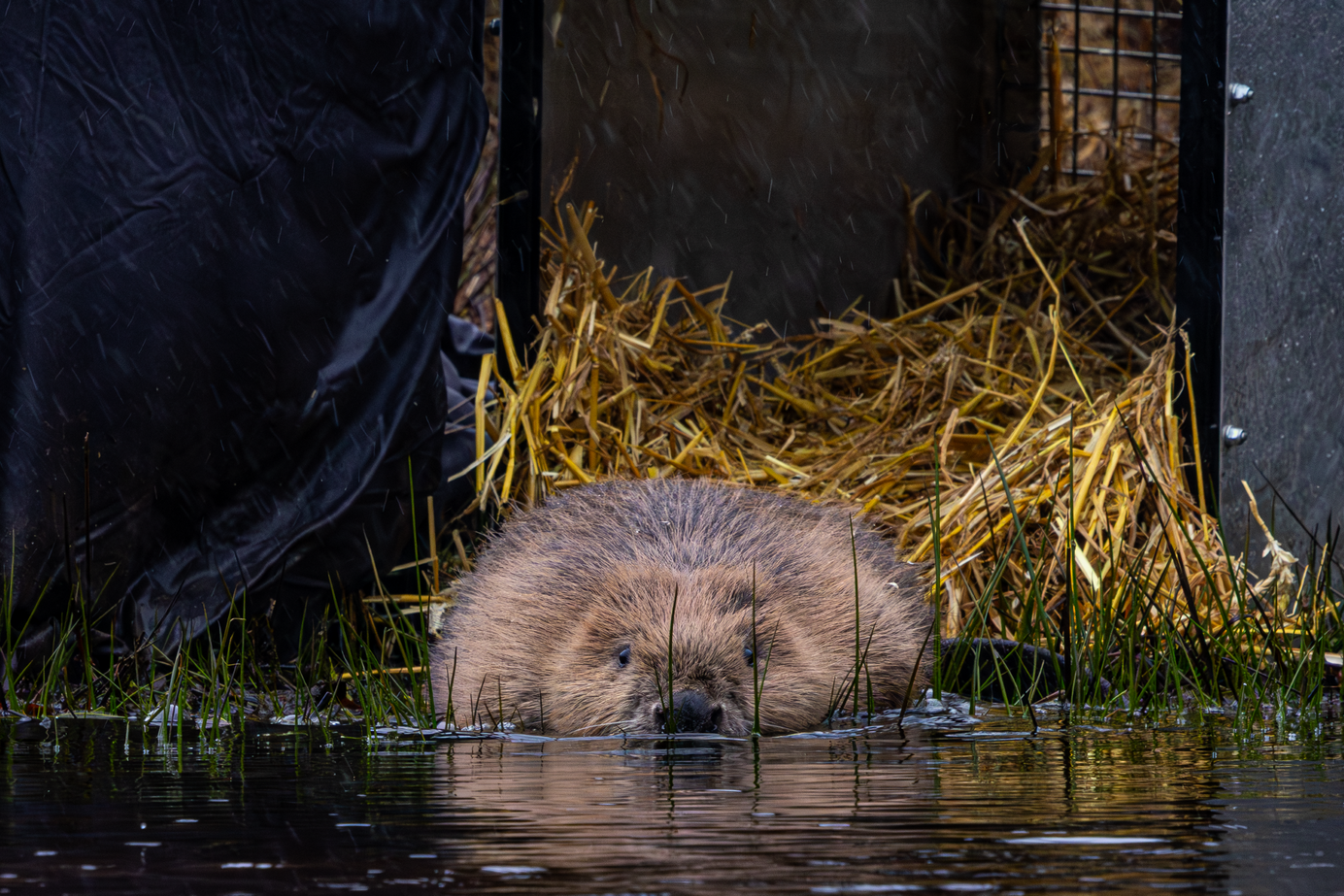
Rewilding | Boris Johnson has promised to “build back beaver” during his much-anticipated speech at the Conservatives’ annual conference on Wednesday. Notably, the Prime Minister endorsed rewilding in his speech, evoking scenes of “untouched, vast moorlands and hills” and saying, “We are going to re-wild parts of the country and consecrate a total of 30 per cent to nature, we are planting tens of millions of trees, otters are returning to rivers from which they have been absent for decades.” ENDS Report noted there was no mention of zero-power carbon, however, and the speech has been criticised for its lack of policy announcements. Environment secretary George Eustice used the conference as an opportunity to praise Jeremy Clarkson and explain the new agricultural subsidy system; he also addressed a reception hosted by the British Association for Shooting and Conservation (BASC) and the Angling Trust. Meanwhile, environment minister Rebecca Pow revealed that she’d been “rebranded” as minister for nature recovery.
Farming | The NFU is urging the government to delay reductions to existing agricultural subsidies amid the “perfect storm” of challenges currently impacting the farming sector, including a shortage of farm workers. Direct payments in England are due to be phased out over a seven-year period starting this December, with some elements of the new Environmental Land Management (ELM) scheme introduced next year. Environment secretary George Eustice, however, does not appear keen to revisit the government’s plans; the current system “achieved nothing more than inflated land rents and input costs, while preventing farmers from retiring and new entrants getting access to land,” he said. The news was covered by Farmers Weekly, Farming UK and Eastern Daily Press. Also this week, senior government official Dieter Helm, chair of the Natural Capital Committee, said the ELM scheme does not do enough for the environment, and is in danger of being a “huge missed opportunity”, reports Farmers Weekly.
Sewage | Southern Water has come under fire for releasing raw sewage at more than half of its locations around the southeast coast during a rainy weekend this summer, reports the Telegraph. The company was fined a record £90m in July for deliberate sewage dumping between 2010 and 2015. There were also problems up north, with Northumbrian Water fined more than half a million pounds for discharging sewage effluent into a stream running through Heads Hope Dene in 2017 – a spillage which damaged water quality across a 4km stretch of the watercourse. The news was covered in the Northern Echo.
In other news:
- Children are to plant 17,000 oak trees in Glasgow ahead of COP26, reports the Independent.
- Numbers of butterflies in the UK are at a record low, reports the Guardian.
- Welsh wildfires are getting larger and causing more damage every year, reports the BBC.
- Defra has set out plans to sustain healthy populations of honeybees across England and Wales.
- Hedgerows are “sexy and important”, according to Defra minister Victoria Prentis.
Across the country
Northumberland | The National Trust has announced a new restoration project at Wallington, using LiDAR technology to assess the hidden features of the historic landscape and using that as the basis for nature recovery. The survey revealed the archaeological remains of old farming practices and 18th century woodlands that were cleared and never replanted. “By basing new planting plans on historic planting schemes, the team is also aiming to create even more habitat benefit as well as restoring lost features of the historic environment,” according to the National Trust. The story was covered by Countryfile and the BBC.
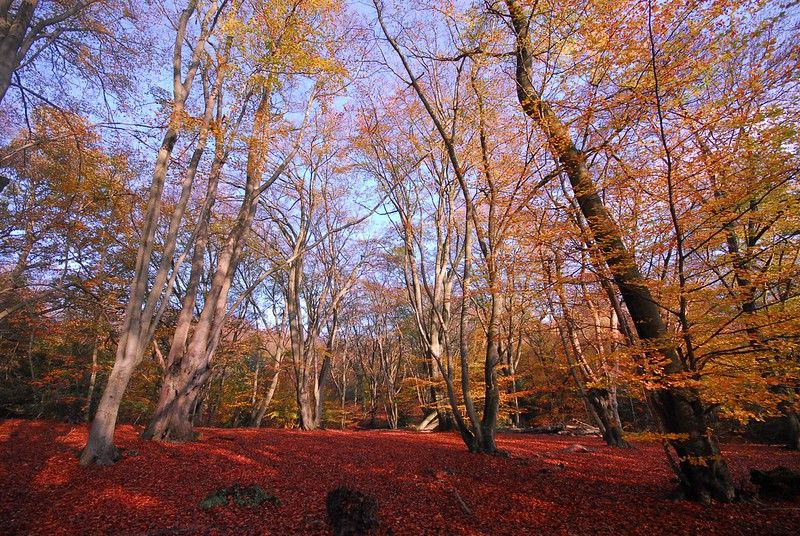
London | The biodiversity of Epping Forest is being damaged by commercial fungi foragers, according to the City of London Corporation (CLC), which owns and manages the forest. In one recent incident, a person was caught with a 49kg haul, equivalent to multiple large black sacks. “Their irresponsible actions are damaging the green lungs of London and spoiling the enjoyment of visitors,” said Graeme Doshi-Smith of the CLC. “Our job is to protect the future of this ancient woodland which is of national and international conservation importance.” The mushrooms are protected under Epping Forest byelaws, and the CLC has prosecuted 27 people for fungi foraging since 2014. The Epping Forest Guardian covered the story.
Salisbury | The Great Bustard Group has saved 13 bustard eggs from a field in Wiltshire due to be harvested, reports the BBC. Great Bustards were hunted to extinction in the UK in the 19th century, but there are now around 100 birds on Salisbury Plain due to a breeding project at Cotswold Wildlife Park. The rescued eggs will now be sent for incubation, before being released as chicks in the coming weeks.
Elsewhere:
- Norfolk Council are dimming street lights after a study demonstrated that LED bulbs are harmful to insects, reports the Eastern Daily Press.
- A government working group is considering areas of Allerdale, Cumbria, for a Geological Disposal Facility for radioactive waste – though it has excluded the Lake District from its search.
- Natural Resources Wales has started work to restore three rivers in Snowdonia so they flow more naturally and attract more wildlife.
- Energy company Equinor has delayed plans to expand two wind farms in Norfolk to investigate their impact on seabirds, reports the Eastern Daily Press.
- Diggers have arrived at Bristol’s last working farm despite Mayor Reeves’ pledge to save it, reports Bristol Live.
- The government has protected a ‘biodiverse stretch of coastline’ on the east of the Isle of Man, reports the BBC.
- ‘Rogue’ paddleboarders and kayakers are threatening protected wildlife on a bird sanctuary island in Northumberland, reports the Guardian.
- Campaigners held a rally to protest a proposal for a theme park on a wildlife haven at Swanscombe Marshes in Kent, reports Buglife.
- Leadshill Estate is considering an appeal over NatureScot’s extension of its restriction on general licenses, reports the Herald.
- Durham City Council have undertaken work to clean the River Wear for both citizens and otters, reports the Northern Echo.
- Scottish Forestry has announced funding for a new broadleaved forest to be grown in Dumfriesshire.
- A World War II airstrip in the Hebrides has been ploughed up to benefit wild birds, reports the BBC.
- There has been discussion of turning a Wirral golf course into an “eco-park” and golfers are furious, reports the Wirral Globe.
- Durham County Council is considering whether to declare an ecological emergency, reports the Chronicle.
Reports
Access | The Wildlife Trusts have released a report outlining how the government’s proposed reforms to the planning system will damage nature and undermine the democratic process. It also sets out the changes that it believes should happen instead, including a call for access to nature to be set in law for the first time, rather than simply existing as “advice” to local authorities. It also recommends a new designation – the Wildbelt – that will protect land in the process of being returned to nature. The report comes at a crucial time, given the rumours that Michael Gove, the new housing secretary, has ordered a rethink of the reforms.
Muirburn | Current muirburn practices are incompatible with Scotland’s net-zero ambitions, according to a report by RSPB Scotland. Muirburn is the practice of burning vegetation to promote new growth, and is mainly associated with managing land for grouse shooting, deer or sheep farming. The report calls on the Scottish government to introduce licensing instead of the voluntary ‘Muirburn Code’ currently in place, and to regulate burning practice more strictly before the start of the next muirburn season in October 2022. It also suggests that burning should be prohibited on deep peat soils, except in exceptional circumstances.
Science
Bees | Honeybees in rural areas travel further to find food than their urban counterparts, reveals a study in the Journal of Applied Ecology. Researchers decoded 2,827 ‘waggle dances’ across 20 honeybee colonies in London and surrounding areas to discover that bees travel an average of 492 metres in urban areas compared to 743 metres in agricultural ones. The research demonstrates that residential gardens in urban areas provide reliable forage resources, but that it is harder for bees to find sufficient food in agricultural areas. The authors conclude that “in the long term, conservation efforts should be primarily directed towards increasing non-crop floral provision in agricultural areas, such as wildflower strips”. The British Ecological Society covered the research in a blog.
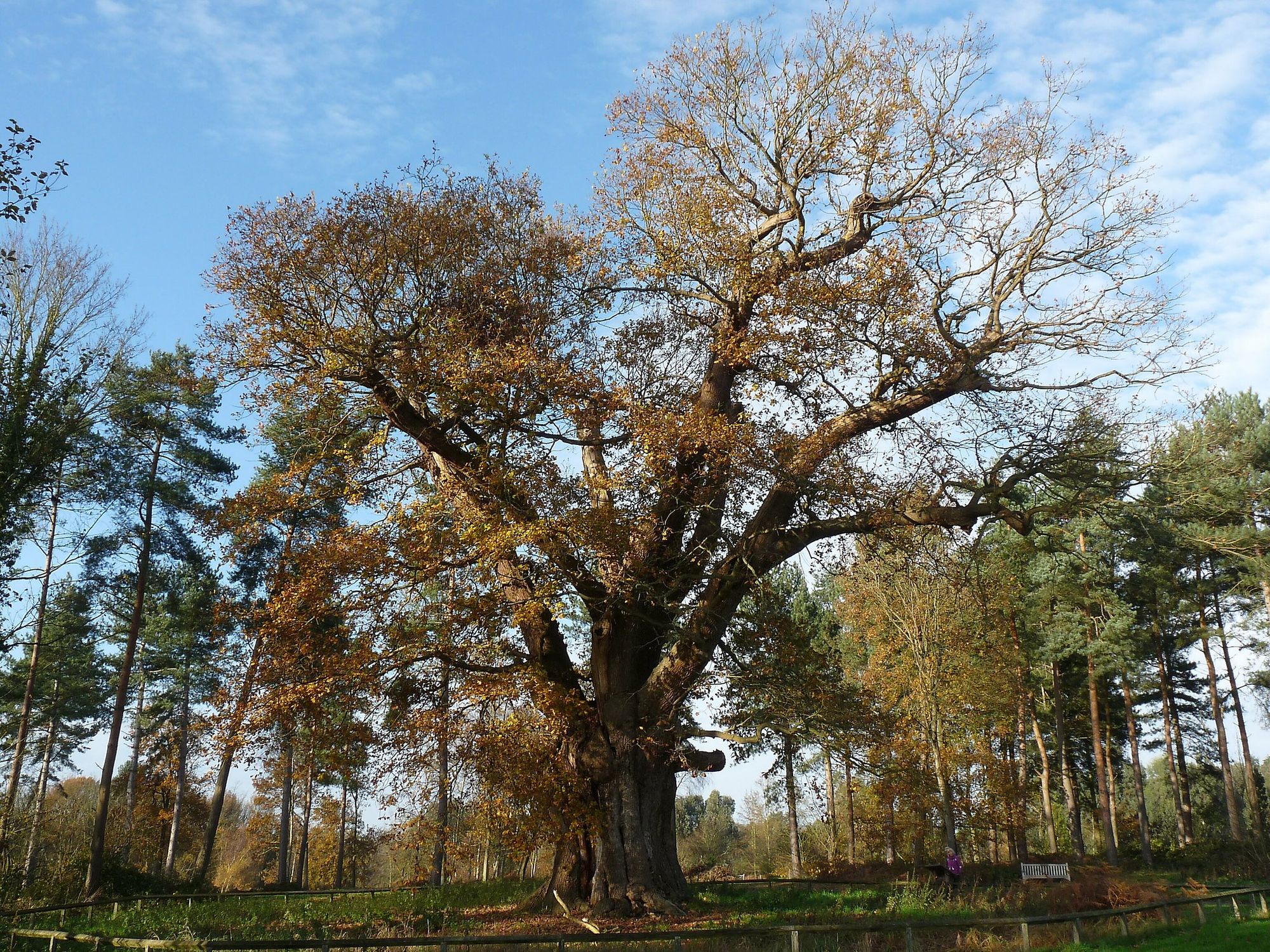
Oaks | Mature trees absorb more carbon dioxide as atmospheric concentrations rise, according to a study by the Birmingham Institute of Forest Research. The researchers conducted a giant outdoor experiment in Staffordshire, which involved bathing an oak forest in increased CO2 designed to replicate expected levels in 50 years’ time. Although increased absorption by forests would not ‘fix’ the problem of carbon emissions, it could buy a few extra years in climate mitigation efforts, according to Professor Rob Mackenzie, director of BIFoR. The study was covered in the Times, and the BBC has a video on the experiment.
Land | When it comes to conserving biodiversity at the same time as feeding global populations, land sparing is better than land sharing, according to a new review of the hotly debated topic. Farming should be as high-yield as possible so that other land can be entirely devoted to natural habitats, writes Andrew Balmford of the University of Cambridge. “Most species fare much better if habitats are left intact, which means reducing the space needed for farming. So areas that are farmed need to be as productive as we can possibly make them," he says. He points out that increased yields needn’t rely on industrial intensification, and that more sustainable options are available.
Driftwood
Health | Analysis in the British Medical Journal outlines why restoring natural habitats is good for human health. It looks at four specific ecosystem services: drug discovery, the regulation of zoonotic diseases, food provision and supporting wellbeing. Penicillin, for instance, was originally sourced from fungi, while aspirin harks back to the bark of willow trees. “We need a curriculum overhaul to incorporate the teaching of biodiversity and ecology in medicine, nursing, public health and other related studies,” the authors conclude.
Lairds | The Scottish Land Commission, a government agency that promotes land reform, has warned that a new breed of “green lairds” risk perpetuating an old model of private land ownership, reports the Times, and that it wants to see profits shared more equally between land and communities. But Scottish Land and Estates pushed back against this characterisation in a separate article. “Whilst many wish to pursue greater fragmentation of ownership, this would actually make it tougher for the Scottish Government to achieve its ambitious objectives,” said Stephen Young, the organisation’s head of policy. The Scottish Farmer covered the story.
Carbon | The RSPB has a blog about its new Carbon Farming Project at Hope Farm in Cambridgeshire, which the charity took over more than 20 years ago. The core aims are to record and reduce the carbon footprint of the farm while examining the impacts on biodiversity. A literature review is already underway, and over the next two years they will experiment with carbon-auditing tools and investigate the impact of agroforestry on biodiversity, soil health, crop yields and profit.
Further reading:
- COVID has led to an unexpected boom in demand for woodland plots, reports the BBC.
- The Cornish ‘wilderness’ is under attack from excessive tourism, according to a local artist.
- Saga magazine has a feature on rewilding efforts in Scotland, focusing on Paul Lister’s ambition to bring back wolves.
Happy days
Books | The climate crisis isn’t fiction, but that doesn’t mean that there isn’t fiction about the climate crisis. Outside Magazine has rounded up 20 novels that deal with a changing planet. “Many are speculative, depicting dystopias induced by eco-collapse and emboldened by corporate greed. Several involve characters dealing with the ramifications of environmental racism... Nearly all include requiems to a lost or dying earth, country, or landscape,” the article says. The list was published as part of a new book club, so if you like discussing outdoor literature, check it out.

Subscribe to our newsletter
Members receive our premium weekly digest of nature news from across Britain.
Comments
Sign in or become a Inkcap Journal member to join the conversation.
Just enter your email below to get a log in link.