Tipping Points & Sustainable Bioenergy
The latest news on nature and conservation in Britain.
National news
Tipping points | The Office for Environmental Protection (OEP), the watchdog set up in the wake of Brexit, has released its first report on the government’s 25 Year Environment Plan. It finds that existing laws are failing to slow the damage to the natural world. "Our rivers are in a poor state, bird and other species numbers are in serious decline, poor air quality threatens the health of many, and our seas and sea floor are not managed sustainably," Dame Glenys Stacey, chair of the OEP, told the BBC. The OEP identifies a number of environmental tipping points – when long-term declines become irreversible and catastrophic – which are fast approaching in the UK, including fisheries collapse, loss of wildlife, and dead rivers. The Guardian covered the news, while Wildlife and Countryside Link urged the government to “heed the warning” of the report.
Election | The Green Party is celebrating its "phenomenal" gains following last week's local elections, where it reached a record high of 547 councillors on 167 councils, with notable successes in South Tyneside, Cumberland, Oxford and Worcester. In Wales, the Greens celebrated their best ever election results by far, Bright Green reported, with the Wales Green Party leader Anthony Slaughter describing it as a “breakthrough moment”. According to Caroline Lucas, writing in iNews, the results demonstrate that the Green Party is offering "big positive solutions" that are lacking in other parties. In the New Statesman, India Bourke argues that the surge was not the result of a protest vote but rather a "slow and steady trend". The BBC covered the Green’s first seat in Coventry, 50 years after the political group was formed in the city. The Guardian and ENDS reported on the Green’s general success.
Woodland | In Scotland, the Woodland Carbon Code (WCC) is to be revised with “tougher new tests” following rapid growth in the carbon market; the country has seen a fourfold increase in the last two years, with over 500 new projects registering, according to Scottish Forestry. Under the WCC, landowners can plant trees to generate offsets, which are then sold on for profit. It is hoped that the new measures will weed out creation schemes which would be financially viable without carbon credits, and help to reduce soaring land prices. Welcoming the new measures, environment minister Màiri McAllan said: “It is natural for carbon standards to evolve as carbon markets develop,” adding that the strengthened tests would encourage species diversity in woodlands, bringing additional benefits for biodiversity. The Scotsman, Farmers Weekly, Farming UK and ENDS covered the news.
In other news:
- Canoeists and kayakers are calling for greater clarity on access rights to rivers and canals amid reports of abuse, according to the BBC.
- The Environment Agency has given full support to Defra’s proposed new targets for nature recovery, despite concerns from environmental organisations.
- Plant diseases are at their lowest levels for years due to an unusually dry spring, reports the Guardian.
- Animal welfare groups have criticised Forestry and Land Scotland for allowing fox hunts to take place in public forests, reports the Ferret.
- Curlews, already in decline across the UK, may face another challenge in the form of fragile eggshells, reports the Guardian.
- The Environment Agency has announced that it will use drones to check for illegal fishing activity.
Across the country
Devon | On Sunday, around 200 people peacefully trespassed in ancient woodland near the Devon town of Totnes to protest the lack of a "right to roam" in the English countryside. The Duke of Somerset owns much of the surrounding woodlands, which remains largely private to the public because it is used for a large pheasant shoot – despite the Duke receiving taxpayer funds under the English woodland grant scheme. The Devon locals shouted, “Less room for pheasants! More room for peasants!” as they entered the off-limits territory. The Guardian, the Times, the Canary and the Daily Mail covered the news; the Guardian also ran a comment piece probing whether mass trespasses could make the Tories reconsider their recent decision to suppress the results of their review into land reform.
On our Mass Trespass of the Duke of Somerset’s pheasant shoot woods, we’ve discovered a mass grave of scores of discarded pheasants, wire mesh fencing, & fly-tipped rubbish.
— Guy Shrubsole (@guyshrubsole) May 8, 2022
We’re here to draw back the veil of secrecy that hides how landowners - not ramblers - trash nature. pic.twitter.com/6h6Djb2wci
Cornwall | The Eden Project has made a u-turn on its decision to install artificial grass at the famous eco-attraction near St. Austell. The fake grass was laid on a children’s play area to stop kids from getting muddy, but quickly faced backlash from visitors and environmentalists who accused the attraction of greenwashing. Campaigners say it is the latest culprit in an endemic of plastic being laid across the UK. After some “soul-searching”, however, the attraction has decided to remove the plastic grass. Cornwall Live and ENDS reported the decision.
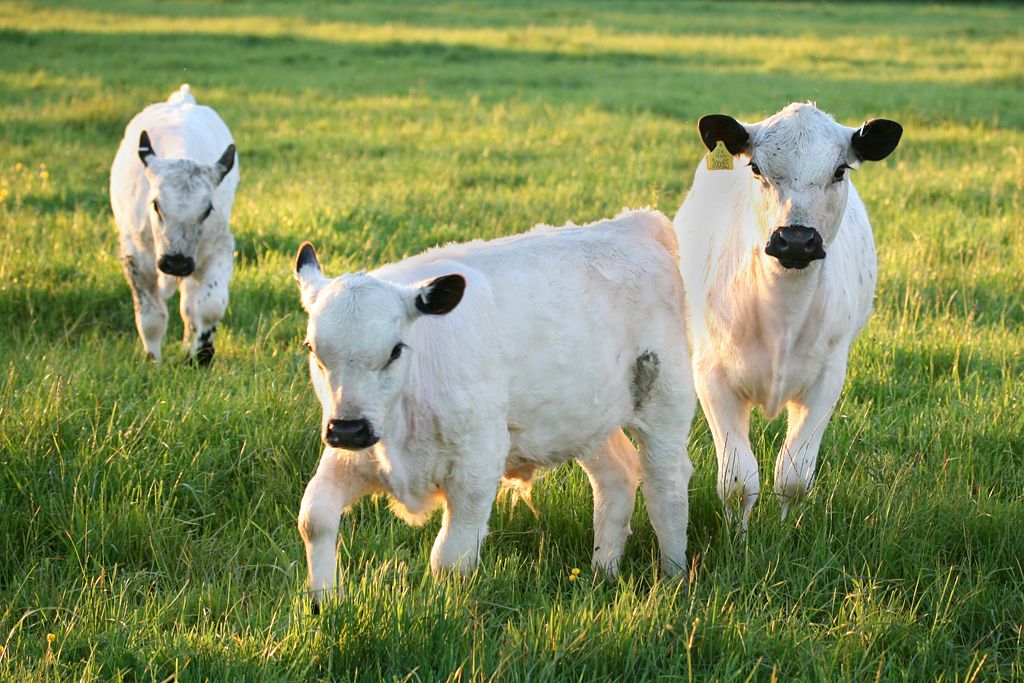
Oxfordshire | The first pedigree British White Cattle calf has been born at Blenheim Estate, reports Countryfile. It is one of seven calves to be born at the Oxfordshire estate in recent days, with another six on the way. The herd of this rare breed of cows was introduced to an ancient oak woodland on the 2,000-acre estate three years ago, with the aim of trampling undergrowth and clearing space for acorns from the oaks. “It means these rare breeds won’t be lost and it’s incredibly heart-warming to see," said head shepherd Tom Locke. "The ancient connection was important to us as our Estate has some of the oldest oaks in Europe, some of which were planted over 1000 years ago during the reign of Henry I.”
Elsewhere:
- A gamekeeper from Wiltshire has been charged in what could be the “largest English raptor persecution case” in terms of number of victims, reports BirdGuides.
- Environmental groups are demanding compensation from the firm behind the Swanscombe theme park application to cover the costs they incurred opposing it, reports ENDS.
- The deadline has been extended for the community buyout of land on Langholm Moor; the Scotsman and the Herald reported on the fundraising efforts.
- Campaigners in Derbyshire are hoping to buy an area of ancient woodland in Crich Chase Wood, reports the BBC.
- Anglian Water has been fined £18k by the government after sewage flooded a river in Yaxley, Cambridgeshire, killing at least 60 fish. The BBC and ENDS reported on the fine.
- Researchers have found high levels of microplastics in rural parts of the River Aire in Yorkshire, reports the BBC.
- The Manx Wildlife Trust has fenced off a section of beach at Cronk y Bing Nature Reserve to minimise disturbance to nesting ringed plovers, reports BirdGuides.
- The John Muir Trust has published its response to the “highly significant” approval of a nine-turbine wind farm on the Sallachy Estate in the Highlands.
- The campaign group Fish Legal has applied for a judicial review of Powys County Council's planning consent for the expansion of a poultry unit, reports the Shropshire Star.
- Farm fields in Lincolnshire are set to be restored to wet fenland by the Lincolnshire Wildlife Trust, reports BirdGuides.
- Orford Ness nature reserve in Suffolk have recruited two new gull officers to help reverse the decline of the lesser black-backed gull, reports the BBC.
- Plans have been approved for a new nature park and protected habitat for great crested newts at Woolston Eyes, south of the River Mersey, reports the Warrington Guardian.
- A family of starlings have set up home in a postbox near Lochinver in the Highlands. Royal Mail said the box will be temporarily out of service until the birds finish nesting and move on, reports the BBC.
- Derby City Council and Derbyshire Wildlife Trust are working to revitalise the city nature reserve next to a business park in Alvaston, as the next exciting piece of the “rewilding puzzle” spreading across Derby.
- A report by the Essex and Suffolk Rivers Trust has found that no rivers in Suffolk currently meet government targets for good water quality, reports the BBC.
Reports
Bioenergy | A report from the RSPB looks at the harm caused by current forms of bioenergy, and suggests alternative nature-friendly sources in the UK. The analysis shows that chopping down trees for bioenergy and sowing biomass crops risks harming both nature and the climate. Instead, the report recommends focusing on sustainable biomass derived from waste products. One option is gas from landfill; another is using sustainable forms of biomass from areas such as nature reserves. On RSPB reserves, for example, material such as reed cuttings from reedbeds, wood from managed woodlands, and gorse and bracken removed from heathlands could be used as biomass. However, the report highlights that the most sustainable form of biomass could only supply up to 4% of the UK’s primary energy in 2050, a lot less than the current 12%. The authors conclude that, as well as using more sustainable forms of biomass, we need to become less reliant on bioenergy overall.
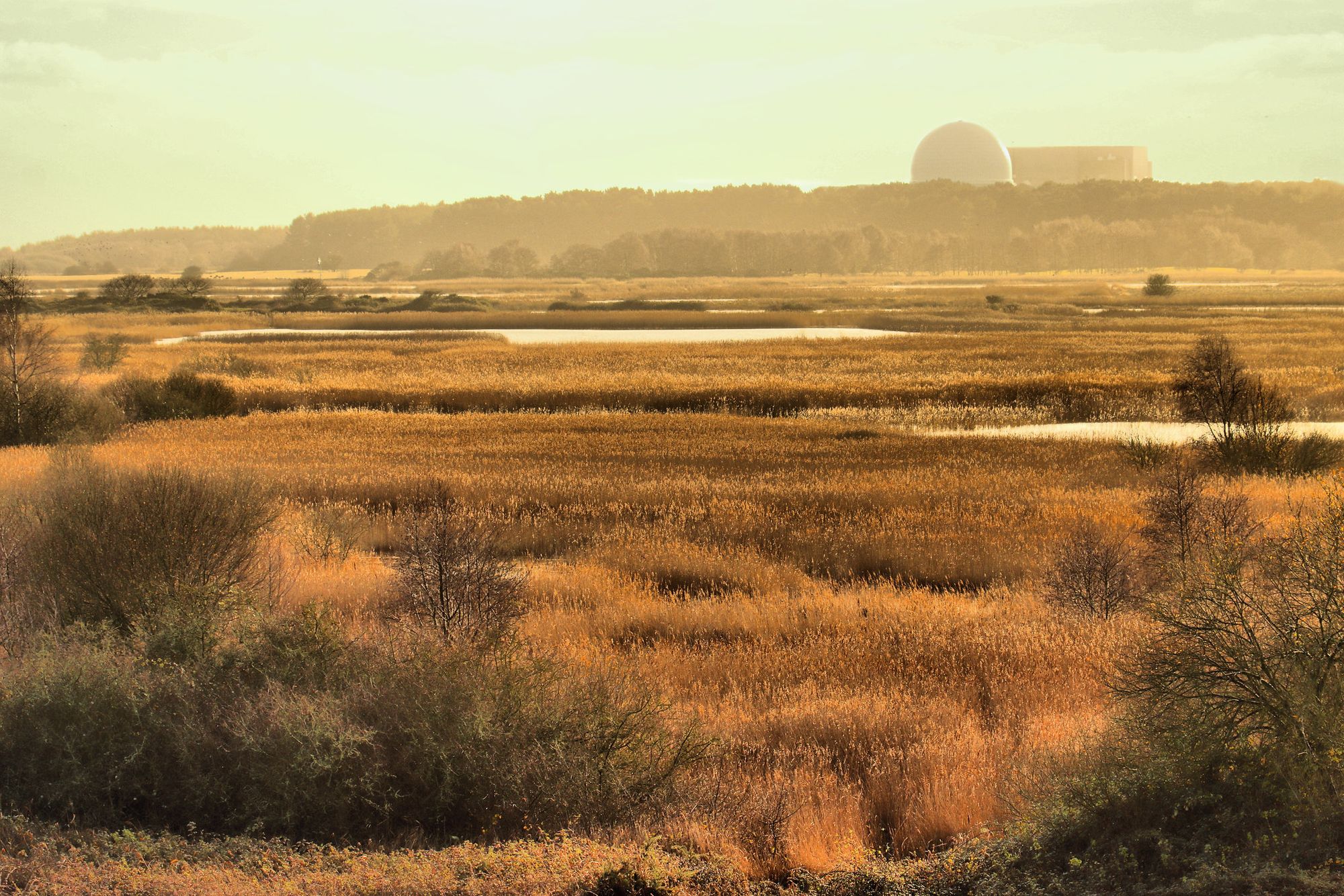
Peatland | A report from Natural England aims to understand the emerging market for peatland carbon finance, considering the opportunities, risks and barriers to a thriving market in England. It shows that private carbon finance can make a significant contribution towards the cost of restoration, especially in lowland areas, but that, overall, peatland restoration is expensive and landowners could face a significant cash flow challenge. To combat this, the report recommends actions including designing new ELMS funding to encourage and complement private carbon finance; introducing loans to help with cash flow problems; providing clarity for buyers about how peat carbon units can be used for net-zero reporting; and raising awareness among landowners about the benefits of restoration and market value of carbon units.
Saltmarsh | Also on carbon markets, this report by the UK Centre for Ecology & Hydrology (UKCEH) assesses the evidence for quantifying blue carbon in natural UK and northwest European saltmarshes. The report was conducted as part of the UK Saltmarsh Code, a pilot project creating a voluntary certification standard to enable saltmarsh carbon to be marketed and purchased by private investors. Researchers from UKCEH, Bangor University and WWT used data from over 30 papers on carbon and greenhouse gas fluxes in natural and restored saltmarshes to determine sequestration rates after restoration. The authors say that the results, which showed high sequestration rates for newly restored marshes, highlight the potential of saltmarsh restoration to not only enhance biodiversity, but also play a role in climate change mitigation.
Science
Coastlines | A paper published in People and Nature examines how people’s perceptions of urban coastlines vary depending on the diversity of species living on the structures. Urban coastal habitats, such as seawalls and other artificial structures, are becoming increasingly common worldwide, and the co-benefits of biodiverse communities thriving on these structures is largely unexplored. Using image-based questionnaires sent to participants across the UK and Ireland, researchers showed that people found images with a rich diversity of species more aesthetically appealing, interesting and calming, particularly at a close-up scale. The authors conclude that managing artificial coastal environments for biodiversity may simultaneously enhance aesthetic, educational and well-being benefits, as well as supporting non-human species.
Diet | Shifting our diets to include more fruit and vegetables and less meat could result in win-win-win outcomes for biodiversity, adaptation to climate change and public health, according to this study, which is yet to be peer reviewed. The paper used Britain as a case study to estimate the potential impacts on biodiversity from converting grazing land to a mix of horticulture and natural land covers. Using distribution models for more than 800 species – including pollinating insects and species of conservation priority – the study determined that the shift would likely result in overall gains for biodiversity, including more species gaining habitable areas of land than losing it.
Agriculture | A study by the James Hutton Institute uses six years of agricultural research collected for the Scottish government to highlight the impact of ecological principles in agriculture on sustainability, resilience, and provision of ecosystem functions. The study demonstrates that diversifying agricultural systems can improve a wide range of important ecosystem functions; reducing tillage and fertiliser, for example, can enhance soil quality over generations. Dr Tim George, lead author of the study said: "By diversifying cropping systems at several scales there is potential to decrease reliance on inputs, provide resilience to abiotic and biotic stress, enhance plant, microbe, and animal biodiversity, and mitigate against climate change by using less fuel and storing more carbon in soils."
Driftwood
Bogs | A visually stunning interactive feature for the New York Times examines the question of who really benefits from saving Scotland’s bogs. While restoring Scotland’s extensive peatlands could help the world mitigate climate change, it could also make a fast-fashion billionaire even richer; Danish multi-billionaire Anders Povlsen is the largest private landowner in Scotland, with some 210,000 acres on 12 different estates. Despite making his millions in fast fashion, an industry notoriously detrimental to the environment, Polvsen could now be “a small part of the solution”, according to Segal, by making profits from carbon credits earned from restoring peatland. “Depending on your perspective,” Segal writes, “he’s either the planet’s ultimate frenemy or the kind of executive that the environmental cause will never succeed without.” Commenting on Segal’s article, Vicky Allan for the Herald voices concerns over how the carbon capture market will develop, and whether Scots will wish that local communities had retained some of the wealth attached to the credits. An article in the Financial Times also looks at how carbon capture pitches smallholders against big businesses looking to boost their environmental reputation.
Soil | “Take a step back and you will see something that transforms our understanding of life on Earth.” So says George Monbiot in an excerpt published in the Guardian from his upcoming book Regenesis: Feeding the World Without Devouring the Planet. The excerpt focuses on the “true wonder” of soils – the very ground beneath our feet, which many people view as little more than crushed rocks and dead plants. In fact, it is an incredibly complex biological structure, according to Monbiot, built by living creatures to secure their survival. We will need a new understanding and appreciation of soil, claims Monbiot, if we are to revolutionise farming and transform not only our food system but our entire relationship with the living world.
Insects | Although declining insect numbers is hardly a good sign, we should be wary of the hyperbole of impending doom around “insectageddon”, according to Jane Hill, professor of ecology at the University of York and president-elect of the Royal Entomological Society. In her comment piece for the Guardian, Hill argues that patterns of change for insect numbers are more complex than statements pointing to catastrophic declines might lead one to believe. The Times also published its view on declining insect populations, but its leading article took a different tone, stating that the precipitous “decline in insect life is a threat to the survival of humans and all living species”. Meanwhile, the Scotsman ran an article hailing the mighty midge, and the Scot on a mission to save insects and prevent “utter disaster” for the planet.
Further reading:
- A feature in the Guardian looks at why churchyards are some of our wildest sites in nature. Inkcap Journal explored this subject last year in our feature on rewilding death.
- Also in the Guardian, Patrick Barkham reflects on the surprise return of Britain’s loneliest bat, and asks whether there is any hope of a future for the greater mouse-eared bat in the UK.
Happy days
Paper | Check out this short BBC video showcasing the nature-inspired artwork of JR CHUO, a 19-year-old from Suffolk. The Cambridge University student has been using traditional Japanese paper cutting techniques to create pieces inspired by coral reefs, which he hopes in turn could help replace reefs damaged by coral bleaching and raise awareness of climate change. Each piece consists of 2,000 to 20,000 hand-cut shapes.

Subscribe to our newsletter
Members receive our premium weekly digest of nature news from across Britain.
Comments
Sign in or become a Inkcap Journal member to join the conversation.
Just enter your email below to get a log in link.