Sycamore Gap & State of Nature
The latest news on nature and conservation in Britain.
Welcome to Inkcap Journal, a newsletter about nature and conservation in Britain. Not a member? Sign up for a 30-day free trial.
National news
Biodiversity | The government has delayed implementing legislation which requires developers to be “nature positive”. The Biodiversity Net Gain (BNG) policy was approved as part of the 2021 Environment Act, and was due to come into effect in November this year. Under the policy, developers must ensure that the natural environment is left in a better state than before, using a metric to calculate the value of various habitats. Now, Defra has announced that the legislation will not be in place until January 2024, and will only mandate a 10% net-gain. Environmental groups have criticised the delay, with the Wildlife Trusts calling it “another hammer blow for nature”, and adding that they wanted net-gain to be set at 20%. The BBC and ENDS covered the news. Meanwhile, the Guardian reports that MPs and campaigners alike are gearing up to oppose the government’s plans to scrap nutrient neutrality rules for housebuilders.
Farming | Over half the British public think the next government should put more money toward nature-friendly farming, according to a poll of UK adults. The research, commissioned by the Nature Friendly Farming Network and Sustain, was designed to coincide with the political party conference season. Results also showed that 55% of people think the government should take action to change farming because of climate change, while 58% said that tackling river pollution caused by agriculture should be a priority. Martin Lines, CEO of the NFFN, said the results “demonstrate a clear public appetite for a farming transition which addresses many of the environmental challenges we face today”, and called for a “clear vision and the political will” to execute that transition. FarmingUK covered the research. Meanwhile, Craig Bennett, CEO of the Wildlife Trusts, has called on the government to invest in the new farm environment schemes, which are a “shadow of their original promise”.
Oil | The UK oil and gas regulator has given the go-ahead to develop Rosebank, the UK’s largest untapped oil field, off Shetland. The government said the decision would raise billions of pounds and make the country “more secure against tyrants like Putin”, but the move has sparked a fierce backlash from environmental groups. Green party MP Caroline Lucas called it “the greatest act of environmental vandalism in my lifetime”, while Chris Packham tweeted that it was “no less than an act of war against life on earth”. The field has the potential for 500m barrels of oil, according to the Guardian, which, when burned, would emit as much carbon dioxide as running 56 coal power stations for a year. Scotland’s first minister, Humza Yousaf, criticised the decision, while Wales’ climate change minister, Julie James, said it “mortgaged the souls of our children and grandchildren”. The news was widely covered, including a scathing editorial from the Guardian.
In other news:
- Research by the Wildlife and Countryside Link and the Rivers Trust shows that harmful levels of neonicotinoid pesticide can be found in rivers across England.
- The lack of a post-Brexit environment watchdog in Wales has been criticised by senior Senedd members, reports the BBC.
- Analysis by the Ferret has revealed that fifty of Scotland’s 89 designated bathing waters breached the safety limits for sewage content this summer. The Courier and ENDS covered the news.
- Defra is running a public consultation with members of the fishing industry to inform a plan to ensure crab and lobster are caught sustainably, reports the BBC.
- In a win for campaigners, coastal waters and estuaries have been added to the government’s plans to tackle storm overflows, reports ENDS.
- Three species have been added to the BOU’s list of British birds, bringing it to 633 species, reports BirdGuides.
- Defra has announced £25m in funding for projects that use nature to protect communities from flooding.
- NatureScot has distributed £3.6m to 27 projects across Scotland to allow them to scale up their conservation work, reports the Courier.
- Defra has brought forward changes to the Levelling Up Bill to better protect England’s chalk streams.
- The government has raised its estimate of the cost of ending sewage spills by 2050 to £60bn, reports the Times.
- Natural England has awarded shares of £14.5m to a range of projects helping England’s most threatened species, reports BirdGuides.
- Hundreds of birders have rushed to see a record-breaking number of rare North American songbirds, which were blown to the UK by the aftermath of Hurricane Lee, reports the Guardian.
- An ENDS article summarises the key points for nature from the Liberal Democrats party conference.
- On Thursday, after the release of the 2023 State of Nature report, campaigners gathered outside Defra headquarters in London to protest for better nature protections.
Across the country
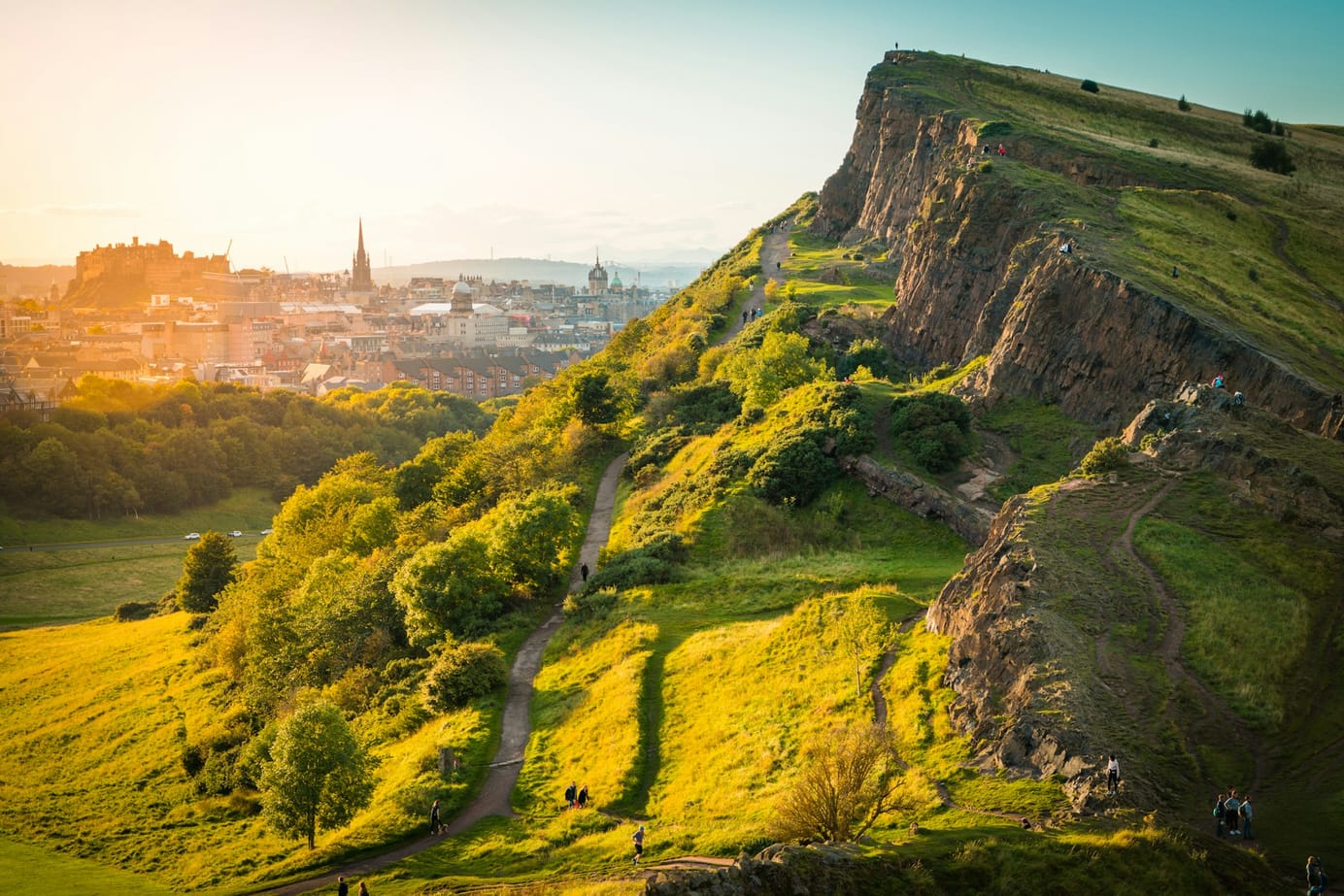
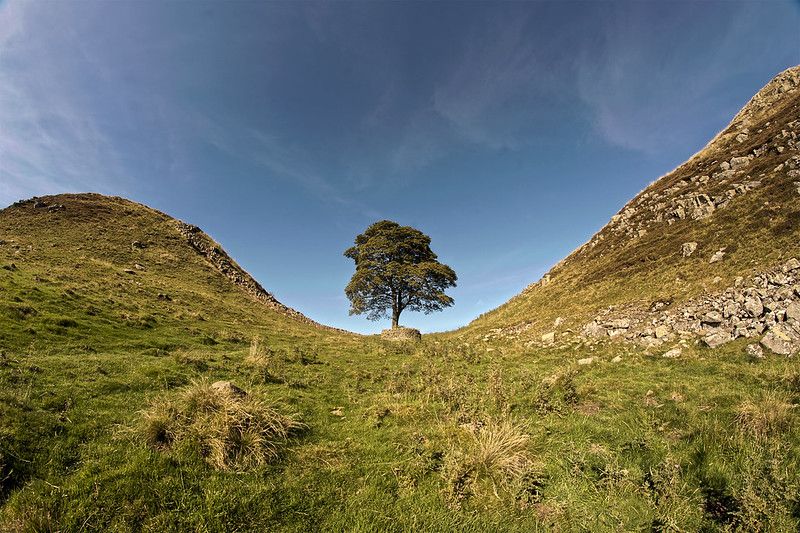
Northumberland | The felling of the Sycamore Gap tree has prompted widespread horror and disbelief, particularly among residents of the northeast, where it had stood proud for hundreds of years. The iconic tree grew in a natural dip in the landscape alongside Hadrian’s Wall, and featured in the film Robin Hood: Prince of Thieves. Northumbria Police have launched a full investigation into the act, which has already led to the arrest of a 16-year-old boy. Northumberland National Park Authority said it would issue more details when they became known, and asked the public not to visit the site. The BBC was among the many outlets to cover the story. The news caused an outpouring of grief by those who had visited, photographed and cherished the famous tree over the years.
Sycamore Gap in June 2021. Now gone forever. A sick act of vandalism. This is so depressing. pic.twitter.com/MDsnXUA1ii
— Prof Jamie Woodward (@Jamie_Woodward_) September 28, 2023
Flintshire | Natural Resources Wales is working to re-establish Calaminarian habitat – grassland that is tolerant of heavy metals – on Halkyn Mountain in Flintshire. That the rare habitat existed there in the first place is thanks to the history of mining in the local area, with plants like spring sandwort alongside heavy metal-tolerant mosses and lichens springing up on the old spoil heaps. In recent years, however, the vegetation has come under threat from grazing and illegal dirt biking. The conservation work will involve scraping back surface vegetation to expose the bare ground, in the hope that the metal-tolerant plants will re-seed from nearby patches of undamaged habitat.
Chilterns | Strong numbers of the Downland Plume moth have been found at Winchester Wood in Buckinghamshire, following efforts to restore the chalk grassland that the invertebrate needs to thrive. After an apparent absence of fifty years, the species was assumed to be extinct in the UK, but it resurfaced again in the Chilterns in 2013. However, there were only a few more sightings until this year, when numbers suddenly exploded; during one survey, members of the Upper Thames Branch of Butterfly Conservation counted 16 in a single hour. The team have high hopes that the Duke of Burgundy butterfly, another rare species, might soon follow, as numbers expand from a site nearby.
Elsewhere:
- Woolsington Parish Council in Newcastle is clearing half a million invasive plants from the ponds and upper reaches of the Ouseburn river to improve its health, reports Chronicle Live.
- The creation of a new nature reserve will act as a ‘green beating heart’ for Norwich, which has the fewest public footpaths of any city in England and Wales, reports the Guardian.
- The RSPB is seeking volunteers to help natterjack toads, one of the UK’s rarest amphibians, start breeding at a reserve in Cumbria, reports the BBC.
- A hoopoe pair bred in Leicestershire this summer, marking the first proven breeding record for Britain since 1996, reports BirdGuides.
- ‘Right to Roam’ campaigners hosted a mass trespass on the English-Scottish border this weekend, reports the Yorkshire Post.
- Dozens of salmon and trout have died in the River Spey, potentially due to low oxygen levels, reports the BBC.
- There is currently an outbreak of myxomatosis in wild rabbits at South Walney Nature Reserve in Cumbria.
- Plans to expand a series of public artworks in a Yorkshire forest are being reexamined after concerns over the impact to protected habitat, reports the Yorkshire Post.
- Reserve managers are asking visitors to Loch Leven to avoid water sports to help protect the internationally important wader birds present over winter.
- Breckland Council is planning to build houses at 24 different locations, but their proximity to stone-curlew habitat may see them scrapped, reports BirdGuides.
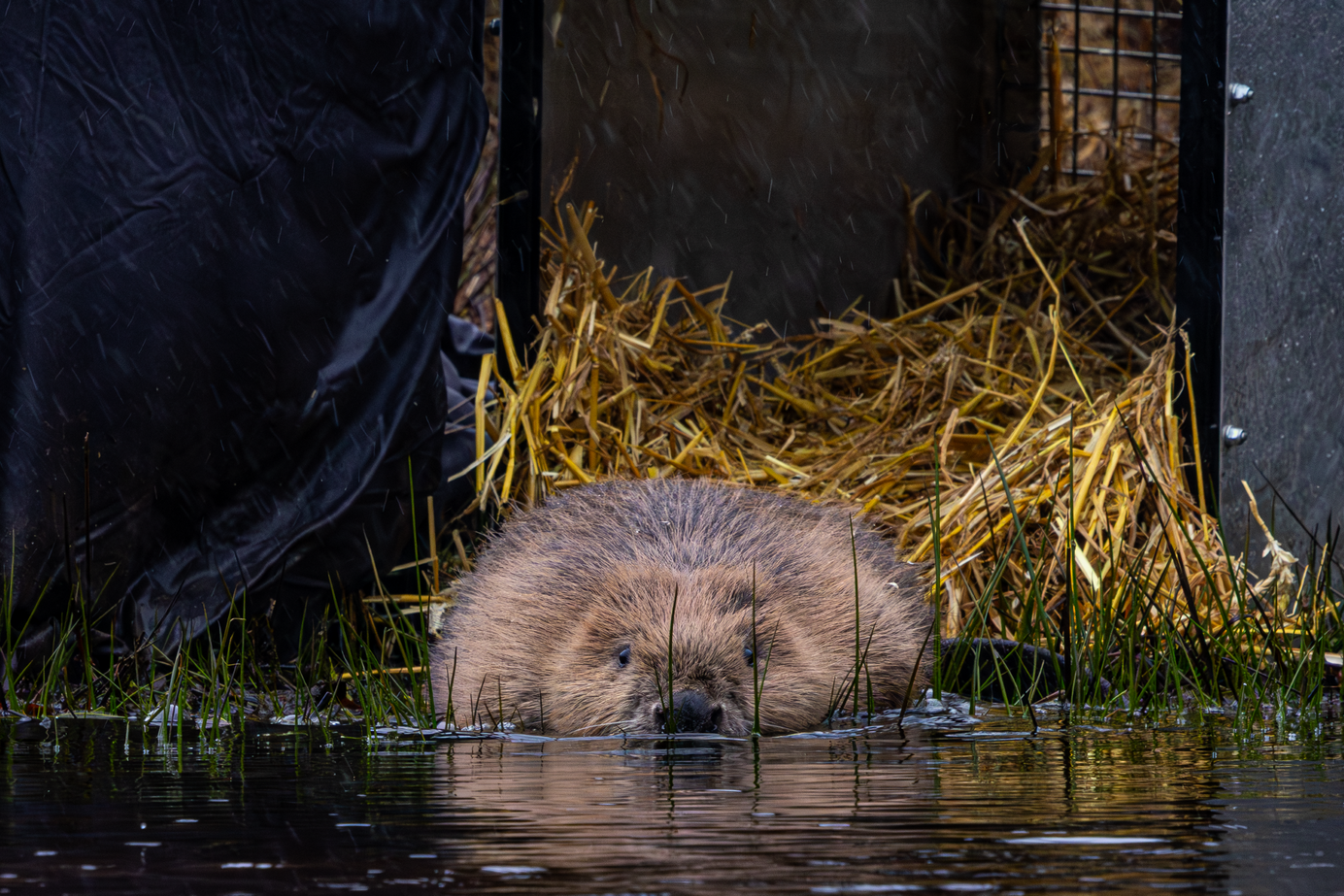
- NatureScot has approved a licence from Forestry and Land Scotland to relocate beaver families to reinforce the current populations in Knapdale, Argyll and Tayside, reports the Herald.
- A Eurasian spoonbill colony in Norfolk has had another record breeding season, reports BirdGuides.
- Natural England has awarded Leicestershire County Council £77,000 to help residents provide nesting sites for swifts, reports the BBC.
- Experts at the University of Gloucestershire are undertaking research into whether the sounds of nature can benefit care home residents, reports the BBC.
Reports
Nature | The latest State of Nature report, published every three years, paints a bleak picture of biodiversity in the UK. Nearly one-in-six species is at risk of extinction, with that number climbing to 43% among bird species. Amphibians and reptiles are also highly threatened, with 31% at risk of disappearing, while 28% of fungi and lichen species are on the brink. The report is produced by a collaboration of over 60 partners, using the latest data from biological monitoring and recording schemes to provide a comprehensive benchmark. It argues that agricultural land use and climate change are the two biggest drivers of wildlife decline, along with unsustainable fishing and marine development in the ocean. However, there is small hope amid the gloom: the authors highlight that conservation actions are delivering results, from large-scale restoration projects such as Cairngorms Connect to the targeted recovery of species such as natterjack toads. Beccy Speight, chief executive of the RSPB, said: “We need to move far faster as a society towards nature-friendly land and sea use” or else continue to face declines, “with huge implications for our own way of life.” The report was widely covered by national outlets, with commentary from the Wildlife Trusts, the RSPB and others. There was separate coverage of Scottish results – including drastic declines in seabirds – and of Wales.
Reintroduction | A report from Natural England shows that reintroduction is not just about bringing back the big ticket creatures – the wolves and the lynx – but rather repopulating the British landscape with a whole host of species that have been lost over the years. The report is a compilation of case studies, featuring invertebrates, birds, mammals, amphibians and even plants that have recently been returned to the wild. It was conceived as the first of many such reports, and Natural England is now requesting further case studies – including projects that failed or faced difficulties – in order to provide a useful reference for future projects. Separately, Scotland: The Big Picture has published a report outlining ten reasons for bringing back the lynx, which have been summarised in a separate blog by Peter Cairns, the organisation’s director.
North | Publicly accessible urban green spaces are worth at least £2.7 billion per annum in the North, according to an economic evaluation commissioned by Nature North. This figure comprises the contributions of of recreation, physical and mental health, air quality regulation, carbon absorption, food production and urban cooling. The organisation published another report at the same time, in tandem with the National Trust, on the wider value of northern urban green space, including recommendations on how to ensure these places fulfil their potential rather than falling into decline. Based upon these findings, and in tandem with cross-sector leaders that were engaged in the research, the organisation is now looking into next steps for action.
Science
Insects | Weather is the main driver for the decline and rise of insect biomass in central Europe, according to a study in Nature. Researchers from Germany have re-analysed 27 years of biomass data, and tested seven statistical models linking changes in insect numbers with different variables, from habitat change to the weather. They found that models involving weather predicted biomass patterns better than those without, and further that they could predict biomass changes elsewhere using weather variables only. This suggests that instead of agriculture and urbanisation – often cited as the drivers of insect decline – weather may be a more important factor, amounting to “another call for action to limit climate change”. However, not all researchers are convinced by the results: the New Scientist covered the reaction. “It’s hard to imagine that the group as a whole responds uniformly to those very specific weather anomalies,” said one.
Earthworms | It is well-known that earthworms are critical to soil health, but how much do they actually contribute to agricultural production? A study in Nature Communications quantifies the impact of earthworms on global production of key crops by analysing maps of their abundance, soil properties, and crop yields, together with literature on earthworm-yield. The results suggest that worms contribute to roughly 6.5% of grain production, and 2.3% of legume production – equivalent to more than 140 million metric tons of crop annually, making them important drivers of global food production. The authors conclude that investing in agroecological policies to support earthworm populations could contribute significantly to sustainable agriculture goals.
Greenspace | The beneficial effect of greenspace on mental health is well-documented, but its varying effect on different people is less understood. A study in Landscape and Urban Planning used a nationally representative survey to compare the effect of public greenspace for those with and without a private garden in Britain, and found that the predicted positive relationship depended largely on gender and age. Specifically, domestic gardens had a greater effect on men’s mental health than public parks, whereas for women, access to public parks had a positive impact regardless of garden access. For older women without access to public greenspace, however, domestic gardens proved beneficial. The authors recommend that the provision of private gardens is considered within greenspace guidance and policy.
Driftwood
Stoats | It is not often that conservationists target the complete eradication of a species, but that is the plan on Orkney, where an introduced population of stoats is causing havoc for the local wildlife. The little mustelid didn’t exist on the islands at all until 2010, when they suddenly appeared and started to spread. A monumental effort is now underway to reverse the damage – involving 40 full-time staff, 96 volunteers and six specialist dogs – thanks to a partnership between RSPB Scotland, NatureScot and Orkney Islands council. But more funding is required for them to see the job through. If all goes to plan, the stoats should be gone entirely by 2027. The project is the subject of a feature in the Times.
Museums | A feature in Reasons to be Cheerful delves into how museum collections across the world are being put to use to examine environmental change across the centuries. Collections at the Natural History Museum in London, for instance, have been employed to track changes in where pangolins live and analyse the rising asymmetry in bumblebee wings in response to rising environmental stressors. Researchers are working to make these chaotic collections more accessible to researchers, including through digitisation. The feature is worth checking out for the visual insight into how museums look behind-the-scenes: there are images of eggs, butterflies and filing cabinets galore.
Geese | In a short but beautiful piece for the Big Issue, Norfolk-based conservationist Nick Acheson writes about the impact of climate change on his beloved geese. These birds arrive in giant flocks on the shores of his county in the early autumn, leaving behind the Arctic tundra to feed upon the marshes and within fields of sugar beet. But warming winter temperatures have caused their numbers to fall steeply. “Soon, perhaps, these wild stars of the Arctic sky will come to us no longer; no longer bringing tundra sagas in their voices,” he writes. “Our winters – though milder – will be bitter for their absence.”
Further reading:
- A NatureScot blog discusses the various benefits of farming with nature.
- An article by Reuters takes a look at resistance to green policies around Europe. Britain is top of the list.
- A blog by the Applied Ecologist discusses recent research into the effects of drought in Scotland on specialist habitats and species.
- A feature in the Financial Times showcases the top entries in this year’s Prix Pictet, the photography prize focused on sustainability. The theme explores the alchemy between people and their environment.
- Carbon Brief has an in-depth Q&A explaining the nuts and bolts of biodiversity offsets.
- A BBC feature investigates how farmers are increasingly relying on tech as bees struggle to pollinate their crops.
- Another NatureScot blog examines the history of the ancient yews of northern Scotland.
- In the Conversation, this feature introduces five jellyfish species you may be more likely to encounter in the UK’s warming seas.
- A blog by the Wildlife Trusts explains an unlikely connection between the Trusts and the junior doctor strikes.
Happy days
Ploughing | On a weekend earlier in September, a swathe of farmland in Norfolk was alive with more than 100 vintage tractors. Their purpose: a ploughing match. Hosted annually by the East Anglian branch of the Vintage Tractor and Engine Club, the contestants’ ploughing skills are judged on their straightness, firmness and levelness of their furrows. The competition raises funds for charity, but it’s also about celebrating a rural passion and the local legacy of the machines, according to photographer Harry George Hall. “It is a real skill, it is an art,” he says. “In modern farming, that skill is disappearing.” You can see images of the spectacle for Hall’s personal project, ‘The Sow Must Go On’, in this BBC article.

Subscribe to our newsletter
Members receive our premium weekly digest of nature news from across Britain.
Comments
Sign in or become a Inkcap Journal member to join the conversation.
Just enter your email below to get a log in link.