Swift Bricks & Ancient Whales
The latest news on nature and conservation in Britain.
National news
Swifts | A proposal to include at least one ‘swift brick’ in every new home has been rejected by Labour at the committee stage of its planning bill. The amendment would require developers to provide a £35 hollow brick for swifts, house martins, sparrows and starlings to nest in. Despite Labour having supported the amendment when it was tabled in 2023, housing minister Matthew Pennycook told the House of Commons that the government was ‘not convinced’ that legislating mandatory wildlife features is the ‘right approach’. Hannah Bourne-Taylor, who campaigned for the proposal, said there appeared to be ‘no logic’ to the government’s opposition when the amendment matches Labour’s ambition of creating win-wins for the economy and nature. Meanwhile, Labour councillor Alan Quinn wrote a letter to the Guardian calling it a ‘myopic decision’ and urging his party to make a swift U-turn. The Guardian reported the news. Separately, Baroness Batters – who is leading a government review of farming – has said every new housing development should have an allotment, reports the Times.
Biodiversity | The government has launched a consultation proposing reduced Biodiversity Net Gain (BNG) requirements for small- and medium-sized building developments in England. BNG became mandatory as part of the 2021 Environment Act, and it means developers must deliver a 10% improvement in biodiversity for any build to compensate for the loss of nature. The proposals would ease BNG requirements for SME developments – which account for more than 70% of all housing developments – and give planning officers rather than councillors the power to approve them. Announcing the plans, Angela Raynor denied she was compromising on environmental protections, instead calling the move ‘pragmatism’. Environmental organisations including the WCL and Wildlife Trusts have heavily criticised the proposal, with the latter calling it ‘another appalling example of the government breaking its promise to put nature at the heart of housebuilding’. The BBC and ENDS reported the news.
Park | The Scottish government has dropped its plans to create Scotland’s third national park in Galloway and Ayrshire. The proposals, which could have seen the area join the Cairngorms and Loch Lomond and the Trossachs, proved contentious, with a large-scale campaign launched in opposition. Rural Affairs Secretary Mairi Gougeon said she realised that the decision would be ‘very disappointing’ for some, but the consultation had raised ‘really important issues that local people care deeply about’. She also revealed that 57% of local responses to the consultation opposed the proposal, while 40% supported it. Concerns included ‘another layer of bureaucracy’ overriding local wishes. Meanwhile, the Galloway National Park Association said the decision was ‘a big loss for our countryside and wildlife, and everyone living in the region’. The BBC, ITV and Herald reported the news.
In other news:
- The Guardian has reported that funds for nature-friendly farming will be cut in the UK’s upcoming spending review. The NFU warned that any such cuts would mean the government ‘effectively giving up on its own environmental targets’.
- A report by Open Seas has accused the Scottish government of allowing ‘destructive’ fishing practices within protected areas, reports ITV and the Herald.
- The government’s recently released national peatland map has been ridiculed by locals and farmers for extensive inaccuracies, reports the Times.
- The Beaver Trust is urging Natural England not to limit the number of approved licenses for wild beaver releases in England.
- Farmers were responsible for an unprecedented number of pollution incidents in English rivers last year, reports the Times.
- Company directors who cause damage to nature could face jail under the proposed ecocide bill in Scotland, reports the Guardian.
- The chief executive of Dartmoor National Park Authority has urged the government to look at extending wild camping rights across other national parks, reports the Times.
Across the country
Skomer | The Wildlife Trust of South and West Wales has counted a record number of puffins on Skomer island off the Pembrokeshire coast, despite declines in global populations. The Trust counted 43,626 puffins on Skomer this year, which is protected by its isolation from predators such as rats, cats and foxes, and also from mainland levels of human impact. Staff said the record number was a ‘conservation success story’, and likely linked to an abundance of food in the wider area, since plenty of fish for chicks results in high breeding success. Visitor officer Rob Knott said the team are ‘cautiously optimistic’ about the improved numbers, but added that the species is in steep decline elsewhere, making the monitoring work of the Trust ‘absolutely vital’. The BBC and Wales Online reported the news.
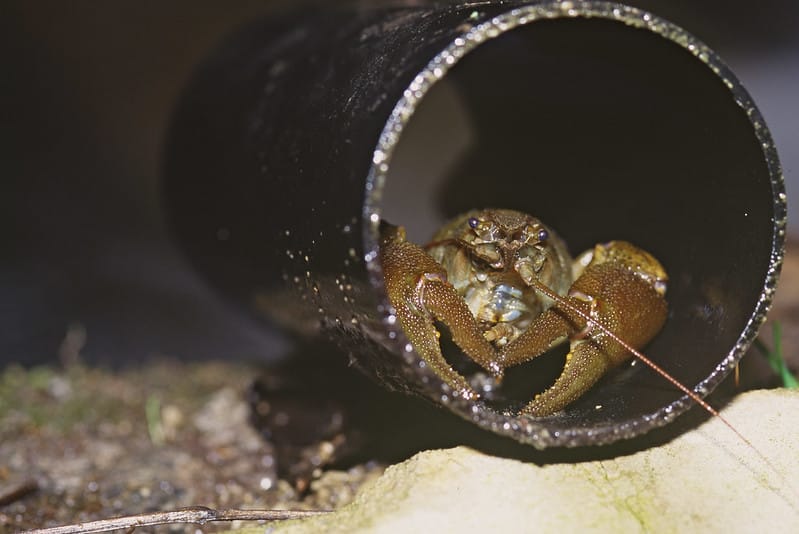
Staffordshire | The Midlands Crayfish Partnership has successfully relocated a group of white-clawed crayfish to a protected site in Staffordshire, helping to safeguard dwindling numbers of the UK’s only native crayfish species. The translocation effort began when conservationists went to collect 12 berried females (females carrying eggs) from a lake in Derbyshire, only to discover nearly 200 individuals – a surprisingly large population – along with three American signal crayfish, an invasive species that carries crayfish plague. The relocation quickly turned into a rescue operation, with the team ferrying native crayfish to quarantine facilities at the National Sea Life Centre in Birmingham.The team then released the native crayfish into a protected site in a remote upland stream, with the aim of establishing a self-sustaining breeding population. The Express & Star reported the story.
Yorkshire | A partnership between the RSPB and Whale and Dolphin Conservation has named Yorkshire’s Bempton Cliffs as the first ‘Shorewatch’ site in England. Shorewatch was first launched across Scotland in 2005, and it organises volunteers to carry out ‘structured watches’ to monitor marine mammals. Seabirds have long been the stars of the show at Bempton Cliffs – with over half a million nesting there each year – but Shorewatch will focus on spotting minke whales, dolphins, harbour porpoises, and grey and harbour seals. The WDC said that the 300ft cliffs give an excellent vantage point of the sea, and the data gathered will help strengthen understanding of how cetaceans are using the English coastline, and therefore how to best safeguard them. It added that the project also aims to ‘inspire people to care about marine life on their doorstep’. The BBC reported the news.
Elsewhere:
- Conservation company Celtic Rewilding is looking after two baby white storks: the first to be born in the west Midlands in more than 600 years, reports the BBC.
- Fishers near Devon and Cornwall are benefiting from a surprise boom in octopus due to warmer sea temperatures, reports the Guardian.
- Conservationists in Cumbria are using a peanut-butter smeared climbing pole and remote camera to track pine martens released last year, reports the BBC.
- Urban bees in Leicester are now travelling along specially designated highways of wildflowers encircling the city, reports the Leicester Mercury.
- The number of four species of butterfly in Devon are at the lowest for at least a decade, reports the BBC.
- Police officers in Surrey have taken DNA swabs from peregrine falcon chicks as part of an anti-wildlife crime project, reports the BBC.
- Roses are blooming around two weeks early due to climate change, reports the BBC.
- NatureScot is considering granting new powers to shoot young ravens on Orkney following a spate of attacks on livestock, reports the BBC.
- Natural England has installed a dozen passes in the ditches of the Somerset Levels to allow endangered eels to move around.
- Thirty-nine curlew chicks have successfully hatched as part of a conservation project on Elmley nature reserve in Kent, reports the BBC.
- Experts say that two beavers relocated from Scotland to Norfolk four years ago have improved the water quality where they are living, reports the BBC.
- Butterfly Conservation is asking members of the public to report any signs of the rare mountain ringlet, England’s only montane butterfly, in the Lake District this summer.
- Golden eagles are beginning to venture back into northern England from the south of Scotland after years of absence, reports the BBC.
- Research in Yorkshire’s rivers is helping scientists understand the grave impact of everyday pollutants, reports the Guardian.
Reports
Lynx | The most challenging aspect of reintroducing lynx to Scotland would be its impact on sheep farming, according to a major report by the Lynx to Scotland partnership. The group undertook a nine month ‘national discussion’ involving 53 stakeholders from a range of sectors, including farming and landowner organisations, gamekeepers and conservationists. Among its conclusions, the stakeholders agreed that there is plenty of woodland and natural prey for a viable population in the Highlands. They also identified positive economic benefits through ecotourism and potential benefits for endangered wildlife. However, they agreed that lynx would likely prey on sheep; recommendations to combat this included payments for losses, promoting coexistence strategies, and a funded rapid response system for farmer assistance. The Independent and Herald covered the report.
Warming | A report by the University of Portsmouth and GB Row Challenge has found that UK seas were, on average, 0.39°C warmer in 2023 compared to 2022. Some regions, including the northern North Sea, experienced temperature increases exceeding 2°C during a marine heatwave. The readings were taken by Team Ithaca: an all-female rowing team who set a Guinness World Record rowing around Britain. The crew also collected eDNA samples, microplastic pollution samples and underwater noise data, creating an unprecedented baseline for assessing the health of Britain's coastal ecosystems. Among other findings, the samples included a Bakelite particle: the substance, invented in 1907, was the world’s first fully synthetic plastic, and its discovery underscores the enduring nature of plastic pollution.
Growing | A report is calling on local councils in the UK to raise their support for community food growing after finding significant benefits for wellbeing, nature restoration and local economies. The report examines the impact of the ‘Coronation Gardens’ project, which supported initiatives to grow sustainable and nature-friendly food across the UK, including in London, Dover, Nottingham and Hull. The report found that these initiatives encouraged community empowerment and circular economies; reduced loneliness; increased pride in local places; and often had a ‘snowball’ effect, breeding more environmental activities or expanding outward. The partnership behind the project, including the Wildlife Trusts, is now urging councils to adopt a ‘Right to Grow’ principle, under which the default response to community requests to grow food on unused land should be ‘yes’.
Science
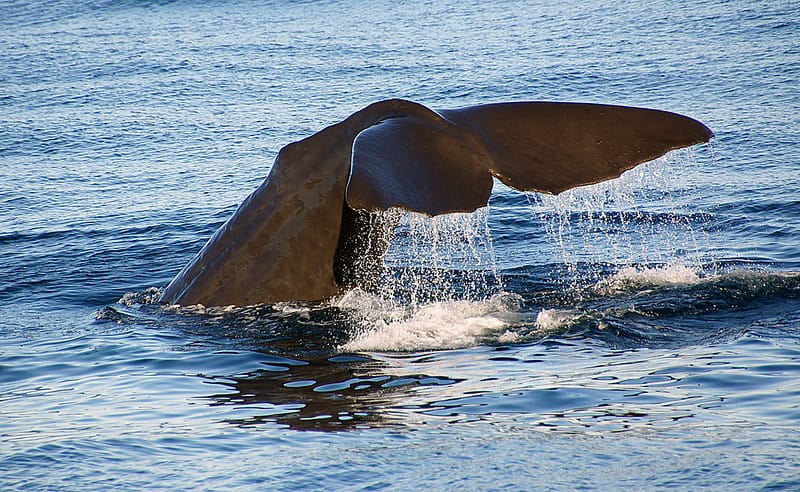
Whales | Coastal hunter-gatherer groups used whale bones as tools as early as 20,000 years ago. The discovery, published in Nature Communications, is the earliest evidence of this activity, and sheds light on the history of human-whale interactions and ancient marine ecology. Researchers analysed 83 bone tools excavated from sites around the Bay of Biscay in Spain, along with 90 additional bones. They identified that the bones came from at least five species of large whales, including sperm, fin and blue whales – all still present in the Bay of Biscay today – as well as gray whales, now mostly restricted to northern areas. The analysis provides insight into prehistoric whale populations, including slightly different feeding habits from their modern counterparts, as well as information on human behaviour in the Late Paleolithic period, with most of the tools being hunting weapons. Phys.org summarised the findings.
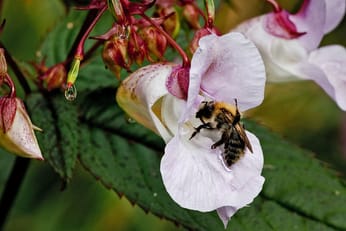
Invasive | Efforts to combat invasive species cost Britain more than any other country, a study in Nature Ecology and Evolution has found. An international team of researchers combined species distribution maps with macroeconomic data to analyse the global costs of 162 invasive species in 172 countries. They found that invasive species have cost Britain more than £1 trillion since 1960, up to eight times more than previously thought. This cost includes damage to crops and agriculture, as well as efforts to control and eradicate species accidentally introduced. The five species that caused the most damage in Britain were Asian longhorn beetles, which infest trees; western flower thrips, a strawberry pest; common water hyacinth, which chokes river ecosystems; the tomato leafminer moth; and wild boar. The authors said that the results place the cost of invasive species on a similar scale to extreme weather. The Times and Independent covered the research.
Darkening | More than a fifth of the earth’s oceans have become darker in the last two decades, according to a study published in Global Change Biology. Researchers from the University of Plymouth used satellite data and numerical modelling to measure the extent of ‘ocean darkening’, which occurs when changes to the upper water level reduce the depth to which light can travel. This ‘photic zone’ is where 90% of marine species live. The study found that 21% of the ocean had become darker since 2003, likely due to a combination of nutrient, organic material and sediment loading, and changes in global ocean circulation. Co-author Thomas Davies said the findings were a ‘genuine cause for concern’, with potentially severe implications for marine ecosystems, global fishers and climate change. The BBC, Guardian and Oceanographic covered the research.
Driftwood
Transylvania | For UnHerd, reporter Aris Roussinos visits the picturesque rural Romanian village of Viscri, where 20 years ago King Charles purchased a dilapidated Saxon farmhouse. Since then, the King’s foundation has created a ‘gentle archeofuturism’, in Roussinos’ words: the royal aura has brought money to the village, allowing the ‘old ways’ to prosper, including grazing sheep and fresh-cut hay. Modern investment is at play, too: local children are taught about organic gardening by the foundation, while a state-of-the-art reed-bed filtration system pumps water nearby, and tourism income complements the farming. Roussinos writes that ‘it is hard not to be swept away by the romance of it’, and wonders whether the King could possibly still ‘re-enchant’ his own realm, if he would ‘focus the love and care applied to backwoods Romania to his own people’.
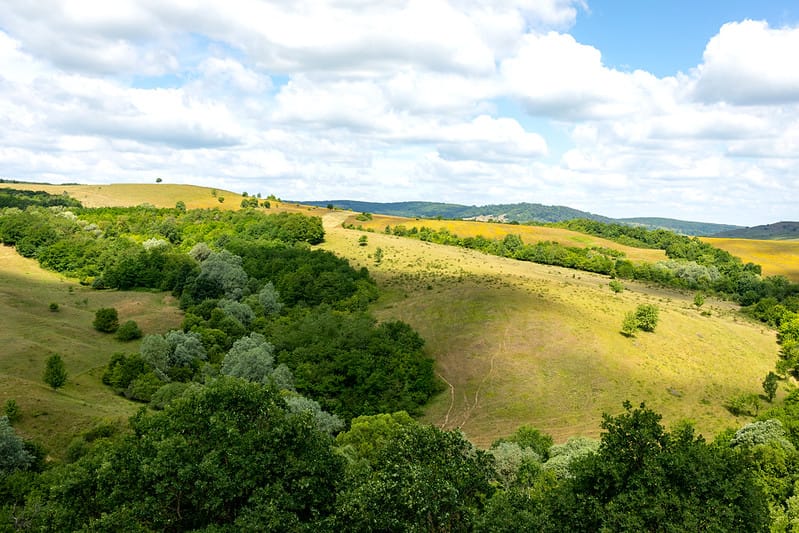
Uplands | A tree-planting project on the Howgill Fells in Yorkshire is uniting farmers and rewilders, writes Phoebe Weston for the Guardian. The bare hills have been shaped by centuries of sheep grazing, but, over the past 12 years, an agri-environment scheme has planted 300,000 native trees in sheep-free enclosures. Now, plants including bluebells and bracken are springing up of their own accord, suggesting that the soil retains the memory of the woodland that once grew there: something that conservationists call ‘ghost woodlands’. Meanwhile, hill farmers are also benefiting from the scheme, which provides annual payments for maintenance and for the loss of grazing rights – a ‘lifeline’ amidst disappearing government subsidies.
Wolves | In his new book, award-winning travel and nature writer Adam Weymouth turns his attention to the complex topic of wolves. In Lone Wolf, Weymouth tracks the journey of a young male wolf from its territory in Slovenia across the Alps to eastern Italy, repeating the same journey on foot. This is not from the ‘macho adventurism school of travel writing’, according to a review in the Times, but rather a ‘thoughtful, nuanced and empathetic’ consideration of the relationship between people and wolves, from the species’ history in fairytales to its recent return to Europe. Along the way, Weymouth listens to hunters, anti-wolf campaigners and aggrieved farmers with ‘impressive open-mindedness’. Read more about the book in the New York Times, or listen on BBC Radio. For more writing by Weymouth, check out his Inkcap Journal article on an ancient crop in the Outer Hebrides.
Further reading:
- Composer Ellie Wilson has used data on moth activity from a nature reserve near Salisbury in her instrumental piece, ‘Moth X Human’, which will air next month.
- The Times and UnHerd both have features exploring the recent discovery of gigantic caves under the Forest of Dean.
- An editorial in the Guardian argues that adaptation measures have never been more urgent in light of recent research on rising sea levels.
- In the Conversation, professor of geography Alastair Bonnett writes about how anti-environmentalism is on the rise, but also full of contradictions.
- An article in the Times investigates how David Attenborough’s Ocean film exposes the violence of bottom trawlers in unprecedented detail.
- What we choose to eat can affect our brain function, moods, and even risk of mental health conditions, according to research explored in this Wicked Leeks article.
- An essay in Atmos considers mycologist Dr Patricia Kaishian’s debut book, Forest Euphoria, which ‘bears witness to nature’s diverse approaches to identity’.
- A feature in the Times explores the ‘Clarkson’s Farm effect’, which is boosting sales of British produce.
- Environmentalist and former government adviser Ben Goldsmith writes on Substack about the concerning state of Labour’s alleged ‘war on nature’.
Happy days
Woods | ‘A culture is no better than its woods’. So proclaimed British-American poet W. H. Auden in his poem ‘Woods’, published in the collection Bucolics in the 1950s. Now, Aeon Magazine has published it as an ‘optical poem’: the video features restored audio of Auden performing ‘Woods’ at the Metropolitan Museum of Art in New York, accompanied by footage of paintings in the MET collection and outdoor footage recorded in Kingston. The poem’s appeal for woodland conservation, according to Aeon, reflects the moment it was written, but also speaks to enduring themes today. It reads: ‘The trees encountered on a country stroll / Reveal a lot about a country's soul.’

Subscribe to our newsletter
Members receive our premium weekly digest of nature news from across Britain.
Comments
Sign in or become a Inkcap Journal member to join the conversation.
Just enter your email below to get a log in link.