Spending Review & Ancient Oak
The latest news on nature and conservation in Britain.
National news
Spending | Chancellor Rachel Reeves’ first Spending Review has delivered a better-than-expected outcome for nature, particularly sustainable farming, after fears of severe budget cuts. Environmental organisations have reacted with relief to the news that the agricultural-environment budget has been maintained, with the Wildlife Trusts saying this protected money is ‘vital’ for both wildlife and rural communities. The Treasury settlement commits to investing an average of £2.7bn per year from 2026 to 2029 in sustainable farming and nature recovery. Meanwhile, Defra’s overall budget has fallen from £8bn to £7.4bn. This 2.7% reduction is among the steepest budget cuts in Whitehall. The WCL said that, while not as severe as expected, the reduction follows years of underfunding and leaves the department under-resourced for the challenges ahead, including meeting 2030 nature recovery targets. Farmers Weekly and ENDS covered the news.
Trawling | The government has announced plans to extend bans on bottom trawling and other destructive fishing activities in more Marine Protected Areas (MPAs). The consultation – launched on Monday ahead of the UN Oceans Conference in France – would expand the ban on bottom trawling from 18,000km² to 48,000km² across 41 of the UK’s offshore MPAs. It would also restrict the use of traps and bottom-set nets. Defra said the measures would protect marine habitats ranging from subtidal sandbanks to gravels and muds, and conserve important marine species such as clams, soft corals and langoustines. Campaigners have welcomed the news, and the Environmental Audit Committee said it was ‘delighted’ after recommending the ban in a report last week. The proposal is subject to a 12-week industry consultation. The BBC, Guardian and Oceanographic reported the news.
Birds | The government may have failed to comply with laws on the protection of wild birds, according to the Office for Environmental Protection. The Joint Nature Conservation Committee, as well as other conservation bodies, previously provided recommendations to the government on changes to Special Protection Areas (SPAs), which are legally designated sites that protect rare, threatened and migratory birds. Following an investigation launched last year, the OEP has said that Defra and Natural England may have failed to implement these recommendations, and therefore comply with its legal duties. The watchdog has notified both agencies and given them two months to respond. The Independent, BBC and ENDS covered the news.
In other news:
- Defra has promised to introduce legislation by the end of the year to enable ratification of the High Seas Treaty, reports the Times. Meanwhile, the BBC and Guardian covered the UN Oceans Conference in France.
- Thousands of saplings in tree planting schemes in England have been killed by drought, reports the Times.
- Buglife has launched ‘Don’t Neglect the Night’, a campaign calling on governments, planners and the public to protect nocturnal nature.
- The CEOs of four leading environmental organisations have written a letter in the Guardian calling for a better Planning & Infrastructure Bill.
- An investigation by Unearthed has revealed that water companies are concerned that tougher pollution rules will leave them unable to dispose of millions of tonnes of sewage sludge.
- Analysis by Energy & Climate Intelligence suggests that the UK could experience another poor harvest after record-breaking spring weather.
- Defra has launched a call for evidence on measures to boost private sector investment in nature recovery.
Across the country
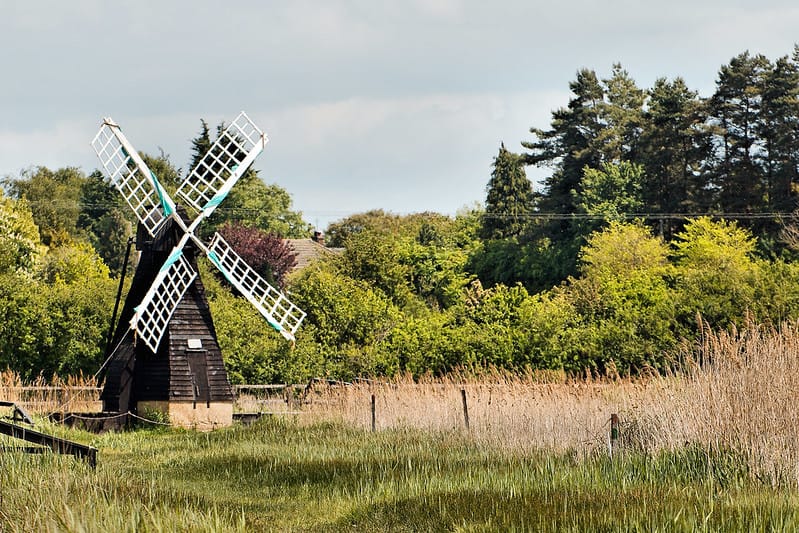
Cambridgeshire | An ancient oak has been discovered in a peat bog at Wicken Fen. The tree was uncovered during work to prevent an undrained section of the Fen from drying out, carried out by the National Trust as part of a £2m peatland restoration project. Archaeologists dated the tree to 2894 BC, making it older than parts of Stonehenge. The find lifts a veil on the ancient ecology of the landscape, suggesting that dry woodland preceded the peat. ‘This discovery exemplifies that wonderful relationship between depth and time, which comes with exploring the peat fen,’ said Mark Knight from Cambridge Archaeological Unit. ‘Traces of past landscapes abound beneath its surface, and what’s more, they come beautifully preserved and in clear chronological order.’ CambridgeshireLive and Countryfile covered the story.
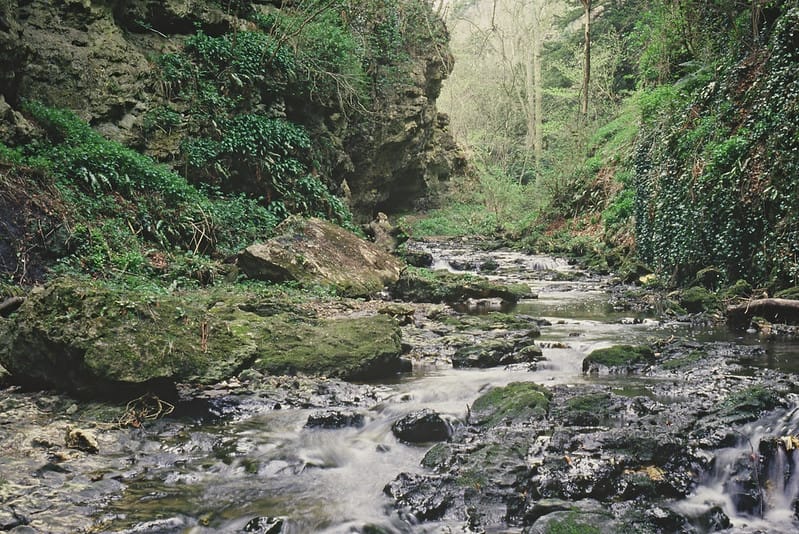
Yorkshire | Yorkshire Wildlife Trust has announced the opening of a new nature reserve, Park Gill, which is home to patches of temperate rainforest in the heart of the Dales. The area also contains limestone grassland, caves and streams, and is well-known for its rare wildflowers such as bird’s-eye primrose, mountain everlasting and grass-of-Parnassus. Jono Leadley, a regional manager at the Trust, said that temperate rainforest is a ‘particularly rare habitat in Yorkshire’, with only a few fragmented patches in the western Dales, so the new reserve is ‘a great opportunity to restore and expand this fantastic habitat.’ She added that the restoration work would also benefit struggling bird species including black grouse, curlew and short-eared owls.
Pembrokeshire | An overgrown church graveyard in Narberth has employed a herd of hungry goats to help remove runaway vegetation. Narberth town council hired the herd from a nearby business, Bio Goats, to chew through the brambles, weeds and excess foliage threatening to overrun the gravestones at St Andrews Church. The council said the goats provide a natural and chemical-free way of clearing areas, and is trialling the method over the coming weeks as part of their biodiversity improvement programme. The herd is monitored by GPS so that they do not wander far. A spokesperson for the Clynderwen-based company, which also rents out the goats to national park authorities, said that the animals are ‘generally very friendly and sociable animals so you might also make yourself a friend or two.’ The Telegraph covered the story.
Elsewhere:
- A Norwegian company has drawn up plans for Britain’s first deep-sea salmon farm in waters off Shetland, according to the Ferret.
- The critically endangered willow gloves fungus, which was reintroduced in Cumbria, is not growing yet, but experts say it is too early to say whether the project has failed, reports the BBC.
- The Solway coastline in southwest Scotland is set to receive £8m of funding for an extensive programme of habitat restoration, reports the BBC.
- Data gathered by Derbyshire Bat Group shows that bats are returning to Kinder Scout, thanks to work restoring its habitat. Find out more on Springwatch.
- Gloucester City Council is preparing to phase out the weed killer glyphosate as part of its urban greening strategy, reports the BBC.
- A peregrine falcon chick has hatched at St Albans Cathedral after the first clutch of eggs was destroyed.
- Campaigners are celebrating after Cheshire East Council scrapped its plans to build almost 1,000 homes on Danes Moss, a peatland site in Macclesfield, reports the BBC.
- The Scottish government has stalled plans for the controversial ‘Flamingo Land’ resort at Loch Lomond, reports the BBC, STV News and Scotsman.
- A colony of breeding seahorses is delaying work to repair a crumbling harbour wall around Weymouth Peninsula in Dorset, reports the BBC.
- Essex and Suffolk Water has finished building a bypass for a concrete weir in the River Blackwater, allowing fish and eels to pass, reports the BBC.
- The latest census of gannets at Bass Rock in the Firth of Forth has revealed continued declines, reports BirdGuides.
- At least six storks born at Knepp Estate in Sussex have successfully returned home after migrating to Morocco, reports the BBC.
- The Woodland Trust in Wales has published a 100-year strategy to protect and restore trees and woodland in Eryri National Park.
- A project to boost golden eagle numbers in the south of Scotland has raised concerns of collision risks associated with a wind farm plan in the Borders, reports the BBC.
Reports
Woodland | Wildlife is declining in UK woodlands despite a small increase in tree cover, according to a report by the Woodland Trust. The State of the UK’s Woods and Trees reveals that the quantity and variety of woodland wildlife is plummeting, largely due to the deteriorating ecological condition of woodlands. The report found that the habitat increasingly lacks complexity, such as having enough trees of differing ages, states and sizes. Only one in 50 native woodlands have more than one veteran tree per 200,000m², while almost half (46%) have no deadwood at all. The report highlights declines in woodland butterflies, birds, dormice and plant species as a result. Meanwhile, tree cover has marginally increased from 13.2% in 2020 to 13.5% in 2024, but less than half of woodland creation targets have been met in that time. The Guardian and Independent covered the research.
Regeneration | A report by the European Alliance for Regenerative Agriculture demonstrates the widespread benefits of regenerative farming. ‘Regenerating Europe from the Ground Up’ is thought to be the largest study into regenerative agriculture to date, involving 78 farms covering 7,000 hectares across 14 European countries. It compares results from these ‘regenerating pioneers’ – from citrus fruit producers in Greece to dairy farmers in Scotland – with conventional farm averages, and found multiple benefits across areas including soil health, biodiversity and economic viability. For example, between 2020 and 2023, the regenerative farmers achieved, on average, just 1% lower yields in terms of kilocalories and proteins, while using 62% less synthetic nitrogen fertiliser and 76% fewer pesticides. In light of the findings, the EARA is calling for agricultural subsidies which recognise farmers as ‘the stewards of transition’ and reward ‘real results’. Wicked Leeks covered the research.
Markets | The UK is on its ‘last chance’ to establish effective nature markets governance, according to the chair of Nature Markets Dialogue. The NMD project brought together 169 specialists to discuss how nature markets can help meet the UK’s targets for nature recovery and the mechanisms needed to ensure market integrity. The resulting report presents key findings, including the importance of markets as tools to accelerate nature recovery, rather than simply for offsetting or replacements for environmental protections. It also highlights a widespread lack of confidence in environmental credit markets, exacerbated by past failures in the voluntary carbon markets. To fill this gap, the authors propose a new governance scheme grouped around five key principles including scientific underpinning, legal foundation of roles and responsibilities, and independent oversight from a governance body.
Science
Angelshark | A study led by the Zoological Society of London has discovered that the decline of critically endangered angelsharks in Wales may be less severe than thought. Angelsharks are flat-bodied sharks that are normally found on the sandy seafloor. Much of current scientific understanding comes from fishing reports of accidental catches, so the authors interviewed 27 fishers from boats operating in Welsh waters between 1969 and 2019. They found that changes within the sector – such as reduced angling efforts and decreased overlap with angelshark habitats – led to a decreased likelihood of fishers encountering angelsharks, and therefore an exaggerated decline in numbers. The authors conclude that new techniques, such as monitoring eDNA, could result in a more accurate picture of how the species is faring. Countryfile covered the research.
Music | Playing classical music to plants could help them grow larger and leafier, according to a study in Evolutionary Studies in Imaginative Culture. A team of scientists, including an Oxford psychologist, played classical music, rock music or nothing in two-hour bursts to pak choi plants. Those played classical music – Bach’s Brandenburg Concertos – grew leafier, heavier, and had a higher total root volume than those grown in silence. Meanwhile, those played rock music displayed the least growth. The researchers suggested the results could be related to a combination of sound frequencies, music tempo and the instruments used. Co-author Charles Spence said that playing music to plants is ‘not as crazy as it may sound’ since ‘plants are attuned to vibrations, such as the vibrations of running water in soil, and they react to them biologically.’ The Times and Classic FM covered the findings.
Acidity | A study by the Plymouth Marine Laboratory and other international institutions has found that the planetary boundary for ‘ocean acidification’ has already been crossed. Ocean acidification can damage marine habitats and, in extreme cases, dissolve the shells of marine creatures. Until now, scientists believed ocean acidification had not crossed its planetary boundary, or natural tipping point. The study combined advanced computer models with new and historical chemical measurements from ice cores, and found that, by 2020, average ocean conditions had already exceeded the boundary in some regions, especially in deeper water. PML’s Steve Widdicombe said that ocean acidification is ‘a ticking timebomb for marine ecosystems and coastal economies’. The Guardian covered the research.
Driftwood
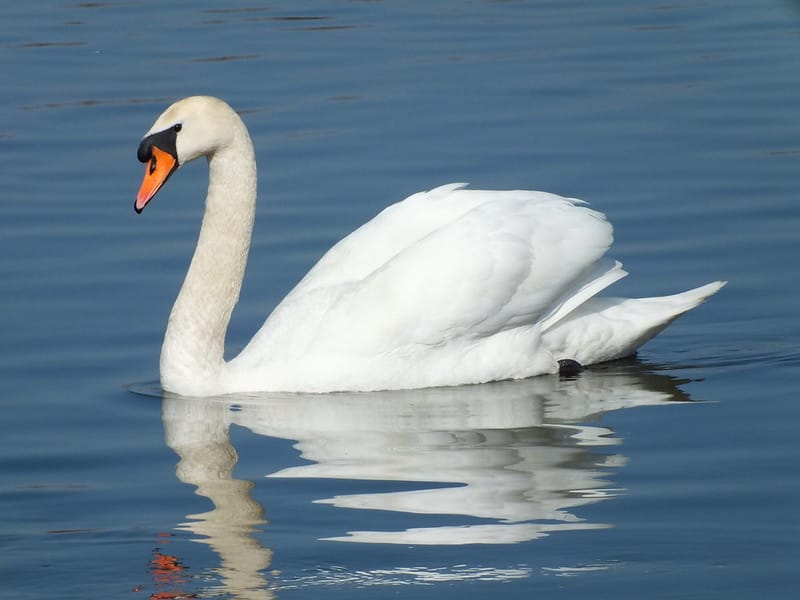
Swans | Conservationists often ponder how humans might learn to live alongside reintroduced carnivores, but less often is that question asked of swans. At last, Jonathan Guthrie takes on this subject in the Financial Times, in light of the oft-quoted idea that a swan can break a man’s arm (something that is probably not true, he concludes). His research into swan-human harmony takes him to Abbotsbury in Dorset, which is the only remaining managed swannery in the world. Its swanherd, Steve Groves, is an expert in human-swan relationships – and he has never suffered a broken arm. More likely, swans need protection from us: the birds have suffered in recent years, thanks to both aquatic pollution, avian flu, fishing equipment and persecution.
Swifts | Swifts are receiving a slew of attention after Labour blocked an amendment to the planning bill that would have forced developers to include at least one ‘swift brick’ in every new home. Reform UK has joined MPs across the political spectrum in supporting a revised amendment, reports the Guardian. In the Times, presenter-turned-farmer Jeremy Clarkson writes a love letter-cum-call to arms for this ‘amazing little creature’. Elsewhere, a feature in the Big Issue describes how a community in Greater Manchester has transformed its streets to prepare for the return of the migratory birds. Launched by the RSPB, the ‘Swift Street’ initiative organised local groups – including vocational skill students, the girl guides and crafters – to paint, furnish and erect more than 80 swift boxes in Swinton, Salford.
Empire | What does species extinction have to do with empire, race and colonialism? In an interview in the Guardian, historian Sadiah Qureshi discusses her new book, Vanished: An Unnatural History of Extinction. In it, she argues that animal extinctions are not simply a scientific puzzle but a philosophical and political one, that have been connected throughout history to human extermination. In North America, for instance, human genocide and persecution were justified by the argument that indigenous peoples were going extinct anyway: an approach that is relevant for thinking about species loss today. Meanwhile, she argues against de-extinction, as it doesn’t require any re-think of our relationship with nature: ‘And, you know, at some point, some billionaire is going to pay a lot of money to shoot one of these recreated beings,’ she adds.
Further reading:
- In the Critic Magazine, Johnnie Furse from the Countryside Alliance makes a case for becoming reacquainted with the meat we eat.
- For the Guardian, author Sophie Pavelle explains why efforts to ‘get rid’ of nuisance gulls miss the point.
- The BBC has a feature on the Lamlash Bay ‘no take zone’ off the Isle of Arran, which has been hailed as a prime example of seabed restoration.
- In the BBC, read about the efforts of a family in South Ribble, Lancashire, to preserve two unique varieties of pear trees.
- In the Conversation, researcher Alex Newman explains how burning urban waste to power a giant greenhouse could be a greener way of growing food.
- Find out whether it is better for nature to neglect your garden in this BBC Future article.
- An article in the Independent examines why the climate apocalypse genre is still ‘on fire’, and how contemporary TV shows are grappling with dilemmas closer to home.
- For the Conversation, ‘Dr Hedgehog’ Sophie Lund Rasmussen explains why hedgehog poo could hold important information about biodiversity.
Happy days
Owls | Sightings of owls have risen sharply in London over the last decade, with residents spotting the nocturnal birds across the entire capital, not just in leafy suburbs. All of the UK’s owl species can be found in London at various points of the year. Tawny owls are usually found nesting in hollow trees in green areas, while short- and long-eared owls are winter visitors. Little owls are found in larger parks, along with barn owls, although the latter has also been recently spotted in urban locations including Notting Hill, Deptford and last month, Tottenham, as tweeted by a surprised journalist. Barn owls are having a particular resurgence: there were just 25 sightings in 2010, but this had risen to 347 a decade later. Read more in the Guardian.

Subscribe to our newsletter
Members receive our premium weekly digest of nature news from across Britain.
Comments
Sign in or become a Inkcap Journal member to join the conversation.
Just enter your email below to get a log in link.