Species Reintroduction & Rogue Rewilders
The latest news on nature and conservation in Britain.
National news
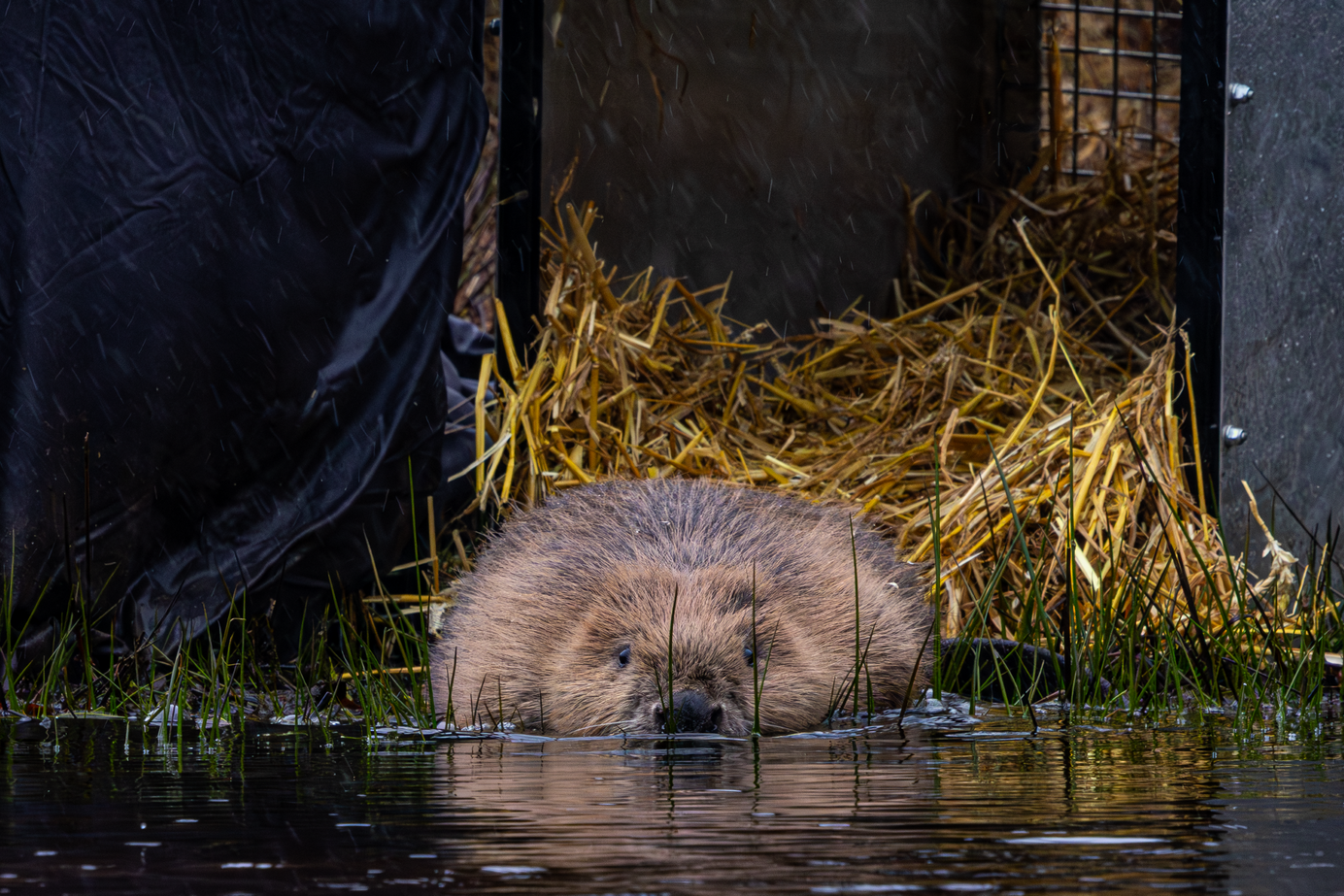
Reintroduction | Reintroducing species to the UK is not a priority for nature recovery efforts, according to the government. The decision came in its response to a report by the cross-party Environment, Food and Rural Affairs Committee, which had gathered expert advice on managing reintroductions. Instead, Defra said it will achieve its biodiversity targets by focusing on habitat restoration and tackling pressures such as pollution and climate change. Wildlife organisations have criticised the move: Joan Edwards of the Wildlife Trusts said it was “astonishing” that no strategy exists, while the director of Rewilding Britain, Alastair Driver, called the decision “absurd” and “environmentally naïve”. Meanwhile, London mayor Sadiq Khan recommended that a Labour government should legalise the wild release of beavers across the country. He added that it was the “right thing to do” for both the environment and communities, and it was also “a vote-winner”. The BBC, the Independent and the Guardian reported the news.
Mining | The government has announced support for a moratorium on commercial deep sea mining to protect marine biodiversity. The moratorium suspends the granting of exploitation licences for mining projects – which extract minerals such as precious metals from the seabed – until there is sufficient scientific evidence to assess the impact on marine ecosystems. The U-turn comes after extensive criticism from scientists, MPs and environmentalists on the government’s previous supportive stance. The UK now joins around 20 countries calling for a pause on licences. This week sees the start of negotiations by the International Seabed Authority on whether to allow production to continue. The Guardian covered the news.
Youth | The RSPB is set to give 16-24 year-olds free access to its nature reserves as part of a “youth revolution”, reports the Guardian. The RSPB is Europe’s largest conservation charity, but in a document sent out to its members, the organisation admitted that its reach among young people is “very low”. Research shows that interest in nature often dips in teenage years, and the charity has now committed to “transform” how it works with young people. The two-year pilot programme for free entry will be joined by other efforts, including a Youth in Nature summit in February, and inviting members of the youth council to attend board of trustee meetings. Emma Marsh, executive director of communications, said the charity wanted to remove barriers faced by young people on a daily basis, adding: “I believe this generation are the ones that can really help us to protect nature.”
In other news:
- Following the destruction caused by Storm Babet, the NFU is calling on political parties to outline their plans to protect farmland from flooding, reports the Independent.
- The Scottish government has announced it will explore options for councils to introduce a carbon land tax. The John Muir Trust welcomed the news.
- Further environmental rollbacks are expected from Rishi Sunak during the King’s Speech next week, reports the Times and ENDS.
- Welsh Water has been fined for just 1% of permit breaches investigated since 2018, according to ENDS.
- Chief of the John Muir Trust, David Balharry, has been cleared of allegations of misconduct, reports the Times.
- Britain is set to see a bumper winter for short-eared owls, reports BirdGuides.
- Defra has announced increased funding and flexibility for farmers to grow more trees, reports FarmingUK.
- The Woodland Trust has said a record crop of hawthorn berries are providing a boost for migrating birds and small mammals, reports the Telegraph.
- The latest report by the Rare Breeding Birds Panel has revealed varied fortunes for Britain’s rarest bird species, reports BirdGuides.
Across the country
Highlands | Forestry and Land Scotland (FLS) are planting hundreds of hectares of native riparian woodland in Caithness and Sutherland to protect waterways and boost biodiversity. Species planted along rivers and burns include alder, downy birch, aspen and rowan. Neil McInnes, a forester who is leading the restoration, said that shade is an obvious antidote to rising water temperatures, but riparian woodland does much more, from providing sheltered habitat for fish to stabilising riverbanks and reducing erosion. FLS said it is also planting woodlands in glens that have become devoid of trees, and restructuring old plantation forests with a more complex mix of species. The John O’Groat Journal reported the news.
Glamorgan | Natural Resources Wales is restoring an area of rare lowland heathland habitat in the Vale of Glamorgan. Regeneration of the area in Hensol forest began after a commercial plantation was felled in 2020 due to infected larch trees. The landscape began regenerating naturally, and officers later discovered rare plants whose seeds may have been lying dormant for more than 60 years. Lowland heathland is a globally threatened habitat, with 20% of it found in Britain, mostly in South Wales and southwest England. Liz Hancocks of NRW said that, with careful management, the heathland would become established over the coming years, creating vital habitat for some of Wales’ rarest wildlife. Nation Cymru reported the story.
South Downs | Thirty-one hectares of farmland in the South Downs have been handed over for nature recovery in a ‘landmark’ biodiversity net gain agreement. The land, part of the Iford Estate farm, is the first to appear on the National Park Authority’s register of land formally dedicated for BNG – which will soon become a legal requirement for developers in England. The ‘Iford Biodiversity Project’ will ultimately comprise around 800 hectares dedicated to nature, including a floodplain grazing marsh, species-rich grasslands and tree-planting to link up existing woodland. Manager of the estate, Ben Taylor, said the scheme would increase species diversity on the whole estate, while still retaining food production as the principal land use on the most fertile areas. FarmingUK covered the news.
Elsewhere:
- Environmentalists are concerned by plans to increase the number of planes flying from Heathrow over Richmond Park, reports the BBC.
- Hertfordshire Wildlife Trust is working to save a critically endangered plant – the scarce tufted-sedge – which is only found at one site in the UK.
- Restoration work by the Wildlife Trust for Bedfordshire has removed two weirs from the River Granta, improving flow along the chalk stream.
- Barn owls are making a comeback in the Tees Valley thanks to five years of conservation efforts by landowners and local community support.
- A survey by Natural Resources Wales has shown promising results for the rare marsh fritillary butterfly in Ceredigion.
- The Manx Wildlife Trust has installed a tracking system on the Calf of Man to study bird migration, reports the BBC.
- A survey led by Lancaster University has revealed increased pollutants in Lake Windermere, reports the BBC.
- The Butterfly Conservation is creating a network of linked habitats in Northamptonshire to benefit key species, including three rare butterflies, reports the Northampton Chronicle.
- A veteran oak in Shrewsbury, which Charles Darwin may have climbed as a boy, is set to be felled to make way for a new bypass, reports the Guardian.
- Cornwall’s Eden Project has announced a new company which aims to create wildflower-rich grasslands through the creation of Biodiversity Net Gain Units, reports Business Live.
- The Tweed Meadows Project in the Scottish Borders has been awarded £140,000 in funding to restore wildflower meadows, reports ITV News.
- The public have been warned not to pick mushrooms in Epping Forest as the fungi is vital to the health of the ancient woodlands, reports the BBC.
Reports
Peatland | A report by the UK Centre for Ecology and Hydrology and NIAB has mapped the agricultural uses of lowland peat in the UK for the first time. Commissioned by WWF and Tesco, the report compares various agricultural uses – from vegetables and cereal crops to grassland for beef and dairy – and highlights the dangers of continuing to drain peatland for intensive cultivation. Instead, the report calls for a new approach that balances the need to protect peat carbon stores with continued vegetable production. It recommends alternative forms of agriculture such as paludiculture (wetland agriculture) and carbon farming, which adopts land practices known to sequester carbon. It also suggests prioritising crops for human consumption and exploring alternative land uses such as solar farms on rewetted peat.
Ponds | Around two-thirds of ponds in England and Wales have been lost since the 19th century – yet these small bodies of water pack a disproportionate punch for biodiversity. Now, the Freshwater Habitats Trust and a UCL research group have produced a guide to help landowners and farmers bring life back to ponds across Britain. The report contains practical information on how to dig new ponds, to restore degraded ones, and also to recover long-lost “ghost ponds”: filled in ponds which can be identified through historic maps or depressions in the landscape. The concept was developed by Carl Sayer at UCL, who helped create the guide. Its publication was timed to coincide with Norfolk Ponds Project week, where Sayer and other researchers are restoring a number of ponds on a Norfolk farm: the Times covered the story.
Flyways | The work of 60 researchers tracking more than 1,000 seabirds has been used to create six ‘Ocean Flyways’, identifying common routes used by seabirds as they migrate across the globe. BirdLife International launched the marine flyways to complement their existing nine Global Flyways, which are largely terrestrial. The marine flyways are used by some of the world’s most vulnerable species, and span national waters and the High Seas, underlining the need for coordinated international conservation action. The six routes can be viewed here, including the Atlantic Ocean Flyway, which stretches from pole to pole and includes the remarkable migration of Arctic terns and South Polar skua.
Science
Choughs | Welsh red-billed choughs are experiencing severe inland declines, according to a paper in Bird Study. Researchers analysed 25 years of data from annual monitoring in mid and north Wales. They found that chough occupancy had fallen by 12% in coastal breeding areas, while inland territories had dropped by 72%. In addition, nest success rate fell by 17% on the coast and 33% inland. The authors conclude that, while slow declines in coastal areas are concerning, the severe decline of inland nesting choughs could lead to rapid local extinction. Since current conservation methods appear ineffective, they recommend urgent further study into the cause of decline.
Caterpillars | Caterpillars are particularly susceptible to climate change because they struggle to control their temperature. This is the finding of a study by researchers at the University of Cambridge, which analysed 14 species of butterfly in nature reserves and an allotment in east England. They found that caterpillars rely on microclimate selection for thermoregulation – meaning they choose locations with a particular temperature – while adult butterflies mainly regulate their temperature through behaviours such as basking. Dr Esme Ashe-Jepson, co-author of the study, explained: “This means that if a heatwave occurs, [caterpillars] become trapped on their food plants, like an island – and they cook.” The authors suggest helping caterpillars by creating microclimates and providing plenty of shade in gardens. The BBC covered the research.
Land | A study in Nature Communications investigates the combined effects of land-use change and climate warming on species in the UK. A team of researchers from Northumbria University and Sweden digitally converted land-use maps from the 1930s, and compared them with modern-day satellite data to understand the extent of land-use change. Combined with Met Office maps of climate change, the team then assessed the effects on species using a dataset of more than 20 million distribution records. Surprisingly, they found that the two drivers did not often interact, affecting less than one in five species. The authors said the finding was particularly interesting because, without complex interactions, it could be easier to identify the ‘winners and losers’ of environmental changes. However, many responses were highly individual, making it difficult to generalise. The Conversation covered the research.
📢New research alert! Our new paper investigating the interactive effects of land-use change and climate change on biodiversity is out this week in @NatureComms! This includes a shiny new land-use change map for Britain. A thread on the findings...🧵(1/17) https://t.co/ORmLyXelyV
— Andy Suggitt (@andysuggitt) November 1, 2023
Driftwood
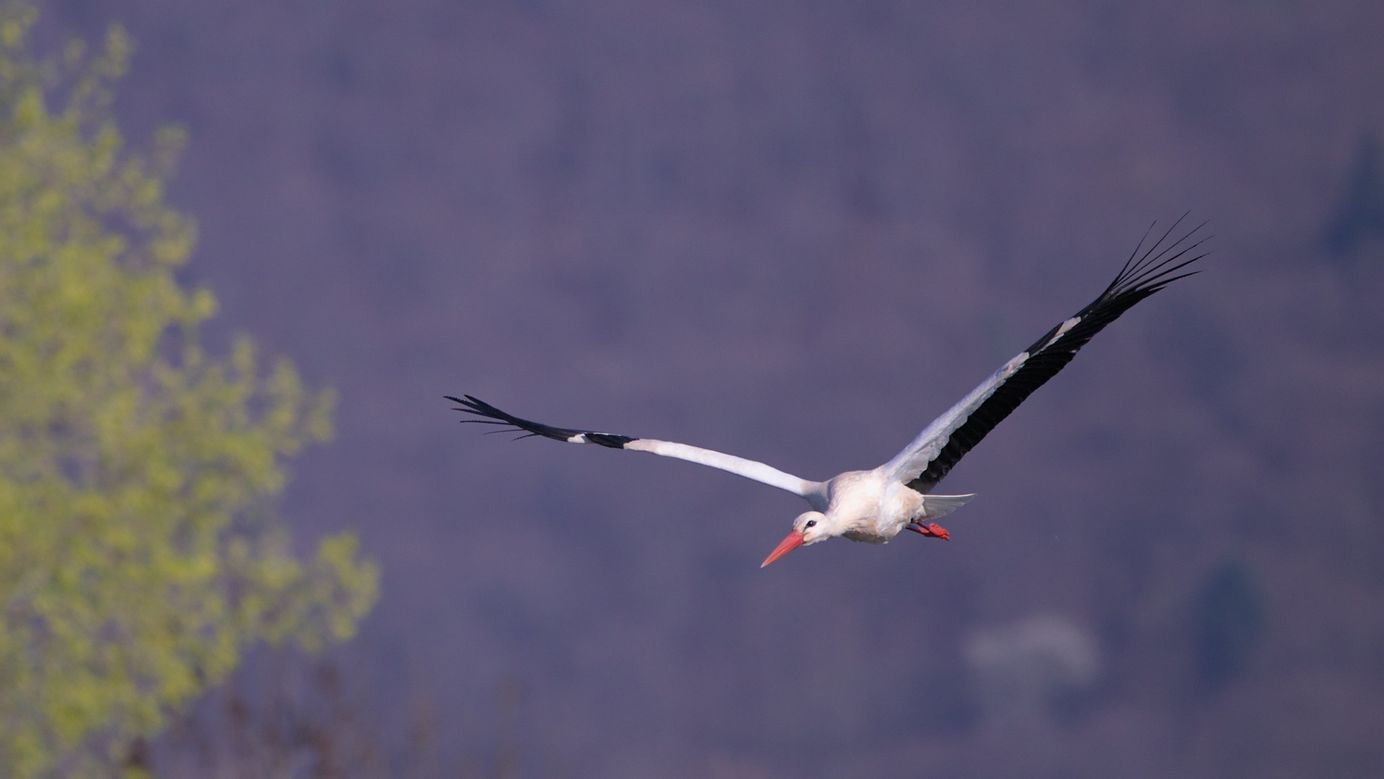
Rewilding | The government may not be prioritising the reintroduction of species to the British landscape, but another group are: rogue ‘guerilla’ rewilders, who release species illegally. A feature in Positive News explores this underground world, as well as reactions from well-known figures including Derek Gow, Ben Goldsmith and Alastair Driver. One interviewee, “Simon”, admits to moving beavers across the country to aid their spread, as well as releasing pine martens and rearing white storks. According to Simon, the current system for conservation translocations is too onerous and restrictive, and it is simply easier to “crack on with it” himself. He could face heavy fines and even prison time for his efforts, but it is a risk he’s willing to take.
Glow worms | A feature in the BBC spotlights the work of ecologist Pete Cooper to single-handedly boost populations of glow worms in Britain. The insect – which is actually a beetle, not a worm – is struggling due to a fatal combination of habitat loss and artificial light pollution, which experts believe prevent individuals from finding a mate. Cooper first started breeding glow worms during the first lockdown of 2020, and describes it as “a cathartic moment of hope in that horrible Covid year of collecting these lights in the dark”. After some trial and error, the young conservationist is now releasing glow worms at various sites, including the grounds of an historic hotel near Fleet, where he has spent two years creating a ‘living laboratory’ for reintroducing the species.
Wood | For The Fence, writer and tree science consultant Harriet Rix goes on a comical quest in search of Britain’s horniest tree. From the copious seeded offspring of hornbeams to the fluid sex changes of ginkgos, Rix explores the astounding reproductive abilities of trees across the UK. Oaks have been “central to the fetish of British concupiscence for millennia”, she writes, by allying the illusion of fidelity with prolific reproduction. Ultimately, however, it is the tragic figure of the magnolia grandiflora that wins the grand prize of ‘horniest tree’: it stands “covered in wax-white flowers”, awaiting “the visit of a beetle extinct for thousands of years”.
Further reading:
- The BBC has two articles on Britain’s so-called loneliest sheep, who appears to have been stuck at the bottom of cliffs on Cromarty Firth for two years.
- A blog by Forestry England describes how botanist and broadcaster, James Wong, joined staff in Kent to help plant critically endangered Wollemi pine trees – or ‘dinosaur trees’ – from Australia.
- In Cornwall, one woman is fighting to re-open hundreds of illegally blocked public paths. You can read about her campaign in Cornwall Live.
- A blog by NatureScot traces the Scottish roots of Halloween traditions, originating from a Celtic festival marking the end of harvest.
- An article in the Guardian lists the best apps for nature lovers, from bird song identification to global animal tracking.
- In Nature, a feature explores how AI can help to save endangered species.
- A touching Guardian article describes the experience of raising an orphaned owl, and what it revealed about our relationship with nature.
- A feature in the Yorkshire Post speaks with scientist and author, Sarah Watkinson, about her climate-themed novel and the role of fungi in the Yorkshire Dales.
Happy days
Stag | A giant 19th-century stag made from white boulders has re-emerged on an Aberdeenshire hillside, thanks to the dedication of locals. The stag, which is over 70 metres tall, was created in the 1870s by estate tenants to commemorate their laird’s wedding. Over the next 150 years, it became obscured by overgrown gorse, heather and bracken, until it was entirely invisible. It has taken local Doug Simpson and a band of volunteers five years to clear the scrub, and recover the stag in its former glory. “He’s some beast, he really is,” said Simpson, who hopes visitors will come to see the stag – and do a bit of weeding while they’re at it.

Subscribe to our newsletter
Members receive our premium weekly digest of nature news from across Britain.
Comments
Sign in or become a Inkcap Journal member to join the conversation.
Just enter your email below to get a log in link.