Seabird Mystery & Welsh Hymns
The latest news on nature and conservation in Britain.
Welcome to Inkcap Journal, a newsletter about nature and conservation in Britain. This is the Friday digest, rounding up all the week's news, science, reports, comment and more. Sign up to receive a free one-month trial.
National news
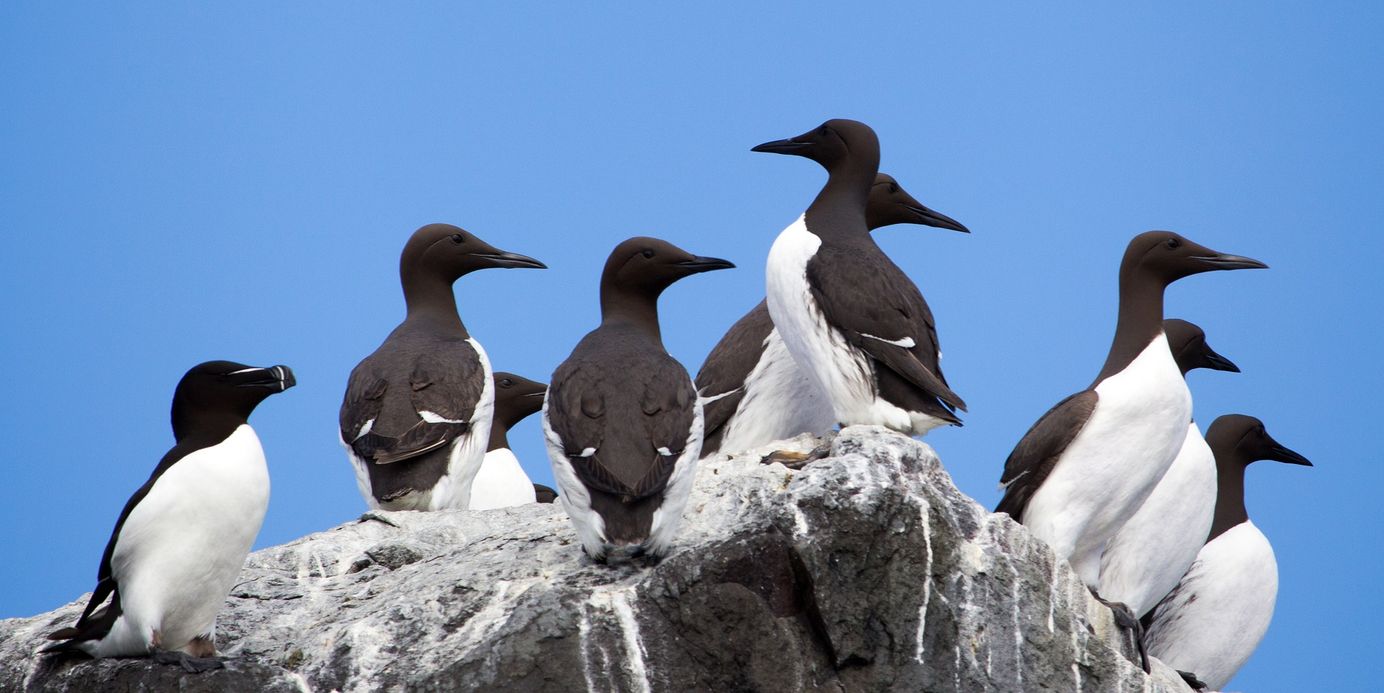
Seabirds | Hundreds of seabirds, mainly razorbills and guillemots, have been found dead along the coasts of England and Scotland, and nobody knows why. More have been discovered emaciated or behaving unusually, and puffins and kittiwakes have also been affected, reports BirdGuides. Bird flu has already been ruled out as a possible cause. “This is an unusual and worrying series of events,” according to an update from the RSPB. “Extreme weather, pollution, disease and toxins can all kill seabirds. If prey fish are scarce, seabirds can be weakened through starvation. We don’t know the exact cause here, but scientists are working hard to find out more.” The mystery is also covered in the Guardian.
Farming | The Welsh government has delayed changes to its new farming subsidy scheme again, reports the BBC. The Sustainable Farming Scheme – which is to replace the EU subsidy system – will not be brought in until 2025. This is bad news from an environmental perspective, as the new scheme seeks to improve farming by offering incentives for protecting Wales’ wildlife and scenery. However, rural affairs minister Lesley Griffiths also announced £66m in additional funding for existing schemes designed to reward environmental work by farmers. Separately, the RSPB has urged the Scottish government to provide “much-needed clarity” about the policies it intends to put in place “to help farmers and crofters become a part of the solution to the nature and climate emergency.”
Reshuffle | George Eustice clung onto his role as environment secretary in last week’s cabinet reshuffle. Green Alliance welcomed this continuation of the status quo: “he is in full command of a complex brief and has quietly pushed forward some radical ideas, such as a 2030 target for restoring nature,” wrote executive director Shaun Spiers in a blog, which contains a detailed run-down of what the redistribution of power means for the environment. The reshuffle saw Michael Gove instated as Secretary of State for Housing, Communities and Local Government – another crucial environmental role, given its intersection with planning and development. “With his past experience as environment secretary, we hope and expect him to champion local communities, nature and climate as his department drafts the new planning bill,” said Crispin Truman of CPRE. The decision to make an environment minister of Victoria Prentis was less warmly welcomed – it was only last year that she branded rewilding as “evil” during an event with the Countryside Alliance.
In other news:
- A proposed bill to decarbonise Welsh fishing vessels and establish “blue carbon protection zones” could go under scrutiny in the Senedd, reports the Powys County Times.
- Farmers will grow crops to be burned for energy by Drax under a new deal with the National Farmers Union, reports the Telegraph.
- Activists have called on two major poultry suppliers to take action to protect the River Wye from pollution, reports the BBC.
- Ministers are launching a consultation on plant biosecurity, which could lead to stricter rules on imports to protect native species from pests and diseases, reports the Times. Government representatives have also commented.
- An eco-garden has won the top prize at the Chelsea Flower Show, reports the Telegraph.
Across the country
Portsmouth | A consultation has now been launched for a proposed ‘super-peninsular’ at Tipner in Portsmouth – a 3,500-house development that charities say would devastate local wildlife. The proposals are part of Portsmouth City Council’s Local Plan; they would require the destruction of 50 football pitches’ worth of legally protected mudflats, saltmarshes and tidal creeks, according to the local Wildlife Trust. Its chief executive, Debbie Tann, said that the proposals set a “dangerous precedent that could open the floodgates for concreting over legally protected sites across the country.” Even the Council seemed lukewarm about the idea, blaming unrealistic government housing targets. “Those homes have got to go somewhere, there are problems with Tipner; doing nothing also has its own problems,” one councillor told ITV.
Teesdale | Today, 95-year-old botanist Dr Margaret Bradshaw will finish her horseback trek across Teesdale in County Durham – a trip she embarked upon 11 weeks ago to raise money and awareness for the dale’s unique assemblage of rare plants. “Upper Teesdale is a treasure house of rare plants, many of which have survived since the last Ice Age,” she said. “These species I have seen decrease in the 50 years I have studied the rare flora. We need to keep recording what is happening to our flora and experiment with ways to halt the shocking level of decline.” The story was covered by the Northern Echo. You can help Dr Bradshaw to reach her target by donating here.
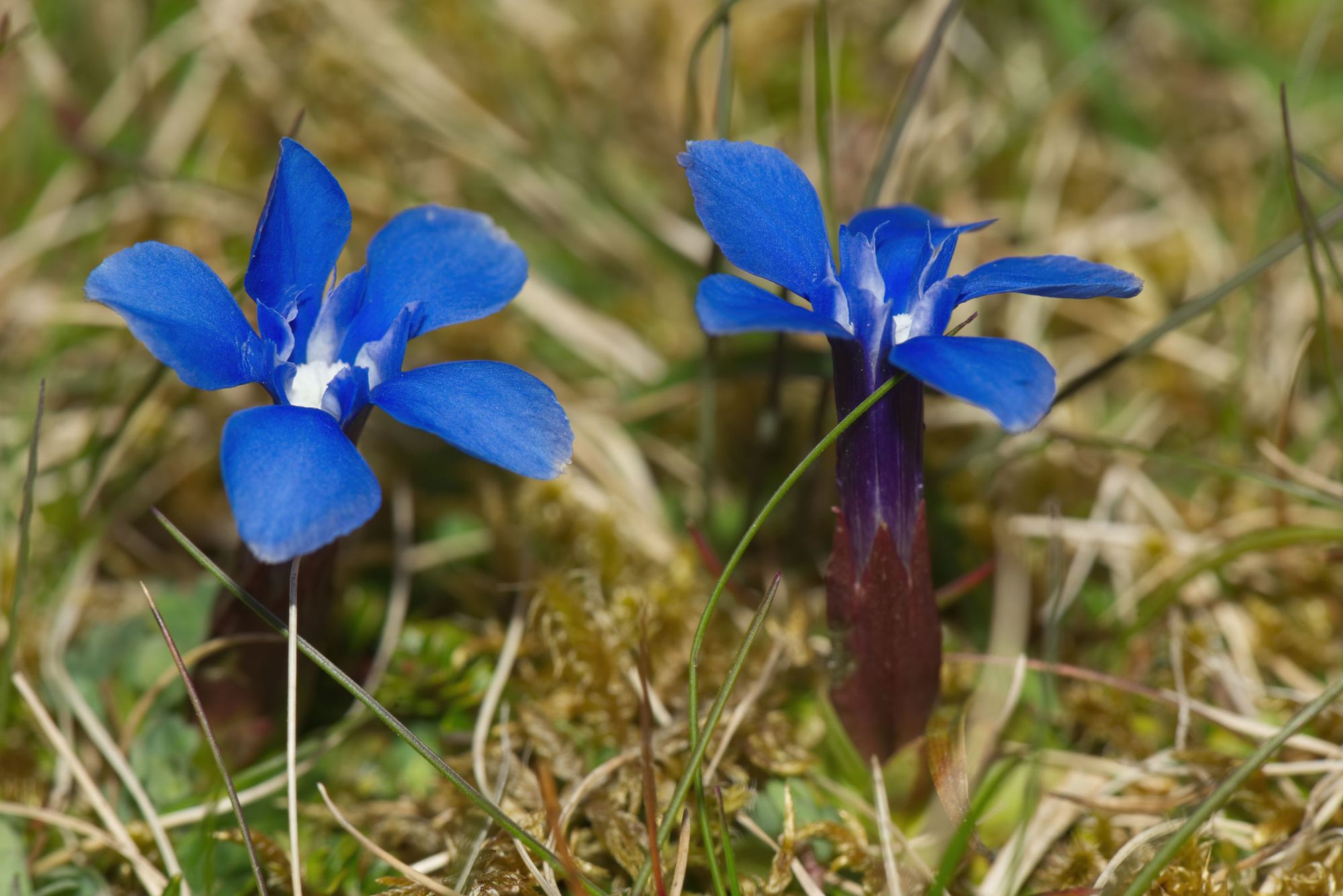
Doncaster | Doncaster Council has been accused of hypocrisy thanks to plans to sell off old arable farmland, where trees have been regenerating naturally, to housing developers. Campaigners say that this contradicts the city’s own environmental policies. “If the council fails to protect Rose Hill with all its trees, it makes a mockery of the mayor’s pledge to plant a million,” said one resident. Tony Nicholson, a member of the Doncaster Climate Commission, said that the area had been naturally rewilded, and that its loss was part of a wider trend of building on greenfield space across the city. The Yorkshire Post covers the story.
Elsewhere:
- An investigation has been launched in Norfolk following a raid that uncovered a number of dead buzzards, reports the Eastern Daily Press.
- Sewage pollution is making popular Thames swimming spots unsafe after rainfall, reports the BBC.
- The Yorkshire Post reports on the volunteer group at Bempton Cliffs that now uses scythes to cut the grass, in place of mechanical mowing equipment.
- Plans for “all-terrain tours” at Llyn Brenig have been axed after an outcry over the potential damage to wildlife, reports the Daily Post.
- The Welsh government has rejected plans for a huge solar farm on the Gwent Levels, in a move that was welcomed by the local Wildlife Trust.
- Almost all of Lancashire’s ash trees are now infected with Ash Dieback disease, reports the Lancashire Post.
- Campaigners have criticised plans to build a recycling facility at the site of an old quarry in Carmarthenshire, arguing that it has become a haven for wildlife, reports the BBC.
- The Environment Agency has introduced new byelaws on the River Severn and its estuary to protect declining salmon stocks.
- Yorkshire plans to set out a 50-point action plan to tackle climate change, reports the Yorkshire Post.
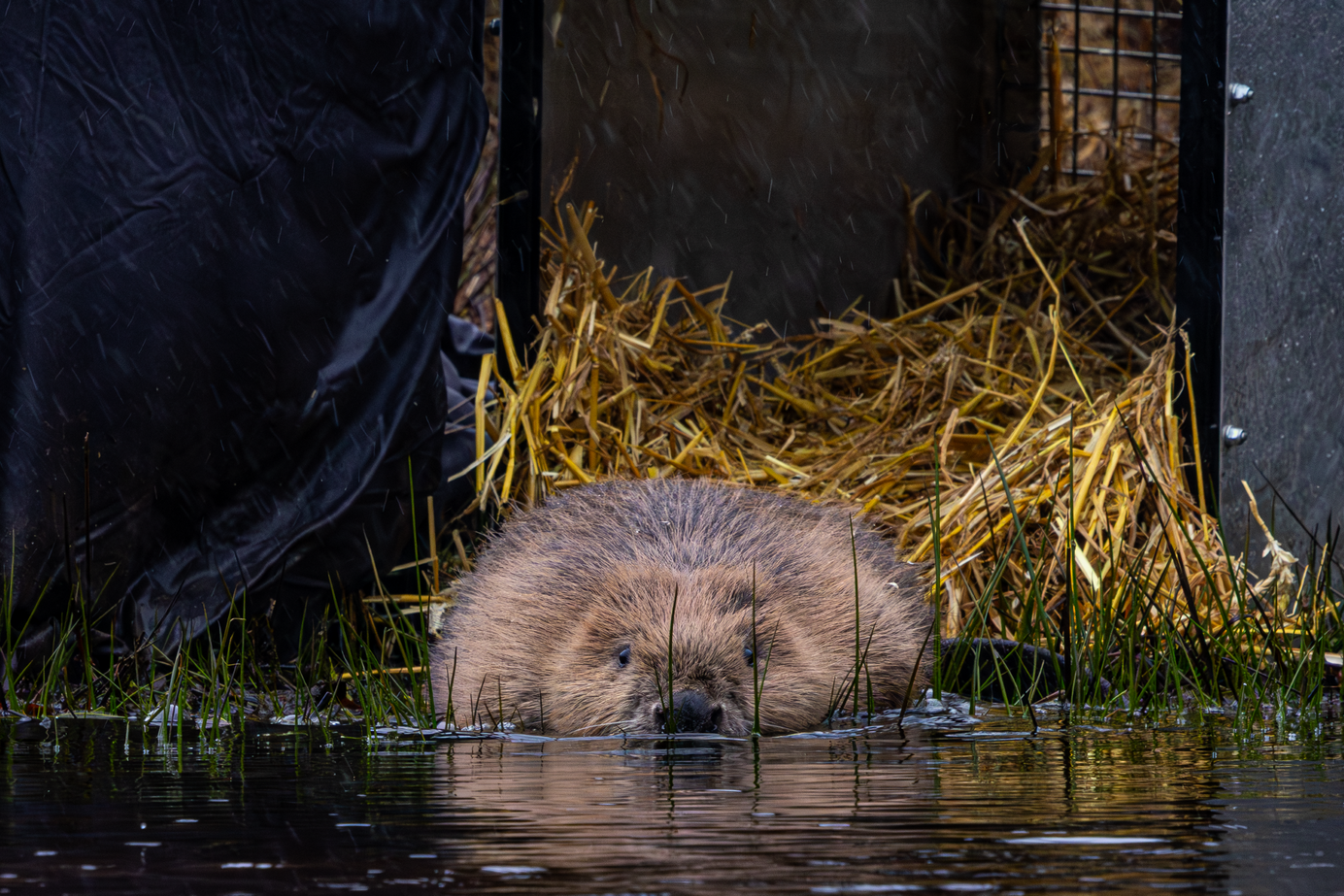
- A pair of beavers have been reintroduced to north Norfolk, reports the Eastern Daily Press.
Reports
Biodiversity | On the anniversary of the Leaders Pledge for Nature, which was signed by 80 heads of state, the UK’s five statutory nature agencies have released a report setting out how the UK can meet its commitments. Its key message is that nature loss harms human health and wellbeing and undermines the economy; and that the UK needs to become “nature positive” by 2030. If you’re confused about what that phrase means, the Independent has published an explainer. The heads of each of the agencies have commented on the report in a government press release.
Nuclear | The UK’s coastal military nuclear infrastructure is “profoundly vulnerable” to flooding from sea level rise and storm surges, according to a new report – and the impacts may arrive earlier or harder than the Ministry of Defence is prepared for. This is set to create a significant risk for nuclear military waste stockpiles, and some installations may need to be abandoned altogether. The report was written by Dr Paul Dorfman, a former advisor to the MOD, and now chair of the Nuclear Consulting Group think-tank. The findings were covered by the Scotsman.
Butterflies | The government has released its latest data on butterfly populations in the UK, including both habitat specialists and those that live in the wider countryside. There are two reports: one covering data from 1976 and the other from 1990 – although the new information is what went on in 2019 and 2020. “Despite the sunniest spring on record, 2020 was only an average year for butterflies in the UK with more than half of all species (32 from 58, or 55%) decreasing in annual abundance, after a summer which was duller and wetter than average,” the report says, noting that large fluctuations between years are typical.
Science
Climate | The biodiversity and climate crises must be addressed together, according to a new study led by scientists at the Zoological Society of London – a challenge that is growing in prominence thanks to the forthcoming UN climate negotiations in Glasgow. This paper reviews some of the current propositions for dealing with these twin emergencies, and highlights options with the greatest potential for delivering biodiversity gains. The findings are explained in a blog on the British Ecological Society website.
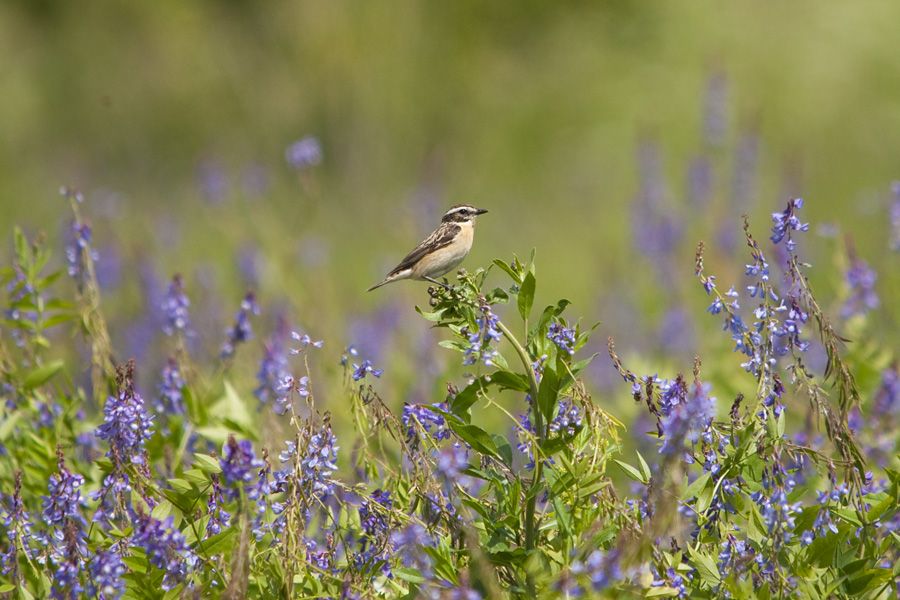
Habitats | Whinchats are not doing well, and a new paper attempts to figure out why that might be. Over the last century, breeding whinchats have been lost from the lowlands probably due to agricultural intensification, but populations still persist in the uplands, although they are also declining in these habitats. However, the availability of suitable habitat is unlikely to be the reason for current declines, as only 50% of apparently suitable habitat was currently occupied by breeding birds. The findings are explained in an RSPB blog.
Wetlands | Unmanaged wetlands support a disproportionately high density of waders compared to farmed habitats within a nature-rich farming system, according to a new RSPB-led study, which focuses on the island of Sanday in the Orkney archipelago. Agriculturally improved grassland supported the lowest densities of waders. The findings show the dangers of losing wetlands, and how describing an entire mixed farming system as “nature-rich” can mask significant variations between the quality of the habitats within.
Driftwood
Hymns | An 18th century hymn writer from Wales could help humanity to tackle the climate crisis, according to a new book by former Plaid Cymru MP, Cynog Dafis. His book, Pantycelyn a’n Picil Ni Heddiw, examines the legacy of William Williams of Pantycelyn, a leading figure in the Welsh Methodist Revival. “We need to rediscover the values of the Christian myth which dominated Welsh culture for two hundred years but is now in steep decline,” writes Dafis. “At the heart of Pantycelyn’s vision was a sense of awe at the immensity of the universe and at what he called ‘amrywioldeb natur’, the very biodiversity which now faces an unprecedented threat as a result of human exploitation.” Read more about his ideas in Nation.Cymru.
Rainforest | Nada Farhoud, the Daily Mirror’s environment editor, visits the temperate rainforests of north-west Scotland to report on this vanishing ecosystem. She explains why these woodlands are so unique and so threatened. “The Scottish temperate rainforests, also known as Atlantic or Celtic woodlands, now cover 117 sq miles, just 2% of the nation’s tree cover,” she writes. “Less than one-third is in a satisfactory condition.”
River | Comedian Griff Rhys Jones writes movingly and angrily in the Daily Mail about his devastation upon finding that the stretch of river that runs through his land in Pembrokeshire had been polluted by slurry, destroying the wildlife within. But this is also an account of his somewhat Kafkaesque attempts to get the Environment Agency, and then Natural Resources Wales, to take action. “My guess is that they daren’t risk their limited resources pursuing prosecutions on the sort of flimsy hearsay evidence that I could provide,” he writes. “By the nature of it, this sort of crime is washed downstream to reappear after the actual event.”
Further reading:
- Elle has a long feature on some women who’ve stepped away from their professional urban existences to “rewild their lives”.
- The Guardian looks at whether eco-labelling could change the way we eat.
- Wicked Leeks speaks to the owner of a Bristol smallholding attempting to protect her land from a housing development.
- We need to scrap HS2 before it causes any more damage, writes Caroline Lucas in the Metro.
- In light of the outrage prompted by a Faroese dolphin hunt, a column in the Herald points out that Scotland is hardly innocent, with hundreds of dolphins dying in fishing gear every year.
- Biology professor Dave Goulson raises the alarm over the insect apocalypse in the Guardian.
- Natural England has posted an update on how they will ensure that biodiversity net gain rules lead to environmental benefits.
- One year on from the Leaders Pledge for Nature, the RSPB looks at what progress the government has made.
Happy days
Music | The Philharmonia Orchestra is running a series of live and online concerts exploring humanity’s relationship with the natural world, called Human/Nature. “The natural world has been a spark for human creativity since the dawn of music-making. Composers have always drawn inspiration from mountains, forests, rivers, oceans, and the fundamental connectedness of all life,” the website explains. The first concert is coming up on 3 October, and the RSPB has discount codes for anyone who wants to book to attend an event.

Subscribe to our newsletter
Members receive our premium weekly digest of nature news from across Britain.
Comments
Sign in or become a Inkcap Journal member to join the conversation.
Just enter your email below to get a log in link.