Scottish Rainforests & Leprosy Squirrels
The latest news on nature and conservation in Britain.
National news
Rainforest | Forestry and Land Scotland has exceeded its national target for rainforest restoration in the last year by over 40%. There are only around 30,000 hectares of temperate rainforest remaining in Scotland, accounting for about 2% of the country’s total tree cover, and FLS manages a third of this area. Restoration involves a range of measures, including the removal of invasive rhododendrons, restoring areas of ancient woodland which have been replaced with plantations, and managing the number of deer. Last year, FLS treated rhododendron across 930 hectares (above its target area of 658), and also managed a 13% increase in the deer cull. Environment Manager Colin Edwards said: ‘In what is a never-ending task it’s good to get a glimpse every now and then of light at the end of the tunnel.’ The Scotsman covered the news, and the FLS press release details key restoration sites.
Oak | Thousands of oak saplings have been planted across Wales, thanks to an initiative which aims to connect children with nature. Natural Resources Wales’ Acorn Antics is an annual campaign which encourages schools to collect acorns from their nearby greenspaces. In 2022, 825kg of acorns were collected by children from 40 locations across Wales, before being delivered to a tree nursery for grading, weighing and planting. This year, having developed into small trees, 49,000 saplings were planted back within the local area from which they were collected as acorns. Aled Hopkins, NRW’s specialist advisor for education, said that Welsh oak trees are fighting for survival in the ever-changing climate, and that trees grown from local seed stock will have a higher growth rate and ability to survive than those imported from further afield.
Climate | A High Court judge has ruled that the government’s plan to tackle climate change is unlawful, and it will be required to redraft the plan for a second time. Mr Justice Sheldon ruled in favour of legal action brought by Friends of the Earth, ClientEarth and the Good Law Project. The organisations argued that the previous energy and net zero secretary, Grant Shapps, acted unlawfully last year when he approved the strategy, since it assumed each policy would be achieved in full, and included no contingency plans if this were not the case. The judge is expected to order the government to amend the strategy within the year – for the second time in two years. Ed Miliband, the shadow climate change secretary, said the ruling was ‘a new low’ for a government that has ‘totally failed on energy and climate.’ The Times and the BBC reported the news. Meanwhile, a BBC analysis found that the world’s oceans have broken temperature records every day over the past year.
In other news:
- Four-fifths of farmers in England and Wales have been negatively affected by months of wet weather, according to a poll by the National Farmers Union. The Independent covered the news.
- More than 120 libraries from Suffolk to Dumfries are featuring hedgerow-themed displays to celebrate National Hedgerow Week, according to the Tree Council.
- The government has warned farmers that there is a ‘very high probability’ that the disease bluetongue, which affects livestock, will be spread by midges blown over from Europe, reports the BBC and the Independent.
- Experts have warned that gardeners may be inadvertently killing earthworms by using soil conditioners marketed as ‘organic’, reports the Guardian.
- The Scottish government has introduced new restrictions to prevent the overfishing of crab and lobster stocks.
- John Swinney has been appointed as the new First Minister of Scotland following Humza Yousaf’s resignation. ENDS looks at Swinney’s record on the environment.
- Defra has announced £11.8m in funding for local projects boosting water quality, from habitat improvement to re-naturalising river courses.
- The JNCC has published an updated Biodiversity Framework, designed to facilitate cooperation and collaboration between the four UK countries.
Across the country
Dunkeld | Police are appealing for information after a popular osprey, known as Laddie, was found dead near Dunkeld, five days after going missing from his nest. Laddie was known by thousands around the world after he gained internet fame via a live webcam of the nest, at the Scottish Wildlife Trust’s Loch of the Lowes reserve in Perthshire. He first appeared on the nest in 2012, and returned in March of this year for his 13th consecutive breeding season. It is unclear whether criminality was involved; Inspector James Longden said that information from the local community ‘could prove vital’ in the investigation. The Times and the BBC covered the news, while this Scotsman comment hails Laddie’s ‘legacy’ for Scotland’s conservation efforts.
Essex | Essex University has built a state-of-the-art laboratory to develop climate-resilient plants and bolster the future of food security in the UK. The £3m facility includes an indoor field replicating environments across the world, a commercial standard vertical farm, and suites imitating a warming climate. Research at the centre will involve computer plant-scanning technology to monitor growth, and artificial intelligence to develop new strategies and predict how agriculture is changing. The BBC reported the news. Elsewhere, Heriot-Watt University in Edinburgh has been awarded £500,000 by Horizon Europe to research whether ancient microbes could help present-day plants adapt to climate change, reports the Herald.
Peak District | The National Trust is planting thousands of sphagnum moss ‘speed bumps’ on Kinder Scout to help restore peatland and slow the flow of rainwater, reports the Courier. Around 130,000 sphagnum moss plugs have already been planted in the first phase of the project, which will eventually see 800,000 placed in the landscape to create healthier blanket bog. The Trust said that the plugs will force rainwater to weave its way slowly down the slopes, alleviating flooding in the towns below and creating ideal conditions for peat to actively form. The moss can hold up to 20 times its own weight in water: the wet conditions will also encourage moorland plants such as bilberry, heather and cotton grass, and provide habitat for dragonflies, lizards and golden plover.
Elsewhere:
- Sadiq Khan has pledged further green action after winning his third term as mayor of London, reports ENDS and the Evening Standard.
- A man from Norfolk has been handed a suspended jail sentence after police discovered his collection of more than 3,000 wild birds’ eggs, reports the BBC.
- East Cambridgeshire Council has opened a consultation on how to increase hedgehog numbers, reports the BBC.
- Northumbrian Water has launched an interactive map to show storm overflows in real time, reports Chronicle Live. Meanwhile, the Angling Trust is calling for the government to prevent sewage entering fragile chalk streams in Berkshire.
- Specialist ‘hotels’ built for kittiwakes during restoration work on the Tyne Bridge have been snubbed by the birds, reports BirdGuides.
- Woody the two-year-old Fox Red Labrador has joined the fight to exterminate invasive predators from Rathlin Island and protect its seabirds, reports the BBC.
- Cumberland Council has said that people taking pebbles or sea shells from Cumbrian beaches could be fined as much as £1,000, reports the Times.
- Natural England has teamed up with the Cornwall Wildlife Trust and others to host a two-day Cornish Seaweed Festival in Marazion, taking place this weekend.
- A man in Newcastle has been left ‘devastated’ after the council cut a wildflower meadow plot he had nurtured for 10 years, reports Chronicle Live.
- Marlborough Town Council has warned the public not to forage for wild garlic after a tributary of the River Kennet flooded with a ‘significant amount’ of human waste, reports the BBC.
- Natural Resources Wales is working with the Wye Valley National Landscape team to bring sturdy breeds of cattle to graze two areas of heath and bog habitat in Monmouthshire.
- Firefighters have issued an ‘extreme risk’ warning of wildfire across the northwest of Scotland, reports the Herald.
- The RSPB and the Peak District National Park Authority are offering a reward of £10,000 for information about the shooting of a peregrine falcon near Crowden, reports the BBC.
Reports
Windermere | A report funded by the UK space agency has found a correlation between peak tourist numbers and toxic algal blooms in Lake Windermere. The study was conducted by environmental data company Map Impact, using satellite images of England’s largest lake to track the blooms. Algal blooms are caused by hot temperatures and excessive nutrients, and campaigners have been highlighting the damaging effects of sewage discharges – which are nutrient-rich – into the lake for years. The report also notes that rising temperatures from climate change pose a ‘significant risk’ by enhancing algal growth conditions. The BBC covered the news.
Species | Decades of decline for species in the UK is ‘levelling off’, according to statistics released by Defra. The ‘Indicator of species abundance’ report is part of Defra’s efforts to develop a new measure that will be used to track progress towards the statutory target of halting species decline by 2030. The latest release found that the relative abundance of species in England did not change significantly between 2017 and 2022, compared to a decline of around 69% between 1970 and 2022. The data covers 1,177 species, of which 48% showed an increase and 37% a decline during the short-term period. Of those species, moths underwent the largest decline, while fish, mammals and vascular plants all increased compared to their baseline year. Defra said it hopes to include more species not currently represented – including amphibians, reptiles and fungi – as more data becomes available. ENDS reported the news.
Rivers | A report by the Office for Environmental Protection has found ‘deeply concerning failures’ to implement the laws designed to protect England’s rivers, lakes and coastal waters. As a result, key government targets will likely be missed, according to the environment watchdog. In fact, the OEP’s worst-case assessment would see just 21% of surface waters in Good Ecological condition by 2027: only a 5% improvement on the current situation, and a considerable way off the target of 77%. The report said that, while the law was broadly sound, it lacked detail and adequate funding, and its interpretation and implementation was ‘poor’. Mark Lloyd, CEO of the Rivers Trust, said the report ‘proves our long-held suspicion that current policy and legislation is not enough – we need to change course to save our rivers.’ The BBC and the Times covered the news.
Science
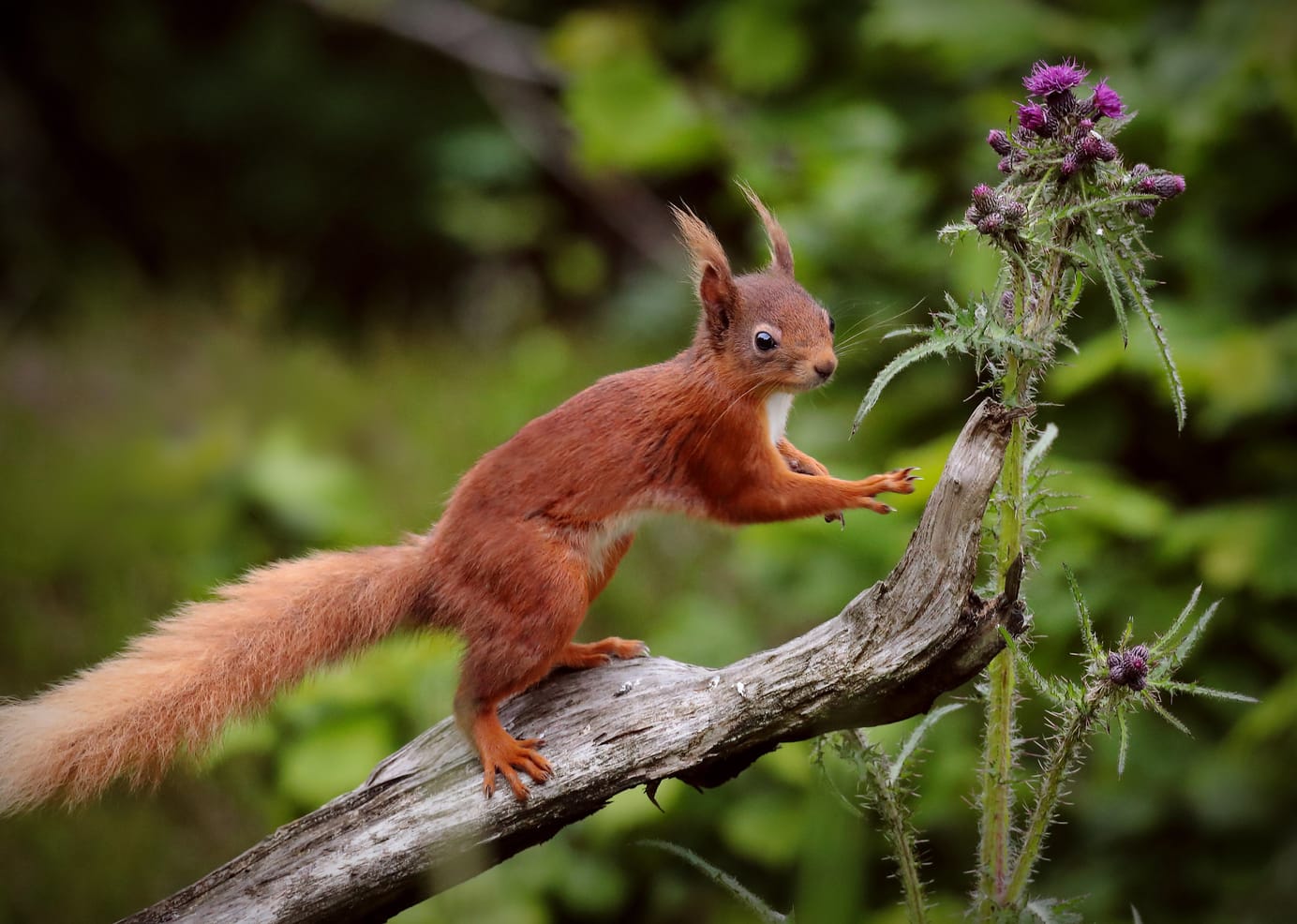
Squirrels | Leprosy may have passed between humans and red squirrels in medieval England, according to research published in Current Biology. A team of researchers studied 25 human and 12 squirrel remains from archaeological sites in Winchester, and discovered closely related strains of the bacteria Mycobacterium leprae, which causes leprosy. The disease is one of the oldest infectious diseases recorded in humans, and although there have been no cases in the UK in 70 years, it was common in medieval times. ‘This is the first time that we found an animal host of leprosy in the archaeological record, which is really exciting,’ said co-author Dr Sarah Inskip from the University of Leicester. It is unknown whether humans caught leprosy from squirrels or vice versa. The BBC and the Guardian covered the research.
Disease | A study in Nature has found that environmental changes caused by humans are fuelling the rise of infectious diseases across the globe. Researchers conducted a meta-analysis of 1,000 previous studies, focusing on five anthropogenic ‘global change drivers’: biodiversity loss, climate change, chemical pollution, habitat loss and the introduction of non-native species. They found that four of the five drivers tended to increase disease risk across humans, animals and plants. The loss of biodiversity played an especially significant role in driving up disease risk, while surprisingly, urbanisation decreased the risk. However, most studies only addressed a single driver; senior author Dr. Jason Rohr said the next step would be to ‘better understand the connections among them.’ The New York Times covered the research.
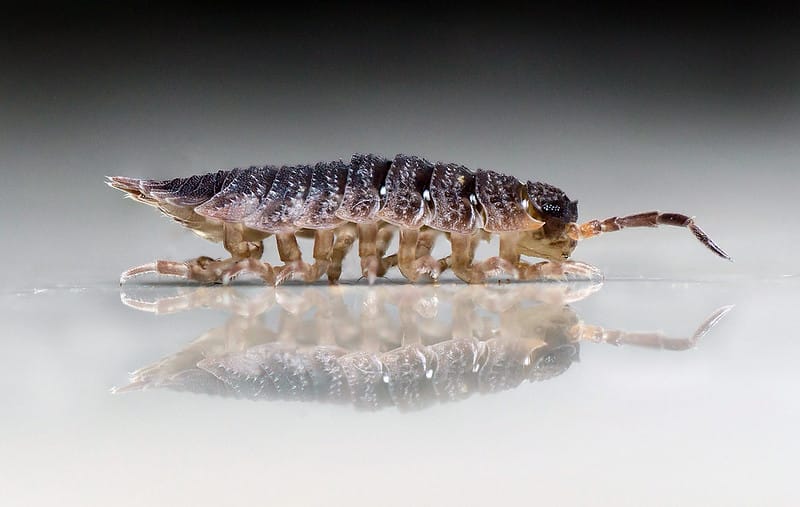
Woodlice | Researchers have discovered that woodlice can spread the seeds they eat, setting a record for the smallest animal recorded doing so. The findings – published in Plants People Planet – underscore the critical yet often overlooked role that small invertebrates play in ecosystems. A team from Kobe University focused on the fungi-eating silver dragon plant found across eastern Asia, known for its miniscule seeds. Using automated photographs at night, they found that woodlice consumed a significant portion of the seeds, and showed reasonable seed survival rates. The authors said the findings should prompt a reevaluation of conservation strategies to include creatures previously considered ecologically insignificant. The Independent and Phys.org covered the findings.
Driftwood
Intelligence | Plants don’t have a brain, but can they possess consciousness? A feature in Atmos speaks to Zoë Schlanger, author of the new book The Light Eaters: How the Unseen World of Plant Intelligence Offers a New Understanding of Life on Earth. In the interview, Schlanger discusses her research into the breakthroughs of modern botany, as well as the controversial debate around plant intelligence. ‘I’m hoping for a future, even in the next decade, where we’re more comfortable thinking about the idea of there being a mind within things that don’t have brains,’ she says. Recognising plants as intelligent, however, will take a ‘certain level of tolerance for holding ambiguity and a comfort with the unknown’, she adds. The contentious book also features in recent reviews by Nature, Slate and the Guardian.
Apples | A long read in the New Yorker delves into the spiralling fate of local varieties of English apples. There exist more than two and a half thousand cultivars in Britain – but the industry is in deep crisis, with cheap imports pushing out local varieties. An orchard owner from Devon has been working with a group of biologists at the University of Bristol since 2017 to record and map every variety of apple tree they can find in the West of England. As well as lost cultivars, the team is on the hunt for ‘natural survivors’: trees which can act as successors when the currently favoured varieties struggle in the UK’s warming climate. Barny Butterfield, proprietor of Sandford Orchards, said: ‘We have funnelled our genetics… [But] if we don’t keep the broader, ancient DNA in existence, then it’s gone.’
Supersewer | London’s newly re-elected mayor, Sadiq Khan, has pledged to make the Thames swimmable by 2030 – but how will he do it? Part of the answer comes in the form of a giant supersewer, more formally known as the Thames Tidal Tunnel. Unbeknownst to most Londoners, the £4.5 billion tunnel now stretches for 25km under the city, well below the tube network. It is ready to transport millions of tonnes of effluent away from the Thames to Beckton, where it will be processed at the largest waste treatment works in Europe. ‘As well as being useful, the supersewer is weirdly beautiful,’ writes journalist Stephen Bleach, who toured the tunnel recently. ‘The whole grandiose complex is like the subterranean fantasy of a mad brutalist architect: silky concrete, monumental proportions.’ Read more about the ‘cathedral of crap’ in the Times here.
Further reading:
- Two artists have collaborated on a piece of music inspired by the birdsong of Knepp Estate. ‘Knepp Dawn’ will be released on Saturday to coincide with International Dawn Chorus Day, reports the BBC.
- A feature in the Times explores whether Craig Shutttleworth, the scientist responsible for the original cull of grey squirrels on Anglesey, can stop their impending return.
- The theme of this year’s Met Gala was ‘The Garden of Time’, designed to celebrate circular fashion. A fun thread on X by Kew Mycology matches various outfits with species of fungi.
- An exceptionally rare book of bird illustrations by John Gould, a celebrated taxidermist in 19th-century London, is on sale with a £2 million price tag. Learn more in the Guardian.
- A Suffolk Punch foal – classed as ‘critically endangered’ by the Rare Breeds Survival Trust – has been named Jedi John after it was born on Star Wars Day, May the Fourth.
- In the Scotsman, read about the botanist using Scottish wildflowers to create a different brand of cosmetics.
- A new writing competition is looking for two Chalk Stream Laureates to help spread the word about the beautiful and endangered habitat. Applications close on 31st of May.
- In the New Statesman, Green MP Caroline Lucas questions why, in a country that reveres nature, the governments of England have presided over its mass destruction.
- A feature in the Financial Times reviews Our Island Stories by Corinne Fowler, which it finds a ‘scholarly and nuanced’ exploration of the colonial history of Britain’s landscapes.
- How is it that an ancient bluebell woodland in Kent has been allowed to become a toxic dumping ground for waste? The Times investigates.
Happy days
Weegie | A fossilised shrimp discovered near Glasgow is believed to be around 333 million years old, and a species new to science. It would once have swum in the Carboniferous seas around the city, when back-boned creatures were starting to colonise land. Amusingly, the scientists who discovered the shrimp have chosen to name it the Tealliocaris weegie, in honour of the people of Glasgow, known as ‘weegies’. Professor Rob Ellam, emeritus professor at the University of Glasgow, said the naming ‘shows that there is still room in the serious world of professional palaeontology and scientific publishing for a welcome bit of light-hearted Glaswegian banter.’ The Independent covered the story.

Subscribe to our newsletter
Members receive our premium weekly digest of nature news from across Britain.
Comments
Sign in or become a Inkcap Journal member to join the conversation.
Just enter your email below to get a log in link.