Sandeel Fishery & Hedgerow Survey
The latest news on nature and conservation in Britain.
National news
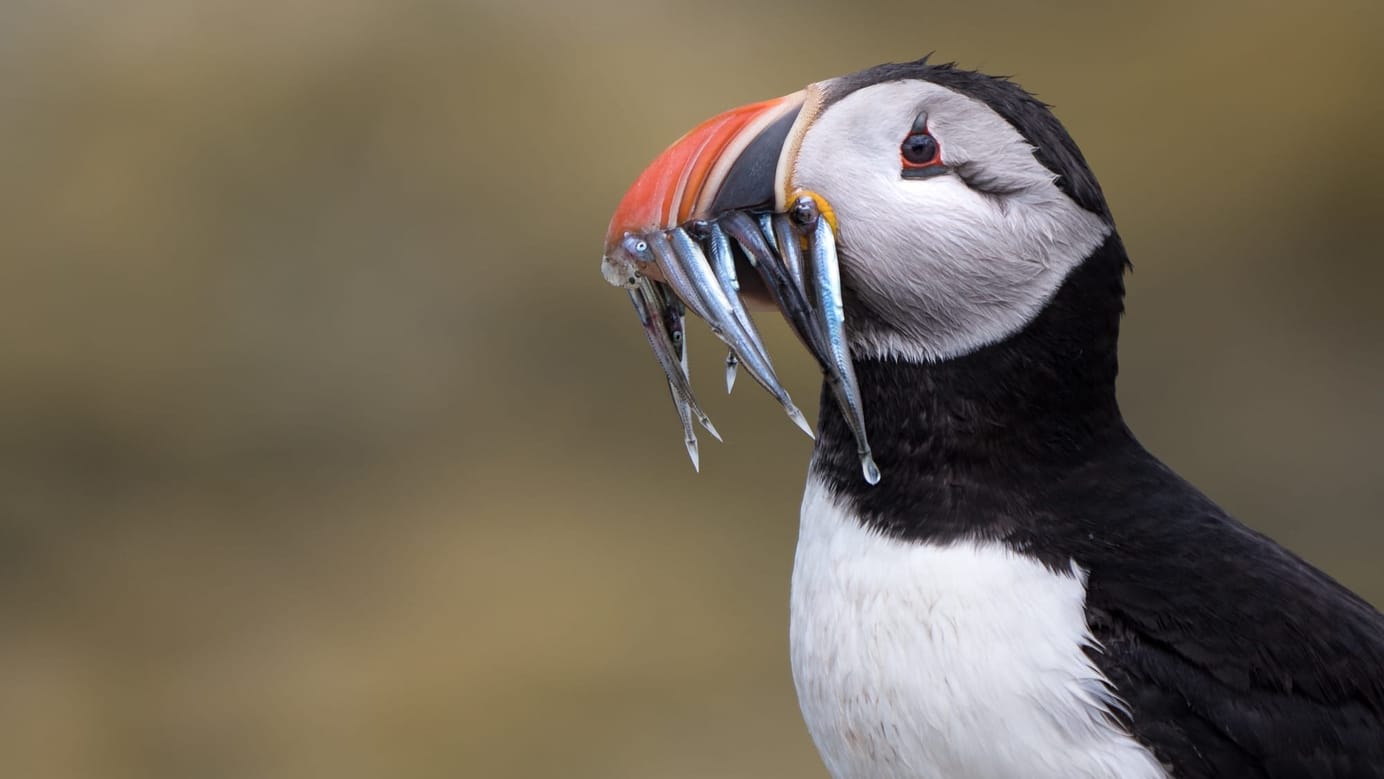
Recovery | One year since the publication of the Environmental Improvement Plan, the government has launched a set of measures designed to reverse the decline of nature. These include the closure of industrial sandeel fishing in the English North Sea, targeted restrictions on bottom trawling in certain Marine Protected Areas, and a new framework for protected areas and national parks. The government also announced that 34 projects will receive a share of £7m to restore lowland peat across England. Some green organisations – including the RSPB and the Wildlife and Countryside Link – have welcomed the measures, with a particular focus on sandeel as a keystone species critical to the health of marine wildlife. Beccy Speight, chief executive of the RSPB, said that the announcement is a ‘vital lifeline from our Government for our seabirds when they need it most.’ However, Joan Edwards from the Wildlife Trusts was more sceptical, stating that the policies mostly served to hide the government’s ‘appalling record’: ‘No amount of window dressing can cover up the fact that the UK government has failed its environmental targets.’ The Guardian, the Times and BirdGuides reported the news. Meanwhile, the Scottish government also announced it will ban fishing for sandeel in Scottish waters, subject to Parliamentary approval. The Herald reported the news.
Wales | The Welsh government has published long-awaited plans for new laws to protect nature and reverse the loss of wildlife in Wales. The white paper on establishing environmental principles and strengthening governance would put nature targets into law, including the headline goal of stopping biodiversity decline by 2030, and for ‘clear recovery’ by 2050. The plans also include setting up an independent watchdog to hold organisations accountable on issues like sewage and air pollution, and a requirement for public bodies in Wales to publish their own nature recovery action plans. The UK government set up the independent Office for Environmental Protection in 2021, with Scotland establishing its own organisation in the same year, leaving Wales as the only nation without a permanent arrangement. Now, climate change minister Julie James says her proposals offer the chance for Wales to ‘leapfrog the other nations’ and ‘go from last to first’. Ruth Chambers, senior fellow at the Green Alliance think tank, said: ‘The government must now crack on and get these welcome but long overdue measures in place as quickly as possible’. The BBC and ENDS reported the news.
Adaptation | Nature must be at the heart of all efforts to address the risks of climate change. This is one of the five central pillars of the national adaptation plan published by the Scottish government on Wednesday, covering 2024 to 2029. ‘This is not a “rural issue”,’ the plan states: ‘Nature has a place throughout our towns, cities, villages and built environment as well as our less populated areas.’ Among the key policy proposals is action to increase the resilience of natural carbon stores and sinks in the form of peatland, forests and blue carbon; a new plan for invasive non-native species; and enhancing the climate resilience of marine ecosystems. The plan will also require every local authority to implement ‘nature networks’, which will connect nature-rich sites and deliver local biodiversity priorities. The BBC highlighted how the plan will use blue-green infrastructure to create resilient natural spaces.
In other news:
- Henry Dimbleby, co-founder of Leon and author of the National Food Strategy, is launching a venture capital firm that aims to transform the world’s ‘unsustainable’ food system, reports the Times.
- Natural England has confirmed that 2023 was one of the worst years for the survival of hen harrier chicks since monitoring began.
- The UK’s largest ever citizen science water testing project has found that 83% of English rivers contain evidence of high pollution from sewage and agricultural waste, reports the Guardian.
- Dr Andy Clements, head of the government’s task force on reintroductions, has said that culture wars between ministers must end if nature is to be restored, reports the Guardian.
- Defra is set to finalise a change to the biodiversity net gain metric which could incentivise building in areas set aside for nature recovery, reports ENDS.
- The government announced it will introduce new border controls to guard against diseases and pests – but some MPs think the regime presents ‘serious biodiversity risks’, reports the Evening Standard.
- Thirty charities have signed an open letter to the Soil Association calling for the removal of its certification of salmon and trout farms, which they brand as ‘unacceptable greenwashing’, reports the Guardian.
- Rewilding Britain has opened applications for its Rewilding Innovation Fund, a twice-yearly award of up to £15,000 for large-scale nature restoration projects.
- The Vincent Wildlife Trust has launched a national polecat survey and is asking the public to submit sightings.
Across the country
Devon | The National Trust has announced plans to boost north Devon’s temperate rainforest by planting more than 100,000 trees. The planting will take place close to surviving pockets of rainforest at three separate locations – near the sea on Exmoor, and inland at Arlington Court and Woolacombe & Hartland – in an attempt to buffer and expand the existing habitat. The Trust is aiming to establish around 50 hectares of new rainforest, and planting will include species such as the almost-extinct Devon whitebeam. John Deakin of the Trust said that ‘the rare specialist plants that depend on this habitat desperately cling to the remaining fragments for survival, with some of the woodlands in north Devon containing nearly the entire global population of some of these species’. On X (formerly Twitter), campaigner Guy Shrubsole applauded the news, although he added that he was ‘obviously hoping these plans involve lots of natural regeneration, not just planting’. The BBC and the Guardian covered the news.
Powys | A pair of ospreys nesting on Gilestone Farm in Powys are the first pair to be seen settling so far south in Wales in around 200 years. Their presence has been celebrated by conservationists, but has caused a pickle for the Welsh government, which spent £4.25m on the farm in 2022 to help the Green Man festival company. The company wanted to use the location for festival events while continuing to farm the area, but a restricted zone now in place to protect the osprey nest has made the site unusable for the festival. The campaign group Stop Gilestone Farm Project has celebrated the news, saying that the appearance of the ospreys is ‘testament to the exceptional habitat and wildlife’ of the area, and needs protecting. The economy minister said the government was committed to helping Green Man ‘secure a suitable long-term base in Wales’. The BBC reported the news.
Norfolk | One of Britain’s rarest butterflies has suffered its worst summer since records began, reports the Guardian. The swallowtail is among the UK’s largest butterflies, and it is now only found at 16 sites in the Broads in East Anglia, where the caterpillar’s food plant, milk parsley, grows. Along with hundreds of other species, the swallowtail in the Broads is threatened by the impacts of climate change, with summer droughts and sea level rise causing saltwater to enter the freshwater habitat, while in winter, floods cover the marshland for prolonged periods. This can prove fatal for swallowtail chrysalises, which become submerged on reeds too long to survive. This year, the RSPB is applying for a licence from Natural England to propagate milk parsley and plant them on slightly higher ground which is less likely to be flooded. Expert Mark Collins said the situation was ‘very concerning’, and that the swallowtail acts as ‘a bellwether’ for other species, whose struggles are understood in less detail.
Elsewhere:
- Kent Wildlife Trust has raised concerns for the welfare of its seal population after a decision to allow floating pontoons to be installed in Pegwell Bay, reports the BBC.
- Storms Isha and Jocelyn have caused thousands of pounds of damage at the Royal Botanic Garden Edinburgh, reports the Scotsman.
- Councillors in Dumfries and Galloway have given their support – in principle – to the bid for creating a new Scottish national park in Galloway, reports the BBC.
- The village of Kinlochewe in the northwest Highlands has set a provisional UK record for January temperature with 19.6C, reports the Scotsman.
- An investigation by the Environment Agency into a pollution event in the River Nene near Peterborough, which killed 100,000 fish, has drawn a blank, reports the BBC.
- Volunteers have planted hundreds of saplings to help preserve a native ash woodland in east Yorkshire hit by ash dieback disease, reports the Hull Daily Mail.
- Campaigners have formed the ‘Cleddau Project’ with the aim of stopping pollution and restoring the condition of the Cleddau estuary in Pembrokeshire, reports the BBC.
- Sharpham Estate in Devon has recruited two Konik ponies to help rewild 50 acres of former farmland, reports ITV.
- A conservation project to help boost the rise of red squirrels in Cumrbia is being launched in Furness, reports the Mail.
- An upland farmer in Lancashire is afraid she will go out of business after changes to subsidies since Brexit, reports the BBC. Meanwhile, a farmer from the Berwyn mountains near Llangollen has branded the Welsh government’s interim agricultural support scheme as an ‘absolute joke’, reports the Cymru Nation.
- A project titled ‘For Peat’s Sake’ has secured funding to restore peatland in Caithness and north Sutherland, reports the John O’Groat Journal.
- A sea swimmer from Exmouth, Devon, is suing South West Water for dumping sewage in the sea near her home, reports the BBC.
- Residents of the Towy Valley are calling for the landscape to be designated as an area of outstanding natural beauty, reports the South Wales Guardian.
- A rare pair of white-tailed sea eagles have been spotted in west Suffolk, reports the BBC.
Reports
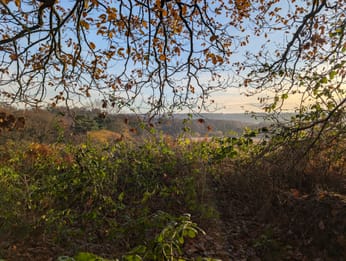
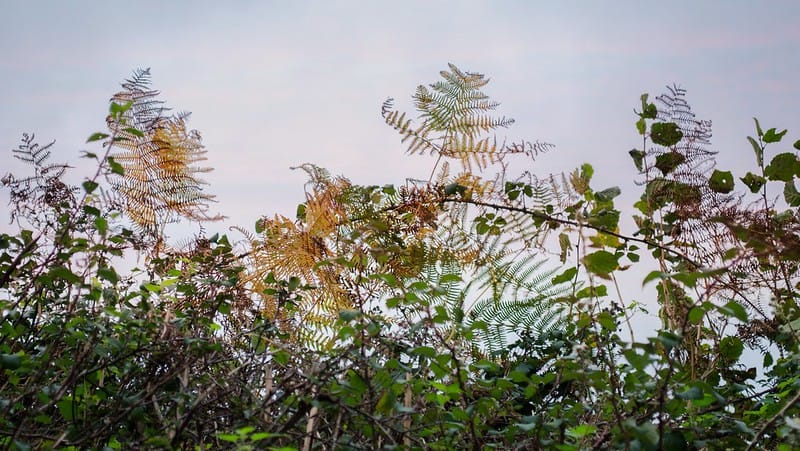
Hedges | If laid end to end, England’s hedgerows would stretch around the Earth almost ten times. This is one of the findings from the first full map of England’s vast network of hedges. Scientists from the UK Centre for Ecology and Hydrology used innovative aerial laser scanning to produce the comprehensive map, revealing a total of 390,000km of hedgerows on field boundaries. The map showed that the southwest supports the highest density of hedgerows, led by Cornwall, while Surrey, Hampshire and Berkshire emerged as the counties with the least (excluding large urban centres). The map also calculated the height measurements of the hedges for the first time, which is a crucial indicator of hedgerow quality and central to estimates of carbon potential. Dr Richard Broughton, who led the project, said that the map will help support the national policy to expand hedgerows by telling us ‘where there are gaps in the hedgerow network that we could fill in’. The BBC covered the research, and UKCEH summarised their findings on X.
Food | Shifting towards a more sustainable global food system could create up to $10tn of benefits and ease the environmental crisis, according to a global policy report by the Food System Economics Commission. The report – which is the most comprehensive economic study of its kind – found that the existing food systems destroy more value than they create due to environmental and medical ‘hidden costs’. Among its recommendations, the report proposes shifting subsidies away from large-scale monocultures and instead incentivising smallholdings better able to absorb carbon and make space for wildlife. Other recommendations include a change of diet, and investment into technologies enhancing efficiency. The team of authors behind the report said that redirecting the food system would be politically challenging – costing between 0.2% and 0.4% of global GDP per year – but it would bring vast economic and welfare benefits. The Guardian covered the research.
Agriculture | Defra has published its 2023 Agri-climate report, outlining statistics for UK emissions linked to agriculture. It found that total agricultural greenhouse gas emissions have decreased by 12% between 1990 and 2021 – although the majority of this decrease took place during the 2000s, and since then emissions have remained at a similar level. The report also details the results of the Farm Practices Survey, which found that the majority of farmers (62%) thought it was important to consider GHGs when making farm business decisions. Furthermore, 53% of farmers said they were taking actions to reduce emissions, with the most common action being to improve energy efficiency. The main motivation for taking action was that it was considered good business practice (83%), closely followed by concern for the environment (73%). On X, food and farming advocacy group Sustain noted that the results show that farmers are motivated to make a difference, but more ambitious financial support and information are necessary to remove structural barriers.
Science
Insects | Everyone knows the expression ‘like a moth to a flame’, but scientists have long puzzled over the real reason why insects are attracted to lights at night. Now, a study published in Nature Communications claims to have solved the mystery. A team led by researchers from Imperial College London captured insect flight paths around lights using high resolution, infrared motion capture and high-speed video recordings. They found that the insects were not, in fact, steering directly towards the light, but instead their flight paths were thrown off by turning their dorsum – or back – towards the light. Under a natural sky, insects developed this instinct to help maintain proper flight control. Now, however, this response can cause them to continuously steer around artificial lights, effectively trapping them. Lead researcher Dr. Sam Fabian said the research highlighted the importance of the direction of artificial lighting at night, with lighting pointing upwards having the most dramatic effect on flight paths. The Guardian covered the research, and the Nature journal created this video of the findings.
Shearwaters | A study in PNAS investigates the shifting range of Balearic shearwaters due to climate change. How individual animals respond to climate change is key to whether they will survive, yet few studies have examined how changes in individual behaviour affect population-level change. A research team led by the University of Oxford used long-term geolocators to track 145 shearwaters – a critically endangered seabird which migrates between the Mediterranean Sea and the North Atlantic – and analyse year-to-year changes. Over a decade of data, they found a northward shift in the migration range, with birds travelling further in response to changes in sea-surface temperature. They also found that when individuals travelled further, they returned faster, perhaps to minimise delays in arriving at the breeding area. The authors write that their findings contribute to understanding of how flexibility in individual behaviour might allow species to better adapt to changing climates.
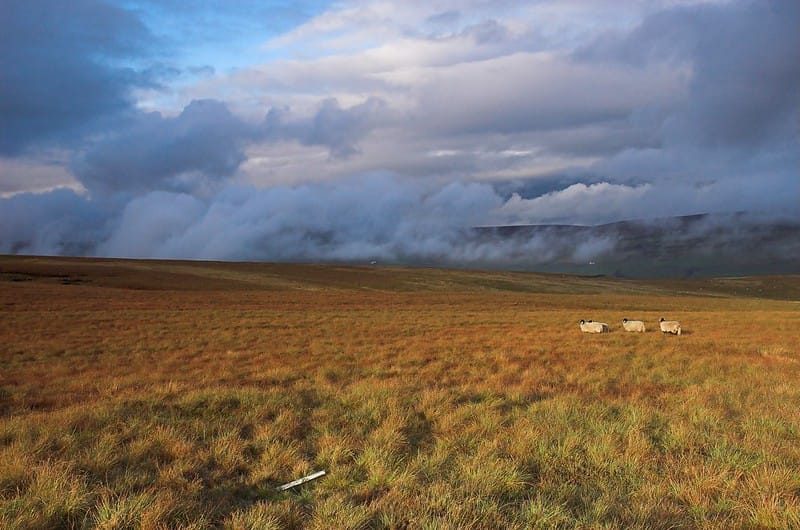
Grassland | As climate change causes winters to warm, the effects on grassland plant communities are largely unknown. To remedy this, a research team conducted a study in Upper Teesdale, England: a well-studied area known for its arctic-alpine species growing at their warm range limits. The team used open top chambers to raise the temperature by 0.5C from mid-September 2019 until mid-May 2022, and excluded sheep grazing during the summer. They found that over the period grass-like graminoid biomass increased, while bryophyte biomass decreased: this suggests that winter warming could cause a shift towards more dominant vascular species in plant communities in the longer term, if not buffered by suitable grazing management. The findings were published in Plant Ecology and Diversity. Meanwhile, a study in the Journal of Applied Ecology conducted a two-year grazing experiment to test the effects of large herbivores on grassland plant communities.
Driftwood
Orchids | A feature in the Times takes a close-up look at the biodiversity of orchids ahead of Kew Gardens’ 28th annual orchid festival in February. Described as ‘a celebration of vibrant flora to brighten up the winter months’, this year the festival looks to Madagascar for inspiration, which is home to almost 1,000 mostly endemic orchid species. The UK has somewhat less, with somewhere between 52 and 57 native species (depending on who you ask). Globally, an estimated 55–60% of wild orchid species face extinction. Professor Mike Fay, a senior research leader at Kew, explains that orchids also function as a ‘useful early warning system’ for the overall health of an ecosystem. Some orchids, such as the bird’s-nest and the ghost orchid, rely solely on fungi – a strategy which only works ‘when the ecosystem is healthy and the fungus is still there’, according to Fay. Kew’s festival aims to highlight the dangers facing the plant, as well as showcase its unique evolutionary traits, beauty, and sheer variety.
Seals | The BBC is showcasing a unique volunteering opportunity: the Manx Wildlife Trust is searching for ‘seal sitters’ to observe and monitor seal pups found around the island coastline. The Trust explained that sitters usually stay with the pup after it is spotted to make sure it is not distressed or injured, and ensure it returns safely to the sea. Marine wildlife officer Lara Howe said the data collected by volunteers is ‘invaluable’ for conservation work – but she warned any new volunteers would need a ‘strong stomach’, as the role also involves collecting data on dead or stranded animals, including basking sharks and turtles. For further motivation, watch this video of Mary, an underweight and infected seal which was rescued by the Trust in October, rehabilitated, and released into the sea on Monday. Elsewhere, an unused lifeboat building in South Gare is set to be transformed into a seal rescue centre in Teesside, reports the Teesside Gazette.
Identity | In Harper's Bazaar, co-founder of Atmos magazine and trans woman Willow Defebaugh writes about how looking to nature helped her feel more comfortable with her own identity during her transition. In a weekly newsletter, Defebaugh would turn to a different species which could challenge binary notions of sexuality and gender. These ranged from examples of sex-changing species such as clownfish and hawkfish, through to hermaphroditic slugs and cosexual trees. ‘Certain species of fungi [...] have over 23,000 variations of what we would consider sex,’ she writes. ‘Fungi are known for decomposing matter; for me, they broke down our binary ideas about identity.’ One hundred of Defebaugh’s essays are being released as a book titled The Overview: Meditations on Nature for a World in Transition.
Further reading:
- A feature in the Conversation discusses ways of increasing access to Britain’s green spaces, including removing stiles from public pathways.
- This article in the Financial Times examines the fraught issue of building houses on Britain’s greenbelt.
- A Guardian article looks at the various areas of Scotland bidding to be the next national park.
- In the Times, Oxford data scientists Hannah Ritchie outlines seven reasons to be hopeful about progress on climate change.
- Also in the Times, editor Rosie Kinchen reports her mixed experience of hunting deer in Hampshire.
- The Herald is running a series on the ‘new Highland Clearances’.
- In Chronicle Live, read about the Northumberland geologist-turned-author who has raised more than £20,000 for wildlife charities through his rock-themed trilogy.
- The Booth Museum in Brighton has unveiled its first new diorama – a large-scale three-dimensional model – in almost a century, inspired by wildlife in the city against a backdrop of climate change. Read about it in this BBC article.
- In the Times, former London resident Lucy Holden investigates whether working as a ranger in the Highlands can help cure her anxiety.
- For the Guardian, writer Phoebe Smith describes her travels to Kildare in Ireland to explore the Celtic figure behind the national holiday of St Brigid: a lover of both nature and beer.
- Also in the Guardian, this article describes the shared grief of a Devon village after an ancient and beloved oak toppled.
- This Countryfile feature investigates the evolving definition of ‘rewilding’, and the predator versus herbivore argument in the context of the British countryside.
Happy days
Hairstreak | In the Guardian, author Patrick Barkham is encouraging readers in London to get out into the winter sunshine and go in search of butterfly eggs. More specifically: the ‘miniscule white eggs’ of one of Britain’s ‘most elusive and nationally scarce butterflies’, the brown hairstreak. The species was disappearing rapidly from Britain in the 20th century, but now, the eagle-eyes of egg hunters have discovered that it is quietly recolonising areas of London and the Thames corridor. Barkham writes that it is only in midwinter that the ‘sea-urchin-like ova’ can be found on the bare branches of blackthorn, a plant which thrives in hedges and copses on clay soils. Sightings are being listed on this map.

Subscribe to our newsletter
Members receive our premium weekly digest of nature news from across Britain.
Comments
Sign in or become a Inkcap Journal member to join the conversation.
Just enter your email below to get a log in link.