Sandeel Ban & Return of the Elk
The latest news on nature and conservation in Britain.
National news
Sandeels | An EU challenge to Britain’s ban on the commercial fishing of sandeels in the North Sea has been dismissed in international court. Sandeels – small eel-like fish – provide vital sustenance for marine life, especially vulnerable seabirds along the UK coast including puffins, kittiwakes and razorbills. But sandeels are also fished commercially for use in animal feed, and, in early 2024, the UK judged that stocks were becoming dangerously low, resulting in the ban. Now, judges at the Permanent Court of Arbitration based in the Hague have ruled that the closure order was ecologically sound, after the EU claimed the move could threaten the future of sandeel fishing in Denmark. The RSPB has celebrated the court decision: chief executive Beccy Speight said that safeguarding sandeel stocks is a ‘key part of the jigsaw’ to setting seabirds and the wider marine environment on the ‘path to recovery’. Defra also welcomed the ruling. The BBC, Guardian and ENDS reported the news.
Protections | The government has admitted that there is very little evidence that protections for nature are blocking development. Whitehall officials conducted their own impact assessment of the controversial new planning and infrastructure bill, and found no data or research to back up the government’s argument that environmental legislation is holding up building projects. The report focused mostly on nutrient neutrality rules, due to a ‘lack of data’ on the impact of other obligations – such as SSSI and endangered species protections – on housing delays. Becky Pullinger of the Wildlife Trusts said: ‘It’s time for ministers to follow the evidence and amend the bill before it devastates nature in the name of a false diagnosis.’ The Guardian reported the news. Meanwhile, the Office for Environmental Protection has published a legal opinion stating that the bill in its current form would be a ‘regression’ in environmental law, and put endangered habitats and species at risk. Campaign group Wild Justice has also publicly criticised the bill, while the Guardian has an article on how the bill could threaten England’s rare chalk streams.
Scotland | The Scottish Government has published its Programme for Government, setting out its legislative priorities for the next parliamentary year. Most notable is a commitment to consider the development of a national deer management plan. The John Muir Trust – which provided a briefing on the proposed approach – said that the plan would aim to reduce deer densities across the country and encourage natural regeneration at a landscape scale. Environmental organisations, including the Scottish Wildlife Trust and ScotLink coalition, welcomed the news, while the Countryside Alliance warned that any ‘unjustified legislation’ would ‘most likely lose the support of many private deer managers and land owners’. Meanwhile, campaigners criticised the lack of updates on marine conservation; conservation groups accused the government of ‘systematically neglecting’ the country’s seabed, after a long-standing commitment to consult on further protections for MPAs was omitted. The Standard reported the news.
In other news:
- The government has announced that applications will reopen this summer for the higher tier of its Countryside Stewardship scheme in England. The RSPB and Nature Friendly Farming Network are calling on Defra to expand the scheme.
- The Marine Management Organisation has made its first ever MPA byelaw prosecution for bottom-trawling in a prohibited area, resulting in £40,000 in fines.
- A report by the Environmental Audit Committee warns that, without substantial private investment, the government may not meet its pledge to protect 30% of land by 2030 and offer communities greater access to nature.
- Baroness Batters, who is leading a review on farm profitability, has urged ministers to re-evaluate the balance between farmers’ income from growing food versus subsidies, reports the Times.
- Unseasonably warm weather has resulted in a glut of early fruit and veg in the UK, eliminating the usual ‘hungry gap’ between winter veg and summer crops, reports the Guardian.
- The People’s Trust for Endangered Species has launched a survey of the country’s water voles to better track their numbers, reports BirdGuides.
- The RSPB is celebrating a record-breaking year for cranes across their reserves, with the latest figures recording 30 pairs in 2024.
- UK governments are sounding the alarm over drought in the coming months unless there is significant rainfall soon, reports the Guardian.
Across the country
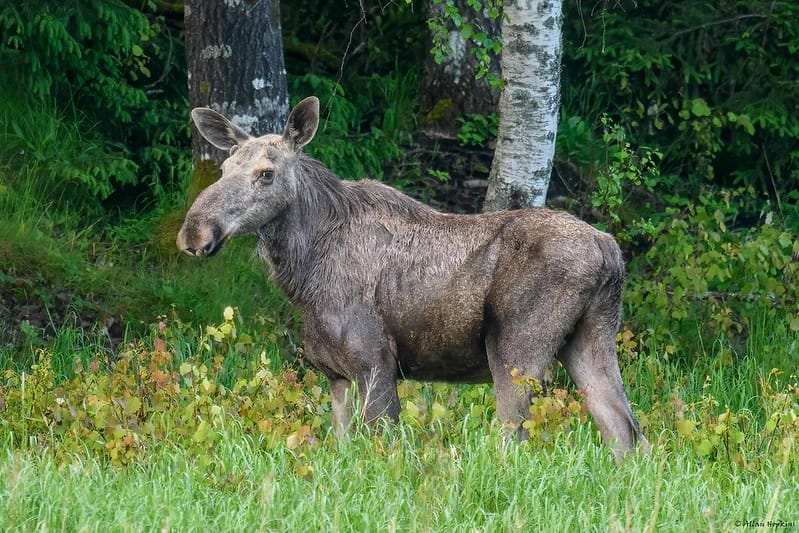
Midlands | Two Wildlife Trusts in the Midlands are investigating the feasibility of returning European elk to Britain. The European elk is the largest living species of deer; it was wiped out in Britain around 3,000 years ago by hunting and the drainage of wetlands. Now, the charity Rewilding Britain is funding Derbyshire and Nottinghamshire Wildlife Trusts to conduct a feasibility study into whether the animals could be reintroduced inside fenced beaver enclosures at two nature reserves near Derby and Retford. The study will look at the risks of disease spreading to and from cattle, as well as the space needed for elk. Rachel Bennett of the Derbyshire Wildlife Trust said the next step would be community consultations to raise awareness of elk, ‘because people don’t know that they are native to the UK’. She added that reintroduction into fenced enclosures would be a step toward potential wild reintroduction, perhaps 20 to 30 years down the line. The Times and Guardian covered the story.
Hertfordshire | In a remarkable show of nature’s resilience, the peregrine falcons at St Albans Cathedral have laid a second clutch of eggs, after their first of the breeding season was destroyed last month. The police are currently investigating the incident, during which the livestream webcam captured a pair of legs stepping on and crushing the eggs. Against the odds, the birds have gone on to breed again, laying two eggs already with the potential of more to follow. Jo Kelly-Moore, the Dean of the Cathedral, said: ‘These extraordinary birds have once again reminded us of nature’s strength and beauty.’ She added that the Cathedral remained committed to their safety, shaped by its purpose as a sanctuary ‘for people and for wildlife alike’. You can read more here, or view the webcam here.
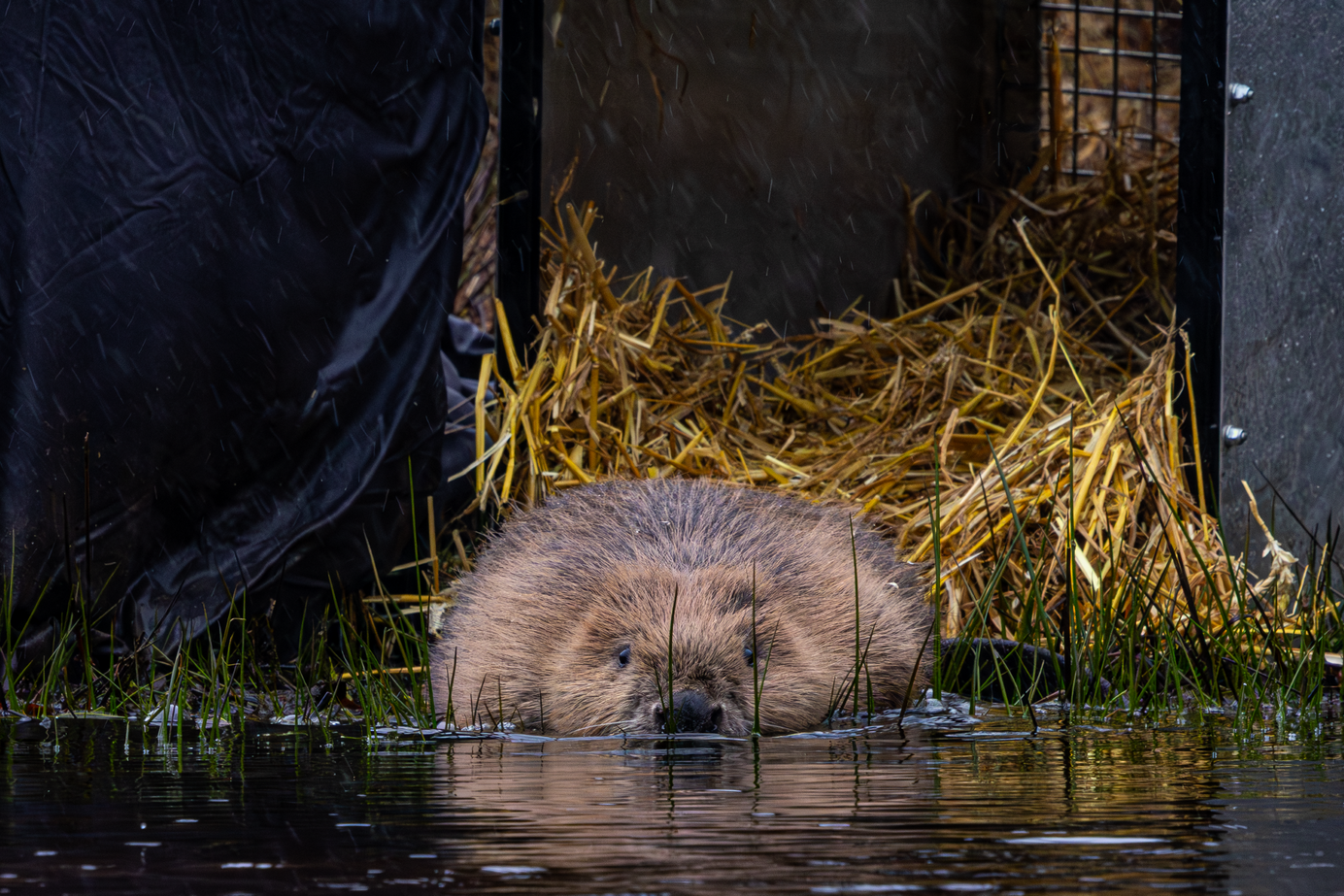
Powys | A wild beaver has been filmed on the River Dyfi in Wales in what is a ‘hugely significant’ moment for the species, according to naturalist and presenter Iolo Williams. There are four managed enclosures for beavers in Wales, and an unknown number living in the wild. It is an offence to release beavers into Welsh rivers without a licence, and Natural Resources Wales said no licences of this type had been issued. Williams, who encountered the beaver, said the sighting ranked with the ‘very, very best’ of his career. He added: ‘The last people to see wild beaver in Wales would have been the Welsh princes, who would have hunted them. So they’ve been absent for hundreds of years.’ Where the beaver came from is a mystery, but the Wales Wildlife Trust said there was evidence of breeding along the river, suggesting at least one family. You can watch the footage on the BBC.
Elsewhere:
- An economics report has warned that a new national park in Galloway would deprive the region of more than £500m and hundreds of renewable energy jobs by blocking wind farms, reports the Times and Scotsman.
- Church bells will ring out to ‘welcome back’ swifts to Derby after their winter migration to southern Africa, reports the BBC.
- The National Lottery has awarded £4.86m to Northumberland Wildlife Trust for a five-year project to protect red squirrels.
- The annual count of rare snake’s-head fritillary flowers at Iffley Meadows in Oxfordshire recorded nearly 30,000 flowers, a dramatic increase on last year’s total of 6,000, reports BirdGuides.
- The John Muir Trust has established a nursery at Thirlmere in Cumbria, where they are growing locally sourced montane woodland plants to help stabilise nearby steep slopes.
- A bronze statue has been unveiled on the Orkney island of Papa Westray, which is an exact copy of the last of the Great Auks that lived on the island in 1813, reports the BBC.
- Two men have been arrested in connection with the deaths of red kites in Strathdon, Aberdeenshire, reports the Herald.
- Woodland Trust Scotland has warned of the dangers of accidental wildfires after a disposable barbeque caused a fire in the Trossachs, killing hundreds of nesting birds and other wildlife. The Times, Herald and Scotsman reported the news.
- Yorkshire Wildlife Trust is celebrating the restoration of 400 metres of dry stone wall in the Dales in a bid to preserve local heritage and create space for wildlife.
- The rewilding initiative Affric Highlands has launched as an independent charity with the aim of restoring nature across more than 200,000 hectares over the next 30 years, reports the Herald.
- The Wildlife Trust for Bedfordshire, Cambridgeshire and Northamptonshire has launched a five-year plan to reverse biodiversity loss in the east of England, including restoring habitats in the Great Fen, reports the BBC.
- A wildfire blaze in a remote area of Dartmoor moorland has raised questions about restricted grazing schemes which could be a fire risk, reports the Guardian.
Reports
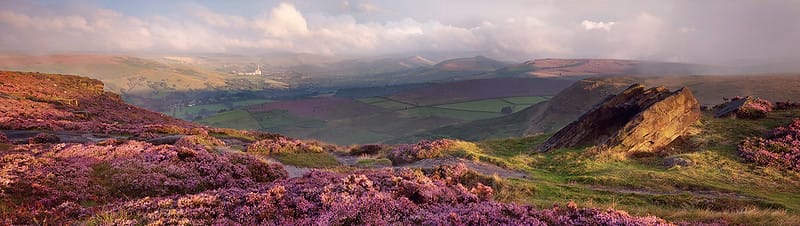
Heather | An area of heather moorland the size of Birmingham is being lost in the UK every year, according to a report by the Heather Trust. The research is the first time that the extent of the UK’s heather moorland habitat – as well as its historical and potential losses – has been quantified. Using available datasets, researchers found that the total loss of moorland between 1990 and 2023 was 609km² in England, 6,696km² in Scotland, and 349km² in Wales. The moorland has been primarily converted to improved grassland, coniferous and broadleaf woodland, while overgrazing, undergrazing and natural woodland expansion also contributed to its degradation. The report highlights an ‘urgent need’ to move towards more integrated upland policies, which balance the maintenance of large areas of contiguous moorland habitat – vital for endangered species such as curlew, lapwing and black grouse – with the important benefits of large-scale woodland restoration. The Scotsman covered the research.
Plastic | A policy brief from the University of Portsmouth has urged the UK government to draw up a comprehensive national strategy to tackle microplastic pollution. Currently, the UK is falling behind on international efforts to tackle microplastics, according to researchers, as the tiny pollutants infiltrate food, ecosystems and human bodies. In particular, the briefing highlights the impact of microplastics on water and soil quality in the UK through common agricultural practices such as mulching, sewage sludge fertiliser, and contaminated compost. It also points to evidence that microplastics are reducing food production by hindering photosynthesis, and disrupting the role of coastal and ocean ecosystems as carbon sinks. The briefing calls for the creation of a roadmap with measurable targets and timings, as well as research funding to identify interventions to improve neglected areas such as soil health. The Guardian and Phys.org covered the research.
Birds | The JNCC has published a report examining the status of the UK Special Protection Areas (SPAs), in collaboration with the four nations’ environmental agencies. SPAs are sites focused on the protection of rare and vulnerable birds, and other regular migratory species. Phase 1 of the report in 2016 advised governments on the condition of the SPA network, and this report – Phase 2 – addresses the insufficiencies identified, and sets out advice on recommended changes. The authors suggest classifying 94 new SPAs, with 38 in England, 37 in Scotland and 15 in Wales. They also outline recommended actions for 183 existing SPAs, including extending site boundaries or adjusting management techniques to better protect the species which use them. For example, the report recommends reviewing the management of six sites in northwest Scotland, where numbers of black-throated diver birds have dipped below 1990s levels, counter to the increasing national trend.
Science
Otters | A study in Conservation Genetics Resources used hunting trophies of British otters to examine their historical genome variation, and specifically the reputed recent introduction of otters from Asia. Researchers from Cardiff University analysed two trophy paws of Eurasian otters from 1929 and 1952. Analysis of the extracted DNA showed that the historical samples most closely resembled modern Welsh populations of otters rather than east England populations, which show a divergent mitochondrial lineage shared with Asian populations. This means that introductions from Asia to Britain likely occurred later than these historical examples. The authors conclude that, although limited inferences can be made from a sample size of two, the preliminary dataset shows the ‘huge potential’ of historical trophy samples to assess past population dynamics, providing ‘crucial context for contemporary conservation efforts’.
📣 I’m excited to be able to share our new publication! 📣 Our research on historical genomic variation 🧬 in Eurasian otters 🦦 in Britain demonstrates the viability of hunting trophy specimens as sources of historical DNA. https://t.co/sU2prMpBBc
— Sarah du Plessis (@SarahduPlessi16) May 1, 2025
Glitter | Glitter pollution could be actively interfering with marine life by changing the chemistry of the ocean, according to a study in Environmental Sciences Europe. The issue is specifically with the kind of glitter made from a common plastic polymer called PET. Scientists from Trinity College Dublin tested the effects in their lab by recreating seawater conditions and adding glitter to the mix. They found that, very quickly, the glitter kickstarted the formation of minerals known as ‘biomineralisation’ – the key process that creatures such as corals, sea urchins and molluscs use to make their shells and hard parts. By speeding up crystal growth and changing the shapes of crystals, glitter pollution could disrupt these natural processes, which need precise conditions to form the correct shapes and strengths. In the Conversation, the authors wrote: ‘What seems small and shiny to us could be a big, silent disruptor for the marine world.’
Fishing | Using illuminated fishing gear could offer an alternative to damaging practices of bottom-towed fishing gear, according to a study in Ocean & Coastal Management. Led by the University of Exeter, researchers conducted trials off the west coast of Scotland, investigating how the use of white LEDs affected catch rates of northern shrimp, which are normally caught using trawls. They found that, across three types of pots, illumination resulted in significant increases in catch per pot of northern shrimp for all pot types. However, the illuminated pots also resulted in high quantities of valueless poor cod bycatch, and lower catches of valuable Norway lobster. The authors conclude that, if pot type and fishing area were configured for specific target species, illumination could offer increased catch-per-pot and even baitless fishing in pot fisheries, and an alternative to trawl fisheries. Meanwhile, another study in the same journal has found evidence of sharks and rays using offshore wind farms as habitat. Phys.org covered the research.
Driftwood
Attenborough | Coinciding with his 99th birthday, Sir David Attenborough has launched his latest film, Ocean, to widespread acclaim. The feature-length film has been described as the ‘greatest message’ from the naturalist and presenter throughout his career, and the most political so far. It is both a love letter to the planet’s support system and a direct call to arms, documenting how the state of the world’s oceans has changed over the course of Sir David’s lifetime, and how their future now hangs in the balance. In an exclusive interview with the Times, Sir David admitted that ‘I will not see how the story ends’, but shared optimism for the remarkable ability of oceans to recover. He said: ‘There may be much to fear in the near future, yet it could also be the most exciting time to be alive.’ Ocean is now showing in cinemas: watch the trailer here, or read more about the film in the Guardian, Oceanographic, BBC and New Statesman.
Beer | How sustainable is British beer? The answer, according to this feature in Wicked Leeks, is not very – but that could be changing. Hops were grown widely across the UK before industrialisation, but now 90% of those used to brew British beer are imported. This is because hops from countries such as the US and New Zealand have a stronger flavour profile due to the absorption of more UV light. Ross Hukins, whose family has been growing hops in the same Kent fields for more than a hundred years, says: ‘We’re encouraging breweries to look again at British hops – intense hops have a home but there are more varieties coming out in the UK.’ Elsewhere, innovations in the brewing process include reusing spent hops for a second beer, and partnering with nurseries to reuse them in agriculture and gardening – all of which makes the process more sustainable.
Seaweed | Kelp forests are often the subject of conservation projects, but what about other types of seaweed? These ‘unsung heroes’ need our help too, according to a landmark report on the state of the world’s seaweeds by an international research programme including the Natural History Museum. ‘Seaweeds’ include a diverse range of red, green and brown macroalgae: their ancestors lived on Earth more than 1.6 billion years ago, and collectively seaweeds cover an area the size of Australia, making them the largest of the planet’s vegetated marine habitats. The report highlights the myriad threats facing seaweeds globally – including climate change, pollution, and invasive species – and also the inadequacy of current conservation measures. The contents of the report will form the evidence base for a set of seaweed conservation targets to be launched at the UN Oceans Conference in June: find out more in the Oceanographic and Phys.org.
Further reading:
- In the BBC, read about the female lynx that could become the first UK zoo-born cat released into the wild.
- A feature in the Guardian looks at whether government support for the campaign to include swift bricks in housing developments could be dropped in fear of being branded as ‘woke’.
- The Guardian has a list of six things you can do to create a more eco-friendly lawn.
- A piece in the Critic Magazine argues that the Conservatives need to reconnect with their traditional voter base of farmers if they want to bounce back from election defeats.
- A feature in Noema imagines the potential of a justice system that includes the more-than-human as worthy subjects, down to a grain of sand.
- For Emergence Magazine, novelist Daisy Hildyard has written a short fiction story titled ‘The Aquarium’, which envisions the deep-time evolution of Scarborough’s coastline.
- Read about the ‘art of de-extinction’ in Atmos: how a variety of artistic mediums are reanimating species we have lost.
- The Ecologist has a feature on the often-overlooked contributions that the queer community could make towards tackling the biodiversity crisis.
- Stephen Morris writes in the Guardian about how villagers in the Welsh Usk Valley have become attached to their newest residents: a pair of ospreys who are expecting.
- In the Financial Times, Sarah Langford describes how the Gates Foundation is introducing a ‘vegetable garden of the future’ to the Chelsea Flower Show.
Happy days
Apples | The UK’s first orchard to be grown from littered apple cores is thriving in Cornwall. The Some Interesting Apples project collects fallen apples from wild trees – or ‘wildings’ – which have grown from discarded cores; thrown from car windows or dropped by walkers along footpaths, for example. The project has created the Wilding Mother Orchard near Helford from more than 600 such apple wildings: the first orchard dedicated to cultivating wild-grown, chance-seedling apples. The organisation held several taste-testing editions for the public to select potential new cultivars, and the team hopes that the grown varieties will be hardy and adaptable to future climate conditions given their rocky start to life. The orchard currently contains more than 70 trees, which are each identified by the what3word location of the original mother tree. Find out more in Cornwall Live.

Subscribe to our newsletter
Members receive our premium weekly digest of nature news from across Britain.
Comments
Sign in or become a Inkcap Journal member to join the conversation.
Just enter your email below to get a log in link.