River Wye & Candlelight Rhubarb
The latest news on nature and conservation in Britain.
National news
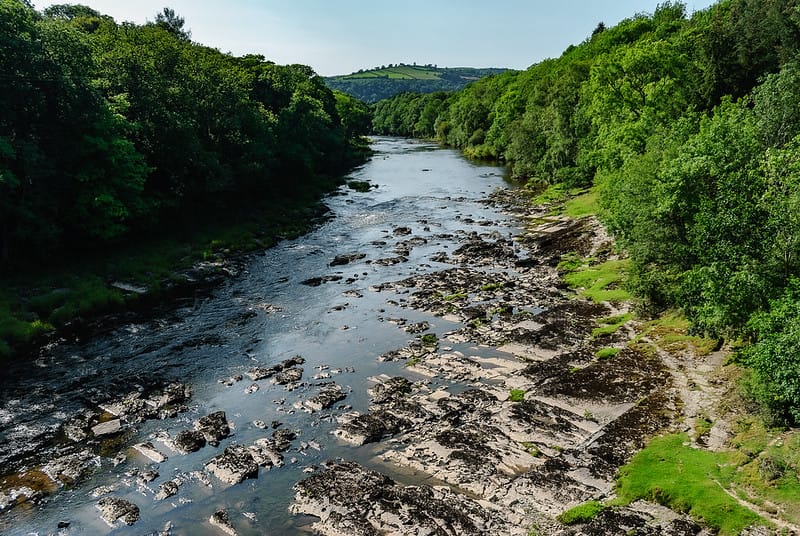
Law | The government has won a landmark legal challenge brought by campaign group River Action over pollution in the River Wye. The group argued that the Environment Agency had broken the ‘Farming Rules for Water’ law by allowing farmers to spread too much chicken manure on their fields, which in turn runs into rivers and causes eutrophication. On Friday, the High Court ruled that the Environment Agency and the government were implementing the law properly, and were not required to pursue sanctions against every breach. So far there has been only one prosecution under the rules. In response to the ruling, River Action said the case had helped clarify the legal obligation on farmers, as well as the EA’s duties in enforcing them, and that farming practices will have to change if they are to comply with the rules in the future. The BBC and ENDS reported the news.
Healing | Eight NHS charities will receive shares of £1m of funding to create and improve access to green spaces for patients across the country. The grants, worth between £25,000 and £200,000 over two years, are provided by the Greener Communities Fund, an initiative from environmental charity Hubbub and NHS Charities Together, funded by Starbucks’ 5p disposable cup charge. The recipients include a sensory garden for children with additional health needs in Dorset, an outdoor space for patients with long-term health conditions in Stockport, and eight therapeutic sites in Lanarkshire for food growing and gardening. Gavin Ellis, director of Hubbub, said initiatives to harness the potential of green social prescribing have ‘never been more crucial’. He added that improving access to green spaces not only benefits mental and physical health, but also boosts biodiversity and ‘builds our sense of connectedness with the natural world.’ The Independent reported the news.
Parties | Environmental organisation Friends of the Earth has published a list of ten ‘key failings’ of the Conservative government on environment and climate, reports the Byline Times. The group said the government’s environmental record has been ‘dismal’, and that the upcoming general election would be ‘the most pivotal for people and the planet since the Second World War’. The listed failings include the government’s flagship climate action plan being ruled unlawful twice; the approval of new oil and gas licences; sewage-filled waterways; and falling indicators for biodiversity. In other news, the Liberal Democrats have pledged to put environmental experts on water company boards to ensure sewage pollution is tackled properly. Their plans also include introducing unlimited fines for polluters, while party leader Ed Davey accused the Conservatives of ‘sitting on their hands’ during record spills. The BBC and the Independent reported the news. Meanwhile in Wales, the Lib Dem campaign will focus on farming, reports the Nation.Cymru.
In other news:
- ENDS has summarised the key green legislation which will be passed before Parliament dissolves, and what will be lost. The Tree Council celebrated the passing of hedgerow protections.
- Defra has made more funding available for farmers hit by flooding and wet weather over the winter. The NFU has said that up to a quarter of the UK’s wheat harvest will be lost due to the extreme rainfall, reports the BBC.
- The bathing water quality of each of the UK’s nations has ranked below average compared to the rest of Europe, reports ENDS.
- The Bat Conservation Trust has published its annual report, which shows worrying signs of population declines over the last five years.
Across the country
Eryri | In North Wales, a team has reintroduced rosy saxifrage, a plant extinct in the wild. The native ‘mountain jewel’ plant was last seen in the Eryri landscape in the 1960s, where it had survived since the Ice Age. Its numbers plummeted after becoming a magnet for Victorian plant collectors, and the last remnants disappeared entirely from the UK mainland due to habitat loss and grazing pressures. Around a decade ago, pioneering horticultural Robbie Blackhall-Miles was given a cutting which hails from a single plant discovered by chance by a teacher in 1962. Now, its descendants have been reintroduced in a secret location. ‘In Welsh, we have a wonderful word adferiad, which means restitution or restoration,’ Blackhall-Miles said after the planting. ‘I'm absolutely over the moon.’ The BBC has a feature on the news.
London | Campaigners say that public parks and green spaces in London are under threat after a judge ruled in favour of Enfield council leasing a rewilded golf course to Tottenham Hotspur for a new football academy. The council will now hand over more than half of the 97-hectare Whitewebbs Park, which is home to 80 species of bird and at least nine species of bat, as well as badgers and great-crested newts. Sean Wilkinson, who leads the campaign, said: ‘We’re seeing a revitalisation of the enclosure movement by big corporations and this is going to permit land-grabs by other sporting clubs and businesses.’ Alice Roberts, head of campaigns at CPRE London, has called on Spurs to withdraw its planning application, since they can ‘well afford to purchase land elsewhere’. The Guardian reported the news.
Plymouth | A thought-provoking pilot study by Historic England uses interdisciplinary research to investigate the environmental and cultural value of coastal heritage in the Plymouth Sound. Over the course of four months in 2023, researchers in marine ecology and architectural heritage collaborated to examine artificial structures of historic significance in the intertidal zone. These included twelve sets of steps, five piers, four swimming pools, three sea walls and 13 other structures. The study recorded 71 species on the structures, ten of which were unique compared to adjacent natural rock. This demonstrates the value of the structures as species-specific habitats, which are also still used by the community today. Such insights will become particularly important as sea-level rise brings more structures within the intertidal zone.
Elsewhere:
- Chichester District Council has pledged £180,000 over the next three years to protect habitats on the rivers Lavant, Ems and Hambook, reports the BBC.
- King Charles has received a seedling from the Sycamore Gap tree, which will be planted in Windsor Park once it has matured into a sapling, reports the Northern Echo.
- North York Moors National Park has announced an archaeological project to investigate the Iron Age history and Nazi links of Sutton Bank, reports the BBC.
- Staffordshire council has launched a survey to determine which species in the county should be made a priority for conservation, reports the Express & Star.
- The Bristol Zoological Society has pledged to help save six species facing extinction, including the white-clawed crayfish in the UK, reports the BBC.
- Cheshire Wildlife Trust has planted 11,000 trees as part of an agroforestry scheme in the Upper Dane catchment.
- The Sussex Ornithological Society has launched a support scheme to encourage young birders in the county, reports BirdGuides.
- Campaigners in Kent are celebrating after Steve Barclay ordered that the Environment Agency must clear tonnes of waste from an ancient woodland near Ashford.
- Birmingham City Council has launched an ‘A to Bee’ programme, which will involve changing the mowing regimes for 100 km of roads across the city, reports the Birmingham Mail.
- An annual count of whimbrel in Lancashire has found that a young wetland reserve in Grimsargh is proving particularly popular with the migrating species, reports BirdGuides.
- The RSPB is celebrating the progress of its long-term project to expand Ouse Fen nature reserve, north of Cambridge, into one of the largest reedbeds in the UK, reports the BBC. Elsewhere, Angus Council is supporting the restoration of reedbeds at the Montrose Basin reserve.
- The common eider has bred in Cornwall for the first time, reports BirdGuides.
- Despite the longest winter floods in living memory, swallowtail butterflies have emerged again on the Norfolk Broads, reports the Guardian.
- The University of Southampton is leading a research project to use AI to hunt for a female mate for the ‘world’s loneliest’ plant, the South African E. woodii, reports the BBC.
- A population of white-faced darters, a rare dragonfly, is on the rise after peat bog restoration at Drumburgh Moss Nature Reserve in Cumbria.
- Rising water temperatures in the River Dee are threatening the survival of Atlantic salmon, reports the BBC.
Reports
Voting | No elected Tory MPs have voted positively on climate issues since the Conservatives took power in 2010. This is according to a survey of parliamentary voting patterns conducted by VoteClimate, an organisation which aims to inform UK voters on how best to cast their ballots for impact on environmental policy. In the survey, MPs were awarded points for their positive environmental votes, minus those that had a negative impact, and this was divided by the number of votes in which they could have taken part. It found that Labour and the Liberal Democrats dominated the list of those rated ‘very good’, for their votes on a range of legislation from fracking to the burning of upland peat. The Guardian reported the story. Meanwhile, campaign group Wild Justice has published a report outlining guidance for charities to make the most of campaigning opportunities ahead of the general election.
Woodland | A report by the Woodland Trust sets out how to restore woodland and trees in Scotland – the latest paper in a series which has already covered England, Wales and Northern Ireland. The Trust lays out principles for restoration across five key habitats: native and ancient woodlands, rivers, uplands and mountains, lowland farms, and urban areas. The recommended actions include reducing deer numbers, incentivising farmers to integrate more trees and hedges, and establishing a Rainforest Restoration Fund. The report also highlights an unusual example of natural regeneration: the central reservation of the busy A9 road, which was dualled 1979, has allowed for the growth of a thriving strip of native woodland in the absence of overgrazing and burning. It is in a ‘more natural state than the surrounding hills’, according to the Trust. The Herald and Forestry Journal covered the story.
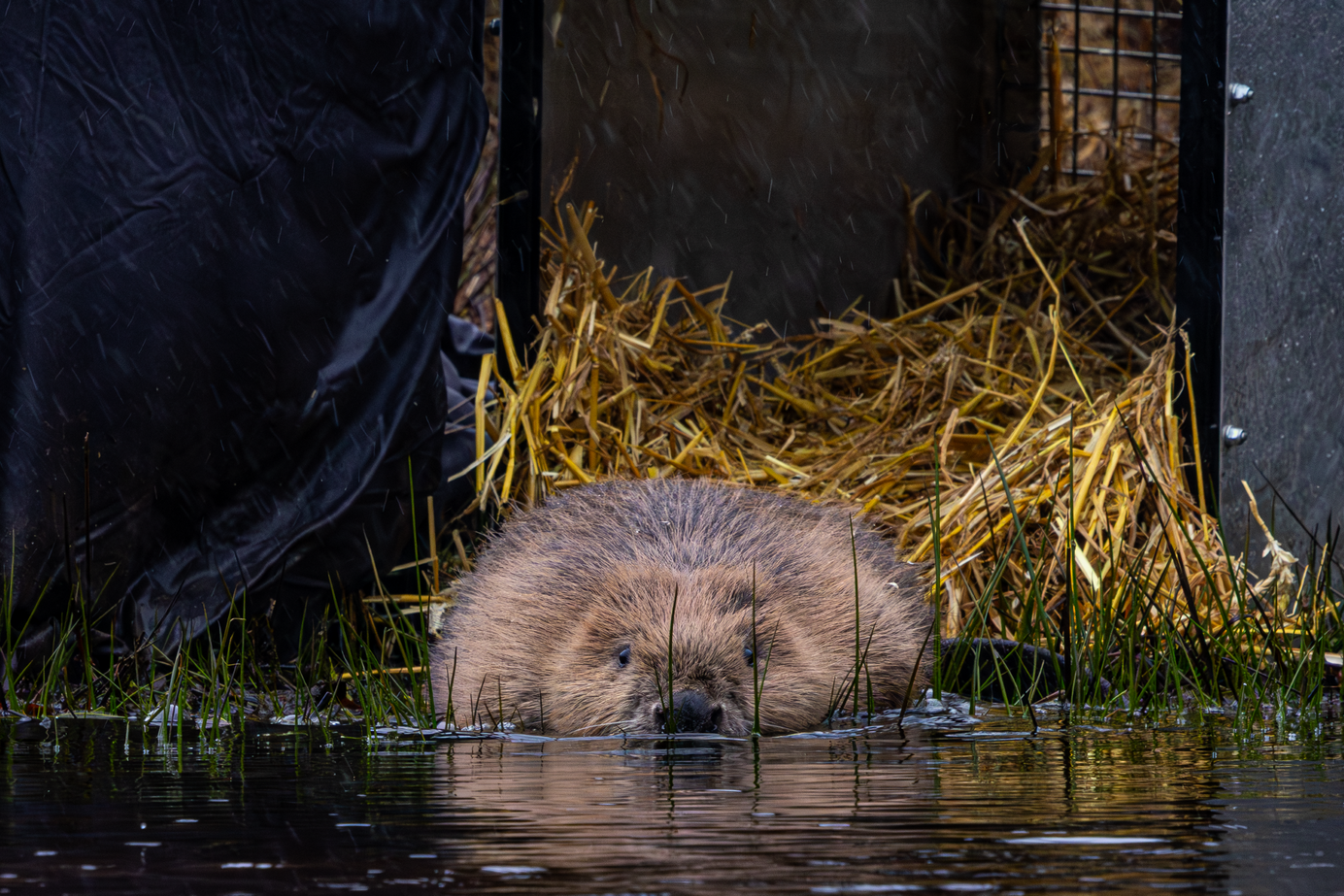
Beavers | A survey by the Beaver Trust and Kent Wildlife Trust has suggested that the number of wild beavers living in Kent could run into the hundreds. Commissioned by Natural England, the survey recorded a total of 2,157 field signs – cut wood being the most common – across 51 territories in the Stour catchment. One of the report’s authors, Ben Morris, explained that counting individual beavers is too difficult due to their nocturnal habits, so instead field signs are used to count territories, which tend to average three to four beavers. Dr Roisin Campbell-Palmer, head of restoration for the Beaver Trust, said the comprehensive survey was ‘the first of its kind’ despite beavers being present in Kent for over a decade, demonstrating that they ‘can become a normalised part of our fauna.’ The BBC covered the research. Meanwhile, a study of four wild beaver territories in Devon has found that together they can store more than 24 million litres of water.
Science
Puffins | The UK’s population of puffins has been declining for decades, but monitoring colonies can be prohibitively expensive for conservation organisations. To tackle this, the RSPB ran an innovative initiative harnessing citizen science to study puffin diets. Between May and August of last year, the public – or ‘Puffarazzi’ – submitted over 1,400 photographs of puffins carrying prey back to their chicks. A team of researchers then identified over 11,000 prey items, spread across 27 colonies. The results showed that prey availability and ocean conditions around the colony strongly affect what the adults can catch for their chicks. In Shetland, where puffins are facing steep declines, parents carried more prey items per trip than anywhere else: often smaller fish, making a less nutritious meal for the effort. The authors say the data provides a critical window into the health of UK waters and the seabirds which rely on them. The findings were published in Avian Conservation & Ecology.
Parakeets | A study published in NeoBiota has revealed what the British public think of ring-necked parakeets, the loud and brightly-coloured species which is native to sub-Saharan Africa and southern Asia, but is now found throughout the UK. Researchers conducted an online survey of 3,947 British residents, and found that while most (90%) were aware of the species, attitudes towards its presence were split. Urban residents were more likely to accept them, attributing a sense of aesthetic enhancement to often wildlife-depleted environments. Rural residents were more opposed, citing concerns over threats to native wildlife and the overall tranquillity of the countryside. The results also showed a generational divide, with younger people showing greater tolerance. The authors said that public perception of the non-native species is important for wildlife managers and policymakers, and can reflect the need to mitigate potential conflicts. BirdGuides covered the results.
Worms | A new species of carnivorous worm identified in ancient fossils in Herefordshire is reminiscent of the giant sandworms in the Hollywood film Dune, according to researchers. Fossils of the species, named Radnorscolex latus, were discovered in a disused Victorian quarry, and date to around 425 million years ago, when the area would have been deep underwater. Although only around 8 to 10cm long, researchers believe the worm had a rather terrifying method of hunting. ‘They had a retractable throat which was covered in rows of sharp teeth that they would throw out to catch prey,’ according to Dr Richie Howard, curator of fossil arthropods at the Natural History Museum. Fossils of the worm were discovered a century ago, but modern imaging techniques allowed the NHM to analyse the remnants in detail recently. The findings were published in Papers in Palaeontology, and covered by the BBC.
Driftwood
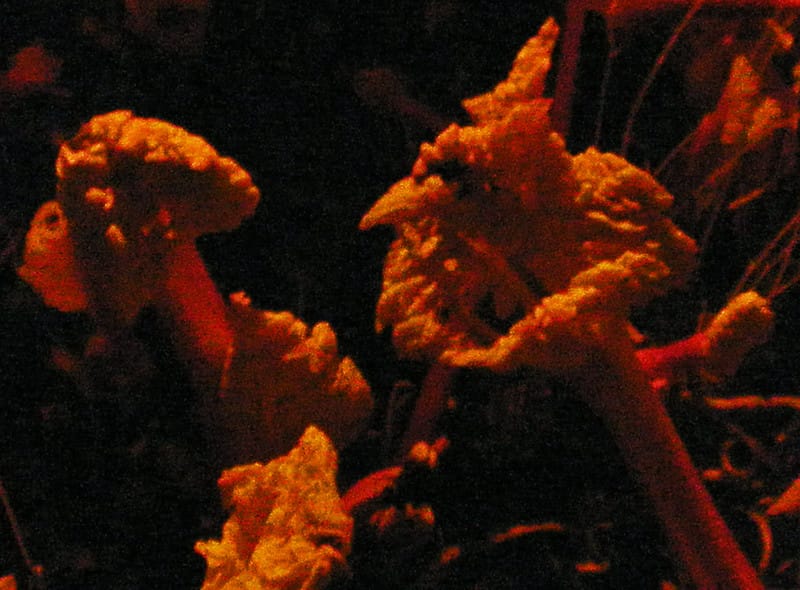
Rhubarb | In Yorkshire, a handful of farmers are still cultivating forced rhubarb in the old-fashioned way: by candlelight. Rhubarb forcing is a method of growing rhubarb in warm, dark conditions during the winter: the heat makes the plant think it is springtime, but due to the darkness, it commits energy to growing as fast as possible to reach any light. The resulting stalks are bright pink in colour, and tenderer and sweeter than the normal plant. To check on their crop, farmers must use candles to avoid ‘resetting’ the seasonality of the plants. The popularity of rhubarb dropped in the 1950s as tropical fruits became increasingly available, but now the British-grown plant is on the rise again, thanks to growing interest in locally grown produce and climate-resistant crops. Read more in the Smithsonian Magazine.
Art | An exhibition is coming to London which examines the works of JMW Turner in a new light: environmental change. Turner was born in London in 1775, and became widely considered one of Britain’s greatest Romantic artists. Now, the exhibition at Turner’s former retreat in Twickenham will examine how his paintings – often landscapes and seascapes – unknowingly captured the early stages of climate and ecological breakdown during the Industrial Revolution. ‘Turner painted the turning point in our planet's modern history,’ according to presenter and conservationist Chris Packham. ‘His sunsets are vivid, his skies torrid – he captures the cusp of change.’ The exhibition will run in London from 6 July to 27 October: read more about it, and view examples of Turner’s work, here on the BBC.
Teens | In the Guardian, author Ben Martynoga writes about why teenagers are becoming increasingly disconnected from nature – and what can be done about it. ‘In an era of climate breakdown and ecological collapse, the teenage slump in connection to wild nature is not just unfortunate, it is deeply perilous,’ he claims. Martynoga’s central suggestion for reconnecting young people to nature is to tap into the rewilding movement, with its ‘proactive, hope-infused ethos’. He gives four ways to aid this, ranging from harnessing the power of technology to reminding young people of their revolutionary potential. It doesn’t have to be grand gestures, either: encouraging activities ‘such as guerilla seed bombing’ or ‘night-time torch-free walks’ can ‘kindle the sense of agency needed to enable further action and activism’, he writes.
Further reading:
- In the Guardian, a long read decries the loss – or theft – of public green space, and the devastating effect it has on urban nature.
- This article in the Times takes the reader inside a high-security research laboratory in Hampshire, which is attempting to protect British forests from disease. Meanwhile, a BBC video explores the ‘super nursery’ at Hyde Park which supplies London’s Royal Parks.
- Pioneering Cambridge botanist Agnes Arber has been celebrated through the creation of a new PhD prize. Read about her life’s work in the BBC.
- Also in the BBC, a feature reflects on how London’s resident beavers are faring, and the hopes that they are hiding kits.
- A feature in the Times explores how Morse code revolutionised weather forecasting in Britain.
- A BBC article investigates whether there is any evidence behind the claims that a big cat is roaming the Lake District.
- An interview in Atmos with author Mary Annaïse Heglar discusses why environmental fiction is an act of hope.
Happy days
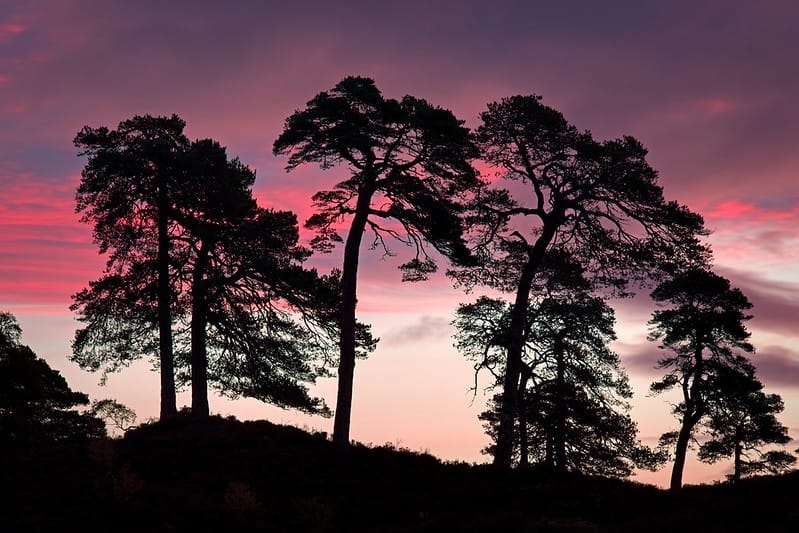
Restoration | NatureScot has revealed the scale of nature restoration at its National Nature Reserves in the Highlands using a long-term photography study. The agency carried out repeat photography: taking pictures from the same spot at the same time of year, in some places stretching back 70 years. Comparing the photos starkly illustrates the changes that have taken place, particularly reforestation. The study is accompanied by a Storymap which plots the data and locations, including the expansion of Caledonian pine forests by 25% at Invereshie and Inshriach, a 41% increase in woodland at Ben Eighe, and 200 hectares of peatland restoration at Ben Wyvis. Ian Sargent, a reserve manager, said: ‘It is sometimes difficult to appreciate change, especially when it happens slowly. Repeat photography allows us a fascinating look back in time and an insight into the dramatic but sometimes unnoticed changes’. The Courier reported the story.

Subscribe to our newsletter
Members receive our premium weekly digest of nature news from across Britain.
Comments
Sign in or become a Inkcap Journal member to join the conversation.
Just enter your email below to get a log in link.