Planning Policy & Star Wars Woodland
The latest news on nature and conservation in Britain.
National news
Planning | The government has announced an overhaul of the planning system, via an update of the National Planning Policy Framework, in an attempt to meet its target of building 1.5m new homes during this Parliament. Of particular significance to the natural world is a new ‘common sense’ approach to greenbelt land. ‘While remaining committed to a brownfield first approach, the updated NPPF will require councils to review their greenbelt boundaries to meet targets, identifying and prioritising lower quality “grey belt” land,’ the government said. The Times released a tool for readers to see how many of these ‘grey belt’ areas sat within 10 miles of their postcode, while acknowledging that the definition of such land remains subjective. Toby Perkins MP, chair of the Environmental Audit Committee, expressed some hesitation over the plans. ‘I welcome the improved environmental safeguards since the original document, but will continue to urge the utmost caution for concreting over any areas which provide valuable ecosystem services, whether they are designated as brownfield sites or grey belt land,’ he said. Environmental charities, including CPRE and Wildlife and Countryside Link, also expressed a note of caution about the update.
Newts | Some of that caution certainly hinges on the recent anti-nature rhetoric expressed by senior figures in the Labour party. This week, housing secretary Angela Rayner said that newts should not be prioritised over people when it comes to building more houses. ‘We can't have a situation where newts are more protected than people who desperately need housing,’ she said, during an interview on Sky News. ‘What we need is a process which says “protect nature and wildlife, but not at the expense of us building the houses”. We could do both.’ Rather than stop building, she suggested that developers could offset or mitigate the damage. Her comments echo those of Keir Starmer, who took aim at bats in a speech last week – and, indeed, of Boris Johnson, who also blamed newts for planning delays. The Guardian and the Daily Mail covered the story. The Wildlife Trusts questioned the government’s stance, suggesting that it should focus on protecting existing habitats while also improving and enforcing current legislation. The Bat Conservation Trust took a softer view of Rayner’s comments, agreeing with her on the principle that ‘nature and business are not at war’.
Biodiversity | The JNCC has released the latest update to the UK Biodiversity Indicators, which summarise a range of data on everything from native breeds to insect trends to expenditure on biodiversity at home and abroad. For 2024, there have been updates to 39 measures across 15 indicators. Trends are assessed across both the long- and the short-term (from 1976 and 2013 respectively, up until 2023). The update found that, while around half of the assessed measures are improving in the long-term, the short-term picture was bleaker, with more measures either deteriorating or showing no change than improving. ‘From the deterioration of protected wildlife sites to the disappearing specialist species like farmland birds, the biodiversity indicators turn the page to another story of decline,’ said Richard Benwell, head of Wildlife and Countryside Link, responding to the update. ENDS covered the news.
2024 biodiversity indicators are in... If a wake-up call was needed to show the UK is failing nature, this is it.
— RSPB (@Natures_Voice) December 10, 2024
Short-term trends show progress stalling or reversing. 📉🚨
To meet 2030 targets, we need nature-friendly farming, smarter planning, and investment in nature now. pic.twitter.com/d40TioqXJZ
In other news:
- The UK exported 8,500 tonnes of banned pesticides last year, according to an investigation by Unearthed and Public Eye.
- New figures show that red squirrel sightings in Scotland have increased by almost a third in a year. The Times covered the story.
- NatureScot has awarded £1.1m in grants to nature restoration projects across Scotland, including creating hedgerows for sparrows in Glasgow.
- CPRE and other charities are making the case for improving the Green Belt for nature and climate.
- Defra has released details of the new Countryside Stewardship Higher Tier offer, which is part of its programme to help farmers deliver improvements for nature.
- British police arrest environmental protesters at nearly three times the global average rate, according to new research covered by the Guardian.
Across the country
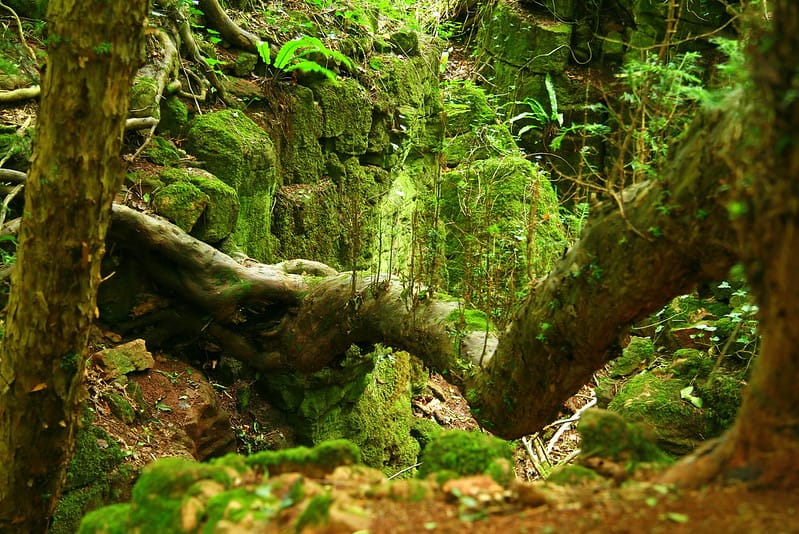
Gloucestershire | Academics at the Open University are exploring the environmental impacts of filming Star Wars in Puzzlewood, in the Forest of Dean, just over a decade ago. It is part of a project helping filmmakers to adopt more environmentally friendly production practices, according to the BBC. Dr Rebecca Harrison, the lead researcher, said she was interested in speaking to those who had been impacted or noticed a change, or who had felt shut out of the forest due to filming. ‘One of the areas we are particularly interested in is wildlife,’ she said. ‘Even the tiniest bit of disruption can lead to habitat loss.’ Puzzlewood is just one of the Star Wars sets being studied as part of the project; others include Ivinghoe Beacon and Winspit Quarry.
Sussex | The number of deer culled in Sussex will quadruple this year, thanks to an anonymous donation from a wealthy environmentalist. Deer populations have boomed in the absence of any natural predators, and their foraging is having a negative impact on the county’s biodiversity. The Country Food Trust is now paying stalkers to kill around 1,000 deer, up from the usual 250, and distributing the minced venison to local food banks and charity kitchens. This combats one of the limitations on deer culling: a lack of consumer demand. ‘We have given 31,000 meals out to food banks in a month and killed 152 fallow does,’ said SJ Hunt, chief executive of the Trust. ‘We have an inexhaustible demand and the feedback from the people eating it has been fantastic.’ The Times covered the story.
Yorkshire | Ecologists are transporting soil from Hagg Wood, an ancient woodland east of York, to a newly created community woodland nine miles away, to test whether it makes the modern ecosystem more resilient to pests, diseases and climate change. Each ancient soil core contains up to 300 different species of fungi – a level of diversity that has developed thanks to centuries of undisturbed accumulation, in the absence of artificial fertilisers and other management activities that break up the soil. The project, which is a pilot by Forestry England, aims to ensure that the new woodland has a supply of the mycorrhizal networks that are so often absent from new plantations. For the next ten years, ecologists will track the changes in the soil via environmental DNA sampling to see whether the trial has been a success. Meteored covered the story.
Elsewhere:
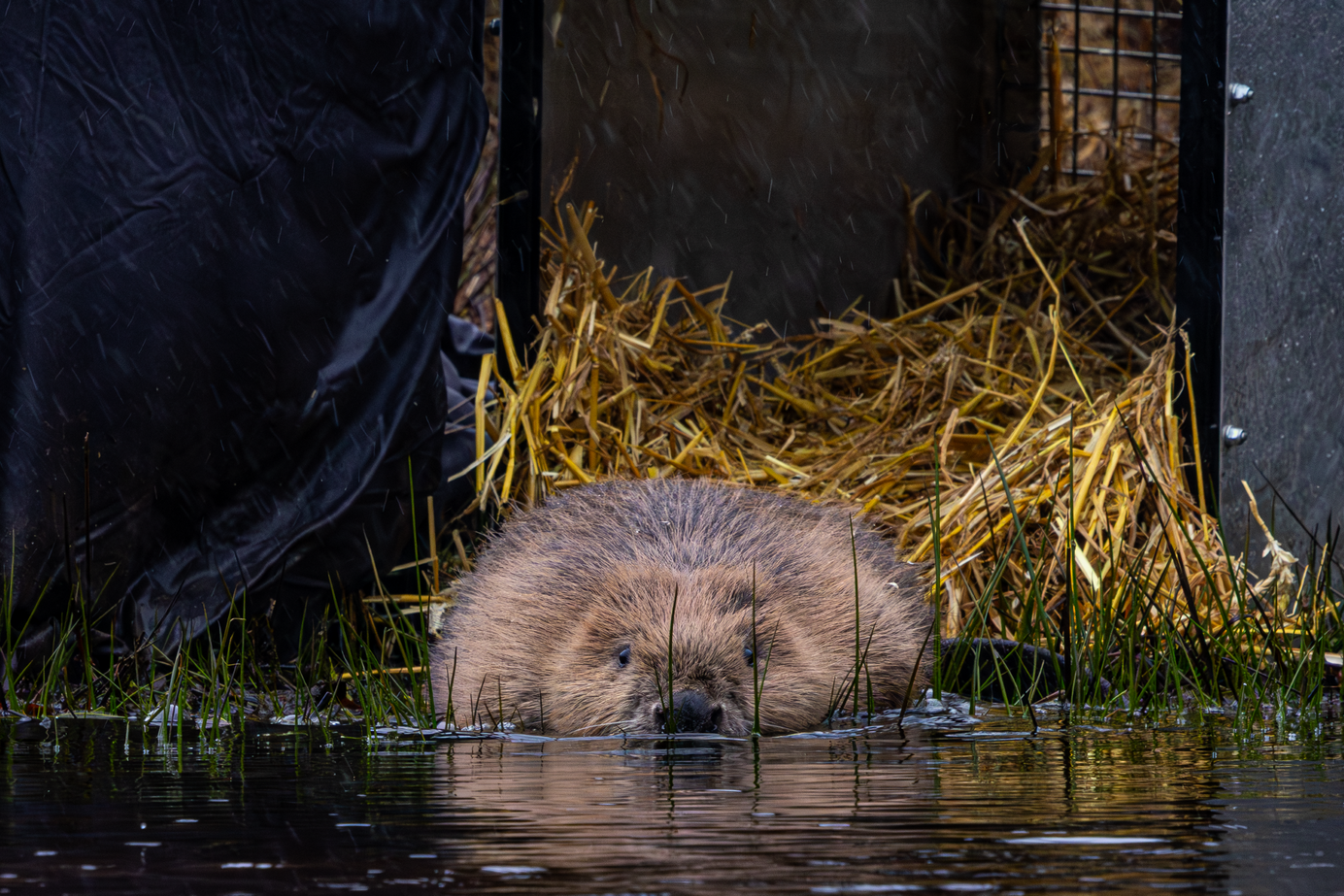
- A pair of beavers has been released into the South Downs National Park, reports the BBC, while water voles have been returned to southwest waterways following a 20 year absence.
- Harrogate Spring Water is planning to cut down a woodland planted by children to expand a bottling factory in the North Yorkshire town, the Guardian reports.
- Seals at Orford Ness in Suffolk are thriving in the absence of human disturbance, reports the BBC.
- The Corncrake Calling Project is celebrating the protection of 2,000 hectares of corncrake habitat across the Hebrides.
- Trustees of the Durrell Wildlife Conservation Trust have criticised the charity for allowing trophy hunting to continue on its recently acquired estate in Scotland. The BBC covered the story.
- Fish are continuing to thrive in a saltmarsh in Teesside, which was created six years ago to offset industrial impact, reports the BBC.
- A pair of hawfinches have been found breeding in Herefordshire for the first time in 140 years, reports the BBC.
- Trees in Cambridge bring around £1bn-worth of benefits to the city, according to new analysis.
- Southern Water is working with Butterfly Conservation to create a wildflower meadow at a reservoir site near Winchester, reports the Hampshire Chronicle.
- Farmers are taking on Herefordshire Council in the High Court over new guidelines aimed at reducing pollution in the River Wye catchment, reports the BBC.
- The Broads Authority has declared a biodiversity emergency, reports the BBC.
Reports
Food | A wide-ranging report into the UK’s food security, published by Defra, has pointed to declining biodiversity, climate change, soil health and water quality as threats to food production both at home and abroad. ‘They drive volatility in the present and put sustainability and resilience of food production at risk over the longer term,’ the report concluded. It also tracked trends relating to sustainable and organic farming. The report landed as farmers returned with their tractors to Westminster to protest changes to inheritance tax in last month’s budget, and just days after environmental organisations sent an open letter to environment secretary Steve Reed calling for greater clarity on measures to support nature-friendly farming. The Wildlife Trusts said that the new report made it clear that the restoration of rivers, uplands, peatland and soils would be ‘critical’ to feeding ourselves in the future. The Guardian covered the news.
WOW! 🚜🚜🚜🚜🚜 pic.twitter.com/d7V6bMRsk4
— Farmers Weekly (@FarmersWeekly) December 11, 2024
School | Teachers struggle to help their pupils connect to nature, even when they are personally inclined to do so, according to a report by Natural England and the University of Sussex. Education may be a way of helping young children benefit from the natural world, particularly when parents are unable to facilitate it, yet a survey of teachers shows a gap between belief and practice. Even those teachers who felt personally connected to nature from a young age, and who wanted to help their students to have a similar experience, struggled to integrate nature into the classroom, citing barriers including the demands of the curriculum and adequate school grounds. The researchers suggested further study into the role of forest schools as a means of changing perceptions around the possibilities of outdoor education.
Building | A new report suggests that environmentalists may be correct to worry over Labour’s recent rhetoric on nature and house-building. Written by researchers at the University of Sheffield, and published by Wild Justice, Lost Nature reveals that developers are installing just half of the ecological features that they should be. A survey of nearly 6,000 houses across 42 new developments found that 83% of promised hedgehog highways and 75% of promised bird and bat boxes had not materialised, while nearly half of the native hedges that were supposed to have been laid did not exist. The figures were calculated by comparing what developers had promised to do when getting permission to build with the subsequent reality on the ground. ‘What we have revealed is a huge, systemic issue and an urgent need for the planning enforcement system to be given the resources it needs to protect wildlife from harm,’ said co-author, Professor Malcolm Tait. The Guardian covered the story.
Science
Food | Do you identify as a foodie? Your hobby may be helping the environment, according to a study published in the International Journal of Gastronomy and Food Science. Foodies – which the authors define as ‘individuals with a high interest and involvement in food’ – tend to be more engaged with sustainability, including the environmental, economic and social impacts of our diets. Foodies may personally eat more ethically, the researchers write, but, more than that, they can improve the food system more widely through direct advocacy and by modelling better behaviour for others. ‘They are certainly well-positioned as influencers around food behaviour, given their propensity to be extraverted, share information and participate in food related media, including blogs and websites,’ the paper concludes. Perhaps sharing your meals on Instagram isn’t such a bad idea, after all?
Pigeons | Before there were domestic pigeons, there were wild rock doves. Today, the wild ancestors of the familiar bird are rare, and those that have survived live in remote locations, usually nesting and roosting in caves. The Outer Hebrides hosts the only population of wild rock doves in the UK; however, even their behaviour is changing. Increasingly, these wild birds are living in human structures, and are shunning their typical ‘commutes’ to foraging grounds – typically machair grassland – instead finding all the food they need within nearby agricultural land. ‘Given that the original domestication of the Rock Dove involved the use of roost sites for harvesting birds, the association of undomesticated Rock Doves with humans in the Outer Hebrides might provide a window into the incipient phases of the domestication of this species,’ the researchers conclude. The study was published in Ornithology.
Hornets | Rapid action to stop the spread of yellow-legged hornets has been effective in the UK, according to a study carried out by the UK Centre for Ecology & Hydrology. The invasive non-native species has been spreading across Europe, and has already devastated honeybee colonies in France and Italy. Without eradication efforts, modelling shows that the insect would have colonised around 5% of the UK’s land area – equating to some 1,680 square kilometres – by 2020. This situation, however, has not come to pass. Efforts have been similarly successful in Germany and the Netherlands. The calculations were based on the availability of suitable habitat for the species; without such predictions, it is difficult to tell how successful eradication efforts have been. The study was published in the Journal of Applied Ecology.
Driftwood
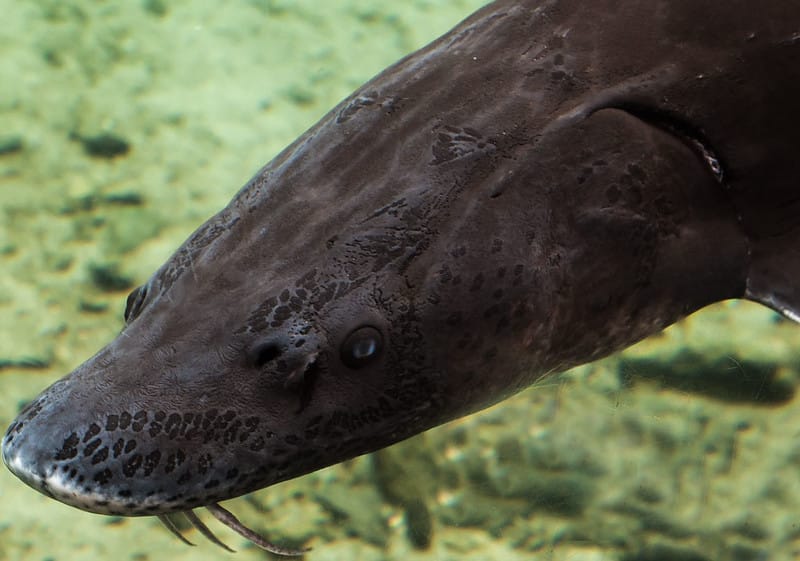
Sturgeon | A new map, created by the ZSL, collates centuries of records of sturgeon – known as the ‘dinosaur fish’ – in the UK. Sturgeon are now critically endangered, thanks to overfishing and habitat degradation, and it is hoped that the trends identified in the map will contribute towards conservation efforts by identifying historical hotspots for the fish. It also reveals some of the colourful tales associated with sturgeon, back from when they were a common feature of the UK’s waterscapes. ‘These species have been gone so long from British shores that their folklore has almost been lost to us,’ said Steve Colcough from the Institute of Fisheries Management, who researched and compiled the map. ‘This new mapping tool brings that history back to life just as this iconic migrator begins to reappear in our coastal waters, thanks to the efforts of continental restoration schemes.’ Browse it for yourself here.
Climate | In Aeon, journalist Dan Hancox looks at the past and present of the Holderness Coast, in East Yorkshire, to explore the impacts that the demise of a village has on both place and community – a phenomenon that is becoming an ever-present threat in coastal settlements today, thanks to rising sea levels caused by climate change. This strip of land has lost around 30 villages in the past millennium, although evidence of loss begins well before that: at low tides, locals have found stumps of petrified forests and even a henge. Hancox asks whether we should attempt to resist the ravages of climate change, or to admit defeat and accept the new meanings created by withdrawal – meanings which are still being discovered by historians of lost villages today. ‘In letting go, of course, we salvage what we can from the wreckage, whether altarpieces or stories, and integrate them back into Time’s weave,’ he writes.
Trespass | A feature in Noema magazine gets into the weeds of the Right to Roam movement in the UK, providing a potted account of the history of enclosure and trespass, as well as an overview of the main actors and initiatives involved in expanding access to private land today. The article is framed around the writer’s own trespass through Norfolk, with philosophical digressions into the meaning of trespass as a political act and the resurgent act of re-commoning. It also looks at examples of people who are acting as guardians of the land, without necessarily doing anything illegal, including guerrilla gardeners, counter-cartographers and social entrepreneurs. ‘In their own ways, trespassers and nature guardians are answering this swelling call to ecological entanglement, which is the opposite of enclosure,’ the author, Samuel Firman, concludes.
Further reading:
- ECOS has an interview with Alan Watson Featherstone, the founder of Trees for Life, in which he reflects on his career.
- Two academics behind a recent study on birdsong write about the ‘extinction of experience’ for the Guardian.
- In the Conversation, Joanne Egan of Edge Hill University looks at how sediment can provide a window into past landscapes – including a tsunami that hit Scotland around 8,150 years ago.
Happy days
Eagles | Do you think white-tailed eagles belong in Exmoor National Park? Now is your chance to have your say. The National Park Authority is considering reintroducing the birds to the area, with the release of up to 20 juveniles over a three-year period, and is gathering public opinion before taking the project any further. The eagles previously released across southern England by the Roy Dennis Wildlife Foundation already visit the park, and further reintroductions would reinforce the existing population. ‘The Exmoor coast with its large areas of woodland provides perfect breeding habitat for the birds, which prefer to eat fish when they are rearing young,’ the survey says. The questionnaire is open to everyone – not just those who live around Exmoor – so let them know your thoughts.

Subscribe to our newsletter
Members receive our premium weekly digest of nature news from across Britain.
Comments
Sign in or become a Inkcap Journal member to join the conversation.
Just enter your email below to get a log in link.