Plan for Water & Dartmoor Grazing
The latest news on nature and conservation in Britain.
National news
Water | The government has set out its Plan for Water, a scheme that aims to clean up British waters and ensure a “plentiful supply” into the future. Thérèse Coffey’s plans are wide-ranging, taking in stricter regulations on pollution, increased investment in infrastructure, and consultations to reduce plastic in waterways. Notably, under the plan, fines for water companies will be reinvested into a Water Restoration Fund, which will focus on improving water quality and supporting community-led schemes. Defra also announced £34m of funding to help farmers better manage slurry storage. However, the Wildlife Trusts expressed concern that the plan is more of a “list of disparate pledges” than a coherent approach, while the Rivers Trust said that “the devil will always be in the detail”. The Times, the BBC and the Telegraph reported the news. There was further analysis of whether the measures will actually work by science editor Tom Whipple in the Times. The Guardian’s financial editor, Nils Pratley, was sceptical of the plans, writing that “after three decades of demonstrably soft regulation, the only rational response is to believe in the new era when you see it.” Separately, the shadow environment minister, Jim McMahon, said that Conservative ministers have treated coastal areas like “open sewers”, after data from the Environment Agency revealed more than 140,000 cases of sewage discharge on the coast of England and Wales in 2022.
The Government has just announced new plans for cleaner water💧
— RSPB (@Natures_Voice) April 6, 2023
But their Plan for Water needs to go beyond an ever growing list of initiatives and good intentions.
We need more detail and a coherent, fully-funded programme of action to save our waterways.#SaveOurWildIsles pic.twitter.com/vlgatXld11
Meadows | English Heritage have partnered with conservation charity Plantlife to restore meadows at 100 historic sites in England. The ten-year project was designed to mark the coronation of King Charles, and celebrate his twin passions of nature and heritage. It aims to return England’s flower-rich grasslands to how they would once have looked, by either creating new meadows or enhancing existing ones. The sites include the chalk down landscape of Stonehenge, native daffodil meadows in the Forest of Dean, and coastal meadows at Whitby Abbey in North Yorkshire. The Guardian, the Times and Chronicle Live reported the story.
Bitterns | Bitterns have had a bumper breeding season in the past year, with 228 males counted “booming out their sub-bass song”, according to the RSPB. The bird became nationally extinct in the 1870s due to overhunting and the drainage of wetland habitat and, although the species returned to Norfolk in 1900, numbers had dropped to just 11 males by 1997. Since then, conservation efforts by the RSPB have focused on recreating, managing and protecting their vital wetland habitats. The charity also confirmed the most northerly breeding bitterns on record, at a nature reserve in Teesside. The BBC and the Guardian covered the story.
In other news:
- Natural England has announced an £18m grant scheme to address the decline of rare and threatened species.
- Member farms of the Red Tractor Assurance Scheme are more likely to pollute the environment than those that are not, according to a government report seen by the Times.
- The Marine Conservation Society has said that eating mackerel is no longer a sustainable choice due to overfishing, reports the Guardian and Sky News.
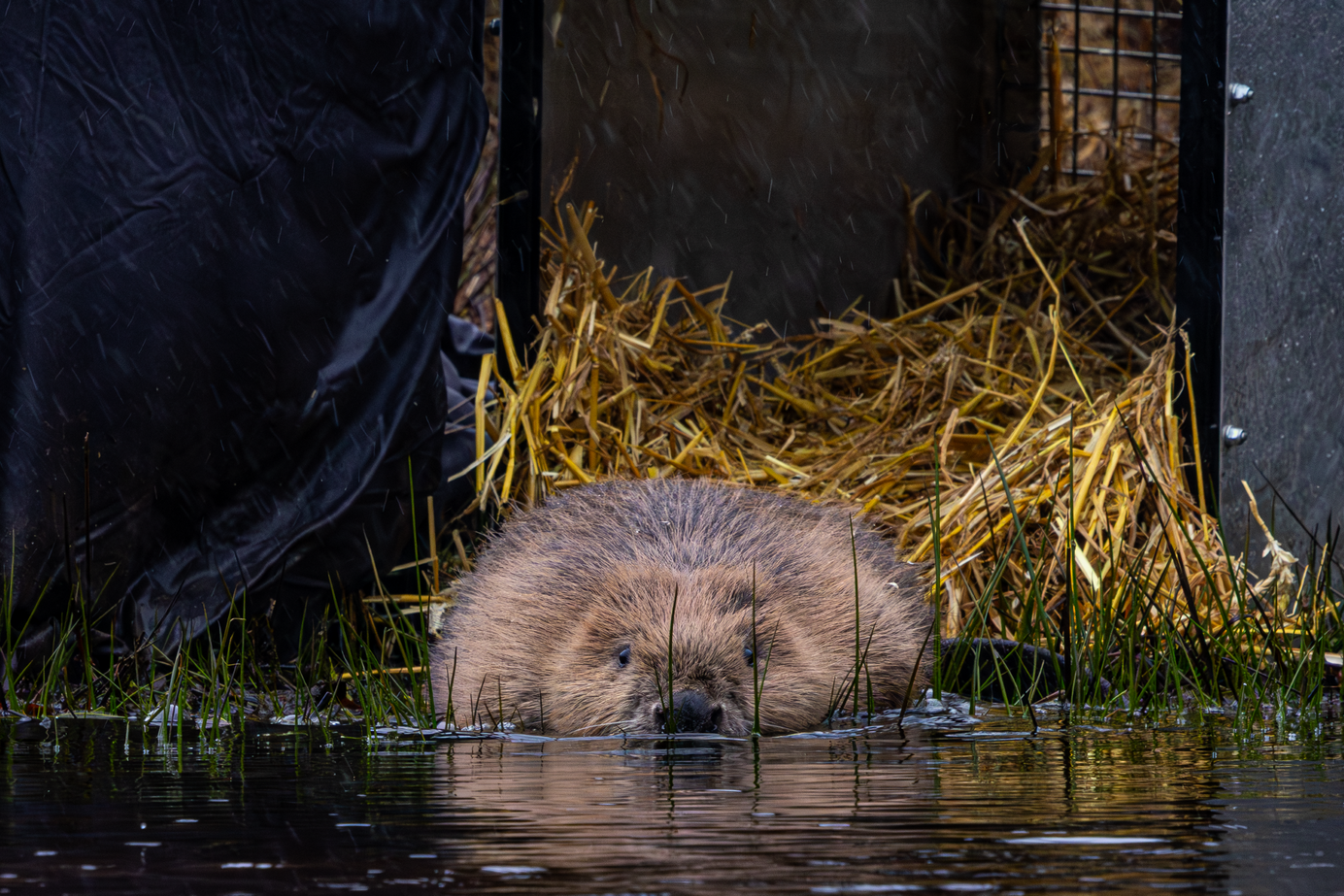
- NatureScot has been accused of failing to enforce humane killing of beavers, according to the Ferret.
- More than 40% of all local planning authorities in England have specific biodiversity net-gain policies in their plans, up from 28% the previous year, according to ENDS.
- Tesco has announced it will become the first UK retailer to go peat-free on its British-grown bedding plants, reports the Express and Star.
- The need for more offshore wind development will outweigh nature protections in a set of national policy statements under consultation, reports ENDS.
- Campaigners have warned that red squirrels in Wales risk being wiped out by a fatal virus unless a vaccine is developed, reports the BBC.
Across the country
Dartmoor | Natural England has met with fierce opposition among farmers over its plans to reduce grazing in Dartmoor National Park. Farmers have been told that they must remove all grazing livestock from common land in the winter, and up to 90% of their cattle, sheep or ponies in the summer, to become eligible for environmental subsidies. “It’s the dismantling of our culture, which we can’t tolerate,” said Anton Coaker, whose family has farmed the land since the 1840s, as reported by the Times. “They are trying to deny it’s rewilding but that is the reality.” Local Conservative MPs have criticised the move, asking for the current grazing regime to be kept in place for an extra 12 months, reports the Guardian. Environmental groups, however, have welcomed the news, pointing out that the park’s protected habitats are suffering due to overgrazing. Private Eye also covered the controversy.
Highlands | Researchers have discovered rare freshwater pearl mussels in Scottish lochs for the first time. The critically endangered species had previously only been known to live in rivers, but has now been found in two lochs, in Sutherland and the Trossachs. NatureScot used remote underwater drones and snorkelling equipment to carry out the survey, and said the mussels had likely entered the lochs by clinging to the gills of host fish. The BBC, the Herald and the Times reported the news. Separately, Natural Resources Wales is preparing to release pearl mussels into Welsh rivers this summer to bolster their numbers, reports the BBC.
Manchester | Volunteers have begun planting the first seeds at Northern Roots, the UK’s largest urban farm. Covering 160 acres in Oldham, Greater Manchester, the multi-million-pound project aims to sell vegetables at affordable prices, while also enhancing the biodiversity of the previously empty site and creating local jobs. Georgia Forsyth Sijpestijn, landscape manager at Northern Roots, explained that the project is “trying to create a local economy around green spaces and food.” Two buildings have been planned for the site, one of which will function as a learning centre delivering community-focused activities. The BBC reported the news.
Elsewhere:
- Dartmoor National Park Authority has been given permission to appeal against the wild camping ban, reports the Guardian and the BBC.
- As part of the Solent Seascape Project, a reef has been laid in the River Hamble that will be home to 30,000 oysters, reports the BBC, Express and Star and the Daily Echo.
- Tourists are beginning to flock to Skomer island in west Wales thanks to the “Attenborough effect”, reports the Guardian.
- A blog by the Sheffield and Rotherham Wildlife Trust explains how technology is being used to re-map ancient woodland in South Yorkshire.
- The Farne Islands will not open to visitors this spring in anticipation of a bird flu outbreak, reports the Guardian. Elsewhere, Yorkshire Wildlife Trust is closely monitoring colonies for the virus, reports BirdGuides.
- The Cairngorms Capercaillie Project has asked visitors not to go searching for the rare bird during mating season, reports the BBC.
- In Monyash, a Peak District village, the annual amphibian rescue operation is gearing up to help migrating toads safely cross roads, reports the Derby Telegraph.
- A coalition of seven environmental organisations are “extremely concerned” by a new planning application for a golf course that threatens Coul Links in Sutherland.
- The UK’s biggest yoghurt producer, Müller, has donated £100,000 to Shropshire Wildlife Trust after discharging high levels of ammonia into a river, reports the BBC.
- Unique footage of a pilot whale expelling its placenta off the coast of Shetland is helping researchers understand the behaviours of marine mammals, reports the Scotsman and the Herald.
- A hedge destined for the chop in Bishopsworth could be saved by the discovery of a new type of grass fly, reports the Bristol Post.
- Salmon are breeding in a Cumbrian beck once again after it was re-wiggled, reports the BBC.
- Wool from Dartmoor’s sheep is being used for vital peatland restoration works, reports the Mid-Devon Advertiser.
- A £7,000 grant is helping to protect the Capon Tree, one of the few remaining trees from the ancient Jed Forest in the Scottish Borders, reports the Scotsman.
Reports
Shooting | Natural Resources Wales has launched a consultation on the regulation of gamebird releases in Wales, including a proposal that would mean any release of either pheasant or red-legged partridge would require a licence. Two evidence reports have been released to support the consultation, both by Dr Joah Madden, who runs the Pheasant Ecology and Cognition Group at the University of Exeter. The first report looks at patterns of gamebird release, management and shooting in Wales. Using a combination of “messy” data sources, it estimates that somewhere between 0.8 and 2.3 million gamebirds are unleashed upon the countryside every year, at between 171 and 431 shooting locations across Wales – around 4% of the total for the UK. The second report compiles the various ecological impacts of releasing all those birds, categorised according to the strength of the evidence. Most studies on gamebirds to date have focused on England, so the reports fill an important gap in the literature. You can respond to the consultation here. Separately, the Game & Wildlife Conservation Trust have released a report called Real Wilders, a set of case studies on “how moorland managers are saving rare wildlife and mitigating climate change”. Among those included are the Raby Estate in County Durham and the Fitzwilliam Wentworth Estate in the Peak District.
The shooting industry will focus all its fire on this consultation, so anyone supporting introduction of licences for game bird releases needs to respond supporting the proposal. Introduction in Wales will make it much more likely to happen in England. https://t.co/iG8R1m51H2 pic.twitter.com/Ms0lx6EtzW
— Miles King #ditchtheREULbill (@MilesKing10) March 29, 2023
Biodiversity | In Ireland, the Citizens’ Assembly on Biodiversity has launched its final report, including over 150 recommendations on how to transform the country’s relationship with the natural environment. The Assembly was established by a resolution of the Oireachtas, and includes a representative sample of Irish society. The report calls for better funding and implementation of existing regulations, and proposes a series of changes to the Constitution to ensure that people have the right to a clean, healthy and safe environment. It explicitly acknowledges the role of farmers as custodians of the land – although that didn’t stop the Irish Farmers’ Association condemning it as “an attack on our industry”, as the Irish Times reports. “It is now up to our elected officials to consider these as ways in which the State can respond to the biodiversity crisis we are now living through,” wrote Dr Aoibhinn Ní Shúilleabháín, the chair of the Assembly, in the foreword. RTE covered the news.
Farming | A report from the Green Finance Institute, commissioned by Defra, looks at how to mobilise private sector financing in support of the transition towards nature-friendly farming. While government subsidies will now support green agricultural measures, public money will only go so far in helping farmers to make the changes required. However, lack of trust has prevented cash from flowing from the private sector into the rural economy. The report identifies four key enablers to unlocking future funding, as well as a broader set of recommendations. “Greater access to private sector finance will enable British farm businesses to continue to invest in this important work and, crucially, build business resilience,” said Minette Batters, president of the NFU, responding to the findings.
Science
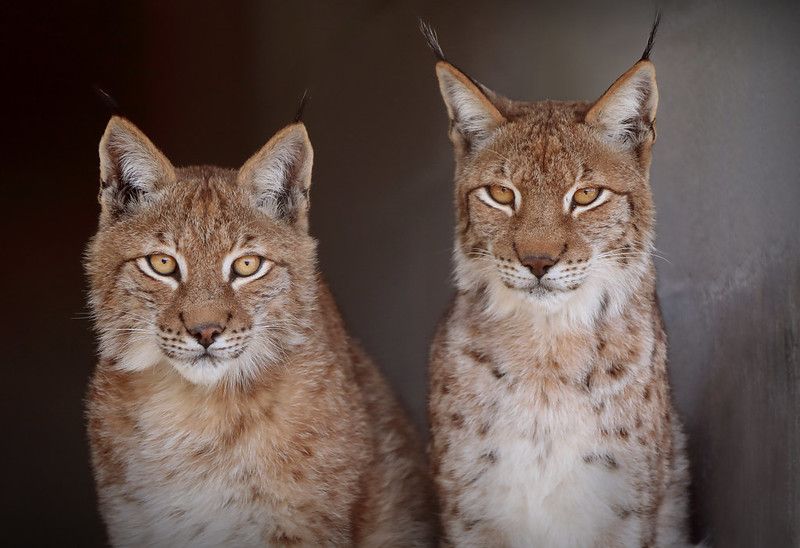
Lynx | Views on lynx reintroduction in Scotland are not as simplistic as sometimes portrayed, according to a study published in People and Nature. Researchers interviewed people in the Cairngorms National Park about the potential return of the predator, finding that views tended to fall into five different camps. Two of those decisively supported reintroduction: one for the ecological benefits, the other for the economic ones. Another camp supported the idea in theory but perceived prohibitive socio-ecological barriers, and another was not convinced that an adequate case for biodiversity had been made yet. The final camp was strongly opposed, on the grounds that humans were already filling the role of large carnivores in the ecosystem. “Our results show that Scottish views about the lynx reintroduction are far more nuanced than we assumed,” said David Bavin of the Vincent Wildlife Trust, who led the research.
Squirrels | Air pollution affects squirrels as well as humans, according to a study published in Environmental Pollution. Researchers tested for the presence of black carbon, as well as lung and tracheal diseases, in grey squirrels that had been culled across five London boroughs – ranging from leafy Richmond to congested Westminster – and in Sussex and North Wales. They discovered a higher prevalence of respiratory diseases in those that were more exposed to air pollution. The findings may help to explain why there have recently been sharp drops in populations in species that, until recently, appeared to have adapted well to city life. “They are not so much the canary in the coal mine as the rodent in the undergrowth,” said co-author Patricia Brekke of the Zoological Society of London. The Observer covered the story.
Engineers | Researchers from the University of Lausanne have created a guide for the introduction of ‘ecosystem engineers’ into habitats. Published in Functional Ecology, the paper outlines a framework for predicting and measuring the influence of such species on ecosystems under different conditions – although individual cases are well documented, the broader mechanisms at work are not yet well understood. The authors say that the aim of the guide is to reveal the common but underappreciated roles of these keystone creatures, with the goal that specialists and communities are able to include them in more conservation efforts.
Driftwood
Green Man | Buckingham Palace has revealed the design of the invitations to the King’s coronation, due to take place in Westminster Abbey in May. The invitations were painted by heraldic artist and manuscript illuminator Andrew Jamieson, who is part of the Art Workers’ Guild. Notably, the design features a central figure of the Green Man. According to the Palace, the Green Man is “an ancient figure from British folklore, symbolic of spring and rebirth, to celebrate the new reign.” He is crowned in foliage of oak, ivy and hawthorn, and surrounded by the emblematic flowers of the UK. The invitation also includes a border inspired by British wildflower meadows, featuring lily of the valley, cornflowers, wild strawberry, dog roses and bluebells. The Independent covered the story, while Town and Country Magazine analysed the symbolism.
Rewilding | Three-quarters of Scots want wilder national parks, with areas devoted to rewilding, according to research by the Scottish Rewilding Alliance, while just 6% of people were opposed to the idea. Scotland’s existing national parks were created over 20 years ago, but environmentalists have criticised their condition. In February, NatureScot advised the Scottish government to create wilder national parks to help tackle the nature and climate emergencies. Steve Micklewright, convenor of the Alliance, said: “Our national parks have the potential to be at the forefront of restoring functioning, thriving ecosystems in Scotland, a country that is currently one of the most nature-depleted in the whole world.” The Scotsman and the Herald covered the story.
Lobsters | A feature in the Guardian explores the practice of V-notching – marking the tails of lobsters before returning them to the ocean, a sign to other fishermen that they should be left to live another day. The method is used to replenish lobster stocks, and is typically applied to those that are carrying eggs or are otherwise vulnerable; it has been illegal to land V-notched lobsters and crayfish in Britain since 2000. Journalist Frankie Adkins speaks to the fishermen in Cornwall who make a habit of notching – although not everyone is keen on the tradition. “Some fishers see it as a bit of a nightmare because it takes away a certain portion of their catch,” says Chris Weston, a technician at the National Lobster Hatchery in Padstow.
Further reading:
- Abigail Croker from Imperial College London writes about how rewilding and agriculture can sit side-by-side for the British Ecological Society.
- A feature in the Guardian looks at the “fringe” theory that bees experience emotions, dreams and even PTSD.
- The Observer reviews Beastly, a new book examining the history of human-wildlife relationships.
- In the wake of the latest episode of Wild Isles, the RSPB has published a blog on why salmon need our help.
- A feature in the Guardian explores why pairing oysters and whisky could have surprising benefits for wildlife in Scotland.
- A blog by Forestry England discusses why working forests need more wildlife.
- A post by Natural Resources Wales delves into a ten-year study of woodcock in Anglesey.
- In the Guardian, an opinion piece explains why climate change is helping ticks thrive in the UK.
- A blog by the Green Party discusses the importance of urban trees for healthy neighbourhoods.
Happy days
Trees | In Literary Hub, author Katie Holten calls for a ‘rewilding of vocabularies’ through the language of trees. To that end, she has created a Tree Alphabet, taking all 26 letters and creating a corresponding tree drawing, which were then converted into a font. "The alphabet is magic, a way to love the world intimately. With these 26 little letters we can create any word in the universe. Letters of the alphabet are like seeds planted on a blank page. I offer the Tree Alphabet as a gift for those who want to fall in love with the world by rewilding their words," she writes.

Subscribe to our newsletter
Members receive our premium weekly digest of nature news from across Britain.
Comments
Sign in or become a Inkcap Journal member to join the conversation.
Just enter your email below to get a log in link.