Oil Tanker Crash & Lynx Kitten
The latest news on nature and conservation in Britain.
National news
North Sea | The collision of an oil tanker and a cargo vessel off the coast of East Yorkshire is of ‘grave concern’ for the environment, according to experts. On Monday, amid thick fog, the Solent vessel crashed into the Stella Immaculate tanker laden with jet fuel, resulting in fires on both ships. Environmental NGOs have warned that a major fuel spill would be disastrous for marine life, and the fragile ecosystems in and around the nearby Humber Estuary. The RSPB and the local Wildlife Trusts said they were extremely concerned by the ramifications: specifically, the area is home to internationally important populations of seabirds, as well as other species including grey seals and a breeding ground for harbour porpoise. The level of danger is thought to depend on how much fuel is leaked, and how far it spreads via currents and wind. The news was widely covered by national outlets.
Subsidies | English farmers have been dealt another ‘shattering blow’, according to the National Farmers’ Union, after the government announced the closure of its Sustainable Farming Incentive. The scheme pays farmers in England to manage their land in nature-friendly ways, including protecting soil, restoring hedgerows and boosting key habitats. Defra said the scheme had been a success, with a ‘record’ 37,000 funding agreements in place, but it would not accept any new applications as the maximum limit of the budget had now been reached. It added that a ‘new and improved’ SFI offer would follow the spending review. In response, Barnaby Coupe of the Wildlife Trusts said that the government was right to review the scheme, as ‘it does need to be strengthened’, but the lack of warning had ‘pulled the rug’ from under farmers trying to work more sustainably. The BBC, Times, Independent and ENDS reported the news.
Water | Environment secretary Steve Reed has confirmed that the £11m raised through water company fines will be used to fund environmental schemes and not, as feared, kept by the Treasury. The water restoration fund was set up by the Conservative government to ensure that polluting water companies paid to fix the damage caused, but in January it was reported that the Treasury was planning to keep the money. Now, Defra has announced that the funds will go to projects across the country, with each focusing on environmental improvements in the same region where the fines were issued. On the announcement, Steve Reed said: ‘The sewage scandal ends now.’ The Guardian and ENDS covered the news. Meanwhile, the UK and Welsh governments have united to announce a £1m fund to tackle water quality issues in the River Wye, reports the Shropshire Star.
In other news:
- An investigation by Greenpeace UK has revealed that supertrawlers have spent 7,380 hours fishing in Marine Protected Areas each year since Brexit.
- Data has revealed that seven of the nine Welsh river systems protected as Special Areas of Conservation are now failing to meet phosphate level targets, reports the BBC.
- The Wildlife Trusts has said it is ‘disappointed’ to see nature largely missing from the government’s newly published Planning and Infrastructure Bill.
- Changes approved by the UN mean that wind and waves are set to be included in calculations of the size of countries’ economies for the first time, reports the BBC.
- The RSPB has applauded the government’s decision to take a ‘presumption against’ granting licences for taking wild birds of prey for falconry or aviculture.
- The Food Standards Agency is looking to speed up the approval process for lab-grown foods, meaning it could be available in the next two years, reports the BBC.
Across the country
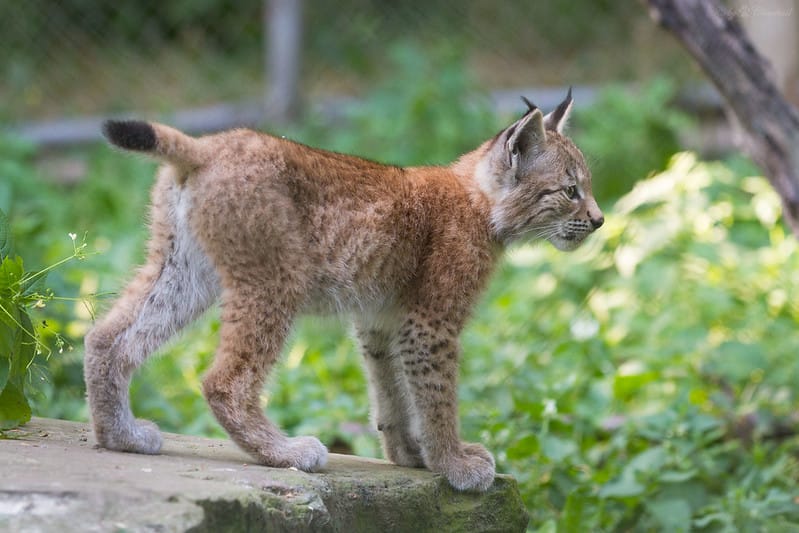
Cornwall | A lynx kitten born in Cornwall has become the UK’s first zoo-bred cat to be selected as a candidate for potential release into the wild. The kitten, born at Newquay Zoo last May, has been chosen by the Linking Lynx rewilding conservation programme, which aims to establish a connected population of the species across Europe’s mountains, stretching from the Carpathians to the Alps and Dinaric ranges. The lynx kitten will have to pass health and behavioural checks before being relocated to a habituation facility in Germany, where she will spend time in a semi-wild environment to develop the skills necessary for survival in the wild. The Wild Planet Trust, which runs the zoo, said such collaborations demonstrated how local conservation centres could play a crucial role in international wildlife preservation efforts. The BBC and Cornwall Live covered the story.
Windermere | The government has pledged to ‘clean up Windermere’ in the face of criticism over the levels of sewage released into England’s largest lake. Environment secretary Steve Reed promised that ‘only rainwater’ would enter the iconic lake, which he said was being ‘choked’ by unacceptable levels of pollution. The plan involves a feasibility study set up by a coalition including the Environment Agency, Ofwat, campaigners such as the Save Windermere group, and United Utilities. The latter, which is the water supply company responsible for much of the sewage discharged into the lake, has pledged a £200m investment toward upgrading its wastewater treatment works and reducing storm overflow spills. Meanwhile, the government will work with private owners to reduce their discharges. Campaigners called the announcement a ‘historic victory’, but said it was ‘just the beginning’ and that the promises must become ‘cast-iron, legal commitments’. The Guardian, Times and BBC reported the news.
 Coreen Grant
Somerset | A bold art campaign is helping walkers to remain mindful of disturbing endangered European adders during their breeding season. The Arty Adders project has installed colourful giant-sized snake sculptures across more than 10 National Trust nature reserves in Somerset. Adders can be found across the UK, but their population has declined drastically in recent years due to habitat loss and fragmentation. The largest populations in Somerset are found on Exmoor and the Mendip Hills, but even among these, 90% of known sites have populations of 10 or fewer adults. In spring, the species emerges from hibernation to bask in sunlight to raise its temperature and generate energy, and is therefore particularly sensitive to disturbances. Each sculpture has a QR code, which walkers can scan to learn more about how to protect the vulnerable reptiles. The BBC covered the story.
Elsewhere:
- The National Lottery Heritage Fund has awarded £100,000 to safeguard the future of one of the UK’s oldest heritage trees: the Great London Plane of Ely, in East Cambridgeshire.
- The Forestry Commission has approved plans for a 290-hectare forest in County Durham, which will be England’s largest contiguous commercial forest, reports Chronicle Live.
- Somerset Wildlife Trust has launched a Wilder Churches campaign, asking communities to allow more space for nature in churchyards and burial grounds, reports the BBC.
- Natural Resources Wales has released native European perch to several sites in Carmarthenshire to help control an invasive species of fish.
- The Manx Wildlife Trust has appointed two ‘biosphere photographers’ to create a ‘lasting artistic legacy’ of the island’s status as a biosphere nation, reports the BBC.
- More than 1,000 trees have been planted in the Rea Brook catchment in Shrewsbury as part of a nature-based flood management scheme, reports the Shropshire Star.
- Cumbria Wildlife Trust has counted a record number of grey seals (563) at South Walney Nature Reserve near Barrow.
- Avon Wildlife Trust and the Royal Horticultural Society are working to create a 70km ‘bee-line’ across Bristol and Bath, particularly to aid hoverflies, reports the BBC.
- The Game and Wildlife Conservation Trust is set to carry out a study on the impacts of game birds on native species in the Cairngorms, reports the Ferret.
- The Wildlife Trust for Cambridgeshire is using traditional livestock and virtual fences to help create the ideal conditions for wetlands species on the Great Fen.
- London’s damaged rivers are set to benefit from £1.8bn of funding from Thames Water, City Hall and Transport for London (TfL), reports the BBC.
Reports
Timber | The Forestry Commission has published a collection of studies investigating how landowners can benefit, both financially and environmentally, from harvesting local timber. Timber is a renewable resource vital to sustainable living, according to the Commission, but the UK currently imports 73% of its timber. A case study from the Woodland Trust outlines how developing a local wood economy in Dartmoor would help support the ecological management of its ancient woodlands. Specifically, timber extraction allows more light into woodlands, encouraging new habitats and boosting biodiversity. In valleys with difficult access, a financial incentive makes the effort of extracting the wood more worthwhile. Meanwhile, this study looks at work on the Blenheim Estate in Oxfordshire to convert low-grade, unprofitable agricultural land into new woodlands. These deliver multiple benefits including carbon sequestration, improved biodiversity and water quality, as well as income through timber production. Read more case studies here.
Floods | Research by the Wildlife Trusts has found that every £1 invested in natural flood management (NFM) is expected to deliver £10 of benefits over 30 years. The report, which was commissioned by RSA Insurance, examined ten NFM schemes created by individual Wildlife Trusts, from the River Otter in Devon to wetlands in the Peak District. Collectively, the schemes had an average cost-benefit ratio of 4:1 over ten years, rising to 10:1 over 30 years. The authors highlight that, as well as its devastating social impact, flooding is the UK’s most expensive natural hazard, costing approximately £2.2bn annually – and expected to rise. The report outlines the range of potential schemes, from investing in beaver wetlands to rewilding rivers and de-paving areas, and also their wider benefits, including for biodiversity, carbon storage and wellbeing. The Trust is calling for more investment and data to boost the long-term effects of NFM.
Planting | Research by the Tree Council has found that tree-planting schemes which ask recipients to contribute towards the cost improves the survival rates of its trees. The study – which included input from Defra and Natural England – took place over three years and across four authorities. Participants planted 145,000 trees across 1,200 sites, with nearly 90,000 of those trees surviving their early years. The results showed that subsidised schemes achieved higher first-year survival rates compared to free schemes (88% to 83%), suggesting that those paying toward trees were more likely to care for them properly. The trial also revealed that participants’ most common motivation was to enhance wildlife and biodiversity, while those using subsidised schemes also cited practical benefits such as shade, shelter, natural barriers, and improving farm landscapes. Read the full report here.
Science
Song | Birdsong is cultural, according to a study in Current Biology. Researchers from the University of Oxford spent three years collecting over 100,000 bird songs, recorded from a wild population of great tits in Oxfordshire. By training an AI model to recognise individual birds, they were able to track variations in repertoires and uncover evolutionary patterns. They found that factors such as age, dispersal and turnover all affected the nature of the music. For example, older birds continued to sing song types that were becoming less frequent, thereby functioning as ‘cultural repositories’. Meanwhile, areas where birds stayed close to their birthplace maintained more diverse and unique song cultures. Lead researcher Dr. Nilo Merino Recalde explained: ‘Just as human communities develop distinct dialects and musical traditions, some birds also have local song cultures that evolve over time.’ Phys.org covered the research.
Cats | Efforts to reduce the impact of pet cats on wildlife should focus on ‘super predator’ individuals, according to a study in Ecology and Evolution. Scientists from the University of Derby used a citizen science project called ‘What the Cat Dragged in’ to survey the quantity of prey killed and returned by cats in the UK. They found that, among 553 cats, the majority brought home between 0 to 1 items of prey every month. However, there were three cats (1.4% of the sample) which returned ten or more items every month, named by the researchers as ‘super predators’. On average, the authors calculated that the current UK population of cats returns between 37-140 million prey pieces per year. However, if owners were able to deter ‘super’ individuals – either by changing their diet, or restricting their outdoor access – then overall predation pressure could be reduced to around a quarter of the current level.
Ditches | Canals and ditches are an overlooked source of greenhouse gases, according to a study in Global Change Biology. Freshwater biogeochemists from the University of Liverpool teamed up with international researchers to collate emissions data from 119 ditches in 23 different countries. They found that, when comparing similar surface areas, ditches emitted more CO2 and nitrous oxide than ponds, lakes and reservoirs. Accounting for all three greenhouse gases, they estimated that the world’s ditches emit 333 teragrams of CO2 equivalent: nearly the same as the UK’s total GhG emissions in 2023. Emissions are particularly high from ditches because they often contain stagnant water, and receive nutrient inputs from agricultural and stormwater runoff. The authors argue that, by properly quantifying the emissions, researchers can target ways to reduce them, from planting more trees along the banks to dredging ditches and minimising run-off. Phys.org covered the research.
Driftwood
Trees | In Sherwood Forest, arborists are experimenting with a set of techniques which seem harmful to trees – but are actually attempting to mimic the character of ancient forests. The issue, according to this long read in Noema, is that there are not enough old trees left. Ancient and veteran trees, like the gigantic Major Oak in Sherwood, support a raft of other species through their nooks, crannies and rotting wood. But trees of this age are roughly ‘one in a million’ in the UK, which has an estimated 170 million oaks, but only 115 ancient giants like the Major. Now, arborists are attempting a process called ‘veteranisation’, which modifies young trees to create features like storm damage or damp hollows that would not usually form until much later in life. Writer Matthew Ponsford writes: ‘To the uninitiated, it can be surprising that caring for a forest might involve yanking trees’ limbs off.’
Camping | British campers craving a ‘back-to-nature’ experience will have a new option this summer, thanks to a partnership between booking platform CampWild and the charity Rewilding Britain. The initiative, called ‘ReWild Spaces’, allows outdoor enthusiasts to book an overnight wild camping spot amid active rewilding projects. Before their stay, campers will receive an information sheet with a species checklist, and micro-conservation activities such as removing invasive species and tree care. Initially launching in 15 locations from Scotland to Dorset, the plan is to expand to other sites. CampWild co-founder Tom Backhouse said the initiative gives campers ‘exclusive access’ to ‘some of the most ecologically rich places in the UK’. However, not everyone is a proponent: Right to Roam campaigner Jon Moses criticised the paid model, saying: ‘It’s a business deal attempting to commercialise access to nature’. Read more in the Guardian, Wanderlust Magazine and Advnture.
Virtual Reality | A feature in BBC Future asks whether a new type of immersive storytelling could inspire more people to act for the environment. Writer Becca Warner describes the experience of watching a pangolin perish in the Kalahari desert, moving her to tears – all through a VR headset. In the article, she digs into recent research that suggests nature experiences shown through VR can be more than just ‘moving or fun’: they can affect attitudes and behaviours, too. VR is particularly good at imparting the complex feeling of ‘awe’, which was found to make people more likely to take social action in aid of the environment. One current drawback is the relative exclusivity of the technology, but proponents argue that, in the future, it could actually be used to help democratise nature, by allowing people access to places otherwise out of reach.
Further reading:
- A feature in Positive News spotlights the work of a group of deaf scientists and educators who have created 400 British Sign Language signs for environmental terms.
- An article in the Times chronicles how a farmer in the Yorkshire Dales swapped sheep farming for an environmentally-friendly herd – and extra money in the bank.
- For the Guardian, professor of invasive biology Tim Blackburn writes about why it would be a mistake to welcome all of the species arriving in Britain.
- An article in the BBC revisits the woman who ‘married’ the River Avon as part of a clean water campaign, and explores how the partnership is getting on.
- A feature in the Times looks into why millions of people are watching a livestream of fish migrating up a Dutch canal.
- Campaigner Guy Shrubsole has published his reply to the government’s land use consultation, outlining the changes he would like to see enacted.
- In Positive News, read about how rubbish is being repurposed for a unique playground which has recently reopened in London.
- If society reduces its meat consumption, will our bodies forget how to digest flesh? An article in BBC Future investigates the bodily impacts of dietary changes.
Happy days
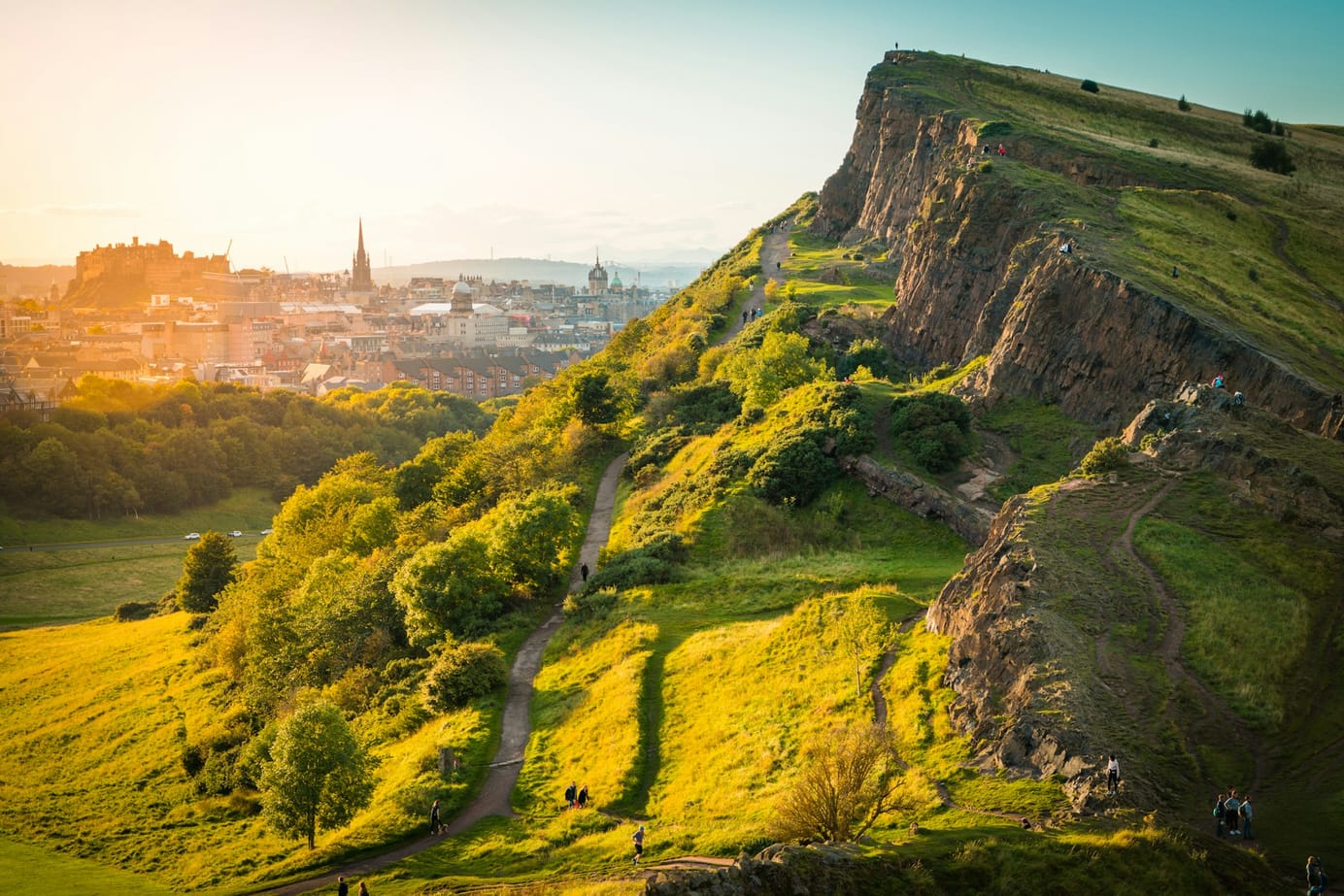
Recovery | An accountant from Edinburgh has captured hundreds of hours of wildlife footage on the Water of Leith while recovering from a knee replacement surgery. The remarkable recordings, some of which can be seen in this BBC video, include otters and their cubs, kingfishers, foxes and herons in their natural habitat. Tom Kelly had knee surgery in January 2021, and doctors advised him to walk as much as possible to aid rehabilitation. Since then, the 60-year-old has walked 5,000 miles along the Water of Leith, which runs through the city centre, and made a full recovery while filming. You can see more of Kelly’s work at an exhibition at the Water of Leith visitor centre.

Subscribe to our newsletter
Members receive our premium weekly digest of nature news from across Britain.
Comments
Sign in or become a Inkcap Journal member to join the conversation.
Just enter your email below to get a log in link.