Ocean Heatwave & Cuckoo Migration
The latest news on nature and conservation in Britain.
Welcome to Inkcap Journal, a newsletter about nature and conservation in Britain. Not a member? Sign up for a 30-day free trial.
National news
Heatwave | Scientists have warned that the unprecedented marine heatwave taking place off the British and Irish coast could have a devastating effect on ocean ecosystems. Sea temperatures are several degrees higher than normal, particularly off the east coast, from Durham to Aberdeen. Experts believe the temperatures are a result of climate change combined with natural climate variability, including the emerging El Niño weather pattern. Dr. Dan Smale, from the Marine Biological Association, told the Guardian that current temperatures are “too high but not yet lethal” for the majority of species, but if temperatures were sustained through summer “we could see mass mortality of kelp, seagrass, fish and oysters.” The BBC, the Independent and ENDS also covered the news, and Phys.org provided an explainer.
Capercaillie | This year’s lek counts in the Scottish Highlands are showing early signs of capercaillie recovery. Forestry and Land Scotland (FLS) said four of its counts on Speyside in the Cairngorms and in Tain, north of Inverness, showed increased numbers of the rare bird. Scotland’s capercaillie population has been declining steadily for the last eight years, causing concern that its second extinction in Scotland could be imminent. However, Kenny Kortland, an ecologist for FLS, said he was hopeful numbers would continue to grow again next year. He added that the findings were particularly satisfying because the forests involved are heavy in predators – such as goshawk, pine marten and foxes – suggesting that capercaillie can survive in a balanced ecosystem. Inkcap Journal explored the complex dynamic between capercaillie and predators in this recent article. The Guardian and the Herald reported the news.
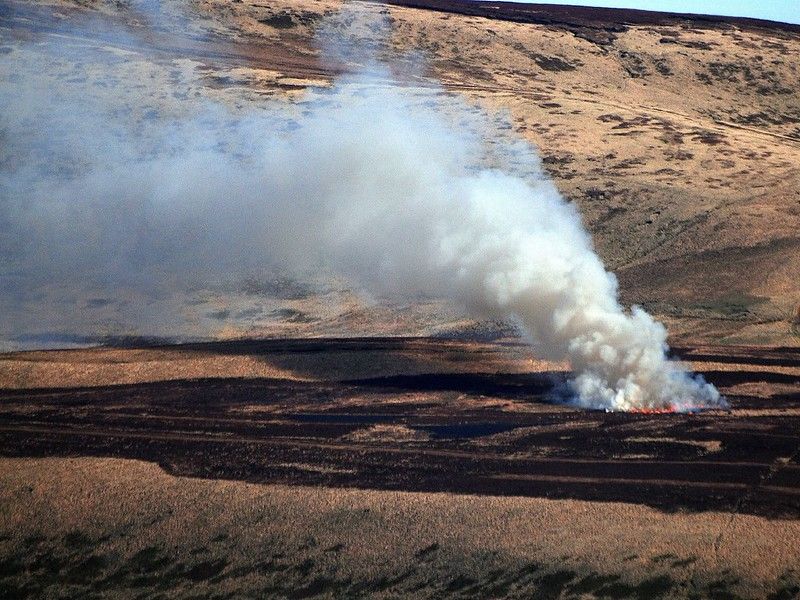
Wildfire | Firefighters from across south and mid Wales have been battling wildfires almost constantly in recent weeks after a spell of hot and dry weather. Two fire services have been forced to issue appeals to the public emphasising the impact of deliberately lighting a blaze; since the beginning of April, the South Wales service alone has responded to almost 400 deliberate wildfires. Matthew Jones, from the service, said that such unnecessary fires have caused severe damage to the Welsh landscape, forestry and wildlife, while also placing the lives of firefighters and the public at risk. In a blog post about the fires, Natural Resources Wales commented: “While the full impact and cost of these fires is still to be determined, we know the physical scars of these events will be visible on the landscape for some time.” The BBC and Wales Online reported the news.
In other news:
- NatureScot has warned that some seabird species are returning to Scotland in lower numbers following last year’s avian flu outbreak. The BBC reported the news.
- The National Lottery has pledged £4.1m to the Natur am Byth partnership, which targets 67 of Wales’ most endangered species.
- The Scottish government has denied farmers emergency use of a banned chemical to control bracken growth, reports the BBC and the Herald.
- Police data reveals a 59% increase in crimes against waterfowl in England and Wales from 2020 to 2022, reports the Guardian.
- The Scottish government has launched a consultation on the idea of creating a dedicated environmental court, reports ENDS.
- In the first ever ‘Nature for Finance’ event, Defra brought together farmers, land managers, investors and conservation experts to discuss new investment opportunities.
- Scotland has missed its target for reducing greenhouse gas emissions, with agriculture as the second largest emitter in 2021, reports the BBC.
Across the country
Highlands | As part of the recently launched Species on the Edge programme, the University of the Highlands and Islands is collaborating with the RSPB on a project to encourage migrating terns to discover new breeding sites. The project is using an unconventional method: 3D-printed tern replicas, painted to look realistic, are being placed in restored areas of nesting habitat to signal to returning terns that it is a safe place to breed. The project, which is called ‘Terning the Tide’, aims to bolster declining populations of Arctic tern, common tern and little tern, which arrive on British shores to establish breeding colonies for the summer. The decoys will be used in nesting areas on Islay and Tiree in Argyll, the Inner Hebrides and the east coast of Sutherland.
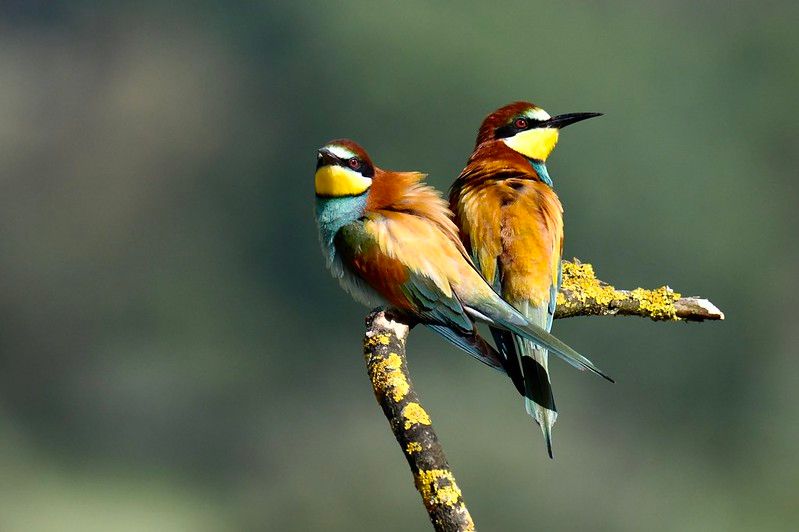
Norfolk | European bee-eater birds have returned to the Norfolk nesting site where they successfully hatched chicks last summer. Their appearance marks the first time the beautiful rainbow-coloured birds – usually found in Mediterranean habitats – have returned to the same UK breeding site in consecutive years. While many bird-watchers are excited by their return, others have voiced concerns that it highlights the impact of a warming climate. Mark Thomas, of the RSPB, said: “Their return is a vivid reminder of the changes being wrought by our overheating planet,” with species being pushed further north. The BBC, the Guardian, BirdGuides and the Telegraph covered the news.
Derbyshire | Rare hazel dormice are being reintroduced to the National Forest in Derbyshire in an effort to halt the decline of the species. The People’s Trust for Endangered Species will release 38 captive-bred dormice into woodland near Calke Abbey. A report in 2019 found that dormice populations were extinct in 17 English counties – including Derbyshire – and nationally the species had declined by more than 51% since 2000. The National Trust, which owns the ancient woodland, hopes that the diversity of trees present in the woodland will provide a secure place for the dormice to forage, nest and breed. The BBC and the Evening Standard covered the story.
Elsewhere:
- Devon is experiencing a boom in dragonfly populations due to severe drought in Europe, reports the BBC.
- Twelve water voles have been released into a newly created wetland near Bristol, reports the BBC.
- Anglesey residents are concerned by the speed of erosion at Lleiniog beach, an SSSI site and AONB, reports the BBC.
- The number of common crane breeding in Lincolnshire is rising after the species recolonised the area in 2020, reports BirdGuides.
- Northumberland Wildlife Trust has launched an animal adoption scheme with the aim of protecting local wildlife, reports Chronicle Live.
- The RSPB’s Haweswater reserve in Cumbria is set to receive £135,000 to create a community visitor hub, reports BirdGuides.
- Staffordshire Wildlife Trust has discovered the rare Welsh clear-wing moth at a new location.
- Dead fish have been spotted in rivers in Cambridge, Leicestershire and Shropshire, likely caused by low oxygen levels in the water due to the hot weather.
- Kent Wildlife Trust has issued a plea for coastal visitors to keep their distance from seals, as disturbance can lead to death for their pups.
- The Marine Management Organisation has fined a fishing business £15,000 for illegally dredging for king scallops in a closed area of Dogger Bank.
- A man has been charged in relation to the discovery of five dead northern goshawks in Suffolk earlier this year, reports BirdGuides.
- A species of day-flying moth – a Dusky Clearwing – has been discovered in east Cambridgeshire, after not being spotted in the UK for almost a century, reports BirdGuides.
- A country park in Wakefield is set to become a “wildlife haven” through the addition of woodland areas and wildflower meadows, reports the BBC.
- Silver-studded blue butterflies have been returned to their former home in Norfolk after an absence of 70 years, reports the BBC.
- A section of the Dudley Canal in Brierley Hill has received conservation status after a survey of its biodiversity, reports the Express and Star.
Reports
Peatland | Re-wetting half of England’s lowland peat could deliver one-fifth of the reduction target for emissions from the agricultural sector by 2030, according to research by the thinktank Green Alliance. That is because wet peat sequesters carbon – but when drained for farming, it emits 19 times the amount of carbon as non-peat cropland. Lowland peat only accounts for around 1% of the UK’s farmland, so re-wetting half of it would have little impact on land availability, according to the Alliance – which recommended that peatland should be a priority for a national land use framework. However, farming experts disagree, arguing that drained peatlands are among the UK’s most productive farmland, and rewetting large swathes could endanger domestic food security. The Guardian covered the debate.
Grouse | A report commissioned by the RSPB investigates the economic, environmental and social impacts of future policy options for grouse moor management in Britain. The extensive report, which was conducted by an independent consultant, compares the implications of three options: business as usual; the development of a licensing system for grouse moors; and a ban on grouse shooting. Among its conclusions, the report found that a licensing system would support the enforcement of existing legislation, therefore addressing some of the negative environmental impacts and also enhancing the public image of the sector. In comparison, a complete ban would have “an immediate and negative impact on employment” – although this could be partially offset by new opportunities in natural capital management and ecotourism, and would result in a more varied upland landscape. The RSPB is calling on the English government to adopt a similar approach to Scotland’s recent Wildlife Management and Muirburn Bill.
Transition | The Scottish Land Commission has published a report on Scotland’s natural capital and land reform, outlining its advice to Scottish ministers on achieving a “just transition”. The Commission argues that land reforms and policy changes must work in tandem to balance responsible private investment with community empowerment and rural repopulation. It recommends, among other things, the development of varied governance models that would enable communities to share not just the financial benefits of land ownership, but also “to include community agency in decision-making, control, and ownership”. Campaigner and reformer Alastair McIntosh tweeted that the report was a “powerful and timely contribution” to the ongoing debate.
Science
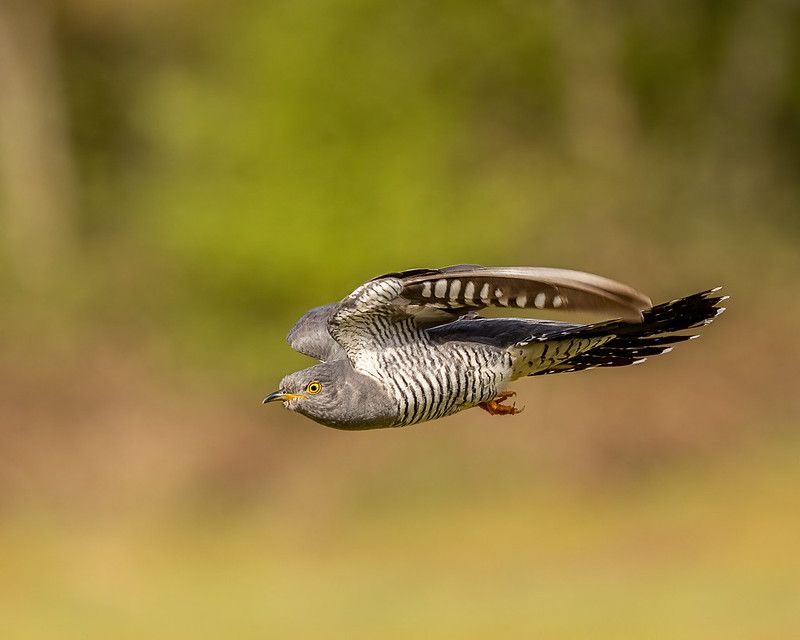
Cuckoo | While many species of birds have advanced their spring arrival dates to match Britain’s changing climate, cuckoos could be under threat from their inability to adjust. A study published in Proceedings of the Royal Society B used tracking data from 87 cuckoos across 11 years to evaluate why the species, which migrates to the UK from sub-Saharan Africa, has remained wedded to its old timetable. Researchers found that their departure from Africa is determined by the arrival of tropical rains, which bring a flush of insects needed to fuel the birds on their non-stop trip across the Sahara desert. However, if cuckoos are unable to match Britain’s earlier springtime, they risk missing the peak availability of insects at their destination, as well as the breeding season of birds that cuckoos notoriously use to raise their own young. The British Trust for Ornithology summarised the results, and the Times covered the research.
Wellbeing | A study in Scientific Reports explores the links between nature areas and wellbeing in Wales. Researchers used the National Survey for Wales, anonymously linked with spatial data on green and blue spaces, to investigate associations of wellbeing for 7,631 respondents. The study found that, in contrast to expectations, the quantity of green space around the home was negatively associated with subjective mental wellbeing. However, it also found that spending more time in nature – through nature visits, for example – was consistently positively related to wellbeing. In a blog post summarising the results, author Jo Garrett said that further research was needed to understand the reasons underlying the mixed results, including which environmental characteristics provide most benefit during time spent outdoors.
Tipping points | More than one-fifth of ecosystems worldwide are at risk of collapse within the next century, according to a study published in Nature Sustainability. A UK research team used computer modelling to study two lake and two forest ecosystems, and model how tipping points can accelerate one another. They found that around 15% of collapses occurred as a result of new stresses or the increasing frequency of extreme events, even when the original stress remained constant. The Guardian noted that the paper is likely to cause controversy: while the links between fossil fuels and climate change are conclusively evidenced, the science of tipping points is relatively unproven. However, the authors argue that their results, although limited in scope, demonstrate the need for policymakers to act before time runs out.
Driftwood
Hornets | A feature in the Guardian introduces the daily struggle of the Jersey Asian Hornet Group: a band of around two dozen volunteers, mostly retirees, standing between mainland Britain and an invasion by the Asian hornet. Now widespread across the west of Europe, Asian hornets are a voracious invasive species that preys on honeybees and other flying insects. They were first spotted on Jersey in 2016, and now volunteers work tirelessly to keep their numbers at bay through a mixture of high-tech radio tracking and painstaking fieldcraft. It’s unlikely their efforts will eradicate the hornet completely from the island, but Matt Goetz, a curator at Jersey zoo, says it is “absolutely and categorically never in vain.”
Whale | For Countryfile magazine, presenter Ellie Harrison describes the process of documenting the UK’s first whale-fall experiment for the TV show. A ‘whale-fall’ occurs when the carcass of a whale sinks to the ocean floor. “There is more life after this death than perhaps any other on Earth,” Harrison writes, “for whale-falls are the biggest feeding events in the ocean.” Researchers had to wait two years for the right sized whale to become available, which turned out to be a humpback that had become entangled in fishing lines and died off the north coast of Scotland. The whale had to be frozen until summer – a logistical operation in itself – before being returned to the ocean, where researchers documented a vast cast of marine life tucking into the 15 million calories of the carcass.
COP15 | Six months on from the COP15 summit, the Guardian takes a look at the subsequent steps forward for nature on the international agenda, as well as the setbacks. In this article, Professor Partha Dasgupta – author of the landmark review into the economic value of nature – cautioned that the COP15 headline target to protect 30% of land and sea must not lead to the wholesale destruction of the remaining 70%. He also said it was the responsibility of businesses, as well as governments, to take action on the COP15 agreement: “It is words on a piece of paper. We need to make them real. Everyone needs to adjust their targets and move this beyond the environment ministry to all sectors.”
Further reading:
- A BBC feature compares contrasting farming styles at Glass in Aberdeenshire.
- An article in the Telegraph gives the “inside story” of the Bromley tree massacre, when more than 100 trees were felled in the Kent community.
- This BBC article gives a taste of working at Threave nature reserve, at the epicentre of Scotland’s heatwave.
- A blog by the British Ecological Society gives tips for ecologists wanting to use TikTok to communicate their work.
- This photo article by the BBC displays images of the black-eyed gannets on Bass Rock that survived avian flu.
- A feature in BBC Future introduces the British buildings made from an unusual sustainable material: hemp.
- Following on from last week’s documentary release, an article by ENDS reveals the amount of money spent in England’s national parks on “failing” green farming schemes.
- A local debate in Renfrewshire, covered by the BBC and the Herald, discusses whether it is acceptable to let your pet snakes sunbathe in the local park.
- This BBC video shows beaches in Wales lit up by the annual phenomenon of bioluminescent plankton.
- A blog by the John Muir Trust celebrates World Rainforest Day by describing the biodiversity of Glen Nevis.
- A feature in the Guardian describes life on the tiny Cornish island of Looe, inhabited by two wardens and thousands of creatures.
Happy days
Beans | The baked beans in your full English breakfast could soon be home-grown. Scientists from the University of Warwick have developed a variety of haricot bean that they believe can be used for commercial crops during the UK’s summer months. Until now, major brands have imported thousands of tonnes of dried haricot beans to the UK each week because the variety was incompatible with the British climate. The first test crop of British-sown baked beans is currently being grown in Lincolnshire, reports the BBC.

Subscribe to our newsletter
Members receive our premium weekly digest of nature news from across Britain.
Comments
Sign in or become a Inkcap Journal member to join the conversation.
Just enter your email below to get a log in link.