Nature at COP29 & Polar Bears in Scotland
The latest news on nature and conservation in Britain.
National news
COP | COP29, nicknamed the ‘finance COP’, has finally drawn to a close in Azerbaijan. Rich nations eventually agreed to channel $300 billion per year by 2035 to support efforts to deal with climate change in developing companies – a sum that has left nations like India, as well as the vulnerable small island states, extremely disappointed. Carbon Brief has summarised the key outcomes on major topics – including adaptation, gender, international pledges and the fallout from the US election – here, with a separate article focusing on the outcomes for food, forests, land and nature. A blog by the Wildlife Trusts reviews the summit’s progress on nature, with director of climate change and evidence Kathryn Brown writing that nature was ‘very poorly represented at this COP’ and generally left to side events. One major breakthrough was the signing off of rules to create an international carbon trading system, which has the potential for environmental benefits coupled with decarbonisation. The Guardian analysed the agreement here. In other news, the UK government announced funding to tackle deforestation and protect the ocean in particularly climate-vulnerable places.
Water | The number of bathing waters in England rated as poor or unfit for swimming has more than doubled this year, from 18 to 37, according to annual statistics. The Environment Agency, which carried out the testing, said the fall in standard is partly due to 27 new sites being monitored, of which 18 were rated poorly. The government called the figures ‘unacceptable’, and water minister Emma Hardy said they underlined the need for tougher regulation of water companies. Notably, the statistics revealed a substantial difference between the quality of inland and coastal bathing sites, with 95% of coastal waters meeting minimum standards, compared to only 53% of rivers and lakes, which suffer from both sewage pollution and agricultural run-off. The BBC, the Guardian and ENDS reported the news. Relatedly, the industry body Water UK has released a live map showing when storm overflows are discharging sewage – the first of its kind covering the whole of England. The Times covered the news.
Budget | Defra has announced that it is suspending capital grant payments for environmental improvements on landholdings due to rising budget pressures. The grants offer funding to farmers for specific measures including tree-planting, badger gates, wildlife nesting boxes and infrastructure such as slurry storage. Environment secretary Steve Reed said the decision was ‘disappointing’, but necessary for Defra to remain within budget, and that the balance between nature restoration and food production had got ‘a bit out of kilter’. The department also cited an increase in application numbers. Farmers have said that the decision will make it difficult for them to run their businesses in an environmentally friendly way, with several taking to X to express their frustrations. The Guardian, Farming UK and Farmers Weekly reported the news. Meanwhile, managers of the National Landscapes Association (formerly AONBs) have warned that a proposed 12% funding cut to their teams would pose an ‘existential threat’, reports the Guardian.
In other news:
- A ban on the use of snares has come into force in Scotland on what campaigners have called a ‘landmark day’, reports STV.
- Butterfly Conservation has launched a programme to save one of Wales’ most endangered species, the marsh fritillary.
- Environment secretary Steve Reed has said that the government is developing a 25-year farming roadmap to transition the sector to new models that are more environmentally and financially sustainable, reports ENDS.
- Plans to require Welsh farmers to devote 10% of their land to tree cover to qualify for government funding have been scrapped after protests, reports the BBC.
- A petition launched by Wild Justice to ban driven grouse shooting has surpassed 10,000 signatures, meaning the government must respond.
- Scotland’s feral pigs are now being monitored for African swine fever after concerns it could arrive in the UK through non-commercial imported meat, reports the BBC.
- A trio of former Cabinet ministers have urged Conservative leader Kemi Badenoch to steer clear of Trump’s ‘anti-green agenda’ to avoid alienating voters, reports the Daily Mail.
- On National Tree Week, the government has launched a Tree Planting Taskforce to oversee tree-planting across the UK.
Across the country
Borders | The South of Scotland Golden Eagle Project (SSGEP) has set its sights beyond the border, and hopes to reintroduce golden eagles to the English uplands. Over the past six years, the project has successfully boosted golden eagle numbers in the Scottish borders to around 50 individuals. The raptor was wiped out from England and Wales due mainly to persecution, and despite a brief post-war return, the last resident golden eagle in England disappeared in 2015. Now a new charity has been formed, Restoring Upland Nature, to take on the SSGEP work and expand its success beyond the Borders. The project, which is at development stage, was covered by the BBC and BirdGuides.
Perthshire | A project to rewild 90 hectares of intensively farmed fields north of Perth has witnessed a boom in bumblebee numbers. Denmarkfield, which overlooks the River Tay, was previously a site of barley monoculture before the charity Rewilding Denmarkfield began work three years ago. Now, they have recorded a huge increase in pollinators: in the space of two years, bumblebee numbers surged from just 35 individuals to 4,056 in the same fields. Meanwhile, the soil was colonised by 84 different plant species, and bird diversity increased from 55 species to 77. Ecologist and author Dave Goulson said: ‘At a time when good news about biodiversity is in short supply, Rewilding Denmarkfield provides a wonderful and inspiring illustration that wildlife can recover, and quickly, if we just give it a little space’. The Times and the Scotsman covered the news.
Cornwall | A technology trial in Cornwall is testing whether robots could help farmers assess the health of their soil more quickly. Researchers from the University of Plymouth have teamed up with a tenant farmer near Bodmin to trial their ‘robot dog’: a small 15kg robot on legs, mounted with a gamma ray detector to measure naturally occurring levels of radiation in the soil. Conventional soil analysis involves digging and sending soil samples to a laboratory, so researchers hope that the robot – which has a top speed of five metres per second – could make farms more profitable by speeding up the process. It could also be used to examine hard-to-reach places such as hills and hedgerows thanks to its manoeuvrable legs. The BBC covered the story.
Elsewhere:
- Natural England is planning work to remove invasive plants from the sand dunes at Bamburgh to protect the coastline, reports the BBC and the Chronicle.
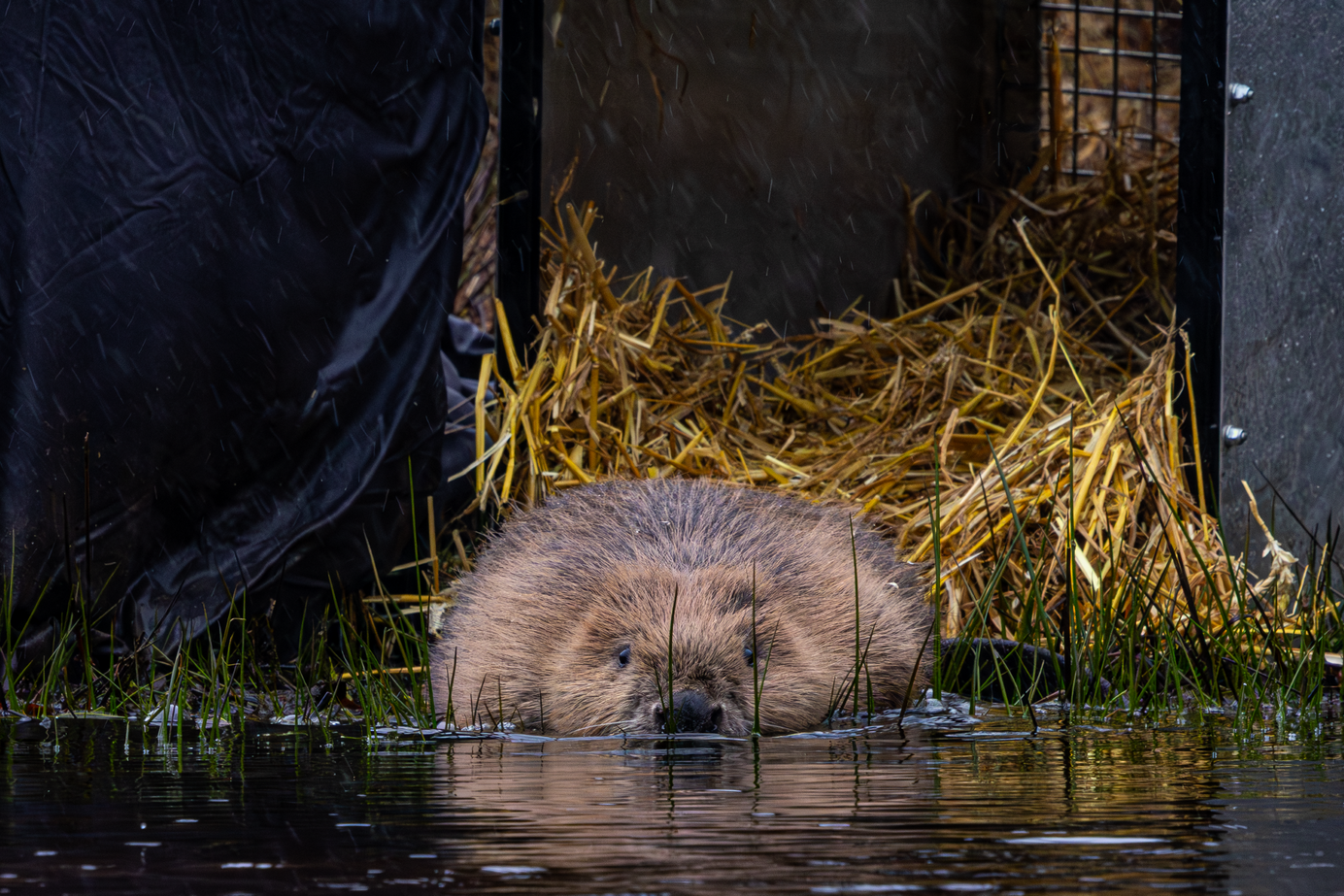
- The Beaver Trust and Forestry and Land Scotland have released a family of five beavers into Loch Ard Forest in Stirling.
- Kent Wildlife Trust has released a herd of Dexter cattle to graze the grassland of Golden Hill in Canterbury, 60 years after cattle last grazed the site.
- Forestry and Land Scotland has completed the first stage of a river restoration project in Glen Prosen, including erecting fencing to protect young trees on the riverbank, reports the Herald.
- Critics of a planned seaweed farm off the Cornish coast have claimed it will require miles of plastic rope and tonnes of concrete, reports Cornwall Live.
- Yorkshire Wildlife Trust has purchased Dryham Farm, in the ‘historic heart’ of its North Cave Wetlands near Hull, reports the BBC.
- The estate team at Blenheim Palace is using aerial photos to map the entirety of its woodland to inform its conservation work, reports the Oxford Mail.
- Labour MP Terry Jermy has warned the Environment Agency that plans for a ‘megafarm’ in Norfolk would harm the environment, reports the BBC.
- A farm in the Lake District could be designated as an SSSI after its low-input methods have encouraged a rare assemblage of flora, reports the Cumbria Crack.
- St Albans City and District Council has started work on a project to restore 2.5km of a rare chalk stream running through the city, reports the BBC.
- Eighty percent of the native crab apple trees found in Dumfries and Galloway are ‘pure’ and haven’t hybridised with non-native species, reports DGWGO.
- Environmental group Tir Natur has launched a crowdfunder to establish the largest rewilding site in Wales, covering 1,000 acres, reports Nation Cymru.
Reports
Rainforest | A report by the Alliance for Wales’ Rainforests (AWR) reveals the precarious condition of rainforest habitat in Wales, with only around one in five sites in good condition. This is due to a multitude of threats – including air pollution, intensive grazing and invasive species – some of which are projected to worsen under climate change. In addition, only around one-tenth of the 68 sites surveyed are protected by official designations. The report outlines the ‘incredible’ diversity of these sites, including rare mosses and lichens, as well as their ‘deep cultural and historical significance’. The authors call on the Welsh government to take urgent action, including improving the active management of sites, reviewing the protection and monitoring network and investing in research. The Guardian covered the news.
Framework | The Scottish government has published its first Strategic Framework for Biodiversity, covering 2024 to 2030. The plan is the first in a series of six rolling delivery plans that will support the overarching Biodiversity Strategy, which aims to halt nature loss by 2030 and make substantial progress to restore it by 2045. The plan focuses on the priority actions needed to achieve the target of a Nature Positive Scotland by 2030. The broad objectives include accelerating ecosystem restoration, protecting and investing in nature, and embedding nature-positive farming, fishing and forestry practices within each industry. Key measures include action to protect threatened species, ambitious deer management measures, and strengthening the role of National Parks to act as exemplars of biodiversity protection and recovery. The environmental coalition ScotLink has welcomed the publication, and calls for a ‘whole-of-society’ buy-in to its aims.
Agroforestry | Forestry Research and the University of Reading have launched a guide to help farmers reap the benefits of agroforestry: the practice of incorporating trees into agriculture. The guide outlines 33 of the best species of trees and shrubs for planting in UK farms, with the aim of informing farmers’ selections based on the individual needs and conditions of the farm. Species highlighted in the guide include hornbeam, which is long-lived and produces specialised timber, and beech, which is suitable for upland farms and requires little maintenance. Walnut trees offer benefits to livestock and produce nuts, while common and red alder trees capture nitrogen to help improve soil health. The Independent covered the report.
Science
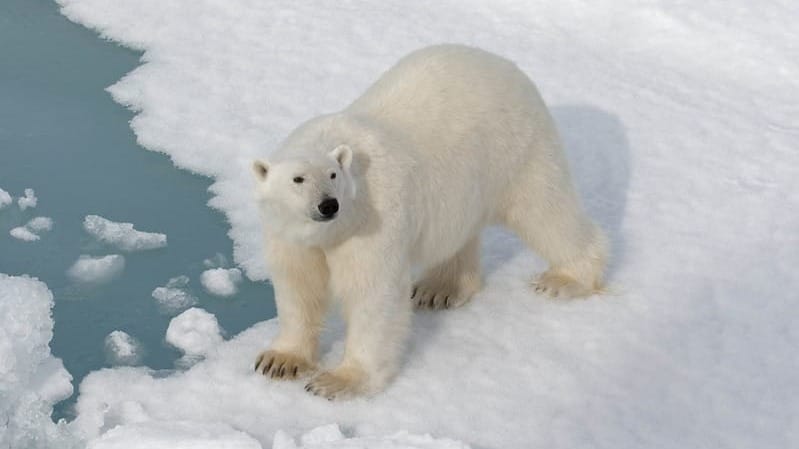
Bears | Fresh analysis of ancient fossils found in a Highland cave could suggest that polar bears once roamed Scotland. Advances in the chemical study of bones have enabled scientists at the University of Aberdeen and National Museums Scotland to reevaluate fossils found in Sutherland. The results revealed that the diet of three samples around 30,000 to 50,000 years old consisted almost entirely of marine fish or other seafood. This is significantly different to the meat and plant-based diet typical of the brown bears once found in the British Isles. Co-author Professor Kate Britton said the samples are ‘so unusual that we now need to either reevaluate what we know about brown bear feeding ecology or question whether these fossils are brown bears at all’, with alternatives being a subspecies or even polar bears. The findings were published in BioOne and covered by the Scotsman.
Spiders | Forestry plantations contribute to a surprising degree to spider biodiversity in the UK, according to a study in BioOne. Researchers from the universities of Stirling and Roehampton conducted an analysis of spiders collected by pitfall traps in plantations at 16 areas across the UK, overall accounting for more than 13,000 individuals, made up of 191 species. They found that geographical gradient was the biggest source of variation, reflecting climatic conditions, with the southeast holding the most diverse mix of species. Other factors included the plantation tree species, as well as the age of the plantation – surprisingly, the highest diversity was found in the youngest stands. The findings run contrary to the belief that artificial plantations support limited forest biodiversity, and the authors suggest that further research is needed to better understand the variation within plantations.
Conservation | A study in Environmental Management analyses the various factors that determine the success or failure of conservation programmes in Europe. Researchers conducted a survey of 30 experts to compare three different conservation programmes: two government programmes (Natura 2000 and the Water Framework Directive) and one NGO programme (Rewilding Europe). Overall, the experts thought the NGO programme was more successful than the governmental legislation. The major factors perceived to negatively influence the programmes included biodiversity-damaging subsidies, competing economic interests, and conflicting policies. Conversely, outreach to raise societal interest and stakeholder engagement were thought to be closely related to success. The authors argue that conservation programmes should be designed to be as inclusive as possible, and must also consider indirect factors such as economy and policy.
Driftwood
Cicadas | A project to reintroduce cicadas to the New Forest has been kept alive by a 12-year-old girl in Slovenia. When British conservationists visited the Idrija Geopark over summer, they hoped to catch enough singing cicadas to establish a nursery – but the insects proved too difficult to locate. Instead, they found hundreds of tiny mud chimneys created by the nymphs as they emerged from the ground, and realised that they could catch them by erecting net tents over the exits. Enter Kristina Kenda, the daughter of the Airbnb hosts who accommodated two of the conservationists. Kristina has agreed to set up the nets and monitor them through winter until the team can return next year. Read more in the Guardian.
Snares | On his blog Bog Myrtle & Peat, author Patrick Laurie questions the logic behind Scotland’s new ban on snares. He recounts his own experience of using snares for predator control, arguing they are valuable and necessary in the defence of endangered species such as curlew, lapwing and black grouse. He argues that, when set correctly, snares ‘can’t really go wrong’, and photographs of mutilated animals are ‘evidence of neglect, passive cruelty and laziness’. Legislation was introduced in Scotland in 2012 to improve welfare standards through mandatory training, he adds, but nobody measured its impact. He writes: ‘If this change was made on an unsubstantiated guess that snaring is “probably still bad”, it was also passed on the utterly spurious notion that there is no good to balance it against.’
Garden | For a long read in Noema, writer and broadcaster Richard Mabey writes about the ‘hybrid’ space of the garden: designed and managed by humans but occupied and shaped by many other species. Twenty years ago he moved into a 16th-century house in Norfolk with two acres of land, and the feature describes the process of attempting to create a garden with open grassland, populated more or less naturally by meadow species – a process described in his recent book, The Accidental Garden. Mabey writes: ‘This is how I want it to be: capricious, innovative, ungoverned — or at least ungoverned by me. But every year I know I have to intervene or face the next decade living in an impenetrable scrubland.’ Mabey goes on to explore the multitude of boundaries present in a garden, between wildness and cultivation but also private and common territory, and wildflowers and weeds.
Further reading:
- To celebrate tree week, a project by the Tree Council is displaying images of trees with related positive facts on screens in railway stations throughout the UK.
- In the Guardian, actor Brian Cox writes in support of the charter to make Scotland the first ‘rewilding nation’.
- A feature in the Herald takes a look at the Beinn Eighe community scheme to make deer stalking more accessible.
- The Times has an interview with Jeremy Clarkson about the recent ‘Tractor Tax’ protests, and why he thinks Keir Starmer is a ‘nightmare’ for farmers.
- An article in the Press and Journal explores the progress made by a project to boost red squirrels in Aberdeen and eradicate their competition.
Happy days
Sutton Hoo | Traditional woodland management techniques are helping wildlife to thrive at the Sutton Hoo. The National Trust looks after the ancient site in Suffolk, thought to be the final resting place of the seventh-century ruler, King Raedwald. The Trust has recently introduced coppicing and thinning to the surrounding woodland, as part of its transition from plantation-style to a more native woodland. Rangers have since noticed an increase in the number of endangered nightingales, with four pairs recorded in 2024, as well as an increase in woodland wildflowers. The BBC and the East Anglian Daily Times covered the story.

Subscribe to our newsletter
Members receive our premium weekly digest of nature news from across Britain.
Comments
Sign in or become a Inkcap Journal member to join the conversation.
Just enter your email below to get a log in link.