Natural History GSCE & Mountain Hares
The latest news on nature and conservation in Britain.
National news
School | The government has confirmed that it will introduce a new GCSE in natural history, after progress on the measure had stalled post election. Announcing the qualification in parliament, education minister Catherine McKinnel said it would equip young people ‘to understand and respect the natural world and contribute to the protection and conservation of the environment’. The qualification will differ from geography and biology partly through its focus on field work, with pupils learning how to observe and identify plants and animals. The exam board OCR said the course was designed to be delivered ‘as effectively’ in city centres as in the countryside. Author and naturalist Mary Colwell, who has been campaigning for the course since 2011, said the announcement was ‘hugely good news’, and that ‘education is the most important thing we can do for the planet at the moment’. The Guardian, Times, and Positive News covered the story.
Land | Last week, environment secretary Steve Reed convened some of England’s biggest landowners to discuss plans to restore nature on their estates. The new National Estate for Nature group includes representatives from the Crown Estate, the Church and the government, as well as nature organisations such as the National Trust, RSPB and Wildlife Trusts. Together, the organisations own around 10% of land in England, meaning their actions will be critical to meeting the nation’s environmental targets. Reed called on them to collectively protect and restore nature, and to report back on potential new approaches for sustainable land use, management and investment. He also said the group should set minimum standards for land management plans, with clear milestones for restoration and protection. Campaigner Guy Shrubsole has praised the move, adding that the government should require the landowners to publish their plans, ‘so the public can see how the land is being looked after on our behalf’. The Guardian and ENDS covered the news.
Action | The charity WWF has published polling data which shows that more than half of Brits want stronger government action on nature. The survey, conducted by More in Common, gathered information from 2,346 respondents, and found that 52% believe the government is failing to do enough to protect the environment. Among younger generations, the demand is even stronger: 65% of 18- to 24-year-olds called for increased government intervention. Notably, the results also showed a strong desire across the political spectrum. The research coincided with Earth Hour last Saturday, when landmarks in the UK and around the world switched off their lights to raise awareness of the urgent need for environmental action. WWF is also calling for a new law – the Living Planet Act – which would set legally binding targets in the UK to halt the destruction of nature and protect biodiversity: read more here. BusinessGreen and the Sustainable Times covered the research.
In other news:
- Data from the Environment Agency shows that water companies released raw sewage into England’s rivers and seas for a record 3.6m hours last year, reports the BBC and Times. The Wildlife and Countryside Link reacted here.
- England’s goal of ending the decline in species abundance by 2030 is endangered by inadequate progress, according to internal documents obtained by the Times.
- Defra has launched green finance standards to boost investment in nature and clamp down on ‘greenwashing’. IPE covered the news.
- Nature organisations including the RSPB are calling on MPs to back amendments to the planning and infrastructure bill to stop the scapegoating of nature, reports the Guardian.
- A petition to ban wind farms on protected peatland in England has reached almost 7,000 signatures.
- A survey by the Wildlife Trusts has found that the British public view pollution, changes to land use, and flooding as the top three future threats to nature.
- Avian influenza has been found in British livestock for the first time in a sheep in Yorkshire, reports the Times.
Across the country
Nottingham | The lilac-coloured Nottingham spring crocus is receiving a helping hand after years of decline. The flower is believed to have been introduced to the UK by medieval monks for medicinal or culinary purposes. It originally flourished in the Trent Valley, and fields of purple blooms in the city’s Meadows area became a Victorian tourist attraction, not dissimilar to tulips in the Netherlands. However, development has destroyed many of its natural habitats, and a recent survey found that, since 2003, the number of square kilometre areas where the plant has been recorded have shrunk from 24 to just ten. Now, the Green Guardians group is clearing dead bracken to encourage the species to spread naturally. It is also running a project to identify ‘donor sites’, where a few individuals can be transplanted in suitable areas to start new populations. The BBC reported the news.
West | The government has announced that the first of three new national forests will be created in the west of England, between the Cotswolds and the Mendip Hills. The Western Forest will cover at least 6,000 acres across Gloucestershire, Wiltshire and Somerset, with around 20 million trees planted in the coming decades. The plan is not to plant in one continuous woodland, but to intersperse the trees between urban areas and farmland, expanding patches of ancient woodland, growing hedgerows and creating corridors for nature. The scheme will also target five urban areas with low tree cover. The government has promised £7.5m for the project over the next five years. Mary Creagh, minister for nature, said the forest would make ‘a huge difference’ to water quality, flood resistance and wildlife, as well as bringing nature ‘closer to people’ in the region. The BBC and Times reported the news.
Thames | Coastal habitats along the Greater Thames Estuary are set to benefit from a £4m grant for restoration. The funding has been awarded to the new Transforming the Thames coalition. Led by the Zoological Society of London, it also includes the RSPB, Wildlife Trusts and local councils. The project will first focus on restoring six key habitats across the estuary, including oyster beds, seagrass meadows and coastal grazing marsh. It will also tackle the largest threats to these habitats, which have suffered from decades of degradation and fragmentation caused by building works, pollution, overfishing and climate change. The team hopes that recovering these ecosystems so close to London will also restore their cultural and economic benefits, and set an example for other major cities. Oceanographic covered the story.
Elsewhere:
- The chief executive of Dartmoor NPA has said that the public may have to pay entrance fees to national parks unless the government stops cutting their budgets, reports the Times.
- Dead wood from trees blown over in Exmoor National Park during Storm Darragh is being used to improve the ecosystem and support insects, reports the BBC.
- Environment minister Emma Hardy has described the restoration of the North Cave reserve wetlands in East Yorkshire as a ‘win-win’ for flood defences and wildlife, reports the BBC.
- Roots Allotments in Bristol has teamed up with Generation Soil to cultivate a new market garden to provide local fruit and veg to the community, reports the Bristol Post.
- Defra is asking for views on proposals for a marine nature reserve off the east coast of the Isle of Man, which will protect newly discovered blue carbon habitats, reports the BBC.
- The world record for a volunteer river clean-up has been smashed by an event along the River Taff, with 1,327 people taking part, reports the BBC and Wales Online.
- Harborough District Council has purchased 130 acres of land in Leicestershire for a major rewilding project, reports the BBC and Leicestershire Mercury.
- Flamstead parish council in Hertfordshire has recruited a falconer to try to catch the Harris hawk which has attacked between 40 to 50 people, reports the Guardian.
- Gwent Wildlife Trust has released a series of maps to indicate the extent and impact of planned solar developments for the Gwent Levels SSSIs ahead of a hearing.
- Marwell Zoo in Hampshire has opened a new native species zone, including a dedicated white-clawed crayfish breeding centre.
- A petition is calling for a stop to the exportation of Gloucestershire glass eels to Russia, reports the BBC.
- Rewilding company Oxygen Conservation may be feeding culled feral goats back to local residents in Dumfries and Galloway, reports the Times.
- A former intensive dairy farm in Somerset has been transformed into a dragonfly haven thanks to two decades of conservation efforts, reports Somerset Live.
- St Andrews is using a mix of rare-breed sheep and 6,500 Christmas trees to protect the ‘Home of Golf’ from coastal erosion, reports the Herald.
- A peatland restoration project around Loch Katrine is aiming to prevent Glasgow’s tap water from turning brown during extreme rain, reports the BBC.
- The Environment Agency has started patrols along the Lancashire coastline to protect critically endangered European eel from illegal poaching.
Reports
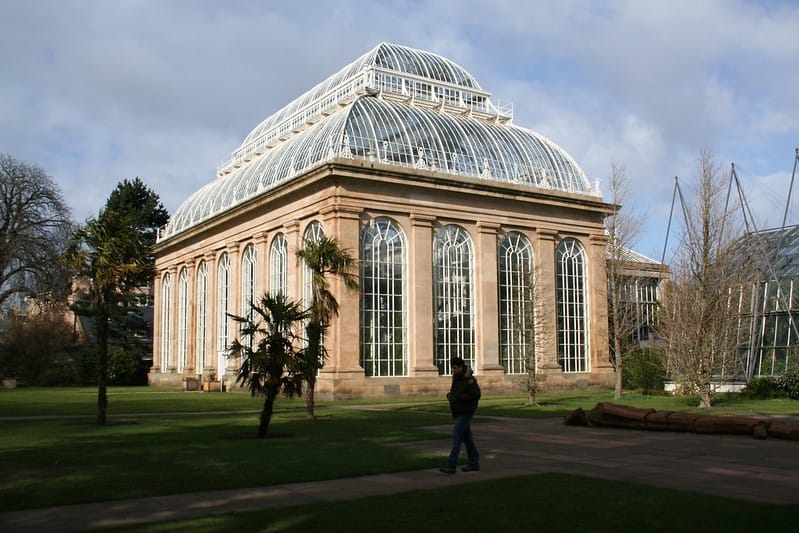
Botanics | The Royal Botanic Garden Edinburgh (RBGE) has published a ten-year roadmap outlining a better future for the world’s plants. The plan details practical solutions for managing botanical collections to help safeguard species. The policy covers five pillars – compliance, curation, cultivation, conservation and communication – alongside a case study for each. It sets out key regulatory and naming protocols, priorities for what to collect and grow, and guidance on education to engage and excite future generations. Raoul Curtis-Machin, director of horticulture, said that factors such as pests, pathogens and extreme weather are challenging botanical gardens to look after species in new ways. He added: ‘We need to learn efficient methods of intervention to benefit the plants and people being impacted by climate change. None of this can be done in isolation’.
Pesticides | The government has published its long-awaited action plan for pesticides, seven years after it was due to be renewed. Under the plan, the use of pesticides on UK farms will be reduced by 10% by 2030 to protect bees and other pollinators. It also promises a new pesticide ‘load indicator’ to monitor progress towards this target, and encourages integrated pest management, which involves reducing agricultural pests without using pesticides. Environmental organisations have welcomed the overdue publication, but said they were disappointed that the target only applies to farms and not to urban areas and parks, where pesticides are ‘hugely damaging’ to both wildlife and human health. They also said that the target will have to become more ambitious over time if the UK is to meet its international commitment to halve pesticide-related risks by 2030. The Guardian covered the report.
Forest | In the face of growing climate impacts, Scottish Forestry has published a ‘Routemap to Resilience’ for Scotland’s forests and woodlands. The report outlines 25 priority actions to help the habitats to resist, adapt, respond and recover from various climate-related threats. Examples include extreme winter storms, increasing temperatures, droughts, wildfires, and more pests and diseases. The actions in the plan are wide-ranging, and include the use of new technologies like AI, eDNA and satellite data, as well as ‘smart silviculture’: choosing and growing tree species that will thrive well into the future. It also includes recommendations for better monitoring and surveillance of ecosystems, and knowledge exchange of best practices. Helen Sellars, head of sustainable forest management, said that ‘there is no one magic prescription’ to make forests more resilient, but ‘we need to act now’ to protect Scotland’s natural assets.
Science
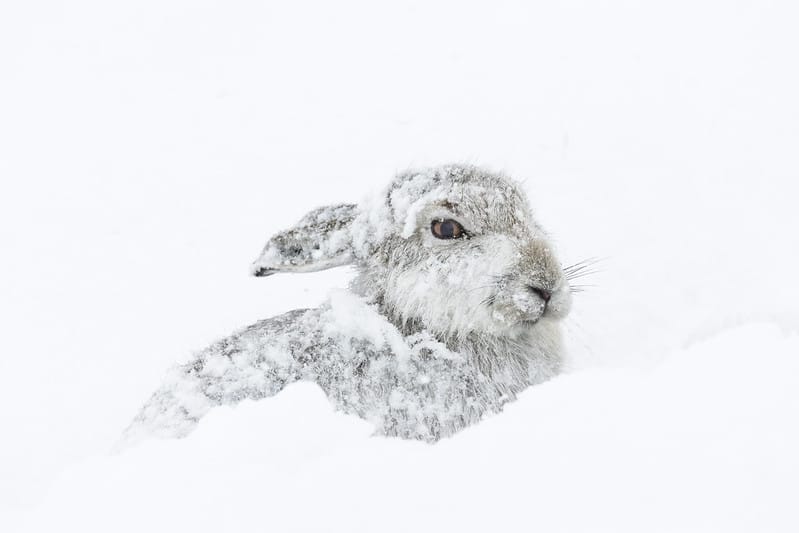
Hares | Without conservation efforts, mountain hares will disappear from England within the next few years, according to a study in Ecology and Evolution. Today, the species is only found in the Peak District, where a remnant population survives from translocations from Scotland during the 1870s. Scientists from Manchester Metropolitan University and Natural England have monitored the population since 2017. Now, they estimate that, over the last seven years, the population has shrunk from around 3,500 individuals to just over 1,000. Populations have declined across all habitats, most severely on grouse moors, while the highest densities of remaining hares were found on restored blanket bog. The authors said the cause of decline is unclear, but potential factors include land use change, habitat fragmentation, roadkill, climate change, genetics and disease. They conclude that more research is needed, but that further blanket bog restoration may be beneficial.
Swimming | A study in the Journal of Environmental Psychology has found that wild swimming is better for mental wellbeing than open-air pools. An international research team including the University of Exeter conducted the largest survey of open-water swimmers to date, collecting data from around 20,000 adults in 19 countries. The study found that any kind of outdoor swimming was associated with a boost in wellness, but ‘wild’ swimming – in natural bodies of water such as lakes, rivers and the sea – seemed to deliver the most significant benefits. This was related to experiencing feelings of autonomy and competence, rather than social connection. In the Conversation, co-author Lewis Elliott writes that the main takeaway is in ‘how wild swimming delivers its mental wellbeing benefits – essentially through enhanced feelings of freedom. Perhaps, in a world of growing external pressures, this is the reason wild swimming is becoming so popular.’
Peatland | Protecting crofting rights will be key to any ‘just transition’ in Scotland, particularly regarding peatland restoration, according to a paper in the Scottish Geographical Journal. Using interviews, stakeholder events and policy review, researchers from St Andrews University assessed how the progression of the ‘carbon frontier’ – the commodification of nature’s services – is influencing the management of peatlands on the Isle of Lewis. Among their conclusions, they found that national net-zero strategies advocate a top-down carbon stewardship which is ‘incompatible’ with localised crofting stewardship, ‘causing mistrust towards not only carbon credits but restoration targets more widely.’ They also found that it is mainly the larger, single landowners who historically employed intensive land-uses that now stand to benefit from an incentive structure with higher rewards for more damaged peatland. Instead, they argue that ‘crofters should be rewarded both for their historic and future stewardship.’
Driftwood
Orchards | Around 100 new community orchards are appearing in the UK every year. This is in stark contrast to commercial growers, which are rooting up orchards because they are failing to make a profit, according to a feature in the Times. The difference is that community orchards are ‘overwhelmingly run for the joy of growing fruit, bringing people together and the environmental benefits, rather than to make money’, writes environment editor Adam Vaughan. Now they are quietly on the rise, from the cider-making counties of Devon and Somerset to urban varieties in Manchester, Bristol and London. Other differences include being largely free of insecticide spray, meaning they tend to suffer more from pests but are havens for wildlife. Guy Barter of the Royal Horticultural Society said: ‘There’s going to be some maggoty apples, there’s going to be some aphids, but they are actually supporting ecology.’
Disgust | Would you eat a cockroach? What if it had been sterilised, or transformed to look more appealing? A thought-provoking essay in Aeon dives into the psychology of ‘disgust’ as it relates to food. As society moves towards a more sustainable diet, people will have to overcome their gut reaction to foods such as insects and lab-grown meat, according to researcher Alexandra Plakiasis. Much of the ‘disgust’ reaction comes from an evolutionary standpoint, where familiarity indicates safety, but it is also heavily influenced by beliefs and customs – and these can be adapted. For example, lobster was once considered as ‘trash food’, and when cheese first appeared in western Europe it was feared ‘unclean’. Plakiasis writes: ‘Instead of associating entomophagy – or cheese – with something dirty or dystopian, one might opt to frame the practice in terms of novelty, sustainability or [...] being an adventurous eater.’
Quantum | Since Aristotle, people have pondered the mystery of migrating birds. The Greek philosopher mistakenly concluded that redstarts change into robins over winter; now we know that certain species migrate thousands of kilometres from warmer winters back to their breeding grounds. Science is still unsure exactly how birds do this with such precision, but recent research suggests that it might have something to do with quantum mechanics. A feature in the Guardian explains the theory in detail: put very simply, it hinges on what happens when electrons gain energy, and the fact that certain spinning configurations are sensitive to magnetic fields. Researcher Iannis Kominis, who published a paper proving that a key trade-off in quantum mechanics is respected in the animal kingdom, said: ‘It seems that nature has devised quantum technology before us, and that doesn’t sound that crazy, right? The opposite would mean that we are smarter than nature.’
Further reading:
- The Guardian has whittled down hundreds of nominations for invertebrate of the year to just ten: read about them here, and the top picks of politicians and environmentalists here.
- A Bristol photographer has won the British Wildlife Photography Awards with a shot of an urban vixen named Frankie. The Times has a wider selection of the winning images.
- A BBC article explores how Teesdale scientist Sara Cox hopes her artwork – lifesize sculptures of birds made from wire – will help draw attention to endangered species.
- In the Times, nature writer Melissa Harrison explains why she is ‘eager for beavers’, but also worries about the disruption they might bring.
- A feature in the Conversation digs into research about how many species act as landscape engineers, sometimes in surprising ways.
- In Wicked Leeks, read about the ‘problematic’ race to rear (and cull) cows quicker in order to reduce the carbon footprint of meat products.
- Researcher David Clarke is on a mission to reinvigorate British folklore, which he believes goes hand-in-hand with a ‘re-enchantment of the landscape’. Find out more in Positive News.
Happy days
Bugs | Looking to get outside this Easter? Today, the team behind rewilding project Wild Finca has launched a Bug Art competition in collaboration with Erig the Earwig, a children’s book about insects. Aimed at kids aged between five and 17, the competition invites participants to get outside on a bug hunt, led by an illustrated guide crafted by Wild Finca and Erig team, with tips on how to ethically seek out bugs. Upon return, participants are encouraged to create a piece of artwork of the ‘most intriguing, wild, or quirky bug’ they encountered. Find out more about the competition, and how to enter, here. In the meantime, read more about how the Wild Finca team rewilded an ex-dairy farm in Spain in this previous Inkcap Journal feature.

Subscribe to our newsletter
Members receive our premium weekly digest of nature news from across Britain.
Comments
Sign in or become a Inkcap Journal member to join the conversation.
Just enter your email below to get a log in link.