House Building & Eagle Predation
The latest news on nature and conservation in Britain.
National news
Building | Keir Starmer has taken aim at the ‘blockers and bureaucrats’ who have prevented house-building and ‘choked off growth’ in both a column in the Times and a major speech outlining the Labour Party’s priorities. In both communications, the prime minister specifically took aim at the now-infamous £100m HS2 bat tunnel as an example of ‘absurd’ regulations holding up infrastructure projects. Starmer said that the government would ‘streamline the approval process’ in the forthcoming Planning and Infrastructure Bill, and introduce a target for 150 new major infrastructure projects. Covering the announcements, the Times suggested that this would mean an end to ‘case-by-case negotiations’ of measures to deal with ramifications for wildlife, with clearer rules for developers on rules for offsetting environmental damage by paying for improvements elsewhere. Campaigners expressed concern over the anti-environment rhetoric: ‘Boris Johnson did newts, Sir Keir goes for bats,’ wrote Richard Benwell of Wildlife and Countryside Link on X.
Rivers | Neonicotinoids – a group of pesticides that are particularly harmful to bees – are present in 85% of English rivers, according to new analysis. Wildlife and Countryside Link teamed up with the Rivers Trust to examine the latest data from the Environment Agency. The results for 2023-24 show an increase in contamination on the previous year, although fewer rivers were tested overall, indicating the worsening resources of the Agency. Although neonicotinoids are banned, the government has allowed their emergency use to protect sugar beet crops; they are also present in flea and tick treatments for pets and livestock. Neonicotinoid presence was highest in regions where sugar beet farming and processing is highest. Campaigners are now urging Labour to fulfil its manifesto promise to permanently ban these pesticides. The BBC and the Daily Mail reported the news. Separately, the Office for Environmental Protection says the government may have broken the law when it authorised a banned pesticide for use in 2023 and 2024. The Press Association covered the news.
Education | Plans for a Natural History GCSE have stalled for party political reasons, according to campaigners. The new course was announced in 2022 to help the UK ‘lead the way in climate and sustainability education,’ according to the former government. But Mary Colwell, who has spearheaded the campaign, told the Guardian that the course is now in limbo because it is ‘seen as a Conservative party initiative’. Work on the GCSE was all but complete prior to the general election, and was due to go out for public consultation. The initiative also had the support of Caroline Lucas. ‘It happened despite the Conservatives. It had cross-party, cross-nation support, support from young people. That’s why it is so incredibly frustrating,’ added Colwell. The Department for Education declined to comment, though officials said the course may be reassessed as part of a wider curriculum review.
In other news:
- The Environment Agency is looking into whether local authorities are meeting their obligations regarding abandoned lead mines. The report follows an investigation by the Financial Times.
- The RSPB has teamed up with Tesco to preserve turtle doves on farmland across the supermarket’s supply chain.
- Forest Research is using sniffer dogs – specifically, a spanador called Ivor – to sniff out a pathogen that is harming UK forests. The Guardian covered the story.
- The government plans to begin a post-legislative review of the Environment Act by November 2026, the Environmental Audit Committee has announced.
- Environmental campaigners have welcomed the Scottish government’s draft budget, which includes increased investment in peatland restoration and the Atlantic rainforest.
Across the country
Sussex | The Sussex Wildlife Trust is starting a £600,000 wetland restoration project at Pevensey Levels, a 3,500-hectare wetland area once home to ‘huge flocks’ of wetland birds that have since disappeared. It is hoped that ‘re-wetting’ the land will entice these flocks back, creating stepping stones for species to move through the landscape. The Trust has teamed up with National Highways for the project, and is working with farmers, neighbours and other organisations to raise water levels. ‘The aim is to create a mosaic of habitats by blocking and meandering ditches, digging scrapes and creating deeper ponds as well as undulations,’ said Jamie Parsons, head of nature reserves at the Trust. The work, due to begin this month, was covered by the BBC.
Bristol | Avon Needs Trees, a local charity, is racing to raise enough money to fund their tree-planting ambitions through the winter. The group purchased the 422-acre Wick Farm in May, where they plan to plant 100,000 native trees over the next two years, creating what they say will be the southwest’s largest forest, alongside areas of wetland and species-rich grassland. A spokesperson said the project would both improve biodiversity and help prevent floods in the nearby Avon Valley. But because the trees can only be planted during winter, planting must start quickly. Avon Needs Trees have already exceeded their initial fundraising goal and are continuing to raise money. Their efforts were covered by the Bristol Post.
Highlands | A group of landowners – comprising the Achnacarry estate, a community forest group, Forestry and Land Scotland and the Woodland Trust Scotland – are working together to rewild an old World War II training ground in the Scottish Highlands. The project area, spanning 30,000 hectares, is home to 150 lichen species, fragments of ancient Caledonian pinewood, and fauna ranging from sea eagles and ospreys to wild boar, as well as a Harry Potter filming location. The four owners will collaborate to remove invasive species and manage the deer population, while continuing to sell some timber and venison from the area. The Times reported on the project. Separately, a coalition of Scottish conservation organisations has presented its ‘pathway’ for rewilding 30% of the country to government ministers.
Elsewhere:
- Parts of Wrexham Industrial Estate – the second biggest industrial park in Europe – are being transformed into an ‘ecology zone’, reports the Daily Post.
- A haiku about spiders, by poet laureate Simon Armitage, has been unveiled in the Lost Gardens of Heligan, reports the Guardian.
- The UK’s largest seagrass restoration project, covering five sites on the south coast, is coming to an end, reports the BBC.
- The Manx Wildlife Trust has bought a 43-acre patch of moorland, adding to its existing mountain nature reserve, according to the BBC.
- There’s been some good news for Northumberland’s birds this week, with a record number of Roseate terns hatching on Coquet Island, alongside a rise in bittern appearances at Druridge Bay.
- The news for Northumberland’s trees has been less positive: around 183,000 of the county’s ash trees will be lost to ash dieback disease, reports the BBC.
- Yorkshire Water is spending £2m to reduce pollution in the River Swale, reports the Northern Echo.
- Cumbria Wildlife Trust is seeking nature-friendly farmers to help reintroduce rare plant species to grasslands across South Lakeland sites.
- A man in Essex has been arrested after the police seized some 56,000 wild bird eggs, reports BirdGuides.
- Updated plans for the Hinkley Point C nuclear reactor in Somerset could cause ecological disaster in the Severn Estuary, Gloucestershire Wildlife Trust has warned.
- Specially designed ‘runways’ at the RSPB’s Lakenheath Fen site in Suffolk are helping cranes to take off and land safely, without catching their wings on the reeds, reports the BBC.
- Work is underway to restore around four hectares of saltmarsh along the River Dart in Devon. A post by the Environment Agency explains the significance of the project.
- The Woodland Trust has warned that plans to build 10 holiday cabins near Loch Ness threaten ancient woodland, reports the Inverness Courier.
Reports
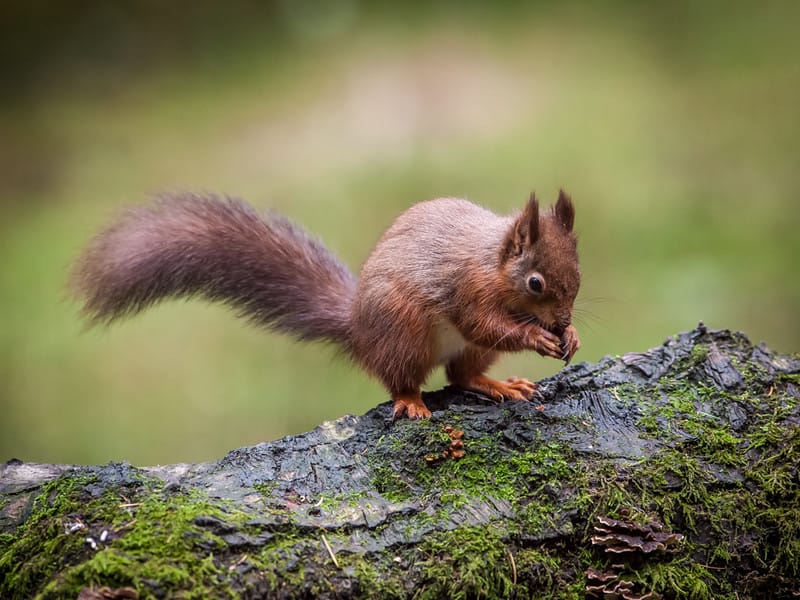
Squirrels | The annual survey of the Red Squirrels Northern England (RSNE) partnership has revealed both positive and negative trends. On the plus side, red squirrels were found to occupy 52% of surveyed sites, compared to 50% last year. However, grey squirrel occupancy had also risen; the species now occupies 70% of sites, compared to 62% last year, outpacing the expansion of the native reds. The survey covered 246 woodlands and gardens across Cumbria, Northumberland, north Yorkshire, Lancashire and Merseyside. The Chronicle highlights that reds had a particularly good year in Northumberland National Park and Kielder Forest, a traditional stronghold. RSNE said that the substantial increase in the presence of greys was ‘concerning’ but that they also showed that red squirrel conservation efforts were succeeding. The BBC, the Guardian and the Northumberland Wildlife Trust covered the news.
Food | When it comes to agriculture, Britain should shift away from a ‘food security’ mindset and instead prioritise ‘food sovereignty’, argues a report from Abundance, an organisation focusing on delivering a just socio-ecological transition. It argues that a focus on food security disadvantages low-income families and adds social and ecological pressures to land, seas and people beyond Britain’s borders. A food sovereignty approach would instead empower those who produce and consume Britain’s food, fuels and fibres, while also restoring biodiversity and producing quality food. The authors argue that England’s council farm estates could act as an ‘incubator’ for this transition, but, rather than being put to good use, they are being sold off to fill budgetary deficits.
Farming | Farmers in the uplands only receive a tiny proportion of the government’s environmental subsidies, despite working in the areas that have the greatest potential for carbon storage and nature restoration. Some £469m is allocated to farmers through the Sustainable Farming Incentive, but just 8% of this is channelled towards upland areas, according to a report from the Energy and Climate Intelligence Unit (ECIU). The payments are instead focused on lowland and more intensive farming systems. The findings show the failure of the government to implement a post-Brexit scheme capable of supporting nature-friendly farming in landscapes dominated by semi-natural habitats, including moorland, species-rich grassland, wet grassland and heath. This failure is harming farmers as well as the environment, as the economics of farming in these habitats tend to be more marginal. The Independent covered the news.
Science
Oysters | Europe’s native oyster reefs have collapsed, based upon IUCN criteria, according to a study published in Conservation Letters. This is a more dramatic finding than assessments based upon recent data, which have resulted in classifications ranging from threatened to critically endangered. The latest assessment, in contrast, is based upon a recent study showing the decline of the reefs across hundreds of years, suggesting that other designations should be seen as an example of shifting baseline syndrome. Inaccurate assessments of reef conditions have harmed restoration efforts: for instance, it was assumed that the oysters were incapable of forming reefs, and therefore this habitat was not included during the development of the UK’s marine Special Areas of Conservation. ‘Our findings illustrate that restoration projects will have to be vastly scaled-up for ecosystem scale recovery to be achieved,’ the authors conclude.
Cities | Urban parks are the most effective form of green-blue-grey infrastructure when it comes to reducing air pollution, according to a study published in Innovation Geoscience. The researchers looked into a range of measures, including street trees, woodlands, hedges, green walls and green roofs. Their results suggest that a more nuanced approach is required when assessing the air pollution benefits of these interventions: for instance, while street trees have a positive impact alongside open roads, they can worsen the problem within street canyons, as they can exacerbate the lack of ventilation. ‘We are beginning to understand just how powerful green infrastructure can be against urban air pollution, but their effectiveness hinges on where and how they are implemented,’ said Professor Prashant Kumar, the lead author of the study. ‘Our review has found that well-placed greenery can cut black carbon levels by up to 40%, making our communities greener and healthier.’
Boar | Humans should eat more wild boar – at least if they live in certain parts of rural Spain – according to a study published in Agricultural & Rural Studies. Repopulation, rewilding and sustainable agriculture can together lead to the regeneration of the landscape, seeing off threats from mining and nuclear power companies, but people must work alongside animals to restore the natural balance. In particular, the long-term persecution of wolves means that wild animals can no longer control wild boar, which in turn are threatening the return of the forests and causing agricultural damage. This is where humans come in, the researchers write. In their models of potential futures, a growing human population was able to keep boar numbers under control, largely compensating for continuing low populations of wolves.
Driftwood
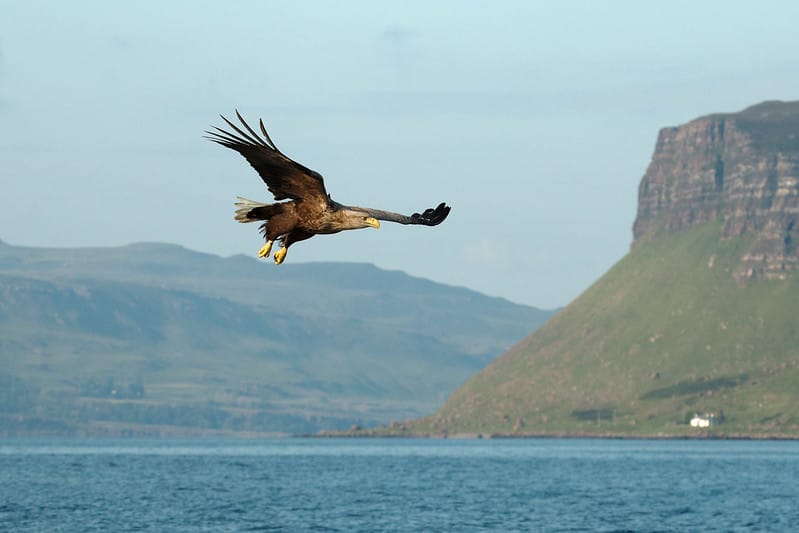
Eagles | Are eagles killing lambs? Farmers in Scotland claim that the birds are taking their livestock in huge numbers, but conservationists maintain that the threat is minimal. For a long read in the Guardian, Phoebe Weston travels to the Highlands to explore the vexed question, speaking to both farmers and researchers about the extent of the problem, and delving into the science that has been published on the topic. The lack of definitive proof – no one has seen a sea eagle actually take a lamb – has led some to accuse farmers of lying or exaggerating, but other evidence shows that, in certain places at least, lamb does comprise a large portion of the eagles’ diets. Whatever the truth of it, conflicts like these are one of the challenges of returning a predator to a widely denuded landscape; restoring native woodland would provide a boost to other prey, like mountain hares, grouse and squirrels, thus taking the pressure off the sheep. ‘Conservationists should be working with us rather than saying it doesn’t happen,’ said one farmer, David Colthart, decisively. ‘We’re not talking shit.’
Christmas | In an amusing Telegraph feature that is simultaneously ode and condemnation, Richard Godwin explores the past, present and future of the Christmas tree industry. Behind the twinkling lights of your December fir (probably a Nordmann) is a whole host of considerations around economics, sustainability and ritual. Most Christmas trees are grown for ten years before they are harvested, Godwin discovers, and the margins for farmers are thin. Meanwhile, while some celebrate the industry as a model for sustainability, sequestering carbon and providing habitats for wildlife, others question the ethics behind the tradition, ‘which require the elimination of such an ancient and symbolic tree’. Meanwhile, growers must compete with the rise in fake trees and supermarkets offering cheap deals. Ultimately, Godwin concludes, there is nothing like the enchantment that comes with choosing a tree – an opinion he appears to share with T.S. Eliot, who wrote of ‘the glittering rapture, the amazement / Of the first-remembered Christmas Tree’.
Lists | It’s that time of the year when newspapers and magazines publish their round-ups of the best of the year, often with Christmas gift-giving in mind. The Financial Times has a guide specifically tailored to nature-lovers: rather than spending £30 on a teapot for robins, asks Jonathan Guthrie, why not buy some yellow rattle seeds instead, or perhaps a donation to a peatland restoration project? You might find it easier to just buy a book, in which case the Guardian and the Times have round-ups of the best science and nature books to be released this year, as does Mark Avery on his blog. For the more whimsical reader, the Conversation has a list of five speculative novels that help to understand our relationship with soil.
Further reading:
- The Times investigates how Thames Water has managed to get away with ‘trashing our rivers’.
- The Telegraph considers the impacts of clean energy infrastructure on the Scottish villagers who live nearby.
- The UK’s peatlands must be restored urgently for the country to meet its emissions targets, writes Casey Bryce of the University of Bristol in the Conversation.
- The Countryside Alliance’s Tim Bonner attacks the RSPB for attacking grouse moors, suggesting calls for regulation as ‘pointless political debate’.
- The New York Times has a feature on the rewilding of America’s cemeteries.
- Ferns, beloved by the Victorians, are in favour again with gardeners, reports the Financial Times.
- Pitchcare, a website dedicated to looking after turf, looks into how golf courses are preserving their ancient trees.
- Positive News looks at how new technology is advancing data collection efforts in the UK’s forests.
Happy days
Devon | From an old fallen oak, a Devon community has crafted what could be the longest table ever made from a single tree. The 60-seat, 18-metre long table has been a labour of love for local artist Elizabeth-Jane Baldry and her neighbours for the past two years. Their work is now standing in a nearby forest, which Baldry bought 18 years ago as agricultural land, complete with an ‘elfin throne’ designed by the Oscar-winning concept artist from Lord of the Rings, who happens to be a neighbour. The project amounts to ‘a 21st-century re-enchantment of the land: a rewilding with bells on,’ as Baldry told the Guardian.

Subscribe to our newsletter
Members receive our premium weekly digest of nature news from across Britain.
Comments
Sign in or become a Inkcap Journal member to join the conversation.
Just enter your email below to get a log in link.