Hedgerow Protection & World's Oldest Forest
The latest news on nature and conservation in Britain.
National news
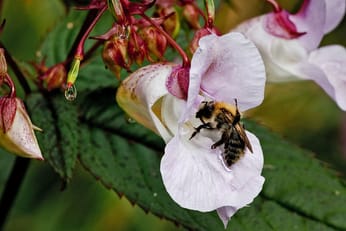
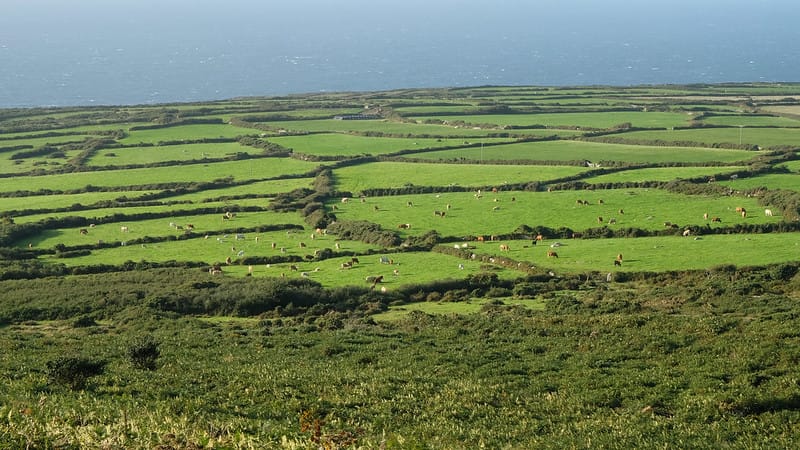
Hedgerows | The government has announced new laws to protect hedgerows, following an overwhelming positive response to its consultation. The regulations include a two metre ‘buffer strip’ from the centre of each hedgerow, where there can be no cultivation nor application of pesticides and fertilisers, alongside a cutting ban between 1 March and 31 August to protect nesting birds. The announcements represent stability more than progress, with the rules essentially replicating EU protections that lapsed due to Brexit, as ENDS explains. Even so, the news was broadly welcomed by campaigners. Jess Allan of the Tree Council said that it is ‘crucial now that momentum is kept up, and the enforcement system is fit for purpose and well resourced.’ Emma Marrington of CPRE, meanwhile, questioned the government’s timeline for implementation. Rather than introducing the rules ‘as soon as Parliamentary time allows’, she called for the necessary changes to happen before the next election. Until that point, hedgerows will lack legal protection. ‘We shall have to hope that farmers act responsibly and do not harm wildlife just because of Defra ineptitude,’ according to Wild Justice.
Boar | NatureScot has issued guidance to Scottish farmers on how best to cull ‘feral pigs’. Scotland is home to scattered populations of wild boar: exact numbers are unknown, but there are well-established populations in Dumfries and Galloway, Glenmoriston and Wester Ross. Wild boar are a native species in Britain, but they are often referred to as ‘feral pigs’ due to cases of interbreeding with escaped or illegally released domestic pigs – a name which author Chantal Lyons describes as a ‘performative label used solely to deny the fact that wild boar belong in Britain’. Boar have been known to cause damage to farmers’ crops, but the Woodland Trust said that rooting pigs also benefit natural processes such as woodland generation. Lyons added that exterminating boar in Scotland would ‘prevent them from fulfilling their vital ecological role’, while environmentalist Ben Goldsmith also took to X to criticise the guidance. The Times and the BBC reported the news.
Pesticides | Labour has promised to end emergency uses of banned pesticides if its forms the next government. The announcement at Parliament came following the news that Defra has approved the use of thiamethoxam – a banned neonicotinoid – on sugar beet crops, after the threat level of the disease known as virus yellows was met. Defra said the decision was not ‘taken lightly’, with the predicted infection rate at 83% of crop, but campaigners said it made ‘a mockery’ of the ban, and the advice of scientists who argue it poses a fatal threat to bees. The shadow farming minister, Daniel Zeichner, said it was ‘time to follow the science and stop using neonics’, which would see Labour follow the example of the EU, where emergency authorisations of neonicotinoids have been banned since 2021. Wildlife groups including Buglife and WCL welcomed the news, with Richard Benwell, chief executive of the latter, saying it sent ‘an important signal’ that Labour would not ‘succumb to industry pressure at the expense of wildlife’. The Guardian, the BBC and ENDS covered the news.
In other news:
- Forty-two bodies and environmental organisations have voiced their support for an Outdoors For All manifesto, which seeks to extend responsible access to green and blue landscapes.
- NatureScot has announced that energy company SSEN has donated £2m toward the protection and restoration of Scottish seagrass meadows.
- England and Wales have experienced their warmest February on record, according to the Met Office: flowers are blooming early, while crops are struggling due to the wet weather. The news was widely covered.
- After 15 years of debate, a committee of geological researchers has decided that the ‘Anthropocene’ will not become an official epoch in the Earth’s geological timeline. The New York Times and Nature explained the decision.
- Data obtained by campaigner Guy Shrubsole via a Freedom of Information request reveals that just 131 shoots and game farms were responsible for releasing 6.2 million pheasants in England. Read about it on his blog, Who Owns England.
- The Environment Agency is preparing to increase the number of inspections of water companies after accusing them of ‘shocking behaviour’ and gaming a self-monitoring system, reports the Times.
- The Scottish government has announced the contenders for its next National Park: areas in the Borders, Galloway, Lochaber, Loch Awe and Tay Forest have submitted bids. The Herald and the Scotsman covered the news.
- The toxic PFAS chemical was found in more than 55% of samples of Scottish drinking water taken in 2023, according to the Ferret.
- Wildlife charity WWF-UK has denied allegations that it dropped a report into the devastating environmental impact of chicken farms on the River Wye due to its partnership with Tesco, reports the Guardian.
- Experts have described the spring budget as a ‘missed opportunity’ for green investment. The Guardian, Carbon Brief and ENDS covered the announcements.
Across the country
Devon(ian) | The world’s oldest fossilised trees have been discovered in the sandstone cliffs along the Devon and Somerset coast, predating the previous record holder by roughly 4 million years. The fossilised trees are around 390 million years old, dating back to the Devonian period, and would have resembled strange palm trees around two to four metres tall, with twig-like structures in place of leaves. Professor Neil Davies, a geologist at the University of Cambridge, said it would have been ‘a pretty weird forest’, without any undergrowth or grass, ‘but there were lots of twigs dropped by these densely packed trees, which had a big effect on the landscape.’ In particular, the discovery has shed light on the ecology of the earliest type of forest, and how trees first began to shape and stabilise riverbanks and coastlines. The Guardian, the BBC and the Independent covered the news.
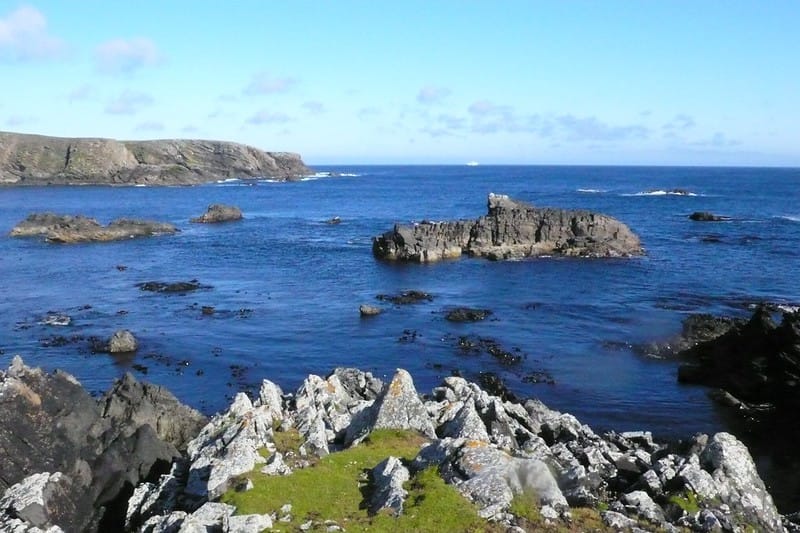
Shetland | Shetland and Fair Isle have been recognised as an Important Marine Mammal Area (IMMA), alongside the likes of Patagonia, Madagascar and Antarctica. IMMAs are not legal designations but rather peer-reviewed assessments based on criteria judged by scientific data, and are used as cost-effective tools to facilitate conservation efforts. In the case of Shetland, citizen science data collated from the Facebook group Shetland Orca Sightings was used alongside other research to highlight the importance of the surrounding waters for marine mammals. As well as orcas, the waters are home to harbour porpoise, Risso’s dolphins, minke whale and humpback whale. The Herald and the Shetland Times covered the story.
Conwy | Natural Resources Wales has discovered a population of the rare lead moss plant after restoration work in Gwydir Forest in Conwy county. The plant, which thrives in ‘heavy metal’ environments, is only found in southwest Germany and Belgium outside of Britain and Ireland, and is classed as endangered by the IUCN Red List. Gwydir Forest is home to a series of disused lead and zinc mines, where the spoil-heaps have been colonised by Calaminarian grassland, a habitat which grows on land rich in heavy metals that are toxic to most plants. NRW undertook restoration work in 2022 to dig experimental scrapes, aiming to re-create suitable habitat for the moss. Caroline Bateson, an advisor for the Conwy Environment Team, said that, despite the success, there was ‘still a lot of mystery around the moss, including its patchy distribution in Gwydir Forest, with some believing it was spread on the boots of miners.’ Nation Cymru covered the news.
Elsewhere:
- The entire length of the Norfolk coast is accessible to walkers for the first time after the opening of a path between Snettisham and King’s Lynn, reports the BBC.
- A scheme led by the Bristol Zoological Society to protect the UK’s native flora and fauna from invasive species is being expanded, reports the BBC.
- Conservationists say that a project to restore peatbog on Dartmoor is starting to reverse habitat loss, reports the BBC.
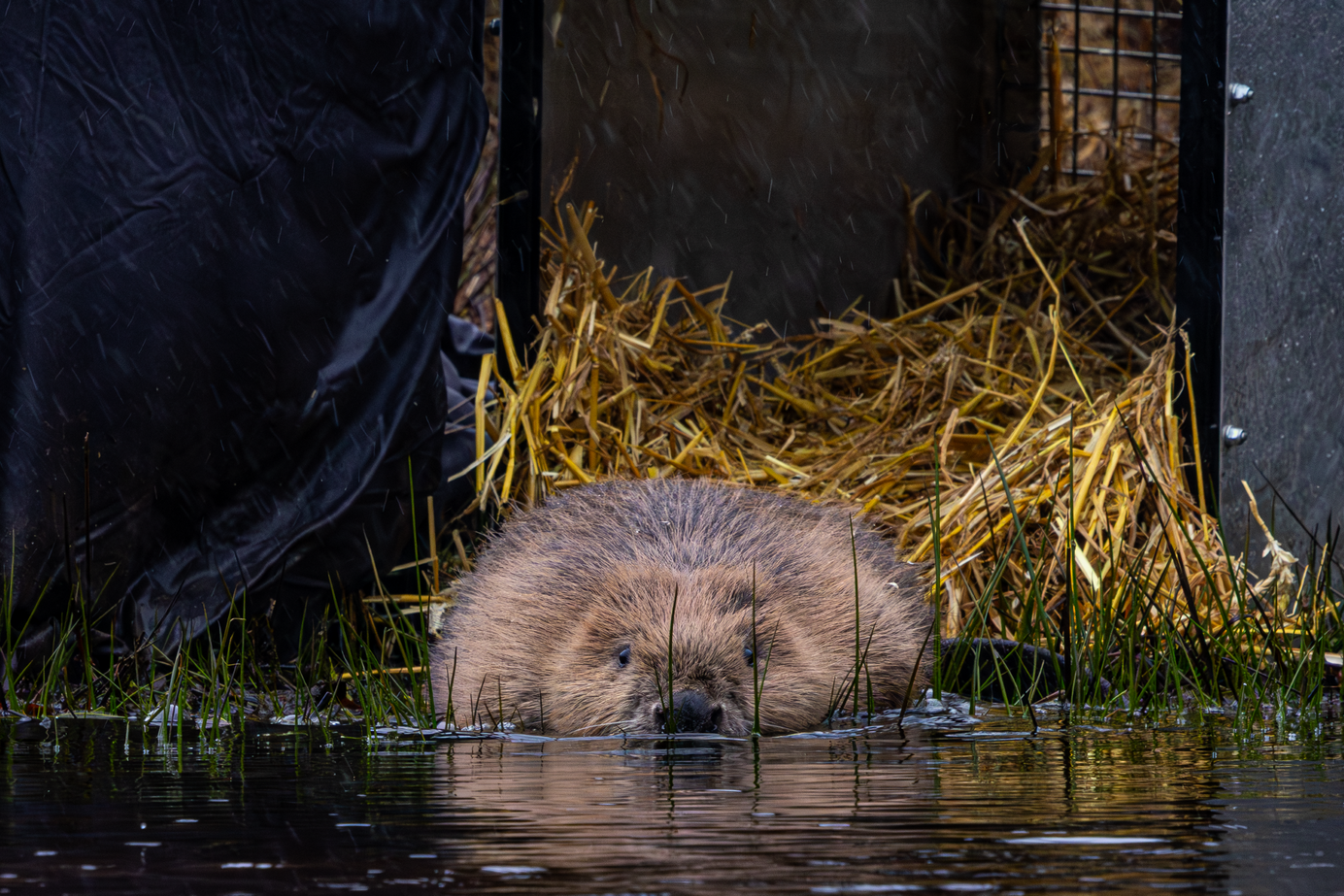
- A family of three beavers has been released into a nature reserve in the Cairngorms National Park as part of its reintroduction programme, reports the Herald and the BBC.
- The Environment Agency has started work on a £1m project to restore wetland habitat and open 55km of river for fish at a Tees Valley country park.
- West Norfolk councillors have approved a breeding scheme for ruffs, a rare migrating wading bird, despite recommendations to reject the project, reports the BBC.
- Farmers have placed more than 5,000 pairs of wellies in front of the Welsh parliament in the ongoing row over subsidy payments, reports the BBC.
- A giant seaweed farm has been approved for Port Isaac Bay in Cornwall to the ire of locals, reports Cornwall Live. Meanwhile, researchers have discovered a vast bed of maerl off the Cornish coast, thought to be around 4,000 years old.
- Farmers and conservationists in Wiltshire are working together on a project to protect and restore chalk streams, reports the BBC.
- Alderney Wildlife Trust has announced that an estimated 30% of the island’s gannet population has been killed by bird flu, reports BirdGuides.
- Residents of Stroud have launched a campaign to protect The Heavens, a beloved 102-acre green space set to be privately sold, reports the BBC.
- A new species of sea slug, thought to be migrating north due to climate change, has been discovered in waters off the southwest of England, reports the BBC.
- Kent Wildlife Trust has partnered with the National Trust to reintroduce cattle to the historic Scotney Castle grounds to contribute to their conservation grazing efforts.
- Surveys by the Warwickshire Country Parks team at Ryton Pools counted more than 50,000 moths of 650 species across 2023, reflecting the success of conservation efforts.
- A report from Torbay Council has found that more than 40 iconic trees were cut down in Torquay’s historical seaside garden due to poor communication, reports the BBC.
- The London Wildlife Trust and East London NHS Foundation Trust are launching a two-year pilot of a nature-inspired wellbeing programme for young people.
Reports
Eating | A report from the alliance Eating Better examines how well the UK’s various policies are supporting healthy and sustainable diets. Food is a devolved issue in the UK, and the report stresses that devolution is key to unlocking food system reform, as each of the four nations have their own unique food histories and cultures. In current policy, Scotland is leading the way with the most comprehensive food and farming strategy, but the report found that ‘sustainable diets’ remain undefined in government policy, leading to a lack of advice in dietary guidelines. In England, the new ELM schemes present ‘an exciting opportunity for nature friendly farming’, but the funding and support currently on offer is inadequate. Meanwhile, Wales is operating without a national food strategy or sustainable diet definition: implementing both should be a ‘matter of top priority’, according to the report.
Health | Natural England has published its most extensive review to date on the relationship between nature and human health and wellbeing. The ‘review of reviews’ screened over 2,000 evidence sources and summarised the key evidence for the benefits of nature-based interventions, such as outdoor exercise, gardening and education. On the flip side, it also highlights the evidence for the negative impacts of contaminated and degraded nature on health and wellbeing, as well as the inequalities of access to quality greenspace. Notably, the review calls attention to the growing cross-sector recognition of the benefits of nature, from green social prescribing in the NHS to focus on outdoor learning by the Department for Education.
Insects | The UK government must increase its focus on halting the decline of invertebrates, according to a report by the House of Commons Science, Innovation and Technology Committee. The report is based on an inquiry which gathered evidence from organisations, academic experts and the government, looking into the state of insect populations and their importance in food production. Among its recommendations, the report suggests the creation of a National Invertebrate Strategy to act alongside the pollinator strategy, with measurable targets to ensure accountability. It also highlights the importance of nurturing an interest in all insects from a young age, since many lesser known and ‘unappealing’ species play vital ecological roles. This could be achieved through the anticipated Natural History GCSE, according to the authors. The charity Buglife welcomed the report, and urged policymakers to take forward its recommendations to restore populations of ‘our smallest and most important creatures’.
Science
Orchards | Planting wildflower strips around the margins of orchards reduces damage to the fruit, providing an economic boost to farmers, according to a study in the Journal of Applied Ecology. This is because the strips provide habitat for insects that predate upon aphids that damage the apples. Researchers measured the impacts over a two-year period, and concluded that the presence of wildflower strips cut the number of trees that had suffered damage from 80 to 48%. This equates to the potential to improve yield by almost 7% each year. It also means that farmers can reduce their need for insecticides. ‘We will get more good bugs on farms and better British food in supermarkets as more flower strips are added next to orchards,’ said Charlotte Howards, lead author of the study. FarmingUK covered the study.
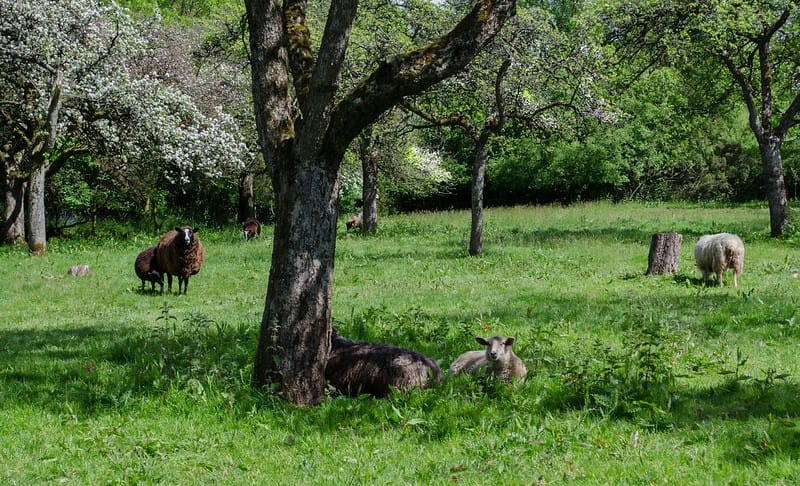
Evolution | The human response to greenery – and its absence – has its roots in evolutionary biology, according to a study in People and Nature. Extended periods of drought would have caused plants to wither. In ancient times, this would have been a useful psychological response, resulting in humans suppressing their activities and thus saving their energies until the arrival of the wet season. The return of greenery would have led to positive emotions, prompting them to resume their foraging activities. This evolutionary response, however, means that modern humans are maladapted to their often-grey urban environments, as feelings of depression no longer serve a useful purpose. The hypothesis has implications for clinical psychology, conservation and urban planning, according to the authors. Newsweek covered the study.
Butterflies | Counting butterflies increases nature connectedness and decreases anxiety, according to a study published in Biological Conservation. Researchers surveyed participants taking part in the Big Butterfly Count, a citizen science project that aims to gather data on butterfly and moth species across the UK. Alongside a plethora of positive responses, they also found increased sadness and concern about biodiversity loss. ‘Interestingly, the more intensely participants felt these emotions, the more their feeling of closeness to nature and noticing wildlife increased afterwards, with participants reporting they felt motivated to help butterflies and nature more, by doing things such as transforming their gardens into butterfly-friendly havens,’ said lead author, Dr Carly Butler. The Scotsman covered the findings.
Driftwood
Bronze Age | To cope with the impacts of climate change, humans must learn to live in harmony with nature as their prehistoric ancestors did, according to Dr Francis Pryor. The archaeologist discovered the Flag Fen causeway, near Peterborough, in 1982. The site dates back to the Bronze Age, when the landscape was wet and marshy – something which the raised platforms were designed to deal with. Draining and hot summers have since dried out the site, but rainfall and tidal surges could mean a return to wetter conditions. ‘I can foresee terrible circumstances where the Fens have to be allowed to flood to preserve areas further south,’ said Pryor. ‘I think what we should learn from our prehistoric ancestors is to live in harmony with the Fenland environment as much as we can.’ The BBC covered the story.
Grief | In a profound and mesmerising feature for the Dark Mountain Project, Liz Jensen reflects on the loss of her 25-year-old son, Raphaël, alongside the loss of the wildlife that he loved and cared for so much during his short lifetime. Raphaël, who had been fascinated by animals since he was a child, grew up to be a zoologist and Extinction Rebellion activist, who mourned the loss of the Wild as much as he was fascinated by it. ‘It’s said that when a creature becomes extinct, it dies three times: first physically, then in language, and then in memory itself,’ writes Jensen. ‘Raphaël died physically. His second death – in language – won’t happen for as long as his name is still spoken. But our memories die with us. When that happens, will my son die a third time, and become extinct?’ Jensen’s book, Your Wild and Precious Life: On grief, hope and rebellion, was published yesterday by Canongate Books.
Coast | Walking along the northeast coast is already a wonderful experience. Now, Durham County Council has launched a new app that seeks to make it educational, too. The SeaScapes Coastal App pings walkers with information about geology and shipwrecks located between the Rivers Tyne and Tees. It has been launched alongside a new website called Reading the Rocks. Jenny Swainston, delivery manager for the app, said it was a ‘combined celebration of the people, places, and habitats’ and could encourage people to protect the coastline into the future. The Northern Echo covered the story.
Further reading:
- In the Guardian, author Philip Hoare writes about how the queer interactions of marine mammals, particularly whales, can challenge presumptions about sexuality.
- Amidst the glam of award season, the RSPB have their own contenders: this fun post lists the winners of the Bird Oscars.
- The Royal Collection Trust has launched a dry gin infused with botanicals grown in the gardens of Holyrood Palace in Edinburgh. An article in the Evening Standard outlines its inspiration from the garden’s history of cultivating medicinal herbs.
- The Wild Trout Trust and the Environment Agency have released a film showing the benefits of floodplain reconnection at the River Witham near Grantham. Watch it here.
- In the Guardian, science editor Robin McKie writes about the plight of horseshoe crabs, whose blood is used to test viruses – leaving them threatened by overharvesting.
- Read about how the reintroduction of the red-billed chough to Kent has inspired a folk music duo to write a song about the mythology of the species in this blog post.
- How has river restoration evolved over time? This post by Natural Resources Wales takes a look at its history.
- Nature is the true winner of the Surrey Wildlife Trust’s second annual Hedgelaying Competition.
Happy days
Comedy | In his search for Britain’s oldest jokes, journalist Ian Hislop has highlighted what is thought to be the oldest example of a comedy animal. The illustration, within the pages of a medieval bestiary kept at the University of Aberdeen, shows a fictional ox-like creature known as the Bonnacon spraying a pair of shocked knights with a ‘hot, smelly acid from its rear,’ reports the BBC. The rest of the stories within the manuscript have a Christian message. ‘You have these very upright, moral stories about good animals and sad animals doing the right thing and the wrong thing,’ explains Prof Janes Geddes, emeritus professor at Aberdeen's School of Divinity, History, Philosophy and Art History. ‘And then you come to the Bonnacon.’

Subscribe to our newsletter
Members receive our premium weekly digest of nature news from across Britain.
Comments
Sign in or become a Inkcap Journal member to join the conversation.
Just enter your email below to get a log in link.