Gene Conservation & Grassland Fungi
The latest news on nature and conservation in Britain.
National news
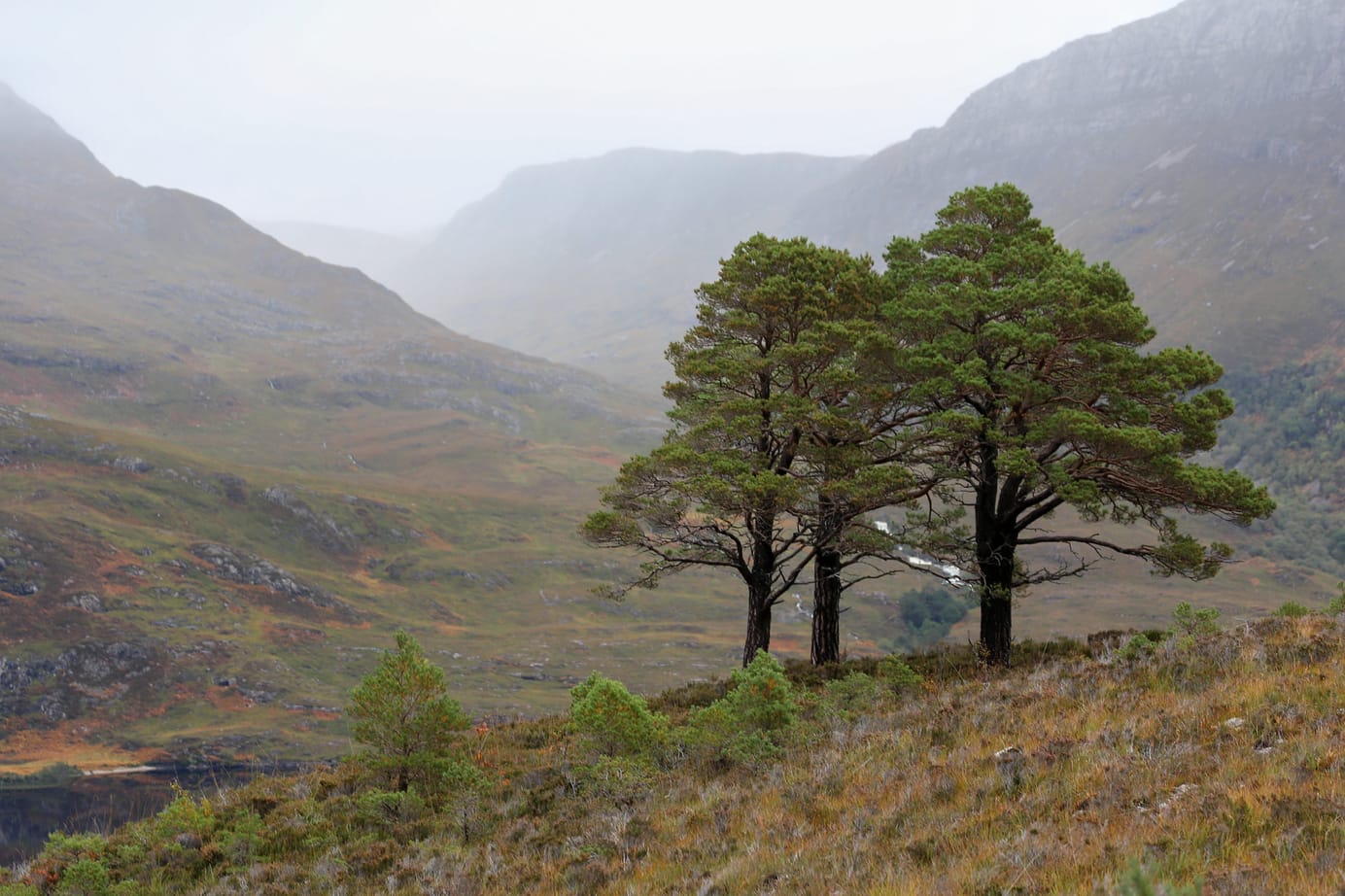
Genes | Scotland’s nature agency is creating a network of specially conserved forests to give the country’s native trees the best chance of responding to climate change and disease. In 2019, Beinn Eighe reserve in Wester Ross became the UK’s first Gene Conservation Unit (GCU) for Scots pine, to help conserve the remaining genes from the ancient Caledonian forest. Now, NatureScot has registered a further four reserves for gene conservation, with a total of 20 species targeted across the five reserves. These cover a range of native trees, including alder, aspen, sessile oak, ash, silver birch, rowan and hazel. Each unit consists of a clearly mapped area where management priorities will include looking after the trees to encourage new seedlings and saplings. This regeneration enables populations to adapt to environmental changes, and become ‘fitter’ for future environments, according to NatureScot.
Trawling | The Scottish government has launched a consultation on plans to restrict the practice of bottom trawling in 20 Marine Protected Areas. Bottom trawling is a fishing method that uses towed nets to catch marine species living close to the seabed, often causing damage to other habitats and organisms in the process. The proposal would see either a full ban on the practice, or a partial ban covering only protected features such as reefs. The charity Oceana has described the consultation as a ‘golden chance’ to restore Scotland’s marine biodiversity. Not everyone is in favour, however. Conservative MSP Tim Eagle urged communities to respond to the consultation, saying that ‘spatial squeeze’ is among the biggest fears of the fishing industry. The Times and ENDS reported the news.
UNESCO | Climate X, a climate modelling company, has analysed which UNESCO World Heritage Sites are most at risk from climate change. They found that four UK sites are within the top 50 most vulnerable. The Forth Bridge and St Kilda are both at risk from coastal flooding, while New Lanark, also in Scotland, is in danger from landslides. Studley Royal Park, in Yorkshire, is vulnerable to severe storms. Globally, the most at-risk site was the Subak System in Indonesia, which faces surface flooding, extreme heat and drought. The study looked at impacts over a 100-year time horizon. ‘Our findings serve as a stark warning for governments, preservationists, and the global community to prioritise the safeguarding of our planet – to preserve our ancient monuments and our current assets and infrastructure – and to protect life today and into the future,’ said Lukky Ahmed, the co-founder of Climate X. The Daily Mail and the Scotsman covered the news.
In other news:
- Golf courses in England breached their abstraction licences 41 times in 2022, according to ENDS analysis of Environment Agency data.
- Butterfly Conservation has written an open letter to the environment minister Steve Reed to ensure butterflies and moths are considered in statutory targets.
- A team of firefighters, scientists and engineers are working on a project to enable a swarm of drones to put out flames before they become wildfires, reports the BBC.
- The Labour government is facing legal action after maintaining it will not revoke a decision by the Conservative government to grant 31 new licences for fossil fuel exploration in the North Sea, reports ENDS.
Across the country
Cambridgeshire | Moth enthusiasts were thrilled to discover a rare species of moth – the dark crimson underwing – in Coton Orchard in Cambridgeshire last week, reports the Guardian. The moth is so rare that none of the Cambridgeshire Moth Group had seen it before; it is normally only found in the New Forest. Anna Gazeley, who owns the orchard, said that the 100-year-old apple trees offered a hospitable environment to the species, and hoped that it might breed in the future. However, her hopes could be curtailed by a proposed bus route that would bisect the orchard. Inkcap Journal reported on the threat – and what it says about the English planning system – last summer.
 Sophie Yeo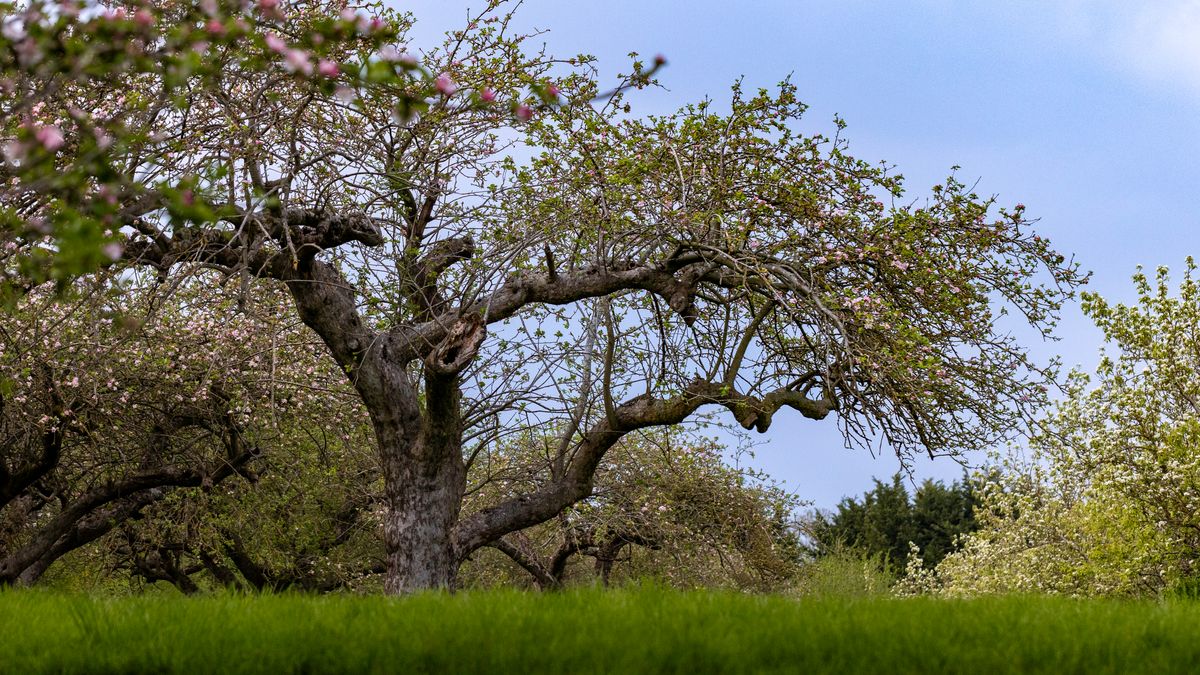
Norfolk | One of the UK’s largest and rarest species of spider is making a comeback, according to the RSPB. The fen raft spider is found in the marshes and wetlands of the Norfolk and Suffolk Broads, and faced near extinction over the last century due to the large-scale degradation of its lowland habitats. Now, a survey by the RSPB has shown that its population is increasing, with the total number of female spiders at just under 4,000 across 12 sites. The spider – which can grow up to 7cm in leg span – can run across the surface of water to capture its prey, which includes insects, tadpoles and even fish. The charity has assured the public that they are not venomous, and prefer wetlands to people’s homes. The Independent and the Guardian covered the news.
Devon | Research by the University of Plymouth has found that a mussel farm in Devon could be helping to revive a shellfish reef wiped out by bottom trawling in the 20th century. The offshore farm, which is the UK’s largest, was set up in Lyme Bay in 2013. Since then, mussels falling from the lines have helped the seabed undergo a transformation from muddy sediment into biodiverse reefs. Now, a French map from 1871 has revealed that this may be an unintended restoration of an old habitat destroyed by bottom-towed fishing gear, rather than the creation of a new habitat. Dr Emma Sheehan, senior author on the study, said the finding ‘shows that the farm is not only having a positive impact on the health of the ocean now, but also returning the seabed to some semblance of its former state.’ The BBC reported the story.
Elsewhere:
- Water voles – which have declined by 90% over the last 30 years – have recently made a home in York, thanks to a seven-year project to restore habitat in the city, reports the BBC.
- Around 90kg of dead fish have been removed from the Walsall canal in the West Midlands after 4,000 litres of toxic waste were spilled, reports the Guardian and the BBC.
- A red squirrel has been spotted in the Glasgow suburb of Bishopbriggs – the most southerly sighting in Scotland’s central belt in decades. The BBC and the Times covered the story.
- Natural England has lodged a formal objection to the controversial plans for a Norwich Western Link road, which threatens rare Barbastelle bats, reports the BBC.
- Derbyshire Wildlife Trust is planning to use £330,000 of funding to rewild 267 hectares in the Trent Valley. It will start by reinstating the role of large herbivores.
- West Sussex County Council is building a ‘mammal shelf’ under a main road to allow otters to cross safely, reports the BBC.
- Labour is yet to confirm whether it will reinstate the role of ‘river tsar’ for the Wye since it was dropped after the general election, reports the Times.
- Avon Wildlife Trust is working with farmers and landowners in Somerset to investigate how changes in land management can protect peatlands.
- The post-mortem of a famous osprey known as Laddie, found on a nature reserve near Dunkeld, has revealed that the raptor died of old age, reports STV News.
- Two kingfishers have bred successfully in the Hebrides for the first time, reports BirdGuides.
- A Guernsey charity is looking for gardeners to become ‘custodians’ of a local flower, the dwarf pansy, to prevent its extinction, reports the BBC.
- Natural Resources Wales has launched a five-year project to restore three rivers in southeast Wales.
- The River Dee is a step closer to its natural state after a project to remove the Erbistock Weir, according to Natural Resources Wales.
- Network Rail and Forestry and Land Scotland have completed a two-year project to improve biodiversity around the famous Glenfinnan Viaduct, reports the Herald.
- Blenheim Palace has successfully introduced bee swarms to its nine new woodlands, using oak logs to replicate its ancient woodlands, reports the Pro Landscaper Magazine and HortWeek.
- The National Trust has reconnected a river to its floodplain to create 11 hectares of wetland in Ullswater, reports the BBC.
- Falmouth Harbour and the Ocean Conservation Trust have installed ‘Blue Meadows’ buoys to protect the sensitive seagrass and maerl habitat around the harbour, according to All At Sea.
Reports
Fungi | NatureScot has released a new map of grassland fungi diversity, revealing the best areas for these whimsical species across the country. It pinpoints the most valuable areas, where it recommends the historical land regime is maintained to allow the fungi to continue to thrive. An accompanying blog by Kat O’Brien, who co-authored the map, delves into the wonders of grassland fungi and the threats that they face. Species like waxcaps require a specific set of circumstances to survive; specifically, ancient unimproved grasslands, where the grass is kept short. These have traditionally been abundant across Scotland – they are typical of ancient graveyards and the lawns of old houses, for instance – but today are threatened by agricultural improvements and land use change, such as reforestation.
Protection | The UK’s protected areas must become more effective and resilient, according to a joint statement issued by the nations’ nature agencies. Conservation policy is a devolved issue in the UK, but the paper aims to set out a shared understanding of how best to improve protected areas, and summarise guiding principles for their future direction. The statement recognises that ‘effectiveness is an issue’ for both terrestrial and marine protected areas, with around half of the former in unfavourable conditions, and commits to put in place more appropriate measures. In the face of increasing environmental pressures, the paper also stresses the need to build ecological resilience into the current network of protected areas, both by increasing their size and reducing threats, and also increasing connectivity between sites. ENDS covered the news.
Mountains | A survey has revealed the UK’s most ‘Instagrammable’ mountains – but professionals have warned that social media users should take care before flocking to popular hiking spots. Holiday property managers Wheelwrights analysed hashtag data on Instagram, and found that Yr Wyddfa (Snowdon) in north Wales topped the list with a whopping 544,313 posts. The survey comes amid rising concerns that social media platforms are driving an increase in mountain rescue call-outs. Mike Park, chief executive of Mountain Rescue England and Wales, said that social platforms spread the word about ‘hidden gems’ without providing information about the associated risks. However, he added there was a ‘good side’ to social media, too, allowing walkers to find and share some of Britain’s best outdoor spots – as long as people take the right precautions. The Times and Microsoft Start covered the story.
Science
Rewilding | Around a quarter of Europe is suitable for rewilding, according to a paper published in Current Biology – and Scotland is among the most suited places, with Scandinavia and the Baltics also primed for a return to wilderness. Suitable areas were determined according to stringent criteria, determined by the authors of the paper, including the human footprint on the land and the number of large herbivores and carnivores currently present. When seen in this light, the figure seems somewhat less dramatic: while Scandinavia retains a full suite of predators, including wolves and bears, Scotland’s inclusion is presumably based on the presence of otters and wildcats. Rebecca Wrigley, chief executive of Rewilding Britain, pointed out that these criteria automatically excluded almost all of England and Wales from the analysis: ‘That is why here in Britain we advocate for rewilding to happen across a spectrum,’ she told the Times. The Natural History Museum also covered the research.
Carbon | Does the reintroduction of large animals enhance carbon storage, and therefore help to tackle climate change? Excitable journalists would seem to suggest so – but the media reporting on this difficult question is too simplistic and selective, according to a new comment piece in Nature Climate Change. In fact, the role of animals in the ecosystem is complex, and their presence does not always lead to carbon benefits. ‘As a result, overstating animal impacts on climate mitigation may lead to misguided investments and ineffective mitigation strategies,’ the authors write. This does not mean that large animals should be dismissed: they are still effective, for example, at helping ecosystems adapt to climate change, as well as sustaining diverse environments for their own sake. You can read a short explainer here, or listen to co-author Yadvinder Malhi explain them in the video below.
NEW PAPER: Overstating wild animal roles in carbon capture may hinder, rather than facilitate, effective climate-mitigation & conservation efforts, say researchers in an article out today in @NatureClimate .@ymalhi @EcologyRoo @MegaFaunaMe @HeidiPearsonUAS @DuvallEcology pic.twitter.com/gibnKPhimd
— Leverhulme Centre for Nature Recovery (@NatureRecovery) August 20, 2024
Justice | Rural areas are poised to undergo the greatest changes in land use due to efforts to tackle climate change and stem biodiversity loss, but what does that mean for the communities that live there? The idea of a ‘just transition’ has gained steam in environmental discourse, but it has mostly been seen in the context of urban areas and the energy sector. A paper in the Journal of Rural Studies aims to bring rural communities into the discussion, too. Looking at case studies from Affric Kintail in Scotland, the French Pyrénées and the Czech Republic, the authors look at the drivers of change and what that says about the social structures currently in place, including unequal access to land and political disempowerment of local citizens.
Driftwood
Scythe | In the Financial Times, author and TV presenter Patrick Grant tells of his efforts to learn the dying art of scything. Essentially a blade on a wooden stick, the scythe is preferable in every way to a strimmer, he writes, providing a quieter, greener and healthier method of mowing your lawn. ‘What I noticed most was how connected I felt to my garden. Scything is no more noisy than walking,’ he says of his experience. However, his story is an unusual one. Back when meadows were a common feature of the British landscape, scythes were ubiquitous, but now they – and the artisans that made them – have all but vanished. The art has left its mark on literature, at least, with Grant quoting both Robert Frost and Leo Tolstoy on the joys of the act.
Trees | A feature in the Guardian looks at the concept of assisted migration, specifically as it relates to trees. As the climate heats up, many animals and insects are moving to find cooler climes, but plants – less mobile thanks to their lack of wings or legs – are failing to keep pace. Ecologists are now coming around to the idea of lending a helping hand, intentionally relocating species to regions where it is expected they will thrive in the future. In extreme cases, this might mean bringing in species that have previously been restricted to entirely different countries or even shifting ecosystems wholesale. But the concept is controversial, with conservationists worrying about the unintended – and potentially irreversible – consequences of such interference.
Oaks | The Woodland Trust has announced its shortlist for the 2024 Tree of the Year – and this year is all about oaks. The list includes 12 specimens from across the UK, including the 1,200-year-old Marton Oak in Cheshire, a hollow giant in West Sussex associated with Queen Elizabeth I, and an enchanting individual in the Highlands which is named after the Scottish folk band Skipinnish. Dr Kate Lewthwaite, citizen science manager at the Trust, said they chose the oak because it ‘captures people’s imaginations – from their leaves to their acorns, these trees are ingrained in our heritage’. Alongside the competition, the charity is campaigning for more robust legal protection for Britain’s veteran and at-risk trees, highlighted by the loss of previous winners such as the Sycamore Gap tree. Voting is open until October 21st. The BBC and the Guardian covered the story.
Further reading:
- In Knowable Magazine, a writer goes on a voyage of discovery into the world of bioluminescence after ordering a glowing petunia.
- An article in the Guardian gives a taste of The Flitting, a new memoir about how butterflies became a vital connection between Ben Masters and his dying father.
- A news review in the Times takes a look at the headaches that newts cause for housebuilders and billionaires.
- Campaigners are concerned that slow paperwork could cause some public rights-of-way to be lost forever. A piece in the BBC explains.
- An article in the Times investigates the research attempting to create ‘greener’ milk by feeding cattle supplements – including seaweed.
- The Byline Times has an ode to honey bees, and what we can learn from them.
- A BBC explainer outlines how DNA analysis is helping to eradicate invasive mink.
- In the Scotsman, a pair of articles explore the concept of ‘slow tourism’, and how a long-distance walking trail could provide an alternative to the busy North Coast 500.
- For the Guardian, biologist Dr. Ceri Lewis explains her obsession with sea worms and their surprising diversity.
- An article in the Conversation discusses how fly fishing can strengthen connections to wildlife and foster conservation efforts.
- English poet Simon Armitage explains in the New Statesman why, if he could be a tree, he would pick a sycamore.
Happy days
Egrets | Great white egrets have fledged successfully in Scotland for the first time, in what the RSPB has called a ‘significant milestone’ for the bird. Rangers spotted three chicks leaving the nest near the Loch of Strathbeg reserve in northeast Scotland on Thursday. The species used to be occasional visitors to the UK, but they have been expanding their range in the country since 2012, echoing population increases across Europe. One factor behind the increase is better legal protection from persecution, as egrets were once hunted for their long white breeding feathers. In a blog, the RSPB wrote that the birds’ recent success had particular resonance since the charity was originally founded to campaign against the plumage trade.

Subscribe to our newsletter
Members receive our premium weekly digest of nature news from across Britain.
Comments
Sign in or become a Inkcap Journal member to join the conversation.
Just enter your email below to get a log in link.