Food Strategy & Wild Camping
The latest news on nature and conservation in Britain.
A special offer for Inkcap Journal subscribers this week! The publishers W. W. Norton have offered a 35% discount code for Beloved Beasts, a book on the history of the conservation movement by American science writer Michelle Nijhuis. Just enter the code WN856 when prompted on the website.
National news
Food | The government has published its much-anticipated food strategy, which aims to create a “resilient, healthier, and more sustainable food system that is affordable to all”. The policy paper is based on a report by Henry Dimbleby, co-founder of the Leon restaurants, who personally criticised the strategy for its lack of a coherent vision. An early leak led to widespread backlash, with the Guardian claiming it failed to tackle cost or climate and the Times reporting that ministers had “quietly abandoned the ‘green crap’” to focus on food security. Under particular fire was the government’s approach to Environmental Land Management payments. Previously, the government stated that a third of the ELM budget would be ring-fenced for landscape-scale recovery projects including rewilding schemes. The leaked strategy appeared to have abandoned this commitment, but the published document retains it, albeit in a slightly different form. As Alastair Driver, director of Rewilding Britain, summarised on Twitter, the indicative spend for the Landscape Recovery element of ELM remains the same at £800m per annum from 2024, but with the important caveat that the actual amount will be determined by “farmer demand”. Geoff Sansome, head of agriculture for Natural England, has written a helpful thread which addresses what this caveat might mean, as well as which media headlines were justified. However, the Wildlife Trusts maintain that the government has broken its promise to restore nature at scale, and argue that restricting the funding will limit the government’s ability to tackle the number one threat to food security: biodiversity loss and climate change. The National Farmers’ Union and the Soil Association have welcomed the government’s pledge to “back farmers” and support British food security by investing in agricultural innovation and focusing on more home-grown food. The strategy publication has been widely covered in the national news, including by the BBC, the Times, the Telegraph, the Guardian, Edie, iNews and the Evening Standard.
Governance | Plans to dismantle Natural England have sparked concern that government efforts to protect and restore nature could be deprioritised. Campaigners spotted the proposal to absorb Natural England into Defra, thereby abolishing it as an arm’s-length body, buried within a recent government consultation on nature recovery. Natural England has increasingly lost independence over recent years, reducing its ability to hold the government to account: in 2012 its autonomous website and press office was scrapped, and in 2018 the former chair Andrew Sells confirmed the body was no longer independent. Now, a government spokesperson has said that the absorption is being considered but that no firm plans have been made. Craig Bennett, chief executive of the Wildlife Trusts, said the Trusts are “incredibly concerned” by the proposal. “There seems to be an obsession with moving furniture around Whitehall. If they’re not careful it’s going to be like moving deck chairs around on the Titanic while we face massive crises,” he said. The Guardian reported the news.
Woodlands | Forest Research has released the latest National Statistics for woodland in the UK. Key findings for 2021-22 include the creation of around 14,000 hectares of new woodland, and around 15,000 hectares of publicly funded woodland restocking (the replacement of trees in woodland that has been felled). However, the Woodland Trust has responded to the statistics with alarm, stating that they show the government is failing to halt the long-term decline of native woods. In particular, they note that the government is lagging behind its target to create new woodland in England; only just over a third of SSSI woodland in England is in favourable condition; and the steady influx of new tree diseases is continuing. Meanwhile in Scotland, Scottish Forestry has announced that the figures show Scotland is “punching above its weight” in woodland creation, despite only achieving 80% of the yearly woodland creation target. The shortfall is blamed on a bad run of winter storms which felled millions of trees, affecting the main planting season. However, Scotland did achieve their target for native woodland creation, and are responsible for over three-quarters of the UK’s new woodland creation. The Scotsman reported on the Scottish woodland targets.
In other news:
- NatureScot has warned that capercaillie could be lost to Scotland within 20 years, reports the Times.
- Analysis of Environment Agency data shows that sewage monitors do not work the majority of the time, meaning that water companies can allow discharge to go unchecked. The Telegraph reported the story.
- The government has introduced byelaws prohibiting fishing activities such as bottom trawling in four offshore marine areas to protect their wildlife and habitats.
Across the country
Dartmoor | Dartmoor National Park Authority has promised to defend the legal right to wild camp on the moor after wealthy landowners filed a high court case to “clarify” the law around public access. Alexander Darwall, a City fund manager, and his wife Diana own 2,784 acres in south Dartmoor. The papers lodged by their lawyers claim there is no legal right to camp on the moor, as the Dartmoor Commons Act does not allow for camping without a landowner’s consent. However, section 10 of the Act does give the public right to access the moor for the purposes of outdoor recreation, which the Park Authority interprets to include wild camping, when done responsibly. The moorland is one of the few places in England which allows wild camping in certain areas, and the park’s chief executive, Kevin Bishop, said the Park Authority would not give in to pressure from the Darwalls. The Guardian and the Plymouth Herald reported the news.
Caithness | The UK government minister for Scotland, Conservative MP Iain Stewart, has added his support to the bid for Scotland’s Flow Country to become a UNESCO World Heritage site. The Flow Country, often described as the “lungs of Scotland”, is the most extensive and intact blanket bog system in the world. The 400,000 hectares of peatland across Caithness and Sutherland are home to some of the UK’s rarest wildlife, and store twice the amount of carbon contained in all the forests in the UK. Stewart said, “Gaining UNESCO World Heritage status would be particularly fitting for this amazing landscape and also help level up the area, encouraging sustainable tourism and supporting local green jobs.” Paperwork to support the application will be submitted by the UK government at the end of this year, with the outcome to be decided in 2024. The Scotsman covered the news.
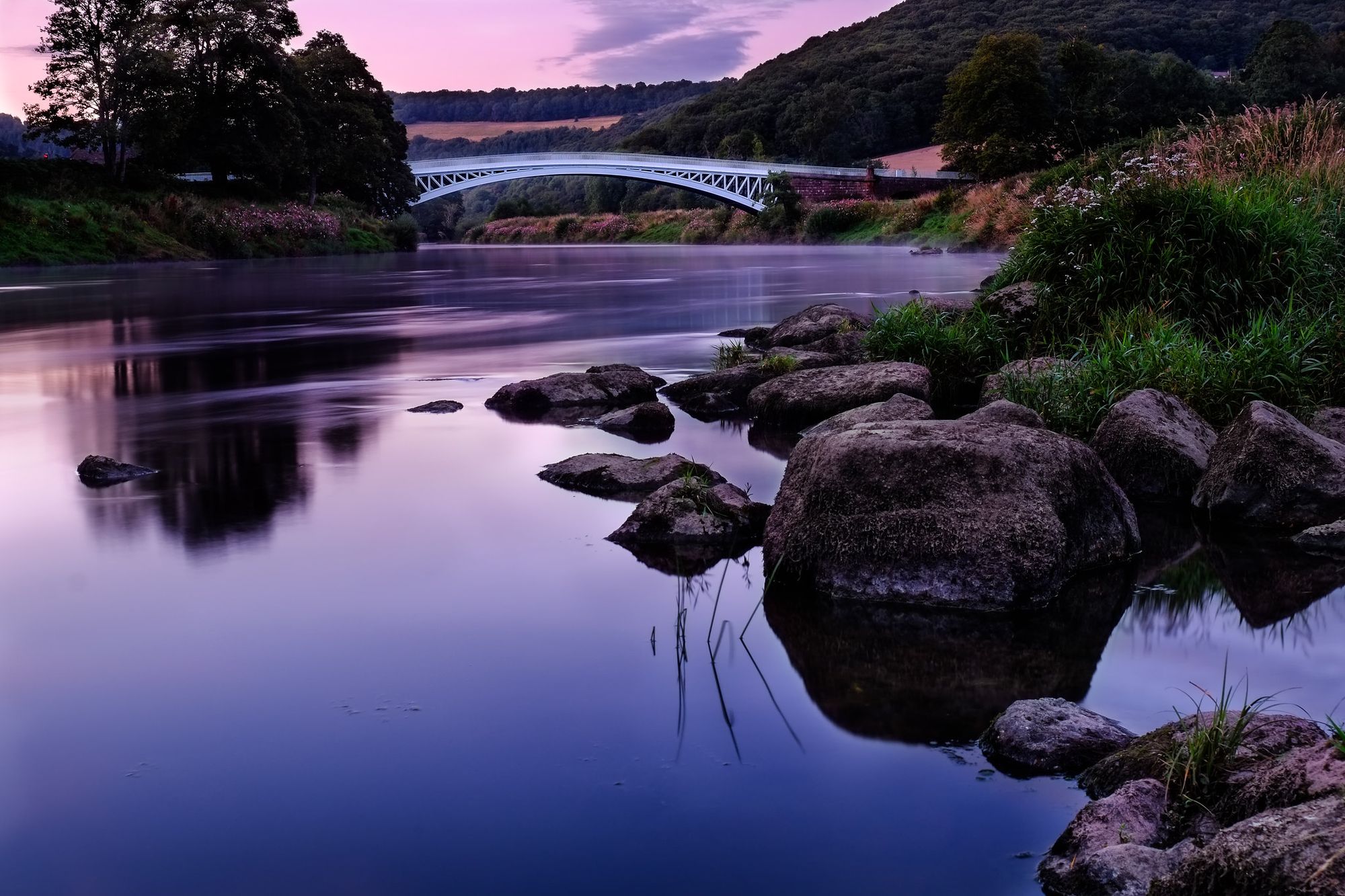
Wye | The entire watershed of the Wye River and its tributaries is “approaching its tipping point”, according to George Monbiot in the Guardian. The river is being polluted by vast amounts of phosphate washing into the river via a constant stream of chicken poo, primarily from intensive farms in Powys and Herefordshire. However, the Environment Agency and Natural Resources Wales have announced a collaborative effort to increase water monitoring in the Wye and its catchment to prioritise how and where to tackle phosphate pollution. The agencies are deploying automatic monitors worth £100,000 to capture real-time water quality data, targeting five upstream areas of the river that have particularly high phosphate levels.
Elsewhere:
- Thousands of people are protesting plans to build an adventure tourism theme park at Elterwater quarry in the Lake District, reports the Times.
- The Bristol Zoological Society has submitted plans to transform the current zoo site into a conservation space, reports the BBC.
- NatureScot has announced the Clyde Peatlands initiative, which will restore peatland across the Glasgow City region, reports the Herald.
- Lancashire County Council is offering annual “micro-grants” of £300 to local councils for small-scale projects to boost biodiversity, reports the BBC and Lancashire Evening Post.
- A proposed expansion for the Rockingham Forest holiday park in Northamptonshire would threaten a curlew breeding site, reports BirdGuides.
- Experts are baffled by the discovery of more than 8,000 ancient frog and toad bones in a ditch near the site of an Iron Age roundhouse near Cambridge, reports the BBC.
- NatureScot staff will use sniffer dogs to search for hedgehogs on Barra after one was discovered on the island for the first time, reports the BBC.
- Police are investigating after the carcasses of a goshawk and a sparrowhawk were found in the Forest of Dean, while another sparrowhawk was found in a plastic bag in Yorkshire. The BBC and BirdGuides reported the two cases respectively.
- Foragers have created a map showing where wild food can be collected in part of Cornwall, as a way of easing the cost of living crisis. A BBC video tells the story.
- Erewash Borough Council has announced plans to turn a quiet golf course in Derbyshire into a nature reserve, reports BirdGuides.
- £90,000 of funding will be used for several improvements at Hermaness in Shetland, the UK’s northernmost nature reserve, reports BirdGuides.
- Whitby Lobster Hatchery has released a batch of 50 baby lobsters in the sea at the Yorkshire coast as part of a scheme to replenish their dwindling numbers, reports the BBC.
- An adult pine hoverfly has been spotted in Britain for the first time in nearly a decade, thanks to successful conservation efforts at Abernethy and Glenmore. Buglife announced the find.
- Campaigners claim that a fungus growing in rivers near East Midlands Airport is being caused by the airport’s de-icer discharge pollution, reports the Derby Telegraph.
- A coalition of environmental groups has written an open letter calling on the Cairngorms National Park Authority to tackle unsustainable deer numbers. Also this week, Scottish Forestry has announced a conservation project which will create 1,425 hectares of new native woodland in the heart of the Cairngorms National Park.
- Shrewsbury Town Council has apologised for its £550,000 sale of public green space for housing, and has promised to help return it to the community, reports the Shropshire Star.
- Naturalist Chris Packham has criticised Derbyshire Dales District Council on Twitter for mowing an area of wildflowers, despite protests that the council left space for pollinators, reports the BBC.
- Co-founder of Brewdog James Watt has said they are not “green lairds” of the company’s 9,308 acre Highland estate, reports the Press and Journal.
Reports
Railway | How can the European rail network better support and enhance biodiversity? This is the topic of a report commissioned by the International Union of Railways, and led by the UK Centre for Ecology and Hydrology. In the foreword, Director General of the Union Francois Davenne urges that the projected expansion of rail networks must not come at the cost of biodiversity. Stretching for 230,000km across the continent and intersecting 2,500 hectares of protected landscape, the authors of the report argue that the European rail network can play a significant role in the conservation of threatened biodiversity by creating vital green corridors and providing a range of habitats. The strategy paper outlines a vision for conservation across the rail network, with 13 key recommendations for rail companies to enact.
Heatmaps | Natural England has published a series of “botanical heatmaps” which identify areas of nature-rich habitat to help inform tree-planting projects. Using records of plant occurrences held by the Botanical Society of Britain and Ireland (BSBI), Natural England and BSBI mapped the distribution of species strongly associated with habitats of high wildlife value. Comparisons of the heatmaps with designated sites, such as SSSIs and ancient woodlands, show the maps are highly effective in identifying known sites of conservation value, as well as highlighting currently undesignated sites. In light of the government’s ambition to more than triple woodland establishment rates over the coming decade, the authors of the report state that it is critical to improve access to this data to avoid tree planting on botanically rich sites. Alongside the detailed heatmaps, the report also provides an easy-to-interpret summarised “botanical value” map to help inform land management decision-making.
Agriculture | A UK-wide transition to sustainable and regenerative farming practices could produce enough food to maintain and potentially even improve current levels of self-sufficiency, according to a report from the Sustainable Food Trust. Feeding Britain from the Ground Up explores the potential impacts of a transition to sustainable agriculture on land use, food production and individual diets. Among its conclusions, the report found that such a transition would double production of fruit, vegetables and pulses, while a general shift toward mixed farming practices would see the reintroduction of grassland and grazing livestock in arable areas, mainly in the south and east. Woodland cover would increase by close to a million hectares, with many more trees incorporated into farmed landscape through agroforestry. The British diet would be more reliant on seasonal produce, with a third less dairy, significantly less chicken, eggs and pork, and more variety in cereals.
Science
Oceans | Rising sea levels could put around 200,000 homes at risk, according to a study in Ocean and Coastal Management. Researchers from the Tyndall Centre at the University of East Anglia looked, for the first time, at coastal areas where the cost of improving defences against sea rise could be too high or technically impossible. The study highlights that so far government policy has been to embed “incremental” adaptation in coastal defence plans, but a significant gap remains for delivering transformational change. The study predicts that, by 2050, the “hold-the-line” policy will become increasingly unfeasible along 30% of the English shoreline, with particularly at-risk areas in North Somerset, Sedgemoor, Wyre and Swale. Paul Sayers, lead author of the paper, said that with significant sea level rise now inevitable, “We need a serious national debate about the scale of the threat to these [coastal] communities and what represents a fair and sustainable response, including how to help people relocate.” The BBC, the Guardian, ITV and Sky News covered the research.
Soil | The warming climate could result in a reduction of microbial diversity in grassland soils, according to a paper in Nature Microbiology. Over the course of seven years, researchers tested the effects of warming, altered precipitation, and biomass removal on grassland soil to determine how climate changes could impact microbial biodiversity and ecosystem functioning. They found that warming, and the related reduction in soil moisture, played a significant role in decreasing the richness of bacteria, fungi and protists in the soil, thereby reducing overall biodiversity. The results also showed a positive relationship between microbial biodiversity and ecosystem functioning, suggesting the increasing risk of severe knock-on effects such as cascading species extinction in a warmer world.
Connection | A paper in Ambio looks at the human-nature connection from a macro-perspective. Researchers conducted a survey of over 14,000 adults from 14 European countries, which they used to explore how affluence, technology and consumption are associated with the human-nature relationship. The country-level factors they focused on included measurements such as a lack of nature experience, levels of consumption and commerce, and events such as natural disasters which might negatively affect a population’s connection to nature. The study found that the human-nature relationship is failing most acutely in affluent, technological consumer-based economies that exploit natural resources, which feeds back to further weaken the relationship through the shifting baseline syndrome. This means that progress on some sustainable development goals, such as economic growth and industry and innovation, could be negatively related to biodiversity.
Driftwood
Bison | An opinion piece in the Financial Times questions whether bison are “really a British animal now, any more than the rhinos and hyenas that once lived here.” Jonathan Guthrie writes that he “cannot wait” to see bison roaming through Kent woodland at the experimental reintroduction project near Canterbury, but that big herbivores are already represented in the British landscape by cattle and deer. Although steppe bison – a similar species to those being introduced – used to be present in Britain 6,000 years ago, the landscape and inhabitants have changed too much to consider properly reintroducing bison in the UK outside of three-layer-thick fences, he argues. The four bison will arrive at Blean and Thorden Woods early next month as the nucleus of a breeding herd for the project, which has £1.125m in funding from the People’s Postcode Lottery.
Toxicity | Two letters in the Guardian from local residents speak out against the failure of authorities to tackle Teesside's toxic legacy, which they say has devastated marine life and the livelihoods of people who rely on it. Peter Race and Paul Brown both have first-hand experience of working on the water during the height of heavily polluting industries in the area, and they say that the ramifications of these actions will be felt for generations to come. Race praises last week’s article by George Monbiot, in which Monbiot argues that government denials of anthropogenic causes of the sealife devastation seem more like a cover up with every passing week. The mass strandings of crab and lobster, he says, are “outward signs of an undersea disaster and a grim new politics.”
Conservation | Natural England has published a think piece looking at the effectiveness of protected areas in England. The report recognises that, despite the expansion of protected areas in England over recent decades, England’s wildlife is amongst the most depleted in Europe, and growing evidence suggests that many species are predestined for extinction due to the current levels of habitat fragmentation. The authors ask whether England can re-envisage and implement a network of protected areas able to reverse this decline. Their principal and simple answer is to make “SSSIs bigger and National Parks better”.
Further reading:
- A blog by the British Trust for Ornithology explains what we have learned about cuckoos in the last decade by tracking their winter migration to Africa.
- A comment piece in the Telegraph argues that cat-lovers in Britain are blind to the “vicious truth” about their feline friends: that they leave wildlife carnage in their wake, not because they are hungry but simply because they can.
- The British Ecological Society has published a response to the government’s consultation on the Landscapes Review, outlining suggestions for how the reforms to National Parks and AONBs in England could more effectively drive nature recovery.
- For the Guardian, co-founder of the Blue Marine Foundation Charles Clover writes about how the ban on trawling and dredging at Dogger Bank is a huge “act of rewilding” which could mark a turning point in the health of Britain’s seas.
- Author Zoe Gilbert chooses her top ten fictional forests from books which are often overlooked, for the Guardian.
- Continuing the theme of ten, the Guardian has a list of ten nature-based festivals happening this summer in the UK.
Happy days
Holidays | A GPS bird tag initially tracking an oystercatcher on its migratory journey from Dublin to Orkney has found its way to the residential streets of Ealing, London. Given that the tag travelled from the island of Sanday via a campsite and pizza restaurant before beelining for London, researchers believe the tag fell off the bird and was picked up by a holidaymaker, who took it home. They are offering a £100 reward for its return. The BBC and the Scotsman reported the story.

Subscribe to our newsletter
Members receive our premium weekly digest of nature news from across Britain.
Comments
Sign in or become a Inkcap Journal member to join the conversation.
Just enter your email below to get a log in link.