Crown Estate Nature & Cairngorms Recovery
The latest news on nature and conservation in Britain.
National news
Crown | The Crown Estate has announced new measures to support its biodiversity targets, including doubling the funding for tenant farmers to restore nature. The Estate has increased its annual Rural Environment Fund from £10m to £20m with the express purpose of supporting its farmers to transition to sustainable farming models with better outcomes for nature, food production and diversified income streams. Its aims also include repurposing 15% of farmland let on new tenancies to nature recovery by 2030, and developing shared visions for nature with graziers in Wales and Cumbria. The other targets include identifying suitable locations for restoration in its marine and coastal portfolio, growing green and blue spaces within its urban portfolio, and expanding nature recovery within Windsor Estate. Reporting the news, Farmers Weekly said the measures represented a ‘significant step’ in the Estate’s approach to restoring nature on its land. BusinessGreen and the Scottish Farmer also reported the news.
Salmon | Scottish MPs have stopped short of calling for a halt to any expansion in the salmon farming sector, despite ‘slow progress’ in improving its environmental impact and governance. The government's Rural Affairs and Islands Committee said it had given ‘serious consideration’ to a moratorium but it was concerned about the impact on rural jobs, and will review progress again in a year. It did recommend, however, that the Fish Health Inspectorate be allowed to stop production at sites with ‘persistently high mortality rates’. The news comes amid reports of rising farm deaths, including attacks by a species of string jellyfish, which has killed millions of salmon in Norwegian sea farms. Environmental campaigners described the committee’s findings as ‘woefully inadequate’, with Chris Packham saying that the climate and biodiversity crises are being ‘actively driven’ by industries like salmon farming that ‘use and abuse our precious landscape’. The Times, BBC, Guardian and Herald covered the news.
Grasslands | Conservationists and landowners have warned that pollinator-friendly grasslands are being dug up across England as an unintended consequence of farming subsidies. The government’s £2.4bn subsidy scheme is making some grassland worth more to farmers if they convert it to herbal ley, a temporary mix of legume, herb and grass species. A Defra official admitted that there had been ‘some small instances’ of inappropriate changes, but the RSPB said it was not just the ‘odd field’, and that data and anecdotes suggested that potentially thousands of hectares of species-rich grasslands had been removed. The problem is most apparent in areas where economic returns are low for farmers; Martin Lines of the Nature Friendly Farming Network said a lack of advice and delayed subsidy tiers have left farmers ‘picking and choosing options in piecemeal fashion’, which risks undermining the intention of protecting valuable habitats. The Times reported the news.
In other news:
- Francesca Osowska, the outgoing chief executive of NatureScot, said that Scotland faces a significant challenge to meet its nature targets without a shift in attitudes and funding, reports the Guardian.
- Analysis of data by Watershed Investigations has revealed that species including otters, dolphins and birds across the UK have toxic ‘forever chemicals’ in their tissue and organs, reports the Guardian.
- The government has vowed to resist the EU’s attempt to overturn a ban on sand eel fishing in a formal disagreement over the Brexit trade deal, reports the Times and ENDS.
- Defra has launched a Grain Verification Scheme to track grain stolen from occupied areas of Ukraine, as part of its 100-year partnership with the country.
- The Heritage Fund has awarded 11 projects across Wales a share of £2.7m to protect, preserve and promote natural heritage. Meanwhile, a blog by the Welsh government outlines nine ways in which £150m has been used to restore nature during this Senedd term.
- Charities that bid for a share of money from water company fines – previously earmarked for river restoration – say it will be an ‘appalling’ breach of trust if the government diverts the cash to the Treasury instead, reports the Guardian.
- A project by the National Trust is aiming to plant almost half a million trees this winter at 20 sites across England, reports the Guardian and the Independent.
- The Moorland Association has accused Natural England of being ‘deaf’ to its concerns that rewilding could lead to uncontrollable wildfires, reports the Telegraph.
- The government has denied an application for emergency use of a banned neonicotinoid on British crops. Buglife applauded the decision.
- Labour has announced that environmental regulators will no longer have the power to delay major infrastructure developments for biodiversity mitigation purposes. The Times and the Independent reported the news.
Across the country
Norwich | Norfolk County Council has withdrawn its planning application for a controversial road development over concerns about its environmental impact. The 3.9-mile Norwich Western Link project, due to cost £274m, was thrown into doubt when Natural England changed the rules protecting rare Barbastelle bats living on the proposed route. Councillor Graham Plant said the road remained a ‘priority project’, but the council had not been able to resolve the issue. Environmental organisations have celebrated the news, calling it a ‘win for wildlife’. The charity Buglife said the outcome allowed ‘vital habitats’ – including ancient woodlands, grasslands, chalk streams and floodplains – to remain undisturbed. The BBC reported the news. Elsewhere, campaigners opposed to a bus route cutting through part of an orchard in Cambridgeshire are also celebrating after some of the trees were granted a provisional tree preservation order, reports the BBC.
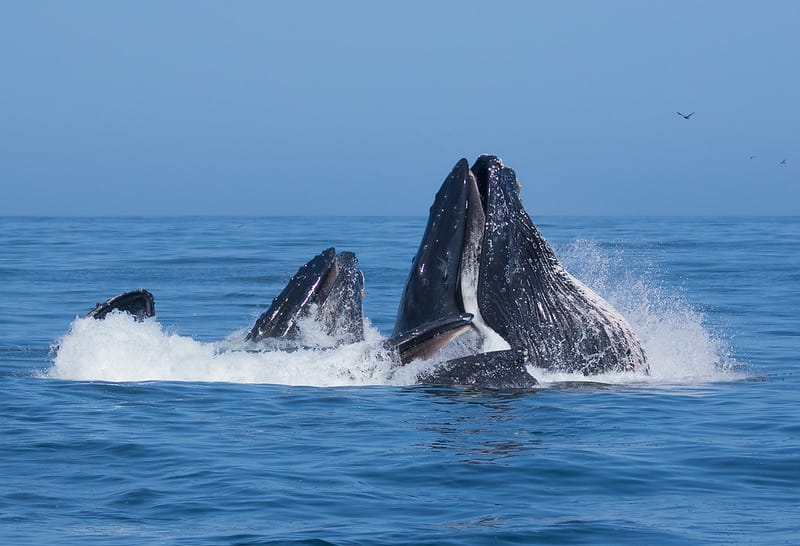
Kent | Humpback whale sightings are on the rise in British waters, with the migratory giants being spotted in increasing numbers and locations this winter from Kent to Cornwall. There have already been 17 sightings around the Isles of Scilly, and, more unusually, multiple sightings in the eastern English Channel, visible from the coast at Deal and Eastbourne. The species is currently migrating from their feeding grounds in Norway to warmer waters in the south: traditionally, humpbacks move around the western side of Britain, but the sightings suggest that some are now swimming down the east coast, possibly re-establishing ancestral routes that were abandoned during their mass slaughter in the 19th and 20th century. Experts say that the increase could be a positive sign of population recovery, but it could also signal a lack of available food, forcing the whales into busy shipping lanes. The Guardian and the BBC covered the story.
Yorkshire | A rare colony of red squirrels has been discovered on a Sitka spruce plantation in the Yorkshire Dales. The endangered species was detected by Julie Bailey from the UK Squirrel Accord, a partnership of forestry and conservation organisations. Bailey first spotted the squirrels on thermal imaging cameras during a survey of the land, and used wildlife camera traps to confirm their presence. She said that the landowners were ‘delighted’ by the news, and now plan to manage the landscape with the population in mind. There are thought to be fewer than 40,000 red squirrels remaining in England, with fragmented populations across parts of northern England and the south coast. Luckily, there are other populations of reds within a few miles of the plantation, and Bailey said she is optimistic for the future of the species in the western Dales. The BBC and the Yorkshire Post covered the story.
Elsewhere:
- A project by the University of Manchester to restore sphagnum moss on peatlands has been awarded a funding prize from Jeff Bezos’ Earth Fund, reports the BBC.
- Conservation organisations including Buglife are celebrating the termination of the London Resort project, a proposed £2.5bn theme park on the Swanscombe Peninsula.
- A three-year project to plant a hedgerow connecting the South Downs and New Forest national parks has reached the halfway point, reports the BBC.
- Leigh Woods near Bristol has been selected as part of a national breeding programme to increase dormice populations, reports the Bristol Post.
- Hilfield Park reservoir in Hertfordshire has become a ‘vital refuge’ for endangered gulls, according to the Herts and Middlesex Wildlife Trust. The BBC reported the news.
- A farmer in Argyll says he may have to abandon his farm due to the damage caused by a sea eagle apparently predating his flock, reports the Scottish Farmer and the Times.
- Wirral Council is moving forward with plans to create a new wetland area to help tackle flooding in Merseyside, reports the Liverpool Echo.
- United Utilities has dropped its appeal against an order to disclose data about its sewage discharges into Lake Windermere, reports the BBC.
- The Isle of Arran distillery is partnering with Dougarie Estate to restore over 800 acres of peatland, reports the Herald.
- A Jersey cafe chain is working with the government to trial the inclusion of carbon footprint ratings on its menu items, reports the BBC.
- Children on the Scottish islands of Jura and Islay are being served wild venison in school for the first time, reports the Times.
- A project run by South Gloucestershire Council has planted more than 85,000 snowdrop, crocus and tulip bulbs near Bristol to create an insect corridor, reports the BBC.
Reports
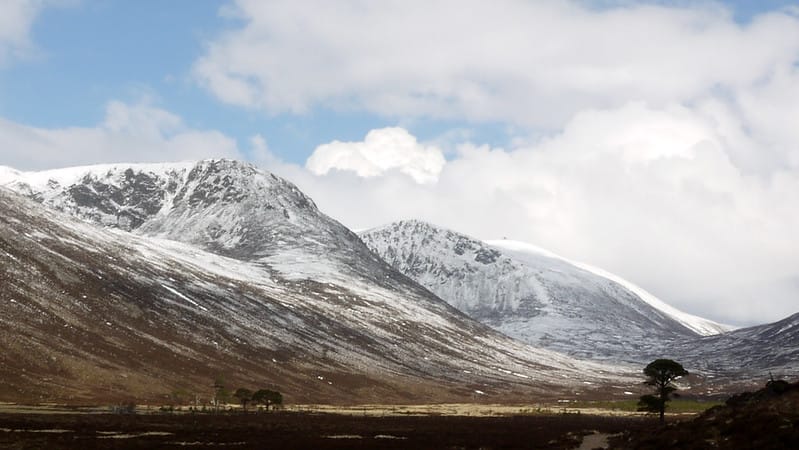
Raptors | A report by WildLand Cairngorms reveals that nature restoration efforts are helping native raptors to thrive in the national park. Since 2019, the organisation has carried out a tagging and monitoring programme on its estates for three species: hen harrier, golden eagle and goshawk. Five years of data has revealed several conservation successes. Golden eagle numbers have increased, with breeding pairs rising from four in 2021 to seven in 2023. Meanwhile, the team recorded a 100% survival rate for hen harrier nests between 2022 and 2023, and two pairs of goshawk successfully bred on the estate in 2021. The tagging also provided insight into their specific habitat requirements, with hen harriers nesting most frequently on the estate’s regenerating moorland, for example. Field ecologist Ronan Dugan said it had been ‘truly wonderful’ to document the species’ resurgence, and hoped that the team’s tagging and ‘transparent communications’ would help keep the birds safe. The National and the Strathspey Herald covered the news.
Seashore | The species found on rocky seashores in Scotland are changing due to rising temperatures, according to a report by NatureScot. Between 2020 and 2022, researchers made 167 surveys of rocky intertidal sites around Scotland’s coast, most of which were previously surveyed in 2014-15. They found that sea surface temperature had risen by 0.20°C on average, with a small but noticeable shift in dominance towards warm-water species. For example, warm-water species such as purple topshell – a colourful sea snail – are flourishing, particularly on the west coast. Meanwhile, cold-water species are experiencing mixed fortunes: some, including beanweed, are declining, while others, such as cold-water barnacles, are still increasing. Co-author of the report Michael Burrows said that while the changes may seem ‘relatively slow and small’, climate change is a gradual process and the effects will be ‘really noticeable after several decades’. The Herald covered the research.
Wales | Meeting the ‘30 by 30’ commitment in Wales will be an ‘extraordinary challenge’, according to a critical report by the Senedd’s environment committee. The report examines the Welsh government’s actions to halt and reverse the loss of nature in Wales, and in particular the target of protecting 30% of land and sea for nature by 2030. The ‘overriding message’ of the report, according to chair Llyr Gruffydd, is that making such commitments must be followed by a clear plan, action delivery and appropriate investment – all of which are ‘currently lacking’. The report makes 30 recommendations, which include explaining and fixing multiple examples of delays and missed deadlines. RSPB Cymru welcomed the report, particularly the recommendation that a forthcoming environmental bill should include a headline target to reverse biodiversity loss. The BBC, Guardian and Wales Online covered the news.
Science
Fertiliser | Using high levels of fertiliser halves the number of pollinators and devastates flowering plants, according to a study published in npj Biodiversity. Researchers conducted a two-year study at the world’s longest-running ecological experiment, Park Grass in Rothamsted, where strips of grassland have been studied since 1856. By increasing the amount of nitrogen, potassium and phosphorus – common fertilisers – applied to the agricultural grassland, they found that high levels of fertiliser reduced flower numbers by fivefold and roughly halved pollinating insects. Bees were most affected, with over nine times more found in chemical-free plots. The researchers also measured the productivity of plots by weighing the hay each produced, and found a ‘large and significant’ trade-off between productivity and biodiversity. The authors concluded that this was the ‘most important and challenging finding’, and highlighted the need for financial incentives in the UK to support biodiversity-friendly farming practices. The Guardian covered the research.
Plants | The discovery of a Colombian tree frog among a bunch of roses in Sheffield has inspired a study into the threats of the ornamental plant trade. Dr Silviu Petrovan, a researcher at the University of Cambridge and senior author of the paper, was asked to identify the live frog in a Sheffield florist. He said the ‘extraordinary’ find made him realise ‘how hard it must be to detect very small agricultural insect pests or their eggs’ in international plant shipments. The study analyses records of pests and diseases discovered at customs in the Netherlands in 2017-2018, and reported to Defra in the UK from 2021 to 2023. In both cases, more than 80% of pests were insects, but there were also snakes, geckos and fungi. The study identified a ‘myriad’ of risks, including the dangers of invasive species to food security and local biodiversity loss. The authors are calling for better regulation and the sharing of data to help mitigate risks. The Guardian, BBC and Times covered the research.
Lakes | Scientists at the University of Birmingham have used new AI technology to identify which pollutants in England’s lakes are having the largest impact on biodiversity. The study, which was published in Environmental DNA, used a multimodal machine learning approach to integrate different types of data, such as biological, chemical and physical data, to uncover potential causes of biodiversity dynamics in 52 freshwater lakes across the country. It revealed that insecticides and fungicides originating from agricultural run-off were the main factors affecting biodiversity, followed by 43 other physico-chemical factors, including heavy metals and alkalinity. Senior author Luisa Orsini explained that the data-driven approach ‘embraces the complexity of natural systems’, allowing for analysis of multiple stressors and threats at once, while also providing actionable targets for regulators.
Driftwood
Carbon | In a woodland in Staffordshire, trees stand beside scaffolding, their branches support drainpipes, and their roots intertwine with wires: this unusual forest has plumbing. It is home to a type of experiment called free-air CO2 enrichment, or Face, which is run by scientists at the Birmingham University Institute of Forest Research. They are hoping to understand how forests will function and adapt as carbon stores and natural climate solutions in future atmospheric conditions. To do this, they simulate climate projections of the year 2050 by pumping carbon dioxide around the trees, then measure a host of reactions from soil composition to insect populations to water usage. The results of the experiment, which has been running for seven years, are so far promising – findings include the ability of mature trees to store carbon for longer by growing extra bark. Read more about the results on the BBC Future.
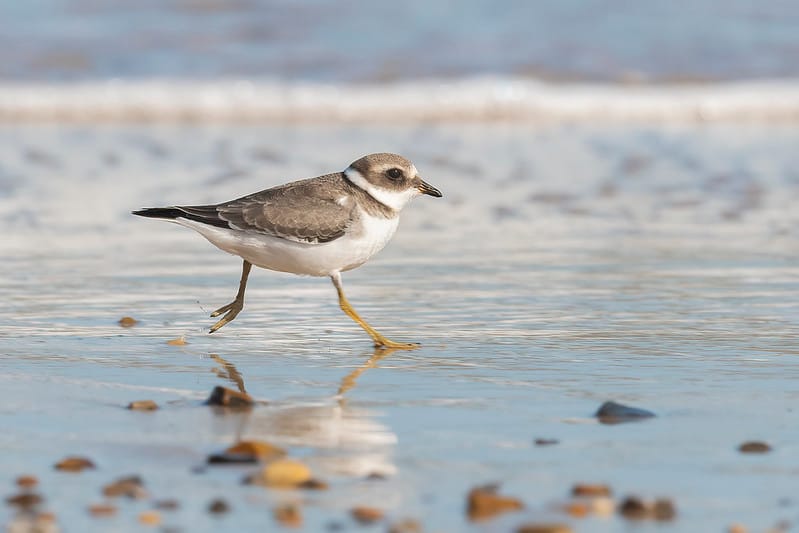
Traitors | Inspired by the UK’s most popular current TV show, The Traitors, an article in Fauna & Flora examines nature’s most talented traitors: the species that have seemingly ‘mastered the art of deception’. Although you might expect most species to hail from the bright colours and wacky designs of rainforests or coral reefs, a number of UK species make it onto the list. These include the plover bird, which uses ingenious displays to distract from their vulnerable nests, including feigning injury or pretending to incubate imaginary eggs. Meanwhile, bee orchids use pheromone-packed scents to lure male bees into its female-bee-shaped flower, unwittingly spreading its pollen. Insects can also deploy deception: moths such as the owl moth and eyed hawkmoth use false eyespots, known as ocelli, to trick potential predators. Other forms of deception include false light, colour-changing abilities and the appearance of two heads.
Disco | What image does the term ‘disco scallops’ conjure? Potentially glittering shells, or an underwater dancing scene in Little Mermaid style? In fact, ‘disco scallops’ is a trademarked term, referring to a method of sustainable fishing in which crab pots are illuminated with multi-coloured LED lights, which attract scallops to the pots. This provides a commercially viable alternative for catching scallops that significantly reduces damage to the seabed compared to traditional methods. Over the past three years, Natural England has supported and invested in a ‘Potting the Scallops’ initiative to encourage sustainable fishing of the mollusc. What started as an experiment operated by the Cornish fisherman Jon Ashworth has now led to the inception of a fully commercial fishery, currently operated by more than 40 vessels across the UK. Read more in this Natural England blog.
Further reading:
- In this Times article, farmer and author James Rebanks argues that Labour’s claims of record support for British farming are ‘categorically untrue’.
- The Times has a list of the 20 best wetlands and nature reserves to visit this winter.
- Inspired by a morning hunting for prawn and shrimp on a remote Scottish beach, a feature in Unherd asks how the natural world became infiltrated by microplastics.
- The Conversation and the Oceanographic both have articles exploring how the UK’s most ambitious environmental commitments could soon become law in the form of the ‘transformational’ Climate and Nature Bill.
- A BBC article explores the medieval wassail taking place in Nottinghamshire to bless Sherwood Forest trees.
Happy days
Wildflowers | In the depths of British winter, thousands of citizen scientists took part in the BSBI’s New Year Plant Hunt to find wildflowers blooming in the cold. The results have now been published, revealing a record-breaking 25,000 individual plant records, including 647 different species in bloom across the UK and Ireland. These ranged from 97 species recorded in Swanage, Dorset, compared to a single observation of gorse in a frosty Scottish glen. The most northerly species in flower was heather, found on a cliff edge on the Shetland mainland. The annual survey provides crucial insight into the effects of weather and climate on wild plants – as well as a reason to get outside and appreciate the beauty of nature during winter.

Subscribe to our newsletter
Members receive our premium weekly digest of nature news from across Britain.
Comments
Sign in or become a Inkcap Journal member to join the conversation.
Just enter your email below to get a log in link.