Crane Recovery & Epping Forest
The latest news on nature and conservation in Britain.
National news
Cranes | The UK’s population of Common Crane has reached a record high, according to figures released on World Wetlands Day last Friday. Survey results counted at least 80 pairs of cranes last year, up from 72 in 2022. The UK’s tallest bird was driven to extinction during the 16th century, and only began returning in small numbers to the Norfolk Broads in the late 1970s. Since then, conservation efforts to restore their favoured wetland habitats – as well as a reintroduction project releasing hand-reared cranes on the Somerset Levels – have helped boost its numbers. A total of 36 chicks hatched successfully last year, and experts believe the total population to be in excess of 250 birds. The Guardian and BirdGuides covered the news. In other news, 2023 was a year of mixed fortunes for heron and egrets, according to the British Trust for Ornithology’s Heronries Census, reports BirdGuides.
Pines | The Woodland Trust Scotland and charity Trees For Life have launched a project to track down the remainder of Scotland’s ancient pine forests before they disappear entirely. The last national survey, 25 years ago, identified 84 fragments of these habitats, but conservationists believe there are more undocumented pinewoods. The Wild Pine Project will use maps dating as far back as the 1500s to identify these lost woodlands – with the aim of documenting 50 wild pine sites – so that it can help inform future restoration work. Project officer Jane Sayers said that finding the pinewoods will require ‘a lot of detective work’, as they are often ‘small and remote’, either hidden in ravines or scattered among birchwood. The Times and STV News reported the story.
Biodiversity | Ahead of the rollout of mandatory biodiversity net gain on 12 February, Wildlife and Countryside Link has released a report examining the commitments of local authorities. The scheme requires developers to create or restore nature habitats to compensate for the harm caused by developments. Analysis of Freedom of Information requests revealed that the majority of local authorities (92%) currently have no plans to go above minimum requirements. The government’s own Impact Assessment acknowledged that, in practice, the required 10% net gain might only achieve no net loss – so the policy is unlikely to make a material contribution to nature recovery, unless authorities go beyond the minimum. However, a handful of authorities (8%) are leading the way by pledging or considering more ambitious aims of 20 to 30% net gain. Richard Benwell, CEO of the Link, urged the government to support higher ambitions to restore nature, saying: ‘There’s a real concern that net gain will only amount to a glorified offsetting scheme’.
In other news:
- Farmers are being urged to take part in the Big Farmland Bird Count as numbers of farmland birds continue to decline, reports the BBC.
- Defra has launched a competition for a new ‘Forest for the Nation’, with funding of up to £10m available for projects.
- Farming unions have warned of ‘huge unrest’ coming over the Welsh government’s planned reforms, reports the BBC.
- A BBC investigation has found that the toxic run-off from roads is polluting waterways, and no one is monitoring it.
- Last year was a record-breaking breeding season for Pied Flycatchers, according to the RSPB.
- The Labour Party has abandoned its flagship £28bn green pledge on the same day that the EU climate service confirmed that global warming had exceeded 1.5C across an entire year.
- The Salmon Scotland Wild Fisheries Fund has committed £140,000 towards conservation efforts for Scotland’s wild salmon, reports the Northern Times.
Across the country
Cairngorms | The National Lottery Heritage Fund has awarded £10.7m to a project aiming to transform the Cairngorms into the UK’s first net zero national park. The funding will be used by the park authority (CNPA) for a range of initiatives to help reduce emissions and absorb carbon. First and foremost the authority has proposed restoring more than 16,000 acres of peatland and creating 2,500 acres of new woodland. It also has plans to improve walking and cycling routes across the park, to pioneer nature-friendly farming and green finance, and – alongside nature prescription on the NHS – to develop the world’s first outdoor dementia resource centre. The CNPA said it was working with 70 partners on the project, including land managers, although it recently faced backlash from farmers and crofters who accused the authority of ignoring their views on issues such as rewilding and beaver reintroduction. The BBC, Sky News and the Scotsman covered the news.
Exmoor | Archaeologists have discovered an area of buried prehistoric woodland on Exmoor, preserved like a ‘time capsule’ in the peat. The findings were discovered during a year-long peatland restoration project at the National Trust’s Holnicote Estate in Somerset. The remains included sedge, rushes, alder and willow trees – with one segment of willow dating back to the beginning of the Neolithic period – as well as insects such as ground beetles, dung beetles, moss mites and water scavenger beetles, which can all still be found in healthy wetlands today. Basil Stow, a ranger working on the project, said that ‘the most stunning bit is how perfectly preserved everything is and that we now know there were trees in what is [now] a treeless environment.’ The knowledge will be used to inform how the area is managed in the future, he added, with replanting of willow, birch and alder already underway. The Guardian, ITV News and the BBC covered the story.
Northumberland | A chunk of land in Harwood Forest, Northumberland, has been restored to peat bog to boost biodiversity, store carbon and filter water. The site was cleared of native species in the 1950s to make space for timber planting, but now, 19 acres have been rewetted to encourage species such as sphagnum moss, bog rosemary and cranberry that grew before the plantation. Over time, these will rot down into the waterlogged conditions to create more peat – although peat specialist Richard Guy said that the restoration of peat ‘can’t be rushed’. The results will be closely monitored by Natural England and Forestry England for the next decade, and if it proves successful, the project could be replicated on other pockets of land. The BBC covered the news. Elsewhere, the Wildlife Trust in Greater Manchester has purchased Chat Moss, an ancient peat bog which will connect two of its existing nature reserves.
Elsewhere:
- A peregrine nest is being installed on the chimney of Lister Mill in Bradford, where the birds can feast on ‘feral pigeons’, according to the Yorkshire Post. Meanwhile, a man who illegally sold peregrine falcon chicks has been fined over £7,000, reports ENDS.
- Keswick is the latest community to join the Dark Skies’ Big Switch Off event, which will see Cumbrian towns turn off their lights this week to reveal thousands of stars, reports the BBC.
- A golf club in Canterbury has won an award for its work with Natural England to restore wildlife habitat, which encouraged turtle doves to breed there, reports the BBC.
- Charity CPRE Oxford is running a campaign to restore and plant more hedgerows in Oxfordshire, reports the BBC.
- Bristol City Council has U-turned on its plans to tighten allotment rules after local protests, reports the Bristol Post.
- A project to restore native woodland at Wild Haweswater in the Lake District has celebrated planting its 200th tree, reports the BBC.
- Soul Farm, an organic veg project near Falmouth, wants to expand by becoming community owned, reports the BBC.
- A farmer in Herefordshire who was jailed for ‘ecological vandalism’ has been prosecuted a second time for felling trees, reports the Times and ENDS.
- Environmental campaigners are appealing their lost legal challenge over the expansion of the Aberpergwm coal mine, reports the BBC.
- A tree grower in Moray has warned that growers will have to burn ‘millions of trees’ after cuts to the Scottish government’s planting budget, reports the BBC.
- The Landguard Trust has banned dogs from a section of Suffolk beach to protect nesting Ringed Plovers, reports BirdGuides.
- Walsall Council is set to ban balloon and sky lantern releases to protect wildlife, reports the BBC.
Reports
Epping | A report by consultancy firm Natural Capital Solutions has valued Epping Forest at £1.9bn to society over the next 50 years. Stretching from Essex into Greater London, Epping Forest is one of the last remaining extensive ancient forests in the south of England. The report assessed the health, air and water quality benefits of the 8,000 acre woodland, and found that its health and recreation benefits were worth £50.7m annually, while its ability to capture carbon totalled £4.1m per year. As well as welcoming 10 million visitors per year, it is home to over one million trees, including 50,000 ancient pollards of oak, beech and hornbeam. Ben Murphy, chair of the Epping Forest and Commons Committee, said that the report ‘enables us to think about what the cost of damage to the Forest might mean for us as a society,’ adding that efforts to protect it must be redoubled. The BBC covered the research.
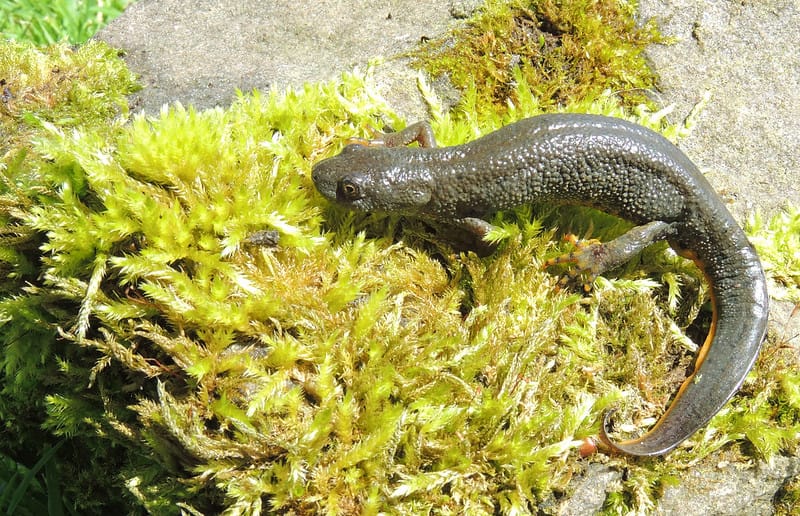
Newts | The Newt Conservation Partnership has published a report reviewing its long-term project to create and restore habitat for the endangered great crested newt. Running since 2018, the licensing scheme covers 60 local planning authorities across England, and has so far created or restored 358 ponds. Great crested newts spend most of their life on land, returning to ponds to breed, so the project has also provided 1,149 hectares of terrestrial habitat. Using monitoring data from 2018 to 2023, the report found that the protected amphibian was recorded at 58% of the pond sites developed through the scheme. Older ponds, created between three and five years ago, were more likely to be populated by newts than newer ponds, suggesting that the number of colonised ponds will continue to increase over time. Elsewhere, this brief article in the Guardian gives a snapshot of this endangered species in Britain.
Irish Sea | The six nations that border the Irish Sea must collaborate on efforts to protect its marine wildlife, according to a report by the Irish Sea Network. The report, which looks at the environmental pressures, found that despite over a third of the sea being designated as Marine Protected Areas, as little as five percent is managed for nature, and less than 0.01% is fully protected from damaging activities. These include industrial fishing, renewable energy development, shipping, military activity and pollution. Furthermore, each nation is creating its own separate marine planning documents, despite the fact that wildlife does not follow borders. Georgia de Jong Cleyndert of the North West Wildlife Trusts pointed to migrating basking sharks and travelling Manx shearwaters as examples of the interconnection of resident wildlife. ‘We believe strongly that the Irish Sea should be considered as a whole and urgent measures to protect nature should be taken at a cross-national level,’ she said.
Science
Whales | If baleen whales are able to smell their food, this could put them at heightened risk of consuming plastic. This is the warning of a study by Scottish researchers on the olfactory ability of baleens. Baleen whales are a grouping that includes blue, humpback, minke and right whales, and they feed on vast amounts of zooplankton to maintain their size. How whales are able to locate adequate zooplankton in the ocean has previously been a mystery to scientists, but a team from the Scottish Association for Marine Science believe it may be explained by the whales’ two nostrils, which could help them to smell the chemical released when zooplankton graze on phytoplankton: dimethyl sulphide. However, plastic debris fouling in the ocean also emits dimethyl sulphide, which could confuse whales and put them at greater risk of ingesting the plastic. The Times covered the research.
Native | Large herbivores have a similar impact on plant diversity whether they are native or introduced, according to a paper in Science. The research enters the contentious conservation debate over the impacts of invasive or non-native species on native biodiversity. Researchers conducted a meta-analysis of over 200 studies of the interaction between plant diversity and herbivores weighing more than 99 pounds, such as pigs, horses, goats and camels. The study found no difference between the impacts of introduced and native herbivores, as well as no evidence that introduced megafauna encourage non-native plants more than native megafauna. Instead, they found that large-bodied herbivores and those with selective diets had the strongest effects on vegetation, suggesting that functional traits play a stronger role than their origins. An article in the Atlantic discussed the findings.
Grassland | A study in the Journal of Nature Conservation investigates methods for restoring calcareous grasslands. These are a rare habitat which supports a high diversity of species, but it experienced rapid decline during the 20th century due to the loss of traditional grazing practices. There is currently no consensus on the most effective method for restoring calcareous communities. To rectify this, researchers conducted two experiments at Martin Down, a grassland in southern England, with the aim of reducing competitive tor-grass. The first involved spraying plots with herbicide, while the second was a seasonal cut-and-graze experiment. The results were positive for both methods: species diversity initially declined with the herbicide spray, but recovered rapidly to levels higher than before, while cutting and grazing twice a year reduced the cover of tor-grass whilst also increasing species richness. The authors said that further monitoring would be needed to determine the long-term effects.
Driftwood
Hinkley | In a week containing World Wetlands Day, you might reasonably expect a story about the creation of salt marsh to be a positive one – but not in Somerset, where the developers of Hinkley Point C power plant want to create 313 hectares of salt marsh on wildlife-rich farmland. To summarise a convoluted story, energy giant EDF have reneged on their initial proposal to install an ‘acoustic fish deterrent’ system to prevent millions of fish from being sucked into the plant’s water intakes out in the Bristol Channel. Instead, in ‘compensation’, they are planning to create native oyster beds, kelp forests and seagrass habitat, and – controversially – to flood an area of farmland currently managed by 30 landowners to create salt marsh habitat. You can read about the shock and anger of local residents in this Guardian feature.
Street art | An interview in Now Then magazine speaks with Peachzz, a street artist based in Sheffield who aims to infuse grey urban spaces with the colour and vivacity of nature. Inspired by graffiti artists in Bristol, Peachzz found the large-scale medium of spray painting allowed her to express herself through bold gestures, and meshed well with her ‘affinity for [painting] wildlife’. Her work can be found from Macclesfield to Mexico, and she tends to choose abandoned or dilapidated concrete structures which emphasise the contrast with the colourful natural imagery. ‘Later in my painting career,’ she said, ‘I like to portray nature as a way to remind the viewer of what is around us. It is a way I can, in my own way, invite nature back into these [urban] spaces’. Check out the article to admire her vast puffin in Weston-Super-Mare, a multistorey heron in Manchester and giant swifts above a Macclesfield rail line.
Landscapes | For Country Life, Julian Glover – author of the government-commissioned independent review into protected landscapes – takes a look at Britain’s history of National Parks, and what can be learned from it. First and foremost, he writes, the job of national parks has changed since they were first created 75 years ago, when their role was ‘to stop ugly development and encourage people to enjoy them’. They must still do that, in Glover’s opinion, but they must also do ‘lots more besides’, most importantly acting as ‘hothouses of natural recovery’. Glover recommends looking at the recently rebranded National Landscapes for inspiration, where those in charge have been able to move quicker and be bolder in setting out a new management vision. ‘The new name is more than a brand,’ he writes: ‘It’s an assertion of their collective potential as national bodies doing a job for all of us.’
Further reading:
- World Wetlands Day brought a raft of wetlands-related pieces, including these blogs by Natural England, the British Trust for Ornithology and NatureScot.
- Could the UK’s love of a cuppa help make water cleaner? A researcher at Queen’s University Belfast is investigating whether tea leaves could filter pollutants in wastewater treatments.
- Hampshire’s chalk streams are to be celebrated through a new literary competition and festival.
- The Guardian has a review of Chantal Lyons’ Groundbreakers, which is ‘rich in evocative encounters’ with Britain’s wild boars.
- An article in Wicked Leeks explores what is fuelling recent demonstrations by farmers. Meanwhile, the Financial Times has an article on the rise of agricultural populism.
- A feature in the Guardian asks wildlife experts about the smallest creatures in the world.
- Also in the Guardian, this article takes a look at a ‘last supper’ dinner menu based on foods which could disappear as the climate changes.
- A Welsh sweet chestnut could be in the running for European Tree of the Year. Check it out on HortWeek.
Happy days
Scat | Pine marten numbers are growing in the southwest of Scotland, evidenced by none other than the tell-tale sign of droppings, or scat. Researchers Johnny Birks and John Martin have the important – if not glamorous – job of annually counting pine marten poo in the Forest of Ae and Castle O’er in Dumfries and Galloway. The goal is to establish whether populations of pine marten can thrive within working timber forests. The growing quantity of excrement found by the pair last autumn revealed that numbers of the protected species are making ‘encouraging’ progress in both forests. Martin said that, to a beginner, pine marten and fox scat might be difficult to distinguish, but ‘do enough of these surveys and it becomes easy to differentiate’. Read about their expert identification in the BBC.

Subscribe to our newsletter
Members receive our premium weekly digest of nature news from across Britain.
Comments
Sign in or become a Inkcap Journal member to join the conversation.
Just enter your email below to get a log in link.