Coronation Nature & Endangered Bryophytes
The latest news on nature and conservation in Britain.
National news
Coronation | A number of nature-based initiatives have sprung up to commemorate King Charles’ coronation, taking place this weekend. Foremost is Natural England’s announcement that it will create a ‘King’s Series’ of National Nature Reserves – five new reserves every year, for the next five years – to leave “a lasting public legacy for people and nature”. The first reserve, which will be declared this summer, is the Lincolnshire Coronation Coast NNR: over 12 square miles of sand dunes, saltmarsh, mudflats and freshwater marshes. Chair of Natural England, Tony Juniper, said it was fitting that the King’s Series would mark a “new era of nature recovery”. The BBC and ENDS covered the news. Also to celebrate the King’s love of nature, a collaboration between the Department for Education and the Eden Project will send out 200,000 packets of wildflower seeds to state-funded primary schools, to foster better connection to nature. Meanwhile on the east coast, a national walking trail passing through Northumberland and Yorkshire will be renamed the King Charles III England Coast Path.
Wales | More than 40 organisations have written to the Welsh government to express concern over the agricultural bill due to pass the Senedd this month. The group includes the WWF, RSPB, and Wildlife Trusts Wales, as well as farming organisations such as the Landworkers’ Alliance. In a letter seen by the BBC, the bodies warned the government that Wales has reached its “last chance to save nature”, and the agricultural bill does not go far enough to reform the country’s approach to farming. In particular, the group wants the phrase “restore nature” added as a clear objective in the bill, which currently uses “maintain and enhance”. Shea Buckland-Jones, policy manager at WWF Cymru, said the bill is a once in a lifetime opportunity: “This is about influencing the system that sits around farmers in Wales – they are the guardians of the land.” The Welsh government said the bill was “ambitious and transformational.” The BBC reported the news.
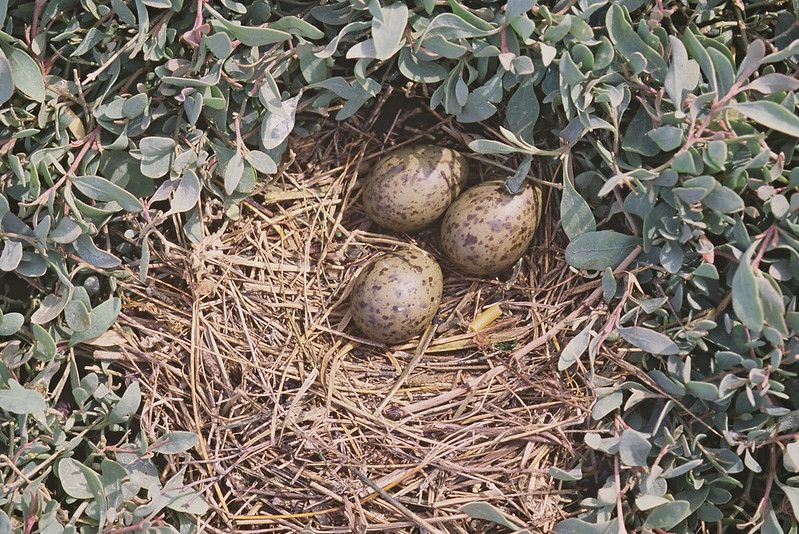
Eggs | The RSPB has criticised the ongoing practice of collecting ‘gourmet’ eggs from black-headed gulls. The gull, which is an amber-listed species in the UK, has a breeding population of around 140,000 and is protected by law. However, government data shows that Natural England has issued licences for more than 160,000 eggs to be taken from nests since 2019. The speckled shells and creamy yolks are considered a delicacy in fine-dining cuisine, and they can sell for more than £8 each. However, conservationists are concerned that the tradition is outdated, and although sustainable harvesting is theoretically possible, it is hard to monitor. Dr Malcolm Hudson, who studied a colony in Hampshire, said: “The collection does nothing to enhance our food security – it’s a very small number of eggs consumed by a tiny (affluent and well-nourished) portion of our population.” The Guardian covered the story.
In other news:
- The Royal Horticultural Society has been criticised for continuing to sell insect repellent and weed-killer products, reports the Guardian.
- Defra and the Forestry Commission have launched a national quality assurance scheme for wild venison in England and Wales.
- Three-quarters of people in the UK have an obscured view of the night sky due to severe light pollution, according to results from CPRE’s Star Count.
- The Ash Rise project is recruiting creatives in Scotland to work with timber from diseased trees to help tackle ash dieback disease, reports the Scotsman.
- An increasing number of Arctic dolphin and whale species are being spotted in Irish waters, reports the BBC.
- Scotland’s environmental regulator, SEPA, has warned that summer water shortages may be possible, with some parts of Scotland already recording low river levels, reports the Herald.
- The European Commission has thrown a “lifeline” to the UK’s turtle doves by recommending a temporary moratorium on shooting along their migration route for a third consecutive year, reports BirdGuides.
- SNP backbenchers have raised fiery opposition to the government’s controversial plans for marine ‘no take’ zones, reports the Scotsman. Meanwhile, the Scottish Environment Link has published a briefing on the ecological benefits of HMPAs.
- A report by WWF found that the UK is failing to deliver on its targets to reduce emissions from farming and land use. The Guardian, the Independent and BusinessGreen reported the news.
Across the country
West Yorkshire | The Environment Agency is engaged in a “race against time” in West Yorkshire, after discovering that the invasive American signal crayfish – along with the crayfish plague it carries – is moving through parts of the River Aire catchment. This area is home to the endangered white-clawed crayfish, the UK’s only native species of freshwater crayfish. Biodiversity specialists from the agency are carrying out carefully planned ‘rescues’, which involve cutting off the section of contaminated watercourse and searching for native crayfish, before taking them for quarantine. Project lead Tim Selway said that native crayfish play “a vital role in keeping our waterways clean and as a source of food for other native species, so it’s vital we take action to ensure its survival.”
Northumberland | An RSPB warden on Coquet Island, off the Northumberland coast, says he has seen returning seabirds avoiding nesting areas which were wiped out by avian flu last year. The small island is home to around 82,000 seabirds each year, but almost 2,000 nests were lost when bird flu took hold amongst the densely packed colonies. Now, Ibrahim Alfarwi – who has worked at the site since 2016 – said that both sandwich terns and kittiwakes have chosen to establish colonies away from the areas in which so many birds died. Alfarwi has no “scientific evidence” for his claim, but he believes terns display learned behaviour, for example by avoiding old traps used for ringing. The BBC reported the news.
Dundee | Last weekend, hundreds of cities took part in a competition to spot the most urban biodiversity. Referred to as an urban “bioblitz”, the City Nature Challenge originated in southern California in 2016, and has now spread globally as citizens race to spot urban species of plant, fungi and animals. This year, Dundee is the second northernmost city taking part (after Whitehorse in Canada), with London, Manchester, Nottingham and Swansea also among the UK’s 19 participants. Last year, nearly 1.7m observations were made around the world. The winning city will be announced on 8 May. The Guardian reported the news.
Elsewhere:
- Police have issued a plea for walkers to be mindful of nesting birds on the northern coast of the Isle of Man, reports the BBC.
- Yorkshire Wildlife Trust is concerned by a potential bird flu outbreak at Yorkshire’s largest black-headed gull colony, reports the BBC.
- Kent Wildlife Trust has published its ‘Wilder Kent 2030 Strategy’, which aims to increase wildlife abundance and climate resilience across 30% of the county.
- The University of Worcester has planted 2.6kg of wildflower seeds by hand to enhance its natural environment, reports the BBC.
- Twitchers are descending on the Northumberland coast after a rare grey-headed lapwing was spotted. The Telegraph and Chronicle Live reported the news.
- Scientists at the University of Nottingham have revealed the internal citrus-like structure of hedgehog spines using microscale images, reports the BBC.
- Conservationists are fascinated by the sighting of a red squirrel eating frog spawn up a tree in Strathyre, reports the BBC.
- A seaweed farm based on Skye is expanding into the land crops market, reports the Herald.
- A 55-foot whale, suspected to be a male fin whale, died after becoming stranded off the east Yorkshire coast, reports the BBC.
- A grey seal pup with a rare genetic condition that makes her fully black has been returned to the sea by the Cornwall Seal Sanctuary, reports Cornwall Live.
- Police in Redland are investigating a series of potential animal poisonings after incidents involving both pets and wild animals, reports the BBC and Bristol Post.
- Cattle are returning to Bristol’s Stoke Park Estate for a third year to help stop the spread of scrub and invasive trees, reports the Bristol Post.
- A wisteria plant more than 100 years old is blooming at the University of Cambridge, although it flowered later this year due to cold weather, reports the Express & Star.
- Locals are worried that the Haskayne nature reserve, famous for orchids and butterflies, will soon become inaccessible after the Lancashire Wildlife Trust lost funding for its upkeep, reports Lancashire Live.
- Brighton & Hove City Council has planted nearly 20,000 trees across the city in the past year.
Reports
Wildcats | There are too few wildcats left in Scotland for their population to be viable, according to a summary report from a five-year research project led by NatureScot. The research found that widespread breeding with domestic and feral cats has resulted in a “hybrid swarm”, where most individuals in the wild have a mixture of genes. Disease, road traffic accidents and persecution have also contributed to the population decline. Researchers ran genetic tests on 529 cat samples, as well as 118 dead cats, but none scored highly enough to be considered wildcats. NatureScot said the research will be used in the next stage of the project, called ‘Saving Wildcats’, which aims to prevent the extinction of wildcats in Scotland by breeding and releasing them into the wild. The BBC and the Herald covered the news.
Access | A report by the Wildlife and Countryside LINK (WCL) has analysed the country’s varying access to nature. The report comes in response to the government’s landmark commitment to ensure members of the public are able to access green space or water within a 15-minute walk of their home. While WCL welcomed this pledge, it also noted “a death of detail on how this monumental task would be achieved”. Using government data, the report found that access to nature is an issue at scale: around one in three (7.8m) English households don’t have nature near their home, while in a third of local authorities, more than 70% of households aren’t within 15 minutes of nature. It also found that nature access is an issue for both urban and rural communities, with transport barriers posing a particular issue in deprived rural communities. The report calls on the government to introduce legal duties to increase access to nature, and provide ring-fenced funding for green and blue infrastructure. The Times covered the news.
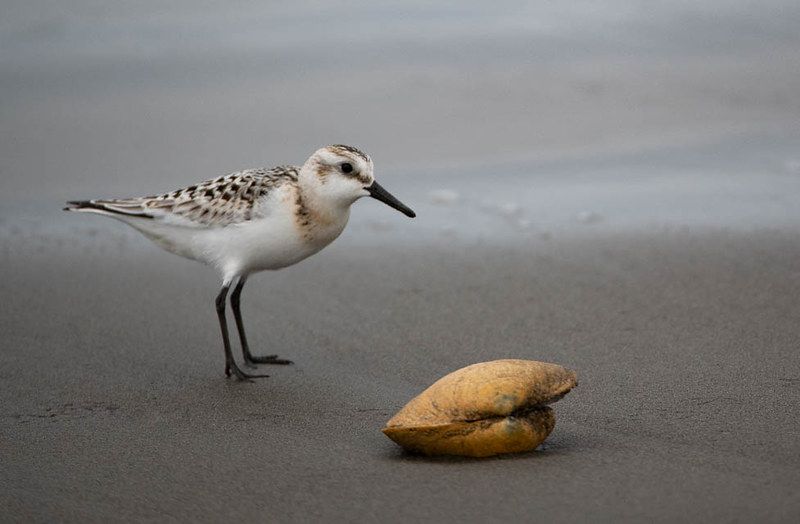
Wetland | The British Trust for Ornithology has published the 40th annual report of the Wetland Bird Survey, which monitors the UK’s wintering waterbird populations. Providing data up to June 2022, this year’s report surveyed a record number of sites (3,336). The results show that although many common waders have been declining since the mid 1990s, species such as the avocet, sanderling, golden plover and black-tailed godwit are showing long-term increases. Other positives include continued increases in recently colonising species, such as great white egret, cattle egret and spoonbill, and an all-time high for crane populations in response to conservation measures. However, the majority of the common species of ducks show declining 10-year trends; Bewick's swan numbers have reached a new historic low; and waterbirds such as coot and red-necked grebe have continued to decline. The JNCC summarised the results.
Science
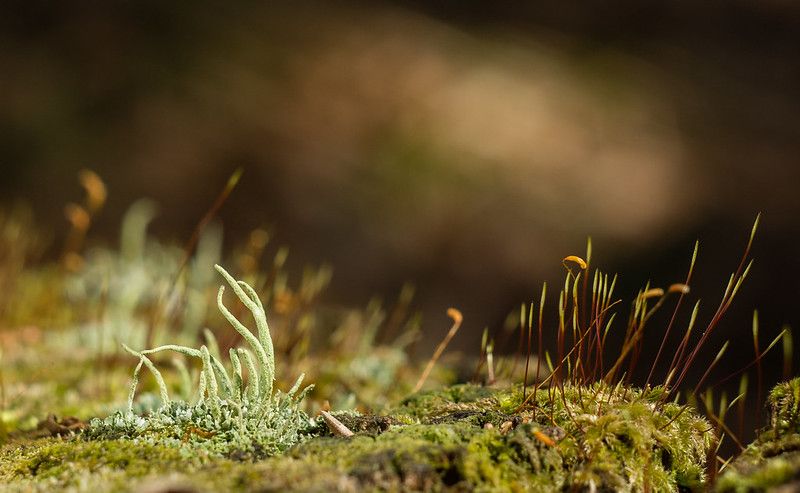
Bryophytes | Almost one-fifth of Britain’s bryophytes – the plant group including mosses, liverworts and hornworts – are threatened with extinction, according to a study in the Journal of Bryology. By assessing all 1,097 species known to have occurred in Britain since AD1500, the paper compiled a ‘Red List’ of bryophytes. Out of the 1,029 species with sufficient information, 191 are threatened, and four have become extinct in Britain due to the destruction of their habitat. Author of the paper, Dr. Des Callaghan, said that although Britain supports one of the richest bryophyte floras in Europe, we need to improve “the identification, safeguarding and management of their most important sites” to conserve the endangered species. The Guardian covered the research.
Lead | It is well documented that supermarket game meat can contain lead fragments – but what about your dog’s dinner? A study published in Ambio found that 77% of samples from three raw dog food products containing pheasant exceeded the EU maximum level for lead in animal feed. Cambridge University researchers found that lead concentrations in the dog food were much higher than those found in pheasant meat sold for human consumption, possibly because the mincing process further fragmented the lead shot. Unsurprisingly, the authors of the paper highlighted that dogs frequently eating food with high lead content risk serious health effects. The study was funded by Wild Justice, who covered the results here.
Flu | Northern gannets can recover from avian influenza, with black irises indicating a previous infection, according to a pre-print study. Researchers conducted a detailed study at Bass Rock off the Lothian coast, the world’s largest colony of Northern gannets. Black or mottled irises, instead of the usual pale blue, were first seen in gannets breeding on the Bass Rock in June of last year. The team took blood samples from 18 adult gannets with both normal and black irises. They found that seven of the eight which tested positive for bird flu antibodies had black irises. Dr. Jude Lane, lead author of the study, said the discovery was a “fascinating development”, and “may prove a useful non-invasive diagnostic tool.” The next steps will be to check if the same applies to any other species, and whether there are any detrimental effects on the birds’ vision. BirdGuides reported the news.
Driftwood
Pearls | Bill Abernethy was one of Scotland’s last professional pearl fishermen. On radio and in this video, the BBC have broadcast interviews that Doug Allan – a cameraman famous for his work with David Attenborough – conducted with Abernethy a few years before his death. Allan had previously lived and worked with Abernethy, and said the fisherman should be remembered as “the peerless practitioner” of the ancient art. Pearl fishing became illegal in Scotland in 1998 due to dwindling numbers of freshwater pearl mussels, so Abernethy’s passing brought an end to this particular part of Scottish culture and history.
Maps | A feature in Countryfile explores the history of Ordnance Survey maps, and how they, in turn, preserve the history of Britain’s long-lived trails. Although England and Wales do not enjoy the same ‘right to roam’ as Scotland, footpaths are a great national asset, according to writer Ellie Harrison. OS maps were first born out of the military need to map the Highlands in 1745 to help move troops and plan campaigns. Almost 300 years later, the same maps help walkers remember where they are still allowed to explore. Harrison writes: “While not the keeper of the land, the OS is the keeper of its memory, reminding us of these ancient trails that allow us to walk unchallenged across private land.”
Wikipedia | A blog by the Natural History Museum explores how monitoring Wikipedia pages could aid conservation efforts. Scientists have developed a tool called the Species Awareness Index, which tracks monthly changes in Wikipedia page views for around 40,000 species. The idea behind the tool is that by understanding changes in how the public views the natural world, conservationists can develop more effective strategies for engaging support. Dr. Joseph Millard, a data scientist at the Museum, explained: “For example, you see in real-time that there is a growing interest for bumblebees, perhaps driven by a viral video, conservation charities could then make a deliberate effort to increase advertising to help protect that species.”
Further reading:
- A BBC feature delves into the highs and lows of the South of Scotland Golden Eagle Project.
- In this Times article, journalist Caitlin Moran describes her first visit to the Knepp estate rewilding project, and why it was every bit as magical as she hoped.
- Speaking of Knepp, the project’s own Isabella Tree has written a handy guide on how to “think like a beaver” and rewild your own garden, in the Guardian.
- An article in the Herald looks ahead to a new TV series which highlights the challenges faced by crofters in the Outer Hebrides.
- In the Scotsman, David McKay of the Soil Association argues that red meat should continue to be a part of Scotland’s diet.
- A feature in the Herald explores the history of Scotland’s abandoned islands, from St Kilda to Stroma.
- This blog by Natural Resources Wales describes how the biodiversity of coastal dune systems comes alive as summer approaches.
- The Guardian has an interview with conservationist and presenter Megan McCubbin ahead of the publication of her book, An Atlas of Endangered Species.
- In the Conversation, Simon James, an environmental philosopher at Durham University, writes about why we must protect nature for reasons other than self-preservation.
- A feature in Country Living looks at ten times King Charles championed the environment.
Happy days
Royal fish | To mark Saturday’s Coronation, a team of conservationists led by the Zoological Society of London have launched an action plan to “save Britain’s royal fish”: the sturgeon. The ancient, armour-plated fish was once so popular that in the 14th century King Edward II declared it ‘royal’, meaning all sturgeon landed in the UK have to be offered to the Crown. "Fast-forward 700 years, and sturgeons have all but disappeared from our waters," explains ZSL's Hannah McCormick, after dams blocked their migration routes and overfishing depleted their populations. The ten-year action plan will attempt to return the charismatic species to British waters by improving essential habitats, restoring migratory passages and reducing accidental bycatch. The Times covered the news.

Subscribe to our newsletter
Members receive our premium weekly digest of nature news from across Britain.
Comments
Sign in or become a Inkcap Journal member to join the conversation.
Just enter your email below to get a log in link.