COP30 & Bats in Churches
The latest news on nature and conservation in Britain.
National news
Climate | COP30 begins next week in Belém, Brazil. What role will nature play? The proximity of the talks to the Amazon Rainforest has led some to frame this as the ‘nature COP’, and forest preservation is expected to be a major theme: there’s more on this, and some useful background to the COP more generally, in this briefing from the House of Commons. Brazil has already launched a Tropical Forest Forever Facility – a flagship fund to incentivise countries to keep their forests intact; CarbonBrief looks at whether it could help tackle climate change. WWF-UK has called on the UK government to elevate the issue of ending deforestation by getting it ‘in a prominent decision, like the cover text or similar’. The Wildlife Trusts points out that COP President, André Corrêa do Lago, has also emphasised the role of nature-based solutions in adaptation. Meanwhile, the issue of carbon markets remains controversial: Rainforest Foundation UK has released a policy briefing warning of the risks of including nature-based offsets within the market framework. The BBC has live coverage of the event, while an article in the Times spotlights how British wildlife is struggling to deal with climate change.
Land | The Scottish Parliament has passed the Land Reform Bill, designed to reduce the concentration of rural land ownership and give greater power to local communities. Passed by 85 votes to 28, rural affairs secretary Mairi Gougeon called it a ‘watershed moment’. The legislation gives ministers the power to subdivide large estates put up for sale into ‘lots’, potentially breaking up large estates. It also means that community groups will be offered the opportunity to buy large landholdings heading onto the market. MSPs voted to include a new hutting law, compelling the government to publish a model lease for hutting on public land (check out the 1000 Huts website for what that means). The Scottish Rewilding Alliance said the move would help people to access public land sustainably. Campaigners welcomed the bill as a ‘step forward’, but warned the measures were not sufficient to change ownership patterns. The news was widely covered.
Birds | The Rare Breeding Birds Panel has published its latest report, revealing that 15 species reached record levels in 2023. These included the white-tailed eagle and the marsh harrier. The former recorded 160 pairs across Britain, following continued increases in Scotland, as well as the first nest in England since 1780. Meanwhile, marsh harriers reached 500 pairs for the first time: a remarkable recovery considering that in 1973, when RBBP first began monitoring rare birds, there were just six breeding females. The report also highlighted record numbers of five large wading species, thanks in part to the creation of new wetland sites. On the flip side, the report revealed declining trends for northern species, including Slavonian grebes and redwings. Read more about the findings in this JNCC blog.
In other news:
- More than 40 environmental NGOs have written to the government, asking it to reaffirm its commitment to the Aarhus Convention, which links environmental and human rights.
- Celebrity chefs including Jamie Oliver have launched a campaign aiming to double the UK’s bean consumption by 2028, reports the Guardian.
- Natural England has published a corporate strategy setting out the role of nature recovery in driving economic growth.
- The Marine Conservation Society’s annual Wildlife Sightings Report recorded a surge in giant jellyfish sightings around British coastlines, reports the Times.
- Campaigners are calling for Britain to ban mercury dental fillings after analysis by the Rivers Trust found that 98% of fish and mussels tested in English waters contain mercury above EU safety limits, reports the Guardian.
- Climate Emergency UK has published a report detailing local councils’ climate actions, from food waste recycling to creating wildflower habitat.
- Rewilding Britain is calling for greater investment in rewilding resources after its £140,000 Rewilding Innovation Fund was severely oversubscribed, reports Inside Ecology.
Across the country
Birmingham | The Save Our Grassroots campaign has announced a £100,000 grant to help local sports clubs install nature-based solutions at grass pitches to prevent flooding and game cancellations. The campaign, which aims to protect public green spaces from extreme weather, launched the initiative last Friday at Hingley Playing Fields in Birmingham. In 2024, local clubs worked with the Wildlife Trust to install a pond, plant native trees, and restore hedgerows to slow runoff from a nearby wetland – successfully cutting flooding incidents from 36 to zero. Now, the initiative aims to replicate this model across the country, offering a win-win for community sports and urban nature. The Birmingham World and Express & Star reported the story.
Argyll | Scotland’s first community-based marine conservation charity, Seawilding, has reported a breakthrough in its efforts to restore seagrass. For the last ten years, restoration efforts around the UK have focused on sowing seeds, yet success has been limited. Since 2024, Seawilding has been trialling a new approach at Loch Craignish in Argyll, transplanting thousands of adult shoots from ‘donor’ meadows. Results show seabed coverage soaring from 10% to 70% in the last 15 months, with an unprecedented survival rate of 97% in the latest 2025 trial. The charity said the results represent a ‘significant leap forward’ in technical success,proving it is possible to restore seagrass at scale. The Oceanographic and Divernet covered the story.
Shropshire | Shropshire Council has launched a project to restore habitat at former mining and quarrying locations in the Shropshire Hills. The Rescuing Rocks & Overgrown Relics scheme will begin at four formerly industrial sites including Poles Coppice, Snailbeach and the Bog. Initial work will involve scrub management and coppicing to expose more of the rocky scree habitat favoured by species such as the slowworm, grayling butterfly and bird’s-foot trefoil, which is the foodplant of the common blue butterfly. The project is one of multiple Defra-funded 30by30 projects taking place in the Shropshire Hills this winter, with others including floodplain meadow restoration at Walcot. The Ludlow Advertiser and BBC reported the news.
Elsewhere:
- The government has announced plans for a new ‘national forest’ in the corridor between Oxford and Cambridge. The Guardian, BBC and Cambridge News reported the news.
- Rothamsted Research centre in Hertfordshire is trialing AI to identify weeds in farmers’ fields to better target herbicides, reports the BBC.
- The Ealing Beaver Project has translocated a beaver to a new project in mid-Wales, reflecting the success of the urban rewilding project, reports Ealing News.
- In Bournemouth, a former pumping station and a WWII bunker have been converted into roosting habitat for bats, reports the BBC.
- Bristol Airport is facing criticism after announcing its expansion plans will involve taking over parts of the ancient Felton Common, reports the Bristol Post.
- Brighton and Hove City Council is planting chalk wildflowers in urban areas to boost grassland habitats, reports the BBC.
- Barn owlets in Cornwall had a particularly strong breeding season this year, according to the National Trust.
- The deputy leader of Northumberland County Council has said that the council does not support reintroducing lynx due to concerns for farmer livelihoods, reports the Chronicle and the BBC.
- The Wild Trout Trust is restoring a stream at the Sandhurst military academy, which is home to a declining population of brown trout, reports Bracknell News.
- The National Trust is preparing to plant 7,000 trees on Exmoor this autumn as part of its reforestation efforts, reports the Somerset County Gazette.
- Right to Roam activists have protested on the banks of the River Dart, urging the government to expand access to riverbanks, reports the BBC.
- A project led by Stroud District Council has been awarded £6.4m to reconnect a ‘missing mile’ of historic canal, reports the Stroud News & Journal and Museums + Heritage.
- The National Trust has announced a partnership with insurance firm Admiral to fund peatland restoration and nature-based flood solutions in Snowdonia, Somerset and the Lake District, reports the North Wales Chronicle and Wiltshire Gazette.
Reports
Flora | A quarter of Britain’s native plants are now classed as threatened, in an update to the GB Red List of vascular plants. Published by the Botanical Society of Britain and Ireland, it is the first update to the list since 2005 and presents a stark picture of decline. Of the 1,720 species examined, 285 are now at greater risk of extinction than before, putting 26% (434 species) in the ‘threatened’ category – up from 23% in 2005. The BSBI attributed the trend to the intensification of agriculture and land fragmented by housing and roadbuilding, while climate change is also endangering certain alpine plants. A rare success story is the fen orchid, which has moved off the endangered list thanks to targeted efforts to restore drained fens. The Times and Independent covered the report.
Water | A report by Scottish Environment Link calls on the government to protect and restore Scotland’s waterways. The report reviews progress under the current River Basin Management Plan, and warns that Scotland risks missing its 2027 target of achieving ‘good’ ecological status for all water bodies, citing sewage spills, rising chemical pollution and climate change. The authors set out ten priorities to steer the development of the next Plan, due in two years’ time, including managing water from source to sea, restoring natural processes to rivers and lochs, and building resilience through habitat restoration. The Herald covered the report. Separately, the Inland Waterways Association has published a first-of-its-kind climate risk map, showing the likely impact of 2C warming on Britain’s 5,000-mile network of canals and rivers. The Guardian covered the research.
Farming | More than half of British farmers are considering leaving the industry amid mounting economic pressures and policy uncertainty, according to McCain’s inaugural Farmdex report. The report surveyed 200 farmers in July to gain insight on post-Brexit farming. It revealed striking statistics: 35% of farmers reported making a loss or only breaking even in the past year, while 51% considered leaving altogether due to financial strain. Meanwhile, 74% said they were ‘pessimistic’ about the future of British farming, and only 4% believed government support was adequate. However, the report also highlighted signs of hope: farmers are embracing innovation, with 71% having already invested in sustainable practices such as reduced tillage and agroforestry. The Guardian and FarmingUK covered the research.
Science
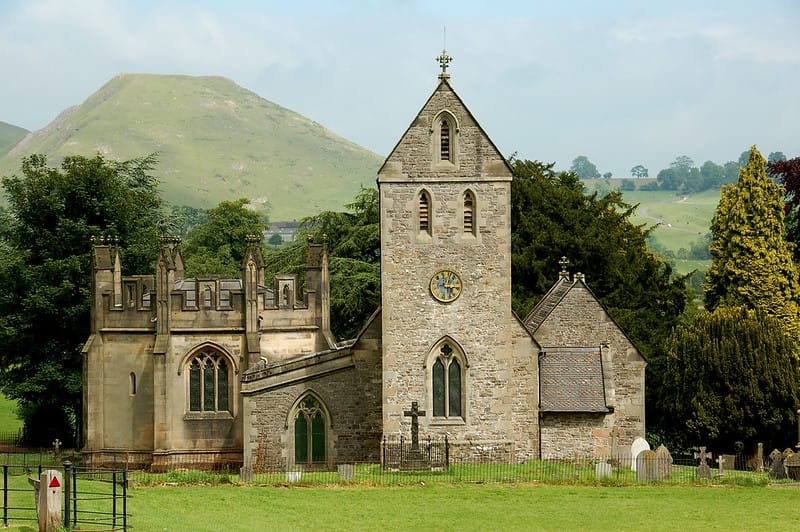
Bats | Around half of all churches in England – more than 8,000 – act as refuges for bats, according to a study in People and Nature. That figure rises to 80% for older churches. The findings come from citizen science surveys by the Bat Conservation Trust, which recorded 12 bat species across 753 churches. Churches surrounded by arable farmland were significantly more likely to contain bats, suggesting that they provide vital refuges in intensively farmed landscapes. Meanwhile, churches with bright exterior lighting, especially on western sides, were less likely to host bats. The research highlighted that 90% of church communities felt positively or neutrally about their resident bats, although some took issue with the copious amount of droppings. The BBC covered the research.
Meadows | Areas of traditional meadows in the South Downs national park have all but disappeared since the mid-19th century, according to a study in Landscapes. Researchers from the University of Portsmouth compared tithe maps from the 1840s with land cover data from 2021 and found that, in the lower Rother catchment of West Sussex, meadows had declined by up to 99.9%. In contrast, improved grassland rose by 135.8% and woodland expanded by 56.3%. The results show how agricultural intensification, enclosures and subsidies have led to the replacement of wildlife-rich meadows by intensively managed fields. Lead author Cat Hudson said that using historical records can ‘help us understand how to balance productivity, conservation and heritage in the face of climate change.’ Phys.org and FarmingUK covered the research.
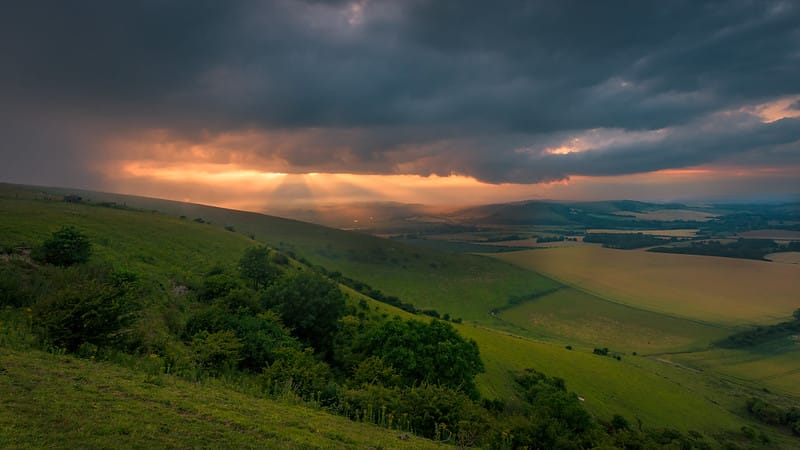
Connection | Britain is one of the least ‘nature connected’ countries in the world, according to a study in Ambio. The research, led by Miles Richardson of the University of Derby, draws on a dataset of 57,000 people to examine the cultural, economic and geographical factors that influence attitudes towards nature. Nepal topped the list, while Britain ranked 55th, six spots above last-place Spain. The strongest indicator for nature connection was high levels of ‘spirituality’. In contrast, ‘ease of doing business’ – a World Bank measurement of business-friendly character – correlated with lower nature connection. Richardson said that nature needs to be ‘mainstreamed’ into technological societies, ‘so it becomes respected and almost sacred.’ The Guardian, Independent and TimeOut covered the research.
Driftwood
Health | A feature in the Guardian explores growing research linking biodiversity to human health. Human bodies are ‘walking ecosystems’, writes Phoebe Weston, teeming with microbes, yet we rarely consider how nature impacts the ‘inner layers’ of human biodiversity. In essence, the greater the richness of species surrounding us, the more healthy microbes make their way in. Researchers hypothesise that higher rates of inflammatory disorders in urban areas are linked to the loss of microbes – a pattern first identified in studies comparing populations across the Iron Curtain. The good news, Weston concludes, is that just as human and ecosystem losses are happening in tandem, so too can the solutions work together.
AI | Experts worry that rising numbers of AI-generated images of animals are distorting our understanding of wildlife, according to a feature in Atmos. Inaccurate portrayals could spread anthropomorphised depictions, for example, encouraging people to approach wild species. Poorly labelled AI-content could also make it harder for viewers to trust genuine conservation content. Journalist Katarina Zimmer writes: ‘At its extreme, this could lead to a widespread apathy toward nature, alienating us even further from the natural world at a time when wildlife needs our attention the most.’
Endemic | Endemic species – those found in only one location – account for the largest portion of documented global extinctions and, by definition, there are no back-up populations. Yet when author James Harding-Morris began researching species endemic to Britain, he discovered that no one had compiled a single comprehensive list. After drawing up a working list of around 700 species himself, Harding-Morris set off across the country to track down a ‘representative spread’ of these unique plants and animals, from the forgotten millipedes of Devon to the vanishing hawkweeds of Yorkshire. Their stories, and those of the people who know them best, are recorded in his new book Endemic. He recounts his efforts in BirdGuides.
Further reading:
- A feature in Aeon examines how the Romans might have viewed nature, with an emphasis on the ‘cyclical dance’ of seasons.
- The BBC explores how Scottish farmers are managing cattle differently to reduce carbon emissions.
- A paper in Conservation Letters explores the dilemmas posed by guerilla rewilding.
- In the Times, read about the work of Tony Kirkham, formerly the head of Kew’s arboretum and now designing private woodlands to cope with climate change.
- A feature in Discover Wildlife asks whether private finance could be the answer to the cost of nature restoration.
- Tuesday marked the ten-year anniversary of Remember Nature, a call for artists to respond to the environmental crisis. Read about this year’s artworks in the Guardian.
- Nature writer John Lewis-Stempel extols the magical and mysterious qualities of British fog in Country Life.
- An article in the Conversation unpacks how rural solar farms become the ‘latest battlefront’ in a culture war pitting green energy against food and farming.
- A BBC Future feature dives into the evolutionary science behind the changing colours of autumnal leaves.
- In the Telegraph, former editor of Country Life magazine Clive Aslet explains why ramblers are coming into conflict with the National Trust over rewilding.
- A feature in TGO Magazine reviews AI exoskeletons, and whether they can help improve access to mountains for disabled hikers.
- A photo article in Positive News showcases the work of We Feed The UK, an arts project profiling ten grassroots regenerative farming projects across the UK.
Happy days
Naming | Collective nouns for groups of animals date back to the 14th century: one of the earliest records, the Book of Saint Albans, listed terms for species commonly found while hunting, including a ‘gaggle’ of geese and a ‘murder’ of crows. No official body ever decided on these terms; they simply caught on through common usage. Now, to celebrate the diversity of Britain’s bats, the Bat Conservation Trust is asking the public to help decide on collective nouns for four bat species. The suggestions include a ‘screech’ of noctules, a ‘flicker’ of pipistrelles, and a ‘whisper’ of long-eared bats. You can cast your vote, and check out the illustrations for each nominee, here.

Subscribe to our newsletter
Members receive our premium weekly digest of nature news from across Britain.
Comments
Sign in or become a Inkcap Journal member to join the conversation.
Just enter your email below to get a log in link.