COP27 & Rare Fungi
The latest news on nature and conservation in Britain.
National news
Climate | The COP27 climate talks kick off next week, with governments from across the world gathering in Egypt for the latest round of the long-running negotiations. Prime minister Rishi Sunak drew widespread condemnation at home and abroad when he initially said he would not attend COP27, but ultimately bowed to pressure in a last minute “screeching” U-turn. Former prime minister Boris Johnson has said he will attend, as will Scotland’s first minister Nicola Sturgeon. King Charles will hold a pre-conference reception at Buckingham Palace, although will not be present in Egypt, the BBC reported. The talks will focus on reducing emissions, adapting to climate change, and securing technical support and funding for developing countries, among other things – the BBC has an overview of why the summit is so important. The New York Times has also published a useful explainer of what to expect over the next two weeks. Meanwhile, for those interested in a blow-by-blow account, Carbon Brief has pulled together the most influential Tweeters at the conference in Glasgow last year.
Targets | Environmental organisations have written an open letter of complaint to the government after it failed to publish new legally binding targets for nature. The targets – which cover nature recovery, water health and air quality – were required in the 2021 Environment Act and should have been published by the end of October. Green groups including the National Trust, RSPB and the Wildlife Trusts are urging the Office for Environmental Protection to investigate the government’s delay. Environment secretary Thérèse Coffey, who issued a ministerial statement on Friday confirming the targets would not be published on time, said that the delay was due to “significant public response” to Defra’s consultation, and the department would “continue to work at pace to finalise these environmental targets.” Craig Bennett, chief executive of the Wildlife Trusts, said the government’s failure to publish the targets was both “astonishing and disgraceful”, and urged the new prime minister and environment secretary to “sort out this mess as soon as they possibly can”. Coffey did not give a date for delayed publication. The Guardian and the BBC covered the news. Also this week, levelling up secretary Michael Gove has announced that he is reviewing Truss’ “investment zones”, promising that anything that could undermine environmental protections “is out”. ENDS reported the news.
Badgers | The government’s 2022 badger cull could see up to 68,000 badgers killed, according to the Wildlife Trusts. Badger culling will be permitted in 69 places this year, up from 58 last year, in an effort to reduce bovine tuberculosis. The figures are based on information “quietly published” by Defra – although the recently published licences are dated 26 August, which means that culling has already been underway for two months. “Culling badgers is not the answer,” said Joan Edwards, director of policy and public affairs at The Wildlife Trusts. “Badgers are not the primary cause of the spread of bTB in cattle – the primary route of infection is from cattle-to-cattle.” She pointed to the badger vaccination programme, which reduces the likelihood of badgers transmitting the bacterium. In 2021, badger control cost the government £1.8 million, while the total cost for Defra-funded policing was more than £3.5 million, according to a new policy paper.
In other news:
- All poultry and captive birds in England must be kept indoors from 7 November under new restrictions to fight avian flu, the government has said. The BBC reported the story.
- Fewer than 2,000 farms have applied to post-Brexit sustainable farming scheme in England, the Guardian reports.
- The Genetic Technology Bill, which covers the gene editing of plants and animals, is back in Parliament.
- Environment Agency chief James Bevan will step down in March, ENDS reports.
- A group representing Scottish estate owners says proposals for a new Land Reform Bill may impede the country’s net-zero ambitions, Press and Journal reports.
- Environmental groups have urged the new prime minister to maintain the Environmental Land Management scheme and increase its funding from 2025.
- Corncrake numbers continue to decline, according to the RSPB.
- The Transport Committee has grilled the CEO of HS2 about the status and environmental impact of the high-speed rail.
- Welsh researchers have warned against planting “short-term” woodlands, Nation Cymru reports.
- A new course in peatland restoration, the first of its kind in Scotland, is now open for booking, according to NatureScot.
- England’s rivers and inland waters are as polluted as they were five years ago, according to Defra’s annual report for 2020-21. The Times reported the story.
Across the country
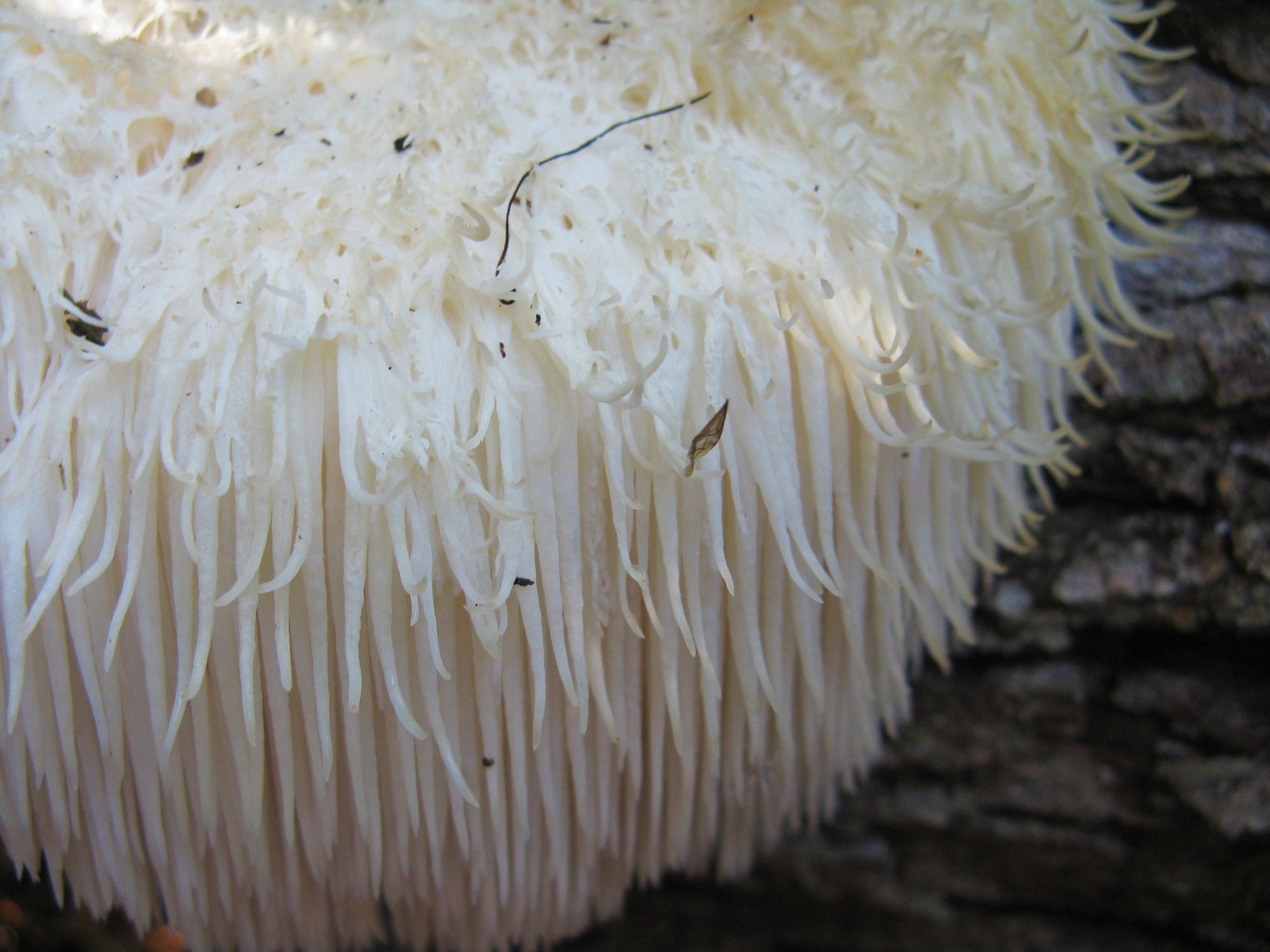
Cornwall | Wildlife co-ordinators at the historic Lost Gardens of Heligan have had to erect cages around an extremely rare fungi to protect it from collectors. The Bearded Tooth mushroom is about the size of a football and is prized for its medical properties. Research has shown that its compounds can play a role in the treatment of dementia, cancer, and neurological disorders. “Usually this mushroom is found in dense woodland where members of the public wouldn’t see it,” Toby Davies, the wildlife co-ordinator at the gardens, told Cornwall Live. “This one has grown on the tail end of a log which looks across a playground and it’s so big you can see it across the field.”
Denbighshire | In a new initiative, Denbighshire county council will be planting yellow rattle seeds to reduce the dominance of grasses in its wildflower meadows, the Denbighshire Free Press reports. The council currently manages more than one hundred sites for wildflower meadows, including 11 roadside nature reserves, together equating to almost 35 football pitches. Yellow rattle is semi-parasitic, feeding off the nutrients in the roots of nearby grasses, allowing wildflowers to thrive. Meanwhile in Staffordshire, volunteers and the local Wildlife Trust are creating wildflower meadows at six council-owned parks and nature reserves, with the first flowers expected in spring next year. And in East Hertfordshire, the district and county councils have identified a number of green spaces to transform into wildflower meadows, with flowers likely to include “Common Knapweed, Lady’s Bedstraw, Oxeye Daisy, Self-Heal and much more”.
Suffolk | The RSPB, the Woodland Trust and Suffolk Wildlife Trust have joined forces in an attempt to prevent the National Grid from building a new overhead powerline through Hintlesham Woods, a large fragment of ancient woodland that has been in existence since at least the twelfth century. The National Grid has proposed two options for the development: the second of these involves running a powerline directly through the woodland, causing the loss of mature trees. “We want National Grid to remove Option 2 from their proposals to avoid harm to this rare wildlife habitat,” according to a statement by the Suffolk Wildlife Trust. The charities are asking people to contact the National Grid personally to register their objections to the development.
Elsewhere:
- MPs have called for an urgent inquiry into Teesside dredging and mass crab deaths, the Guardian reports.
- Multiple witnesses report “brown sludge” of a large sewage spill at an iconic Cornish beach, report the BBC, Cornwall Live, and the Times.
- Police Scotland have issued a warning after a large pack of wild boar was released in Argyll, reports the Scotsman.
- University of East Anglia is offering eco-anxiety and climate-grief support to students, the Telegraph and Eastern Daily Press report.
- A paint company has been found guilty of allowing hazardous chemicals to get into the River Yealm in Devon, the Plymouth Herald reports.
- An endangered moth has seen a resurgence in part of Dorset, the BBC reports.
- Campaigners say a large new road development would undermine Shropshire Council’s climate commitments, the Shropshire Star reports.
- An invasive species of shrew has been discovered for the first time in Britain by chance, after it was caught by a domestic cat, the Telegraph reports.
- A new nature reserve has been created for great crested newts in West Northamptonshire, the BBC reports.
- Conservationists have released almost 200 white-clawed crayfish into a secret river site in Hampshire, the Hampshire & Isle of Wight Wildlife Trust says.
- The North York Moors National Park Trust has been awarded more than £215,000 to help the European turtle dove, song thrush, common redstart and yellowhammer, BirdGuides reports.
- The government has postponed its decision on a new coal mine in Cumbria until after COP27, the BBC reports.
- DNA analysis has revealed the presence of a rare bat roosting in a Somerset church, the BBC reports.
- A tree plantation at Coulshill farm near Auchterarder has been accused of planting trees on peat, the Scottish Farmer reports.
- Exploratory drilling for natural gas in Manx waters will begin in late 2023, the firm behind the project has said. The BBC reports.
Reports
Regulations | A new report details the regulatory action taken in England by the Environment Agency in 2021. The good news is that the organisation carried out 721 farm inspections last year, more than double the number undertaken in 2020, thanks to a boost in government funding. However, at more than half of those inspections, inspectors found non-compliance with slurry and storage infrastructure, while 43% of farms were non-compliant with at least one water-related rule. Despite its increase in farm inspections, the agency is a long way off the new regulatory targets of 1,500 farm inspections in 2021-22 and 4,000 farm inspections per year from 2022-23 onwards. The report also contained the latest statistics on water pollution: in 2021, the agency recorded over 370,000 sewage discharges from water company storm overflows. ENDS covered the report.
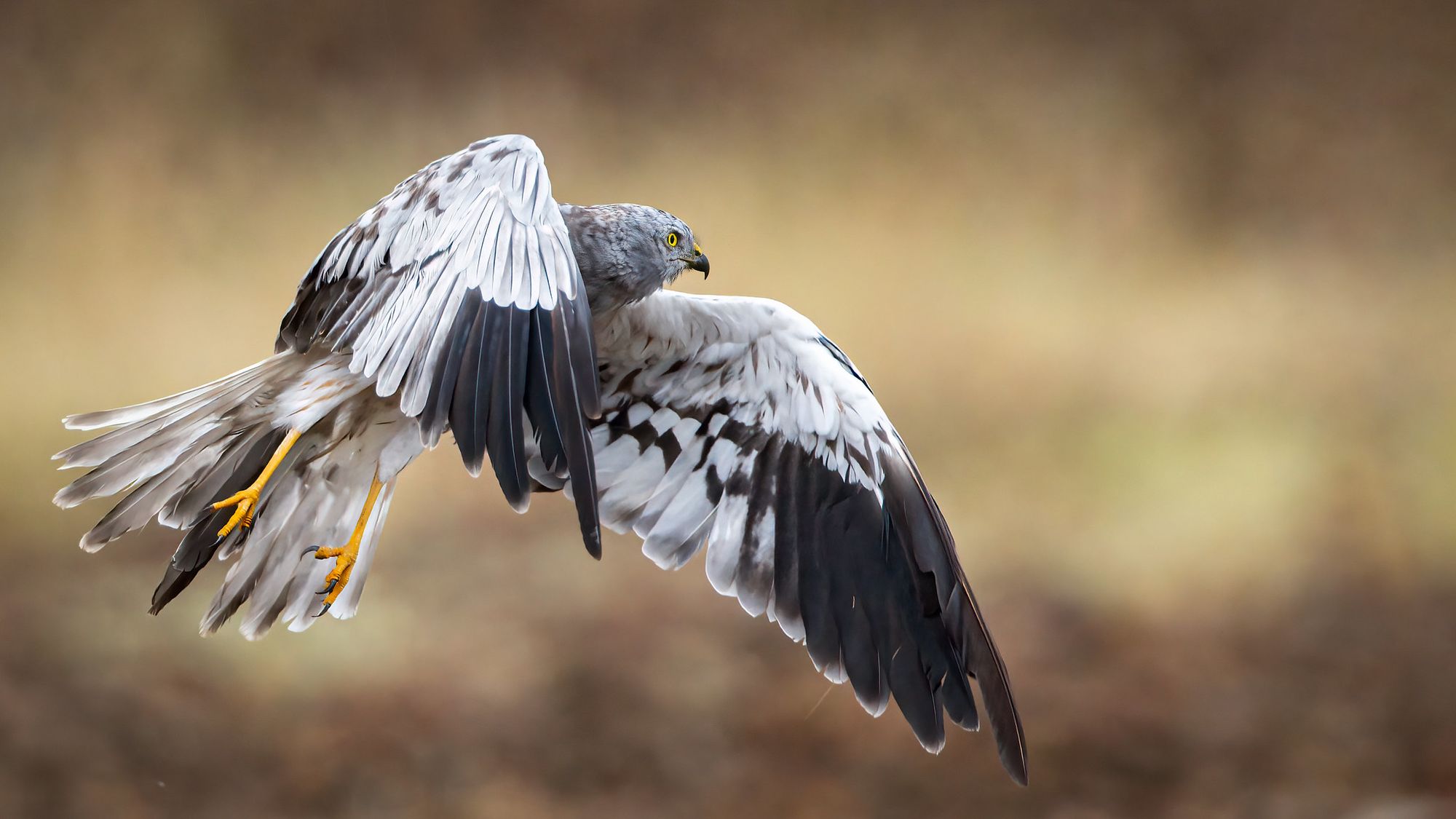
Birds | The Montagu’s harrier, a close relative of the hen harrier, has failed to breed in the UK for the first time since 1975, according to a new report from the Rare Breeding Birds Panel. The birds are migratory, wintering in West Africa; this year, only three females and six males were reported, none of which formed a pair. But there was also good news. Twelve species, such as the common crane, white-tailed eagle, bittern, spoonbill and great white egret, had a record-breaking year. In northern Scotland, the red-necked phalarope also reached a new high, and a pair of wrynecks was reported in Wales, the first such instance reported anywhere in the UK since 2002. The full report is available for subscribers to journal British Birds and will be made available on the panel’s website in due course, panel secretary Dr Mark Eaton told Inkcap Journal.
Jellyfish | The Marine Conservation Society’s latest annual survey report suggests that warmer temperatures may be impacting jellyfish diversity. The report, based on jellyfish reporting between October 2021 and September 2022, found an increase in the number of species visiting UK shores. Bioluminescent crystal jellyfish made up 3% of all sightings, although they are usually found in the Pacific Ocean and rarely seen in the UK, while sea gooseberries totalled 1% – the highest percentage reported to date. Sightings of the venomous Portuguese Man O' War also increased. “Investigating the relationships between species can help us to discover more about our amazing underwater world and how it might be changing in response to things like climate change,” said Amy Pilsbury, citizen science project lead at the society.
Science
Composting | The majority of “home compostable” packaging used by UK consumers does not fully disintegrate, according to a new study published in Frontiers in Sustainability. About 900 UK residents completed the Big Compost Experiment, a citizen science project to test the environmental performance of compostable plastics. The participants used a wide variety of composters, from indoor wormeries to outdoor trenches, with the most popular (64%) being an outdoor closed-bin composter. Many of them use their compost in their gardens. However, for 60% of participants, the biodegradable packaging did not degrade and for half of them, the packaging remained clearly visible. “Our conclusion is that home composting is not at present a viable, effective or environmentally beneficial waste processing method for compostable or biodegradable plastics in the UK,” the authors wrote. New Scientist reported on the study.
Fireworks | Fireworks cause major distress to geese, significantly altering their heart rate and temperature, according to a study in Conservation Physiology. To gauge the birds’ response to New Year’s Eve fireworks, the researchers fitted 20 greylag geese with transmitters, which recorded two-minute averages of heart rate and core body temperature. Compared with average values during December, their heart rates increased by 96% and body temperature increased by 3% in the first hour of the new year. The study was published in July, with the lead author Claudia Wascher discussing the findings in an article published this week in the Conversation. The Guardian suggested that the findings would also apply to Guy Fawkes Night: “Though fireworks on bonfire night bring joy to many people, it is likely to be a night of terror and distress for the UK’s geese.”
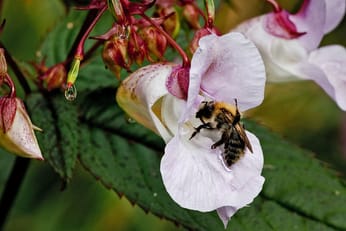
Pollinators | Increasing the number of flower species on marginal farmland can benefit the health of bee populations, according to a paper in Ecology and Evolution. The study measured flower richness and density in the field margins of ten British farms and compared these results with the number of bumblebees and honeybees visiting the areas. Researchers found that a higher number of flower species reduced the network connectivity of bees, and slightly reduced the overlap of bee species in the same areas. Although increased connection and overlap is generally believed to strengthen pollinator networks, the authors argue that increasing plant richness on farms “may provide unexpected benefits for the bee community” by separating foraging niches, reducing competition for resources, and preventing the transmission of diseases via shared flowers. The authors also recommend extending the use of wildflower strips into spring, when wild bee populations are established.
Driftwood
Salmon | A new documentary, Riverwoods: An Untold Story, sheds light on the perilous state of Scotland’s salmon. “The salmon need the forest. The forest needs the salmon. And Scotland needs them both,” says rewilding charity Scotland: The Big Picture, which created the documentary. Numbers of wild Scottish salmon are plummeting. Centuries ago, their rivers were protected under canopies of trees, but today most of these forests are gone, leaving the rivers and salmon more vulnerable to the effects of climate change. The new documentary shines a light on the problem, but also offers possible solutions. The documentary is narrated by Peter Capaldi, A.K.A. Doctor Who. The Scotsman interviewed Peter Cairns, chief executive of Scotland: The Big Picture, about the documentary. Riverwoods airs at 8pm on 7 November on 5Select.
Rewilding | A meandering feature in National Geographic explores the touristic opportunities offered by rewilding projects in Scotland, as well as exploring the background to the “zeitgeist” movement. Destinations for nature-minded travellers include the Dundreggan Rewilding Centre, which is set to open next year, as well as ranger-led tours and rewilding weekends in the Cairngorms National Park. The article is accompanied by a stunning series of photos showing rewilding in action across the nation.
Prehistory | At low tide, dozens of prehistoric tree stumps become visible on several beaches on Anglesey, and nowhere more prominently than at Traeth Trearddur. This story in North Wales Live recounts the strange story of these trees that speak to Britain’s distant past. Severe storm erosion in the winter of 2013-14 left more of the forest in Traeth Trearddur exposed, and holidaymakers are “adamant” that each year they get to see more of the lost ecosystem. “Remains like these are a window into our past,” said Prof John Healy, professor of forest sciences at Bangor University. “They are interesting monuments to the recolonisation of Britain by nature after the last Ice Age. They reveal a time when much of Wales was wooded, from the coasts to hillsides below 600 metres; only the tallest peaks remained uncovered.”
Further reading:
- A first-person account in the Guardian revels in the Flashes of Wigan and Leigh, an eight-site nature reserve in Greater Manchester.
- This piece in the BBC reports on a hedgelaying competition held in Oxfordshire. The traditional craft is used to manage hedgerows and there are more than 30 regional styles. Meanwhile in Norfolk, 55 men and women tested their skills in a ploughing competition.
Happy days
Autumn | Autumn storms are tearing the leaves from trees, leaving golden leaf litter at the feet of skeletal trees and reminding us that the long days of summer are now only a memory. This piece in the Financial Times, by Kevin Martin, head of tree collections at Royal Botanic Gardens, is a visual homage to the season and to London’s natural environment, featuring a selection of stunning images from Kew Gardens, Epping Forest and Nunhead Cemetery. But the richness of autumn is perhaps even more special because, as Martin points out, after the bruising heat of summer 2022, many trees will not survive the spring.

Subscribe to our newsletter
Members receive our premium weekly digest of nature news from across Britain.
Comments
Sign in or become a Inkcap Journal member to join the conversation.
Just enter your email below to get a log in link.