COP15 & Spoonbill Expansion
The latest news on nature and conservation in Britain.
National news
COP15 | Environment Secretary Thérèse Coffey has said that countries must hold onto “hope” during COP15 in her speech to mark the start of the conference. The UN Convention on Biodiversity got underway on Tuesday in Montreal and will last until the 19th of December. Defra issued a statement calling on countries to unite and agree a deal to reverse nature loss. The UK government has committed to negotiate to protect 30% of the world’s lands and oceans by 2030 and halt species extinction, among other targets. David Henshaw, chair of Natural Resources Wales, said that “the time to act is now”. The charity Scottish Environment LINK argued that COP15 is an opportunity for Scotland to lead the way through action on its promises. The Guardian has provided a helpful visual guide to COP15, as well as an explainer of what to look out for, and an editorial on why a breakthrough deal is desperately needed. Meanwhile, MP Tracey Crouch wrote in the Times about how ministers can strengthen British leadership on nature at the conference. The BBC, the Guardian and the Times all covered the news.
Farming | Thérèse Coffey has confirmed that the post-Brexit farming subsidy programme – the Environmental Land Management scheme (ELMs) – will go ahead after a controversial review. However, farmers are angry that details of the payments will be delayed until early next year. Conservationists are also concerned after finding out that one of the payment tiers – the local nature recovery scheme, which would have rewarded farmers for creating space for nature – will be abandoned in favour of an updated version of the existing countryside stewardship scheme. The other two tiers – the sustainable farming incentive and the landscape recovery scheme – will remain as planned. The National Trust said the government was “watering down” its commitment to restoring nature. The BBC and ENDS reported the news. Meanwhile, a survey by Wildlife and Countryside LINK shows that more than half of the British public thinks the government is giving too little support to help farmers restore nature.
Target | The government is set to miss its flagship ‘30 by 30’ target after ignoring counsel from its own advisers, according to documents seen by openDemocracy. The UK adopted the target, which commits to protecting 30% of all land and sea by 2030, two years ago. However, documents obtained through a Freedom of Information request show that the government chose not to implement key recommendations from Natural England, a review of National Parks commissioned by the government and its own analysts. This included advice to empower National Parks and AONBs, to create more sites of special scientific interest (SSSIs), and to abandon its plans to revise the EU laws protecting special habitats. None of these recommendations have been implemented at the scale recommended. Richard Benwell, chief executive of Wildlife and Countryside Link, said that the government’s 30 by 30 promise “will add up to nothing for nature without domestic action”. Defra refused to comment.
In other news:
- The government has committed to relaxing the ban on building onshore wind farms after Conservative MPs threatened a rebellion, reports the BBC.
- Defra has announced £500,000 in funding to plant trees in communities across the country as part of the Queen’s Green Canopy.
- A UK firm which makes packaging from seaweed has been named as one of the five £1m winners of Prince Williams’ Earthshot Prize, reports the BBC.
- The Welsh government has announced plans to ban the extraction and sale of horticultural peat but has yet to set a date.
- A coalition of over 90 organisations are calling for a legal right to nature to be prioritised in the government’s Levelling Up and cost of living agendas.
- Michael Gove has given the go-ahead for the UK’s first new coal mine in 30 years, despite local and national opposition. The BBC and the Guardian reported the news.
Across the country
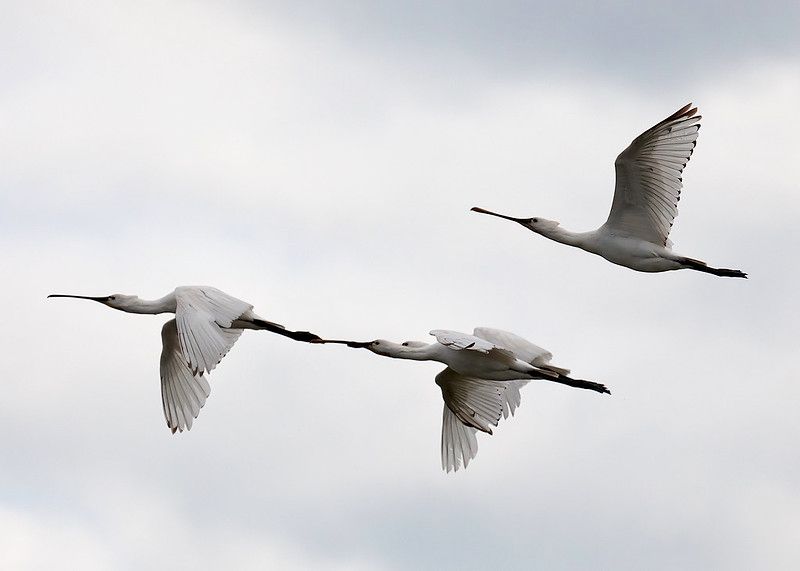
Norfolk | Spoonbill numbers are on the rise, in part thanks to the efforts of landowners to improve wetland habitats and tree cover. The striking birds were hunted to local extinction 300 years ago, but in 2010 a colony was discovered in north Norfolk, thought to have flown from France or the Netherlands. In the last decade, spoonbill populations have spread out across the UK and breeding pairs are now found in Yorkshire, Essex, Cumbria and Suffolk. On Norfolk’s Holkham Estate, manager Andrew Bloomfield wants to double the size of the current spoonbill nesting area, creating islands with trees to future-proof the colony. He said: “All the wetland work that has been done in the UK will play a part in safeguarding a lot of birds that are moving across from the continent because of global warming.” The Guardian reported the news.
Cotswolds | A group of Welsh mountain ponies are helping the Gloucestershire Wildlife Trust with their conservation work in the Cotswolds. The ponies have been brought to the Daneway Banks reserve to graze the vegetation, restoring a natural process that has been lost in large parts of the UK. The animals have teeth that point slightly forward, which means they graze very close to the ground, while leaving some areas untouched. "They allow the wild flowers to germinate and our target species, such as the large blue butterflies, are absolutely thriving as a result of the ponies and the grazing that they do,” said Alan Sumnall from the Trust. The BBC covered the news.
Hertfordshire | The National Trust has started work on a major restoration project at the Ashridge Estate in Hertfordshire. This is the largest woodland in the care of the organisation, and it has been the location for films including Harry Potter and Les Miserables. The three-year project will involve removing non-native conifers and replanting native broadleaf species, as well as restoring 42 hectares of ancient woodland. Tom Hill, adviser for the National Trust, said: "Our ancient woodland soils hold incredibly rich seedbanks and are teeming with microscopic life below ground, essentially forming the base of the ecological pyramid.” The BBC reported the news.
Elsewhere:
- Underground cables between Suffolk and Kent, proposed by the National Grid, would cause “huge damage” to protected wildlife areas, according to the RSPB. The BBC reported the news.
- The Cumbria River Restoration programme, which has improved almost 100km of river and restored over 150 hectares of floodplain in the Lake District, has been awarded the prestigious European Riverprize.
- Conservation charity Buglife has announced the discovery of two new populations of one of Cornwall’s rarest bees, the Large Scabious Mining Bee.
- The Environment Agency is investigating a pollution incident after the River Yealm in south Devon turned white, reports the BBC.
- A salmon company has plans to build Scotland’s largest fish farm on Loch Linnhe in Argyll, using new technology to lessen its environmental impact, reports the Scotsman.
- The Hampshire and Isle of Wight Wildlife Trust has confirmed that pine martens are well established and successfully breeding in the New Forest.
- The Wilder Blean herd of bison in Kent have been released into a larger 50 hectare area of woodland. Kent Wildlife Trust announced the news.
- The South of Scotland Golden Eagle Project has been named the Scottish project of the year in the National Lottery awards, reports the BBC.
- Plans to build flats in Shepshed include wildlife-friendly measures, such as hedgehog highways and bug hotels, reports the Leicester Mercury.
- After a public vote, Cheshire Wildlife Trust has announced the names for two beaver kits, born earlier this year: Aspen and Bramble.
- Aberdeenshire Council has launched a project to plant native broadleaf trees to repair the damage caused by Storm Arwen, reports the Press and Journal.
- A scheme in north Devon and Somerset will cull grey squirrels to support the reintroduction of reds, reports the BBC.
- A humpback whale called Pi has returned to the Isles of Scilly after two years, reports the BBC. Meanwhile, the Cornwall Wildlife Trust is hoping for a bumper cetacean season after several humpback sightings off the Cornish coast.
- Scotland’s infamous pest, the midge, has been disrupted by a cool spring and hot summer, reports the BBC. However, recent mild weather has extended the tick season.
- South Gloucestershire Council has revealed plans to transform Bristol Parkway Station, which include a new community park and nature reserve, reports the Bristol Post.
- It has been a successful year for eels on the River Great Ouse, with over 70,000 making the journey to Cambridgeshire from the Sargasso Sea, according to the Environment Agency.
- Northumberland Wildlife Trust has been gifted the Haining, a section of land in the Redesdale area, which will complement the Trust’s existing reserves.
- Y Foryd nature reserve and SSSI in North Wales is starting to erode into the sea due to a lack of funding, reports the Daily Post.
- The Nottinghamshire Wildlife Trust is asking for an old quarry near Sherwood Forest to be protected for wildlife after its imminent sale, reports the BBC.
Reports
Greenery | Research by Defra and Forest Research has revealed that trees planted outside woodlands are worth billions of pounds. The report is the first to estimate the value of individual trees – lining streets, hedgerows, and in gardens, parks and fields – in the UK, and found it to be between £1.4bn to £3.8bn annually, depending on the methodology. The benefits of individual trees include carbon storage, regulating temperatures in urban areas, strengthening flood resilience, and reducing noise and air pollution. Researchers said that other benefits, including boosting biodiversity and improving mental health, were difficult to quantify, so the estimate is conservative. The Guardian and ENDS covered the news. Meanwhile, a survey by countryside charity CPRE shows that farmers want to plant more hedgerows, but cite funding as the biggest obstacle. Out of 1,100 farmers surveyed, 70% said they would plant more hedgerows with appropriate government incentives, while 80% would be in favour of a new government target to increase hedgerows by 40% by 2050. The Guardian reported the news.
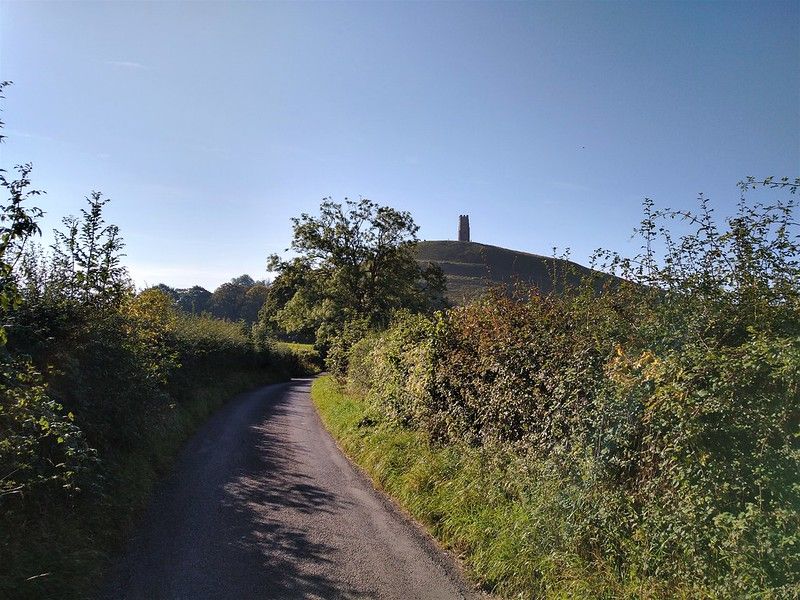
Land | Progress to improve areas of land protected for nature in Scotland has stalled, according to a report by the charity coalition Scottish Environment LINK. Although 18% of Scottish land is protected, one in five sites are in “unfavourable condition”. The Scottish government has committed to protecting 30% of its land and sea by 2030, but the report says it must focus on the quality as well as quantity to make the target effective. A survey conducted alongside the report revealed that two thirds of the public support the 30 by 30 approach in Scotland. The BBC covered the news.
Birds | More than a quarter of all Welsh bird species now appear on the RSPB’s conservation Red List, its latest report has revealed. Since the last assessment in 2016, five species have been added to the Red List – of highest conservation concern – including familiar birds such as the swift, greenfinch and rook. Corn bunting and corncrake have been declared extinct as breeding birds in Wales, while the house martin has moved to the Amber List. Not all is doom and gloom, however: after more than a century of conservation work, the red kite has moved to the Green List, along with the avocet, meaning they are no longer in decline. The BBC and the Guardian covered the news. Meanwhile, a report from NatureScot looking at 14 species of urban birds in Scotland found a “significant” increase of 19% between 1994 and 2019. The Herald reported the news.
Science
Protection | Two studies have shown that UK sites legally protected for nature deliver multiple benefits for bird biodiversity. This paper, published in Animal Conservation and led by the RSPB and British Trust for Ornithology (BTO), used data from the annual Breeding Bird Survey to demonstrate that numbers of threatened birds are higher at sites protected by UK legislation. This was particularly prevalent at sites with the highest levels of protection: those afforded by the Habitats and Species Regulations. Separately, a paper by the BTO published in Nature Ecology and Evolution used data gathered by three large-scale citizen science programmes to assess the impact of protected areas on birds. The RSPB said that, taken together, the two papers “underline the fundamental role of protected sites in safeguarding nature and supporting its recovery”. It added that the studies are particularly significant in the context of the government’s controversial Retained EU Law Bill, which threatens the future of environmental protections. ENDS covered the research.
Herbivores | Large herbivores could play a key role in supporting forest biodiversity by creating tree cavities, according to a study in BioOne. Many small mammals, birds and invertebrates rely on tree cavities for nesting. In North America, woodpeckers fill this role, but in European forests many hole-nesting songbirds rely on cavities created by fungal decay after tree damage. In this study, researchers suggest that large herbivores, such as red deer and European bison, play an overlooked but crucial role in this dynamic by stripping bark from trees. The idea is partly based upon evidence from the primeval forest in Poland's Białowieża National Park. The authors suggest that restoring these animals across European forests could help to restore the diversity of hole-dwelling species.
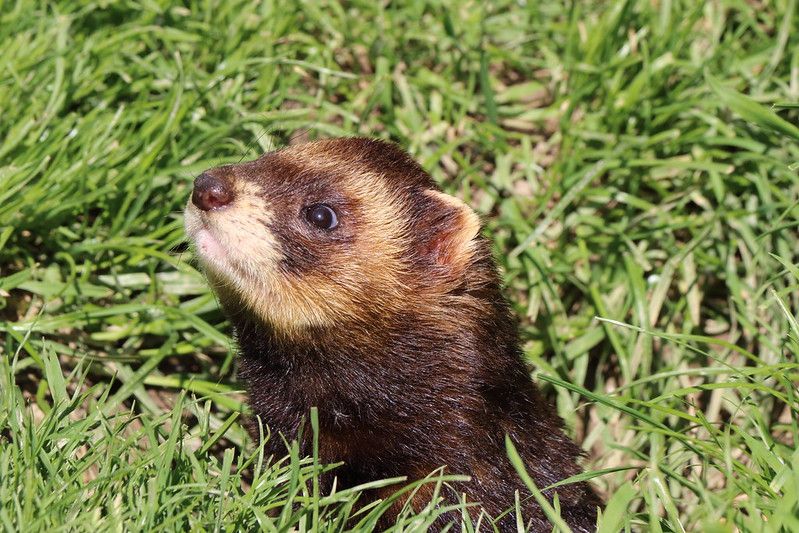
Polecats | A study in PeerJ examines trends in the deaths of polecats on roads in Wales. Wales is a traditional stronghold for the mustelids in Britain, but they are frequently the casualty of roadkill, and little is known about the factors that increase the risk of collision. Researchers used models to explore season patterns, as well as landscape characteristics associated with collisions. They found that casualties occurred most frequently in March and October, and they were associated with higher road density, traffic volume, the presence of rabbits and patchy habitat. “This research has implications for polecat protection in Wales as well as applicability to the rest of Britain, and throughout their European range, where they are thought to be in decline in several countries,” the authors conclude.
Driftwood
Rivers | A feature in the Guardian takes a look at the life and work of Paul Powlesland, a barrister who has assumed the role of “nature guardian” for the River Roding in London. The Roding originates in Stansted, journeys through farm-intensive Essex, and then encounters motorways, combined sewage overflows and heavy industry as it enters the capital. Powlesland has lived on his narrowboat on the Roding for five years and has been championing the river’s transformation for just as long. Powlesland uses a mix of direct action combined with legal knowledge and campaigning to fight for the rights of the river. His drive, he explains, “comes from the wellspring of the belief that the Roding is sacred, it is a being and it does have rights, and I will manifest those in whatever way I can.”
Botanics | Long-term research at Scotland’s botanical gardens is helping to understand the effects of climate change on plants. Scientists at four sites belonging to the Royal Botanic Garden Edinburgh (RBGE) are monitoring the annual life cycles of over 150 plants, logging the dates and duration of flowering and leaf development on a weekly basis to decipher the effects of warming temperatures. One volunteer said that the “plastic” behaviour of some plants – changing their behaviour according to the temperature – could help them to adapt to climate change but could also make them more vulnerable to late frosts and other unpredictable extremes. The current work has been underway for almost two decades, but RBGE has a history of phenology dating back to the 1850s. The Scotsman and the Herald covered the story.
Housing | Biodiversity targets shouldn’t stop the construction of new houses, writes Westminster policy researcher James McSweeny in the Critic. Britain is building houses at nearly the slowest rate in Europe, leading to unaffordable prices and lower salaries, he writes. However, he believes that there is no need to choose between housing and wildlife. He explains: “A pro-nature planning system would harness the value generated by building houses where they are needed to boost rewilding efforts where they are not.” He suggests loosening planning constraints in a small number of high-demand areas, such as in fields next to train stations, and introducing local zoning to boost clarity about where businesses are allowed to build.
Further reading:
- A blog by Natural England explains how government agencies are working to find solutions to tackle phosphate levels in the River Wye catchment.
- Skyward, a short Guardian documentary, explores how birdwatching has shaped the lives of two teenagers, as they emerge as leaders in a new generation of conservationists.
- An article in the Times explores the research project trying to genetically engineer flu-resistant chickens.
- Both the Guardian and the British Ecological Society have published the winning images from their annual photography competitions.
- A feature in Metro recalls a trip searching for the rare great grey shrike, or the “butcher bird”, on Hothfield Heathlands Nature reserve in Kent.
- In the Guardian, Oxford professor of economics, Dieter Helm, sets out how to fix England and Wales’ defective water system.
- Next week, rewilding charity Scotland: The Big Picture is holding a webinar to discuss whether Scotland is ready for the return of lynx.
Happy days
Festivities | If you’re looking for something nature-related over the Christmas period, Staffordshire Wildlife Trust are hosting the 12 Days Wild challenge. Through a daily email, the initiative encourages you to connect with nature during winter through mini-challenges. It takes place in the “weird days” between Christmas and New Year, so if your calendar is looking a bit empty, sign up!

Subscribe to our newsletter
Members receive our premium weekly digest of nature news from across Britain.
Comments
Sign in or become a Inkcap Journal member to join the conversation.
Just enter your email below to get a log in link.