Chemical Cocktails & Wildflower Meadow
The latest news on nature and conservation in Britain.
Some additional news this week! Inkcap Journal is partnering with the Campaign for National Parks on their National Park Protector Awards. There are three categories, and nominations close on 4 June. You can enter here.
National news
Rivers | The majority of England’s rivers and lakes (81%) and groundwater sites (74%) are infected with a cocktail of toxic chemicals, according to analysis of Environment Agency data conducted by Wildlife and Countryside Link. The chemicals include four “forever chemicals”, a pesticide and ibuprofen. These were discovered in five different hazardous mixtures that can be harmful to wildlife, including reduced growth, cell function, impacts on embryos and survival rates. Some of the sites where all five combinations were discovered included the Exe in Devon, the Yare in Norfolk and the Wansbeck in Northumberland. A coalition of charities are now launching a Chemical Cocktail Campaign, urging the government to take a more ambitious approach to regulating these substances. The Guardian and the Telegraph covered the news.
Dredging | Environmental campaign group Open Seas has launched a legal bid against the Scottish government over the practice of scallop dredging. Open Seas argues that the licensing of scallop dredging – when heavy metal-framed nets are pulled over the seabed to rake up scallops – is unlawful in the damage it causes. Scotland’s National Marine Plan requires that no use of the sea will have “significant impact on the national status of Priority Marine Features”, yet evidence gathered by Open Seas using underwater cameras demonstrates that scallop dredging has caused serious damage to key marine habitats, in places such as Gairloch, Brodick Bay and around Rum. The BBC, the Independent and the Herald covered the news.
Business | A coalition of organisations called the Science Based Targets Network has launched the first framework for companies to assess and report their impacts on nature. SBTN aims to “get nature in the boardroom” in much the same way that climate impacts are already being reported. However, biodiversity impacts are more complicated to measure, relying on multiple metrics and data sources. The first release from SBTN includes guidance on measuring land degradation, and the use and pollution of freshwater; reporting systems for oceans and species abundance will be released next year. Ecological economist Sophus zu Ermgassen explained that without science-based targets, “the public will not be able to hold the largest companies to account for their impacts on biodiversity”. The Guardian and Edie covered the news.
In other news:
- The Scottish government has announced it will launch a consultation on ending commercial sandeel fishing in Scottish waters. The RSPB said the move would be a “game changer” for Scotland’s threatened seabirds.
- Defra has launched England’s first national Marine and Coastal Wildlife Code, designed to help people enjoy the coastline and its wildlife responsibly.
- The government has announced measures to support tenant farmers in response to an independent review by Conservative politician Baroness Rock.
- Natural England has been accused of blocking 160,000 new homes under its nutrient neutrality rules, reports the Times. Defra stated the coverage was inaccurate.
- The ‘My Tree, Our Forest’ project launched by the Welsh government last year has seen 300,000 trees planted across the country, according to the Woodland Trust.
- Natural England has launched a new annual celebration to highlight the role of England’s National Nature Reserves in boosting nature recovery and combating climate change. This includes a virtual tour of a nature reserve near Chichester.
- Marine Scotland has asked anglers to humanely kill and report any invasive pink salmon they catch in Scottish rivers, reports the BBC.
- The percentage of water habitats in declining condition within protected sites has doubled in three years, according to ENDS analysis of government data.
- Almost £750,000 of funding from Defra has been earmarked to boost domestic tree seed production and help meet national demand for trees.
- The Marine Conservation Society has said Scotland’s sewage network must be more closely monitored, reports the BBC. Meanwhile, Scottish Water has promised to install 1,000 more monitors across Scotland by 2024, reports the Times.
- The Welsh government has announced higher payment rates for farmers creating woodland. Nation Cymru reported the news.
- ENDS has published its Power List 2023, of the UK’s 100 most influential environmental professionals.
Across the country
Durham | Last year, Durham Cathedral installed nest boxes in its belfry tower, hoping to encourage breeding swifts. This year, it has redoubled its efforts, adding high-powered speakers that will broadcast the bird’s call, in hope of attracting youngsters looking for their first nesting site. Motion-triggered cameras will enable the team to keep tabs on any new arrivals. The work was funded by local businessman and swift enthusiast Edward Twiddy. “Their presence in the city sends a noisy and spectacular reminder that life returns each spring, but across the UK and much of Europe fewer and fewer of these tireless transcontinental visitors have been returning to raise the next generation,” he said. “Needing little more than healthy insect populations and somewhere to nest, their demise should send a clear warning about what we are doing to the world around us." BirdGuides reported the news.
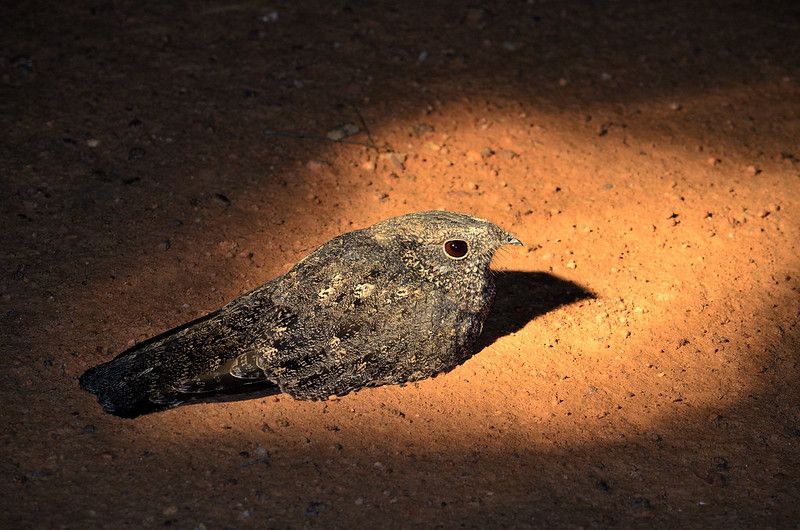
Dorset | The number of nightjars in RSPB reserves across England and Wales has hit a record high following decades of conservation work. A total of 198 males were recorded during surveys last year, up from 178 in 2021. In particular, RSPB Arne in Dorset has seen nightjar numbers triple since 1990, where numbers have grown with the help of livestock: Red Devon cattle, alongside ponies, donkeys and pigs, have helped restore the reserve to a dynamic mosaic of heathland, grassland and woodland habitats. Even their poo is important to this wilder grazing system, according to site manager Peter Robinson: “It’s the dung that attracts insects such as dung beetles, which are great nightjar food.” The reserve will feature as the live location for this year’s BBC Springwatch programme, airing on Monday.
Malverns | Conservationist Mel Mason and a group of volunteers from Butterfly Conservation are working to reintroduce the rare pearl-bordered fritillary butterfly to the Malvern hills. The species disappeared from the hills around 30 years ago, but Mel and his wife Liz have spent the winter breeding the caterpillars, which are now ready to be released. Volunteers also helped by growing dog violet plants, which the butterflies thrive on. It’s a small start, but Mel is hopeful about efforts like these in the face of the biodiversity crisis: “If we can do it with a project like this here on the Malverns, there’s no reason why it can’t happen everywhere else.” This BBC video films the butterfly release.
Elsewhere:
- Woodland Trust Scotland is receiving a £1m grant to expand rainforest habitat on the slopes of Ben Shieldaig in Torridon.
- Leicester City Council has introduced a reduced mowing regime for green spaces in the city, allowing more room for nature and reducing pollution. The BBC and Leicester Mercury reported the news.
- Plymouth City Council has announced a U-turn on its plans to fell 129 trees as part of a revamp of Armada Way, reports the Plymouth Herald.
- Meanwhile in St Albans, residents are campaigning against the city council’s plans to chop down 250 street trees, reports the Times.
- Essex Wildlife Trust has completed the creation of a 40-hectare wetland, designed to give greater breeding opportunities to vulnerable ground-nesting birds.
- Willow and paper sculptures of skylarks are being installed at a nature reserve in Somerset to remind visitors to be mindful of the ground-nesting birds, reports the BBC.
- Norfolk County Council is hoping to create four or five new country parks to help meet its tree-planting target, reports the BBC.
- One of the first red kites brought to the UK as part of a successful reintroduction programme has died aged 29, reports the BBC.
- An exotic bird breeder from Dumfriesshire who poisoned 15 wild birds, including five red kites, has been handed community payback hours, which critics say is “monumentally inadequate”. The Evening Standard and ENDS reported the news.
- Volunteers for the Freshwater Habitats Trust have doubled the number of recorded ‘priority ponds’ in the Nidderdale AONB.
- A ‘rewilding network’ has been launched in Hampshire and the Isle of Wight to connect landowners and rewilding experts.
- The National Trust is using four Exmoor ponies to graze part of a conservation project in West Yorkshire, reports the BBC.
- Telford has been named a ‘Tree City of the World’ by the UN, joining 20 others in the UK, reports the Shropshire Star.
- Environmental campaigners in the Wye Valley have told the council to tackle waste pollution from chicken farms rather than blocking housebuilding, reports the Times.
Reports
Access | Income is a key barrier to accessing the countryside, according to research commissioned by the British Mountaineering Council (BMC). Just 38% of people said they could easily get out into the countryside, while those on a living wage were twice as likely to never visit as those that earn more. The lack of private transport was a particular barrier, as was access to suitable clothing, with women affected more than men. There were significant regional differences, with people in Cambridge spending an average of 135 days per year in the countryside, compared to just 57 for people in Glasgow. In response to the findings, the BMC released a new Equity, Diversity and Inclusion strategy to address the problems both in general and within the organisation itself.
Land | Scottish land continued to fall into the hands of large buyers in 2022, with communities shut out by the consequent high costs, according to the latest report from the Scottish Land Commission. Demand for land for forestry, natural capital investment and corporate estates drove the high prices. “The prices achieved, and speed of many transactions, meant participation in the market has been curtailed, with particularly few opportunities for communities, new entrants and young farmers to acquire land, and help diversify the pattern of land ownership in Scotland,” said Andrew Thin, chair of the Commission. A short summary of the findings is also available. The Guardian covered the story.
Taskforce | The Geospatial Commission – part of the Department for Science, Innovation and Technology – has released a report recommending that the government establish a new Land Use Analysis Taskforce. Based upon cutting edge data science and modelling technologies, their work would inform how to reconcile competing demands for land, leading to the better use of the UK’s surface. The report considers the opportunities for multifunctional land use across six sectors: energy, housing, biodiversity, food, water and transport. Other recommendations include developing a standard approach to classifying key land use data and championing market innovations that help to achieve better decision-making.
Science
Wildflowers | An urban wildflower meadow planted at King’s College, Cambridge, has benefitted both local biodiversity and climate change mitigation, according to a study in Ecological Solutions and Evidence. Researchers conducted biodiversity surveys over three years, and found that despite its small size, the meadow supports three times the amount of plant, spider and insect species compared to the adjacent lawn. Surveys of the Cambridge community showed overwhelming support for the meadow, with only 1.4% of people preferring the lawn. Dr Cicely Marshall, lead author of the study, said the meadow has been a “phenomenal success”, and had “captured the imagination of people across the city.” The British Ecological Society summarised the findings.
Invasives | Urban ecosystems are the most invaded by invasive alien species, with nearly 68% of their extent occupied by harmful animals, plants and other organisms. Freshwater ecosystems were the next worst affected at 52%, followed by forest and woodland at 44%. These are the findings of a study published in Scientific Reports, focusing specifically on EU countries. The researchers found that the Atlantic region had suffered the most, followed by the Continental and Mediterranean regions. The average pressure caused by these aliens was greatest in croplands, followed by forests. “Taken together, these findings raise concerns on the potential consequences on ecosystem functioning,” the authors write, citing the possibility of pests, pathogens and socio-economic impacts.
Peat | Peatlands have historically been drained to create space for agriculture, forestry and infrastructure, with damaging effects on freshwater diversity. Conservationists are now attempting to reverse this process, typically by creating new ponds on the surface, which now likely exceed one million in number. However, there has been little attempt to measure the biodiversity of these habitats. A study published in Biological Conservation attempts to fill that gap. Scientists at the University of Leeds found that life returns to new ponds quickly, and that the returning invertebrates offer a vital supply of food for birds and amphibians. “Older pond environmental conditions and biodiversity were generally similar to natural ponds, highlighting restoration success for aquatic biodiversity gains,” the scientists concluded.
Driftwood
Gardening | The latest controversy over rewilding is taking place not in the hillsides of Wales but in the exclusive boundaries of the Chelsea Flower Show. Monty Don discusses the trend for weeds and wilderness within gardening in a wide-ranging interview with the Times. “Gardens are an expression of mankind’s interaction with the natural world and it’s a subtle dance, a play. Chelsea is just reflecting the zeitgeist. But we don’t want to be too extreme,” he says. Alan Titchmarsh was more forthright in his condemnation of the trend. Horticultural excellence, he wrote in Country Life magazine, was being “obscured by the need to demonstrate that gardeners are not dyed-in-the-wool traditionalists, but vibrant folk with a finger on the current environmentalist pulse. This can lead us down a garden path that endangers the very things we ought to cherish.” The Times covered his comments.
Bumblebees | Bumblebee numbers are decreasing, with at least half the species present in Britain getting scarcer. However, this feature in the Guardian spotlights the army of citizens who are refusing to let their decline go by unnoticed. Between March and October each year, around 800 people take part in an initiative called the ‘BeeWalk’. Like the UK Butterfly Monitoring Scheme and the RSPB’s Big Garden Birdwatch, BeeWalk makes use of large-scale citizen science to monitor populations across the country. It involves ‘bee counters’ walking a designated route weekly, counting the number of bumblebees they spot. Now in its tenth year, BeeWalk has built up one of the largest bumblebee datasets in the world, providing an insight into how their numbers are changing each year.
Alpine | In the Conversation, researcher and conservation manager Sarah Watts writes about why we should be paying more attention to arctic-alpine plants. These are tiny plants that thrive in some of the harshest environments on Earth, including on freezing summits in the Highlands. But these hardy plants are also sounding alarm bells: as average temperatures rise, the number of alpine-arctic plants are plummeting in Britain. Snow pearlwort, a penny-sized cushion plant found on the slopes of Ben Lawers, is the first flowering plant in Britain to have its IUCN status moved from vulnerable to endangered due to climate change. Watts writes: “we must celebrate and protect our tiniest of plants. If we don’t, the spectrum of diversity across earth’s extremes will be lost for generations to come.”
Further reading:
- A report released by the RSPB summarises the fortunes of different species on RSPB reserves during 2022.
- This beautiful short documentary on Youtube is the work of student Ben Garrick, who set out to find and film Britain’s owls for his final year project.
- In the Times, this article argues that property building should be allowed on the green belt, but only in certain places – such as near a railway station.
- An article in the Evening Standard discusses the “green gap” with Tayshan Hayden-Smith, the creator of Chelsea Flower Show’s smallest garden.
- Kensington Palace marked World Bee Day by posting a photograph of the Princess of Wales tending a beehive. This article sums up the royal family’s apiarist tradition.
- An article in the British Ecological Society discusses how society can attempt to balance wildlife conservation with increasing public access to nature.
- In the Scotsman, scientist Professor Roxane Andersen writes about her personal experience of witnessing wildfires pushing peatlands toward a tipping point.
- An article in the Guardian explores how Ben Goldsmith’s love of nature helped him through the trauma of losing his fifteen-year-old daughter, Iris.
Happy days
Sanctuary | An accessible garden designed for people with spinal injuries has won the top prize at the Chelsea Flower Show. ‘Horatio’s Garden’ was created to provide a therapeutic sanctuary for patients at Sheffield’s Northern General Hospital, who might otherwise find gardens inaccessible. The designers consulted patients and NHS staff while developing the garden; the layout is intended to be immersive, calming and restorative, with airy planting and pops of colour the opposite of a hospital ward. Judge Marie-Louise Agius commented: “The garden is uplifting, beautiful and considered, and for someone who has had a life-altering spinal injury it will provide them with a wonderful sanctuary.” The Guardian and the BBC covered the story.

Subscribe to our newsletter
Members receive our premium weekly digest of nature news from across Britain.
Comments
Sign in or become a Inkcap Journal member to join the conversation.
Just enter your email below to get a log in link.