Caroline Lucas & Butterfly Reintroduction
The latest news on nature and conservation in Britain.
National news
Politics | Caroline Lucas, the Green Party’s only MP, has announced that she will stand down at the next general election to focus on activism around the climate and nature emergencies. The intensity of her work, she wrote in a letter to her constituents, meant that she had not been able to spend enough time on these priorities. “My purpose now is to play a new role in the struggle to ensure our life-giving planet, the species we’re privileged to share it with, and all who inhabit it, can flourish too,” she wrote in i news. Plaudits swiftly flooded in for the popular MP, with praise coming from across the political aisle. ITV’s political correspondent called her “the most important politician the Green Party’s ever had” in a piece outlining her ascent to the top. The BBC, the Guardian, the Times and the Telegraph covered the news.
Meadows | A national audit by the Wildlife Trusts and Plantlife has revealed the success of the Coronation Meadows project, a decade after it was launched by the former Prince of Wales. The project was designed to honour the 60th year of Queen Elizabeth’s ascension to the throne, with 60 species-rich meadows identified to act as seed donors for nearby areas. Ten years later, 101 new and restored wildflower meadows have been created across the country. Craig Bennett, chief executive of the Trusts, said the new meadows were “a wonderful legacy for communities everywhere to enjoy”, but added that meadows needed greater support and protection under planning policy and the new farm environment schemes. The BBC and the Times covered the news.
Roads | Over 40% of major new road schemes in England will impact ancient woodlands, according to the Woodland Trust. Analysis by the charity comes during a government consultation on revisions to the National Networks National Policy Statement, which guides decisions on major road and rail projects. However, changes to the policy do not go far enough to protect the environment, according to the charity. The Trust’s analysis reveals that at least 106 ancient woodlands will be directly or indirectly affected by new schemes, with 82 ancient and veteran trees predicted to be felled over a decade of road investment. In a YouGov survey commissioned by the charity, 81% of respondents said that damaging ancient woodland for road infrastructure is usually or always unacceptable.
In other news:
- NatureScot has officially launched the ‘Species on the Edge’ programme, with eight conservation organisations tackling the decline of vulnerable coastal species in Scotland. The BBC and the Herald reported the news.
- Youth campaigners are calling on Rishi Sunak to back the Climate and Ecology Bill, introduced by Caroline Lucas in 2020, reports the Evening Standard.
- NatureScot has announced almost £1m in funding for extra rangers at Scotland’s most popular natural sites this summer to help safeguard the environment.
- The British Dragonfly Society and Forestry and Land Scotland are teaming up to create new habitat for rare dragonfly species in Scotland, reports the Daily Record.
- The climate change minister for Wales, Julie James, has raised the possibility of a Wales-wide ban on artificial grass, reports the BBC.
- Celebrities including Olivia Colman and Stephen Fry are urging the government to support a global moratorium on deep-sea mining, reports the Evening Standard.
- As part of a parliamentary inquiry, scientists have warned MPs that further insect declines could threaten fruit crops and food security, reports the Guardian.
Across the country
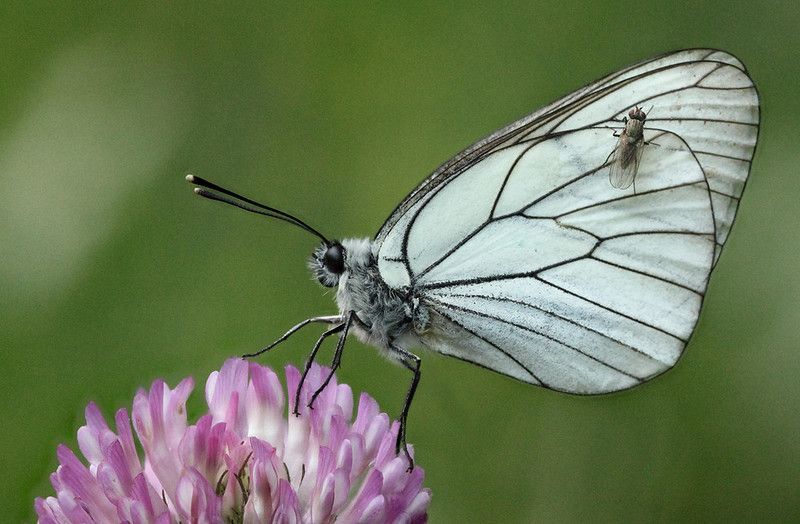
London | Small numbers of a nationally extinct butterfly, the black-veined white, have been spotted fluttering around southeast London, where naturalists – including the BBC’s security correspondent Frank Gardner – have celebrated their arrival. Not seen since 1925, despite efforts by Winston Churchill to bring them back, their sudden appearance was probably down to a rogue release rather than a spontaneous recovery, according to the charity Butterfly Conservation. The somewhat jubilant tone of the news coverage, including pieces in the Guardian and the Times, was tempered by the concern of other naturalists, who noted the potential harm that could result from an illegal and poorly managed introduction. Marcus Rhodes, an ecologist at the University of Exeter, gave a particularly thorough overview of what was at stake in a lengthy Twitter thread.
Dartmoor | Campaigners are calling on Prince William to rewild parts of his royal estate in Dartmoor to restore its ancient rainforest. The Prince of Wales inherited the Duchy of Cornwall estate, which covers more than 128,000 acres, after his father became king. Much of the estate is classed as being of special scientific interest and contains valuable fragments of temperate rainforest, yet campaigners say it has fallen into poor ecological condition. A petition signed by almost 60,000 people is urging William to support a plan that would reduce sheep grazing around areas of oak forest, allowing natural regeneration and expansion. Campaign group Wild Card said this would be “an undemanding first step”, and would translate William’s public concern for the environment into action. The Times covered the story.
County Durham | The Coal Authority has started work to restore a once-ancient woodland near Chester-le-Street in County Durham. Hag Wood survived intact for at least four centuries, until around 60 years ago, when its native woodland was cleared to make way for conifers. The Authority bought the site in 2004 to manage the mine water discharge that ran through the centre of the site, and now the timber trees are mature, they plan to fell the crop and restore the broadleaf trees that would once have grown there. Some of the ancient woodland ground flora – including wood sorrel, dog’s mercury and enchanter’s nightshade – clung on amid the darkness of the conifers, and the regeneration work will provide the dappled sunlight they require to thrive once again.
Elsewhere:
- Conservationists have found evidence of critically endangered freshwater mussels reproducing in Cumbria for the first time in 13 years, reports the BBC.
- A £1m campaign has been launched to restore dew ponds back to the South Downs landscape as breeding grounds for frogs, newts and toads, reports the Telegraph.
- Northumbrian Water has started work on a project to protect species of European eel on a stretch of the River Tyne, reports Chronicle Live.
- The Berkshire Wildlife Trust has launched a £46,000 project to explore wildlife-friendly farming methods on 20 hectares of arable land.
- Otter sightings on the River Cynon are on the rise after a project by the South East Wales Rivers Trust to clean up pollution in the river, reports the BBC.
- The Lancashire Wildlife Trust has planted a crop of blueberries on lowland peatland in Greater Manchester as part of their wetter farming trial.
- Forestry and Land Scotland said that controlling deer numbers has allowed woodland to regenerate around An Lochan Uaine in the Cairngorms, reports the BBC.
- Leicestershire Wildlife Trust is asking people to look out for glow worms as part of a project to conserve them, reports the BBC.
- The Jersey Hedgehog Preservation Group is urging people to “check before you chop” after an influx of hedgehogs injured by garden strimmers, reports the BBC.
- Canterbury City Council has approved plans from the Kent Wildlife Trust to build bridges that will allow the resident bison to roam a larger area of woodland, reports the BBC.
- Natural England has axed a requirement for the majority of farmers on Dartmoor to reduce livestock numbers this year, reports ENDS.
- The noble chafer beetle, a striking green beetle found mainly in Worcestershire, Gloucestershire and Herefordshire, is declining as a result of the destruction of orchards, reports the Guardian.
- Over forty farmers in Cornwall are working with the ‘Farm Net Zero’ project to reduce their carbon footprint, reports the BBC.
- A rare summer sighting of a humpback whale off the Cornish coast could suggest a species comeback, reports the Guardian.
- Dozens of small sharks have washed up on a Denbighshire beach, reports the BBC. The cause is yet unknown.
- Two hen harriers have disappeared under suspicious circumstances during May, one from Lancashire and one from North Yorkshire, reports the BBC and BirdGuides. The RSPB said it was a “huge blow for a struggling species”.
- Defra has announced there will be an independent review into the management of protected sites on Dartmoor. ENDS covered the news.
Reports
Wales | Natural Resources Wales has set out a plan to reverse the decline of nature in Wales by 2030. The corporate report outlines a vision for “nature and people thriving together”: the targets for 2030 are for nature to be recovering; communities to be resilient to climate change; and pollution to be minimised. As part of the plan, NRW has pledged to adopt a “greater advocacy role” due to the “scale and urgency of the collective challenge” to meet restoration targets. ENDS reported the news. Meanwhile, the Climate Change Committee has published a progress report on the reduction of emissions in Wales. It found that the Welsh government is falling behind on its targets, including peatland restoration and emissions from farming and land use. The rate of woodland creation is currently less than a third of the government’s target of 2,000 hectares per year, which the CCC said was already “significantly less ambitious” than it would hope for. The BBC covered the report.
Climate | Some habitats are more sensitive to climate change than others, according to a report by Natural England. A panel of experts was asked to rank the sensitivity of different habitats in both good and degraded conditions. Almost all were ranked from medium to highly sensitive, illustrating the overall vulnerability of the UK landscape to rising temperatures, but watery places tended to fare the worst. Lakes, ponds, wet lowland meadows, coastal grazing marsh, fens and swamps were ranked among the most vulnerable ecosystems. Drier habitats, such as lowland calcareous grassland, were relatively resilient. In cases where degradation was heightening the risks of climate change, the report suggests that tackling the cause of the problem would be more effective than a generalist approach towards restoration.
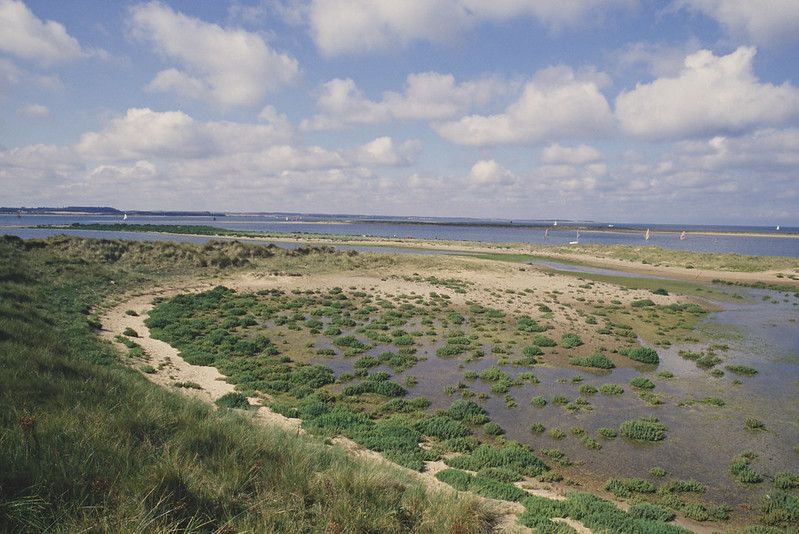
Oceans | On World Ocean Day, Whale and Dolphin Conservation (WDC) and Deloitte released a report looking into the value of ocean environments to the economy. Specifically, the report highlights the role of cetaceans as “Ocean Ambassadors” by demonstrating the significant contributions they make to both oceanic ecosystems and financial systems, from phytoplankton growth to the whale watching industry. The report examines the operations of four key industries – shipping, food retail, financial services and tourism – to present a framework for businesses to structure thinking around the true value of living marine species.
Science
Fungi | Mycorrhizal fungi could take up 36% of the world’s annual carbon emissions from fossil fuels every year, according to a study published in Current Biology. This is down to the millions of tonnes of carbon that are allocated to mycorrhizal biomass annually, contributing to soil carbon pools. The research demonstrates the need to safeguard hidden fungal networks, as the authors explain in The Conversation. “As we search for ways to slow or stop the climate crisis, we often look to familiar solutions: cutting fossil fuel use, switching to renewables and restoring forests. This research shows we need to look down too, into our soils,” they write. Co-author Merlin Sheldrake, best known as the author of Entangled Life, emphasised the large uncertainty values and the need for better understanding of carbon flows to mycorrhizal fungi – accompanied by a characteristically mind-bending graphic. The New Scientist covered the findings. Sheldrake, incidentally, is also the subject of an in-depth profile in the New York Times this week.
Invertebrates | Invertebrate species are disappearing twice as fast in areas of intensively farmed crops, according to a study in Proceedings of the Royal Society B. Researchers used citizen science datasets to study the population trends of more than 1,500 species, comparing regions of low and high crop cover in the UK over the last 30 years. Although they found declines across the board, the steepest declines were in areas of high crop cover, suggesting that efforts to promote wildlife-friendly farming techniques are not yet widespread enough to conserve and restore invertebrate numbers. The authors suggest that post-Brexit changes to agricultural policy and reforms under the Environment Act offer opportunities to improve the sustainability of agricultural ecosystems. The Guardian covered the research.
Monitoring | One of the biggest challenges in researching biodiversity loss is the ability to monitor biodiversity change at scale. However, a study in Current Biology suggests that air pollution monitors could provide an answer. Researchers realised that the network of thousands of air filters, which are continually testing for air pollutants, were also picking up traces of airborne environmental DNA (eDNA). Testing of two UK stations – one outside of Edinburgh and the other in a London park – uncovered the presence of more than 180 species, including little owls, hedgehogs, smooth newts, and 80 types of plants. In the paper, the authors write that the discovery could be “game changing” for biodiversity monitoring, and the infrastructure “may represent a tremendous opportunity to collect high-resolution biodiversity data on national scales”. Carbon Brief, the Guardian and BBC Future covered the research.
Driftwood
Wolves | The British have a moral duty to learn to live with wolves, says Ben Goldsmith, one of the country’s most prominent rewilding advocates. “Countries which are significantly poorer and more food-insecure than we are, we expect them to look after their wolves and their lions and their jaguars and all these other charismatic species, but when it comes to Britain — ‘no, no, no’,” he said in a talk at the Hay Festival, which was covered by the Times. However, a separate article in the same paper asks whether too many farms across Britain have already been sold for rewilding. The yardstick for this judgment is whether young people can afford to enter the farming profession, with the demand for nature-based solutions pushing up land prices.
Kelp | Positive News covers the return of England’s kelp forests, thanks to targeted restoration efforts. These ecosystems have suffered in the past due to supertrawlers, which stripped the seabed bare; off the Sussex coast, more than 96% of these underwater forests were destroyed, with devastating impacts on the local fishing industry. Thanks to campaigning work and scientific endeavour, the seabed is now on the mend, with evidence of emerging mussel beds more than a mile wide and rising lobster catches. While this is just the beginning of the task of restoring the island’s kelp forests, it is nonetheless an inspiring example of what can be achieved when local people take on corporate interests, the feature concludes. Kelp farming also made an appearance in the Economist this week.
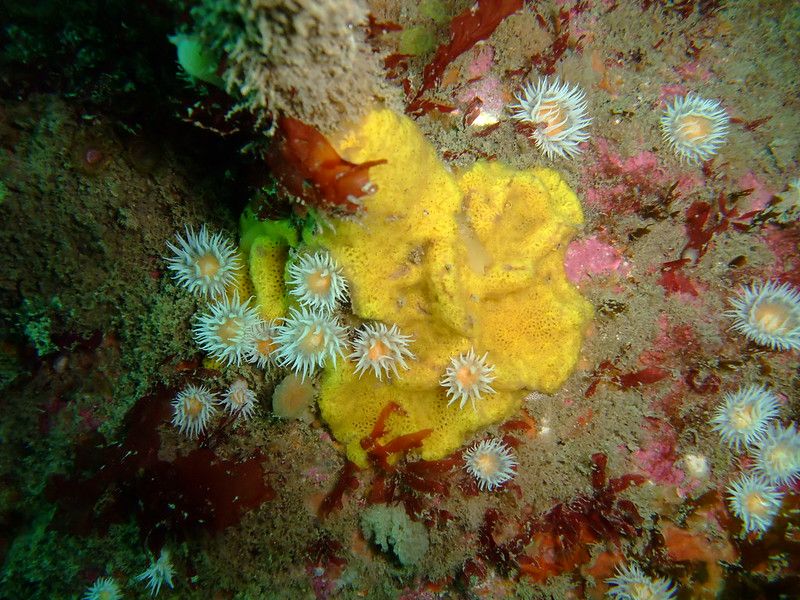
Fisheries | Scotland’s small-scale fishers speak out against government proposals for highly marine protected areas (HPMAs), which would impose strict limits on human activities in around a tenth of Scottish waters, in a feature in the Guardian. “It’s about justice,” says Angus MacPhail, a creel fisher off Barra in the Outer Hebrides, whose song comparing the policy to the Highland clearances reached No 9 in the iTunes download chart 24 hours after its release. While advocates suggest that "no-take zones" are a moderate step that could lead to significant ocean recovery, marine conservationists are also critical of the government’s failure to engage with coastal communities. The plans have also exposed tensions within the SNP. "There’s a feeling of hopelessness that anonymous bureaucrats in Edinburgh can impose policies without thought to rural needs, whether that’s ferries, roads, housing or schools," said MSP Kate Forbes, a backbench rebel, who represents Skye, Lochaber and Badenoch.
Further reading:
- An article in the Guardian probes whether the public should be concerned about pesticides.
- This BBC Future article explores why it is difficult to find cultivated meat on menus over a decade since it was first created.
- In the New Statesman, environmental journalist India Bourke writes about how Labour’s pledge of £28bn for the green economy could deliver beyond climate.
- To celebrate Pride month, a feature by the British Ecological Society speaks with Brigitte Baptiste, described as an LGBTQIA+ powerhouse in ecology.
- This BBC video showcases how Dr. Margaret Bradshaw is inspiring a new generation of botanists in Teesdale.
- A BBC article explores how climate change is affecting young people’s mental health, and what can be done about it.
- A blog written by John Holmes, the strategy director of Natural England, outlines joint advice from NatureScot and Natural Resources Wales on how to best approach pine marten conservation.
- In this opinion piece, Countryfile presenter Ellie Harrison writes about why nature is “felt” rather than named, in light of the renaming of the Brecon Beacons.
Happy days
Balmoral | Balmoral Castle, the royal family’s Scottish home, is hosting the UK’s first virtual capercaillie lek. The idea is to allow visitors to experience the rare birds’ captivating mating displays without disturbing them in the wild. “We aim for it to be an immersive experience where people can hear the woodland sounds and see a lek, but without being out in the woods,” said Elspeth Grant, project officer at the Cairngorms Capercaillie Project. The display will take place in the castle stables, and will open by September of this year. The Times reported the story.

Subscribe to our newsletter
Members receive our premium weekly digest of nature news from across Britain.
Comments
Sign in or become a Inkcap Journal member to join the conversation.
Just enter your email below to get a log in link.