Biodiversity Indicators & Beaver Genetics
The latest news on nature and conservation in Britain.
National news
Biodiversity | Defra has confirmed it will not publish two-thirds of the metrics it uses to track biodiversity health in England this year. The New Scientist initially reported that Defra would pause reporting on all 24 indicators, to enable a “thorough review” of the indicators ahead of the biodiversity summit in Canada later this year. Instead, Defra has stated that it will publish data from seven of the indicators, chosen according to availability, user needs and timeliness. These indicators include protected areas, butterflies, pollinating insects, and biodiversity expenditure. Defra has said that it does not “anticipate” the pause will lead to missing data on the other 17 indicators, which should be made available in 2023. The decision was published as a footnote on Defra’s website. Chris Packham tweeted that the decision demonstrated “yet more poor practice and cowardice” from Defra, while Mark Avery, co-founder of Wild Justice, said: “Defra is failing to tackle wildlife loss and so it has decided to bury the evidence. This is a department with no shame.”
Farming | Prime Minister candidates Rishi Sunak and Liz Truss have set out their respective plans to support British agriculture, if they were to take the reins. Both spoke on the subject at Conservative hustings at the end of last week. Truss vowed she would capitalise on the opportunity of Brexit to “unleash British food and farming” through deregulation and cutting red tape. Sunak also majored on food security, but went further with plans for “significant reforms” to farming. He proposed a new statutory target to boost domestic food production, as well as a target for sourcing half of public sector food locally. He also promised to introduce regulations to protect the best agricultural land from rewilding, solar farms, and housing developments. Although he promised to promote the environment, Sunak said he wouldn’t go as far as telling people not to eat meat. George Eustice and Defra agriculture minister Victoria Prentis have publicly supported Sunak’s campaign. Farmers Weekly, the Telegraph, the Independent and the Yorkshire Post reported the story.
Parks | The government has launched its Levelling Up Parks Fund, a £9m initiative which will finance over 100 new and improved parks in urban areas. In England, the government is using data from Natural England’s Green Infrastructure Framework Mapping to identify the urban areas most deprived of quality green space. The cash will then be given to councils to create new parks or revamp their existing green spaces, with Liverpool, Birmingham, Carlisle and 16 London boroughs set to benefit from the fund. £1m has been set aside for the devolved administrations, while another £2m is dedicated to tree-planting. Tony Juniper, chair of Natural England, said: “This investment will create new habitats for our precious wildlife and build beautiful places for everyone to enjoy, with our data and expertise supporting the development of green spaces in areas where communities say they are needed the most.”
In other news:
- Defra has announced funding of up to £1m each for 17 projects researching sustainable fisheries practices, from the £100m UK Seafood Fund. In the Northern Echo, Defra minister Victoria Prentis writes about how the Fund will benefit fishing industries in the northeast.
- The recent lack of rainfall is “hugely challenging” for farmers across the country, reports the BBC and the Times. Even as the weather cools, the risk of field fires remains high, with one farmer losing £40,000 worth of crops.
- First Minister Mark Drakeford has announced that Wales will launch a new platform for nutrient offsetting and trading to tackle river pollution.
- Defra has introduced new legislation to crack down on illegal hare coursing, reports the BBC.
- Research has revealed widespread contamination of British waterways from medicinal drugs, potentially harming freshwater wildlife. Buglife, ENDS and the Ferret reported the news.
- It is “game over” for the UK’s bird shooting season, according to the Guardian, with a combination of bird flu and Brexit delays shutting down dozens of shoots.
Across the country
Morvern | RSPB Scotland is aiming to restore a section of Scottish rainforest after taking over responsibility for Glencripesdale, a former National Nature Reserve on the Morvern Peninsula. The reserve was sold to the charity by NatureScot, who said it was an “exceptional opportunity” to support a landscape-scale restoration project. Temperate rainforest is a rare and highly fragmented habitat in Scotland, but vitally important for biodiversity: in good condition, one hectare of rainforest can contain up to 200 species of lichen and 200 mosses and liverworts, as well as specialist species of birds and insects. RSPB Scotland said it is excited to work with the local community and landowners to restore the woodland, and that it had “not underestimated” the challenge this will present in such a remote location. The charity is planning to plant trees such as aspen and holly to restore the woodland’s natural diversity, while removing invasive species such as rhododendron and Sitka spruce, and reducing the impact of deer on tree regeneration. The BBC and the Herald reported the news.
Bath | Dan Norris, Mayor for the West of England, has announced a £1m fund to boost bee numbers across the region. Grants of up to £100,000 will be offered to projects that aim to protect and expand habitats which support bees, from planting wildflower meadows in schools, to installing green roofs on community buildings, or constructing new “bee paths” in urban areas. Speaking ahead of a visit to Grow Batheaston, a community-focused sustainability charity, Norris pledged to make the west of England the “Bee and Pollinator Capital of the UK”. He said: “Bees are quite simply vital to make sure crops are pollinated and we have food to eat. But our pollinator pals have faced a tough few years so they need a helping hand.” The Bath Echo reported the story.
Lincolnshire | East Lindsey District Council has granted the National Trust permission to begin work on transforming an 18-hole golf course near Mablethorpe into a nature reserve, reports the Leicester Mercury. The Trust purchased the land two years ago, but their plans to turn the 74-acre site into a reserve were only authorised last week. The site constitutes the Trust’s first coastal land in the Midlands, and will form part of the Lincolnshire Coastal Country Park. The charity said that future visitors can look forward to seeing the blooms of yellow flag iris and purple loosestrife in summer, and admiring the flight of whooper swans in winter. The reserve will be an important new home for breeding birds like snipes, lapwings and oystercatchers, as well as migratory species such as black-tailed godwits. Trust employees are now carrying out surveys to inform further planning applications for wildlife habitat areas and visitor facilities, although it will be several years until the transformation is complete.
Elsewhere:
- The Northumberland Wildlife Trust has employed three goats to trial a targeted grazing scheme on East Chevington’s wildflower meadows.
- South Gloucestershire Council has committed to transforming a farm near Bristol into a river and nature reserve after 2028, reports the BBC.
- A former gamekeeper at Millden Estate, near Dundee, has been jailed for eight months for using terriers to fight badgers and foxes, reports the Guardian.
- Protestors are “utterly devastated” after failing to stop the felling of a 450-year-old oak in Somerset, reports the BBC.
- Staffordshire Wildlife Trust has launched a fundraising appeal for £81,000 to purchase Gun Moor Meadow, a missing ‘jigsaw piece’ from their larger site in the Peak District Moors.
- NatureScot has banned public landings on Mousa island in Shetland to protect the population of storm petrels from bird flu, reports the Herald.
- Residents of a new housing estate in Kent could be banned from owning cats, after wildlife groups voiced concern over its proximity to important nightingale habitat, reports the BBC.
- Castle Hill Hospital in Cottingham has employed 51 sheep to keep the grass short in its multi-million-pound solar farm, reports the Hull Daily Mail.
- Tees Valley authorities have put measures in place in case of blockades protesting the mass crustacean deaths, reports the Northern Echo. Meanwhile, the Teeswork project has confirmed dredging will begin again in September despite concerns, reports ENDS.
- NatureScot has announced £1.5m in funding for an additional 94 rangers and 15 operational staff across Scotland’s most popular natural sites, reports the Scotsman.
- Experts have warned that plans to dispose of radioactive nuclear waste off the Cumbrian coast pose serious risks to marine life, reports the Guardian.
- Visitors to the Ecrehous and Minquiers reefs off Jersey are being asked to use safety equipment to collect dead seabirds so they can be tested for bird flu, reports the BBC.
- Meanwhile, the RSPB has confirmed that avian flu has reached an internationally important colony of gannets on Grassholm, off the Pembrokeshire coast, reports Wales Online. And, in Scotland, David Steel, manager of the Isle of May nature reserve, is concerned that departing seabirds may take bird flu with them and spark a global pandemic, reports the BBC.
- The Cheshire Wildlife Trust has announced that one of its nature reserves, home to endangered water voles, is set to be compulsory purchased by HS2.
Reports
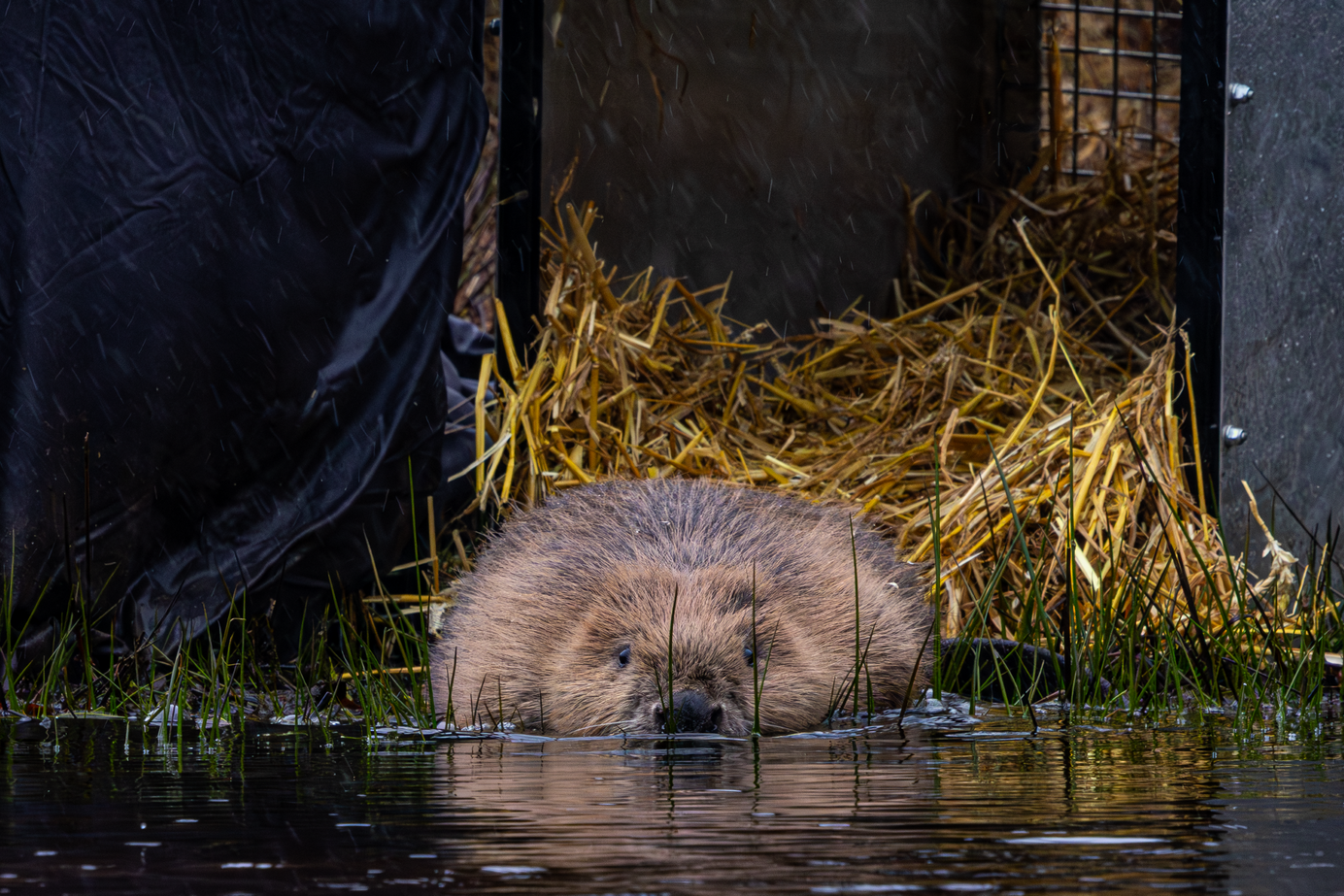
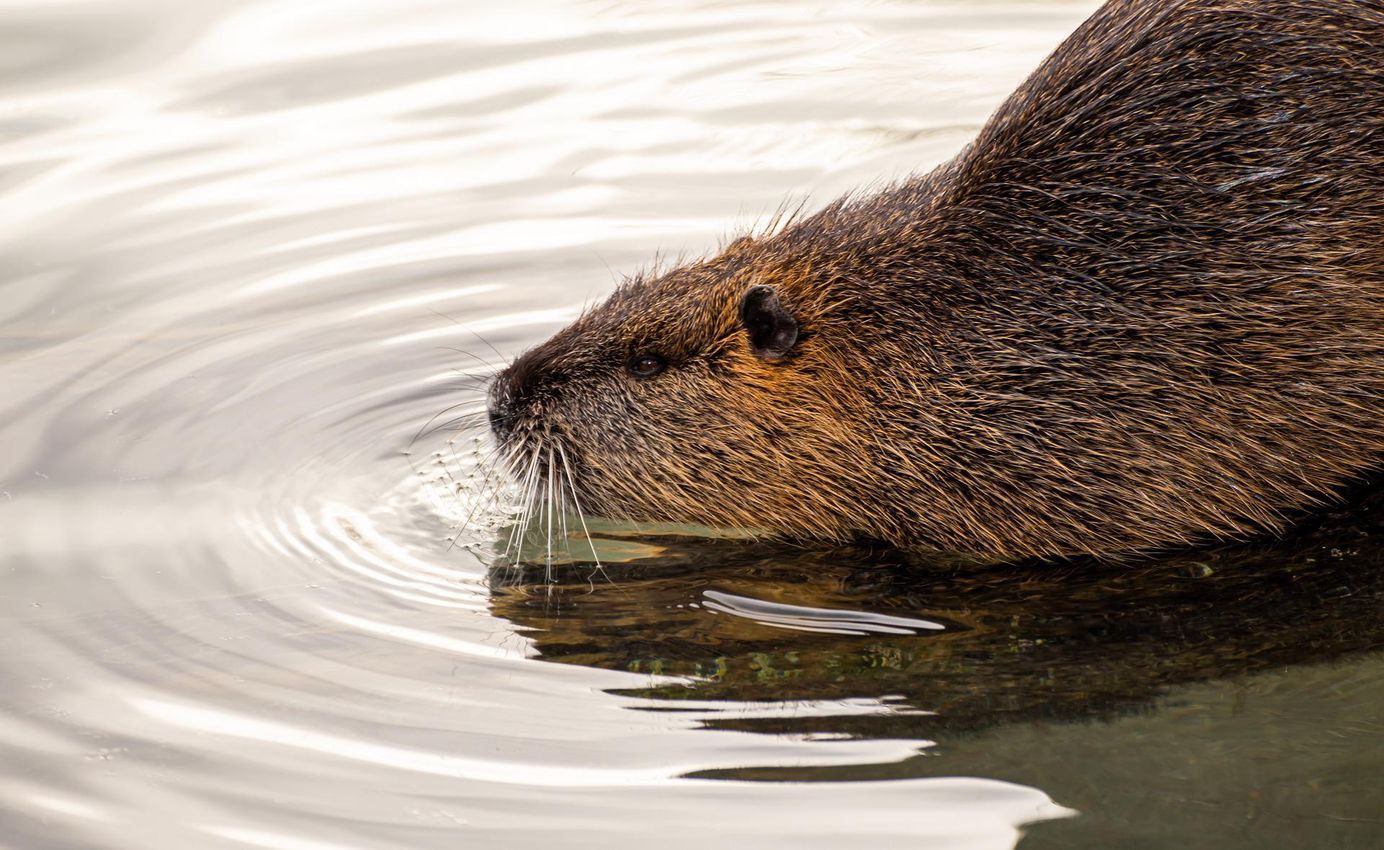
Beavers | A report commissioned by Natural England investigates the genetic diversity of beavers in England. Its purpose is to inform the government’s approach to beaver reintroduction: genetic diversity is important for long-term population health, and therefore a key element of a successful management strategy. The report includes samples from both free-living beavers and those in enclosures. For each population, researchers tested genetic diversity and relatedness amongst individuals, and compared the results to populations in Scotland and across Europe. It found that, when taken as a country-wide metapopulation, beavers in England had a similar genetic diversity to populations on the continent. The authors recommend maximising and retaining genetic diversity by using new population founders from multiple sources, particularly Europe, and allowing population sizes to increase. They add that, given the currently fragmented distribution of beavers in England, continued translocations and reinforcement is required to maintain genetic health.
A report published today by @NaturalEngland has found that translocations of #beavers from conflict sites in Scotland to projects in England has provided additional genetic diversity to the English population! pic.twitter.com/0iiKl8Icho
— Beaver Trust (@BeaverTrust) August 3, 2022
Compost | Last year saw a dramatic reduction in the amount of peat used in gardening compost, according to a report by the Horticultural Trades Association (HTA) and Growing Media Association. The Growing Media Monitor reports on trends in the composition of UK compost supplied from 2011 to 2021. It found that the proportion of peat in total volume of compost fell from 41% in 2020 to 36% in 2021, a reduction equivalent to 600,000 cubic metres. The report states that the drop is due to a continuing trajectory of peat removal from the supply chain. Increasing specification of peat-free products by retailers, growing proficiency in manufacturing such products, and the lack of availability of peat have all accelerated its removal from the sector. The National and the Shropshire Star reported the news.
Pesticides | A report by the Pesticide Action Network warns that a trade deal between India and the UK could significantly threaten British pesticide standards. The UK and Indian governments are currently negotiating a Free Trade Agreement (FTA), which could be finalised by October. Trade deals encourage regulatory alignment on a wide range of issues, and, as one of the world’s largest agricultural exporters, India has an economic interest in weakening UK pesticide standards to increase market access, the report says. The Action Network argues that, while far from flawless, the UK’s pesticide regulations are currently much stronger than India’s. The report makes a series of recommendations to the government, including adequately resourcing its borders to prevent products with illegal levels of pesticide residue from circulating in the UK, as well as ensuring that British farmers are not disadvantaged by cheap food imports produced to weaker standards – especially food grown using pesticides banned in the UK. It also urges the government to publish detailed assessments on the likely health and environmental impacts of an FTA on pesticide use.
Science
Farming | Nature-friendly farming methods can significantly benefit bird and butterfly populations while maintaining levels of food production, according to a paper in the Journal of Applied Ecology. In the longest-running study of its kind, researchers from the UK Centre for Ecology and Hydrology monitored biodiversity at Hillesden, a commercial farm in Buckinghamshire, where up to five percent of the farmland has been replaced with wildlife habitats – including patches of wildflowers, seed-bearing plants and grass margins. After a decade, researchers found that the majority of 12 bird species and nine butterfly species had fared better at Hillesden than in comparable farmed landscapes without such measures. A previous UKCEH study, conducted for six years during the same period, found that overall yields at Hillesden were maintained – and enhanced for some crops – despite the loss of agricultural land. The Guardian reported the research.
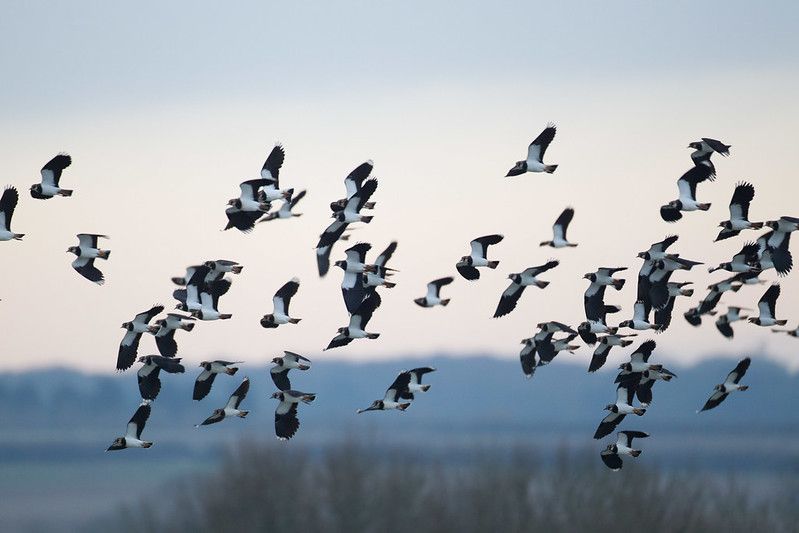
Waders | A paper published in Ibis exploring conservation interventions on British nature reserves found that the size of a reserve contributes significantly to wader numbers – with the general rule that “bigger is better” – but also that older reserves supported higher numbers of pairs. The study also found that fencing out ground predators is important, with numbers of lapwing and redshank in particular boosted by predator-exclusion fences. However, the authors admit that fencing entire areas of lowland wet grassland is impractical at many sites. An RSPB blog written by the lead author of the study, Sean Jellesmark, summarises the key findings.
Climate | A brief paper in Conservation Letters argues that the recent past is not a reliable guide to the consequences of climate change, and that conservation must look ahead if it is to successfully anticipate and mitigate biodiversity loss. The paper responds to a study published earlier this year, which contends that climate change does not necessarily pose a significant threat to biodiversity, and that rising global temperatures have not been a major recorded driver of extinctions since 1900. However, the rebuttal paper argues that the accelerating and non-linear nature of climate change renders this a false argument. It points out that the decline of individual species, while easier to measure, hides the more “pervasive and critical impacts” of climate change on entire ecosystems. “Conservation science must quickly orient itself toward the oncoming threats we face,” the authors conclude, adding that there needs to be a particular emphasis on understanding how rapid climate changes will interact with other drivers of biodiversity decline, such as overexploitation and habitat fragmentation.
Driftwood
Manifesto | James Cullimore, programme manager at the Conservative Environment Network, has written a “mini-manifesto” for nature, outlining what the next Prime Minister should do for the environment in order to appeal to voters. He calls for a national plan to restore British rivers, including cleaning up sewage and introducing unlimited fines for water company breaches. He also suggests better protection for veteran trees, to safeguard the UK’s “ancient arboreal monuments”, and the development of a national register to give historic trees the same statutory protection as other monuments. A plan for ancient woodlands should also include the UK’s diminishing rainforest habitat, he writes, with a dedicated fund for restoration. Thirdly, Cullimore suggests reinvigorating the countryside by driving nature recovery in National Parks and AONBs, as well as establishing a Wildbelt designation to safeguard green land on the edge of cities. Taken together, these three plans would amount to “an inherently conservative offering to the public,” he says. The mini-manifesto was published by CapX.
Sewage | A long read in the Guardian examines the work of the “sewage sleuths”: two men responsible for uncovering the slow death of British rivers by sewage pollution. Peter Hammond and Ashely Smith were neighbours, both living near the Windrush – a tributary of the Thames – when they noticed the health of the river was deteriorating rapidly. After making enquiries in 2017, Smith discovered that untreated sewage had been dumped into the Windrush 240 times in the past three years. The following year they set up Windrush Against Sewage Pollution. Hammond, a retired academic specialising in machine learning, repurposed his software to search sewage data for flaws. Meanwhile, Smith – a retired detective superintendent – put his investigative skills to use hunting out incriminating information. Their revelations have since spurred regulators to investigate water companies across the country, but the pair are still fighting for improvement. “Even if you made the government’s response ten times better than it is now, it would still be rubbish,” said Smith. “It needs a complete overhaul to take away criminality being rewarded. Because that’s the model.”
Wheat | A feature in the Times introduces a team of scientists who have grown 5,000 new types of wheat in a field in Cambridgeshire. Among these, they hope a few could prove to be “climate-ready” strains which can survive in a warmer, drier climate. It is one of the largest studies of its kind – and such work is becoming increasingly urgent. The researchers are relying on the genes of ‘tauschii’, a species of grass which grows in harsh environments in central Asia, and which acted as a central pillar of modern agriculture thousands of years ago. Now, the team are attempting to create a more resilient wheat through a sort of plant IVF, nurturing embryo seeds in an artificial environment to introduce a greater diversity of tauschii genes. Dr. Sigrid Heuer of the National Institute of Agricultural Botany, which is leading the work, said: “A lot of the traits that we need to make our wheat climate-ready and secure are hidden in what we have in this field, growing right now.”
Further reading:
- Defra has published a blog outlining its actions to combat the bird flu outbreak, although it states that “mitigation measures” are ineffective in reducing transmission.
- In the Scotsman, an article explains how writers are using stories and poetry to shine new light on the Flow Country, home to some of Scotland’s critical peat bogs.
- A Countryfile feature explores the return of bluefin tuna to Britain’s oceans after disappearing for 60 years.
- An opinion article in the Scotsman by Ross Ewing, moorland director at Scottish Land & Estates, discusses how managed grouse moors in Scotland benefit biodiversity as well as the economy.
- A feature in the Guardian investigates who is behind the rash of “tree murders” in affluent urban areas.
- A video by the BBC showcases a piece of giant sand art in Northumberland, which is highlighting the vulnerability of local wildlife.
- An article in the Guardian by author and conservationist Stephen Moss outlines how the summer drought is affecting British wildlife.
- An article in the Herald highlights the importance of soil in tackling climate change, as the World Congress of Soil Science currently takes place in Glasgow.
- A feature in Rewilding Mag by Oliver Clanford explains how he spent eight years rewilding his horse paddock, which last year welcomed 49 species of birds.
Happy days
Pints | “A beaver walks into a bar…” might sound like the start of a bad joke, but in fact pub-goers in Norton Canes were shocked on Monday to be joined by a large beaver at their local, the Yew Tree Pub. The beaver “strolled” into the pub before heading out to the beer garden, where it lay washing itself until volunteers from a wildlife sanctuary arrived to retrieve the animal, reports the Birmingham Mail. Lindsay Newell, from Linjoy Wildlife Sanctuary and Rescue, said it was the first time they had been called out to retrieve a beaver. "Locals were joking that maybe he had been looking for a pint of Beavertown Neck Oil,” she added. They discovered it was chipped, and the beaver was safely returned to the enclosure from which it had escaped.

Subscribe to our newsletter
Members receive our premium weekly digest of nature news from across Britain.
Comments
Sign in or become a Inkcap Journal member to join the conversation.
Just enter your email below to get a log in link.