Beavers in Wales & Capercaillie Rescue
The latest news on nature and conservation in Britain.
National news
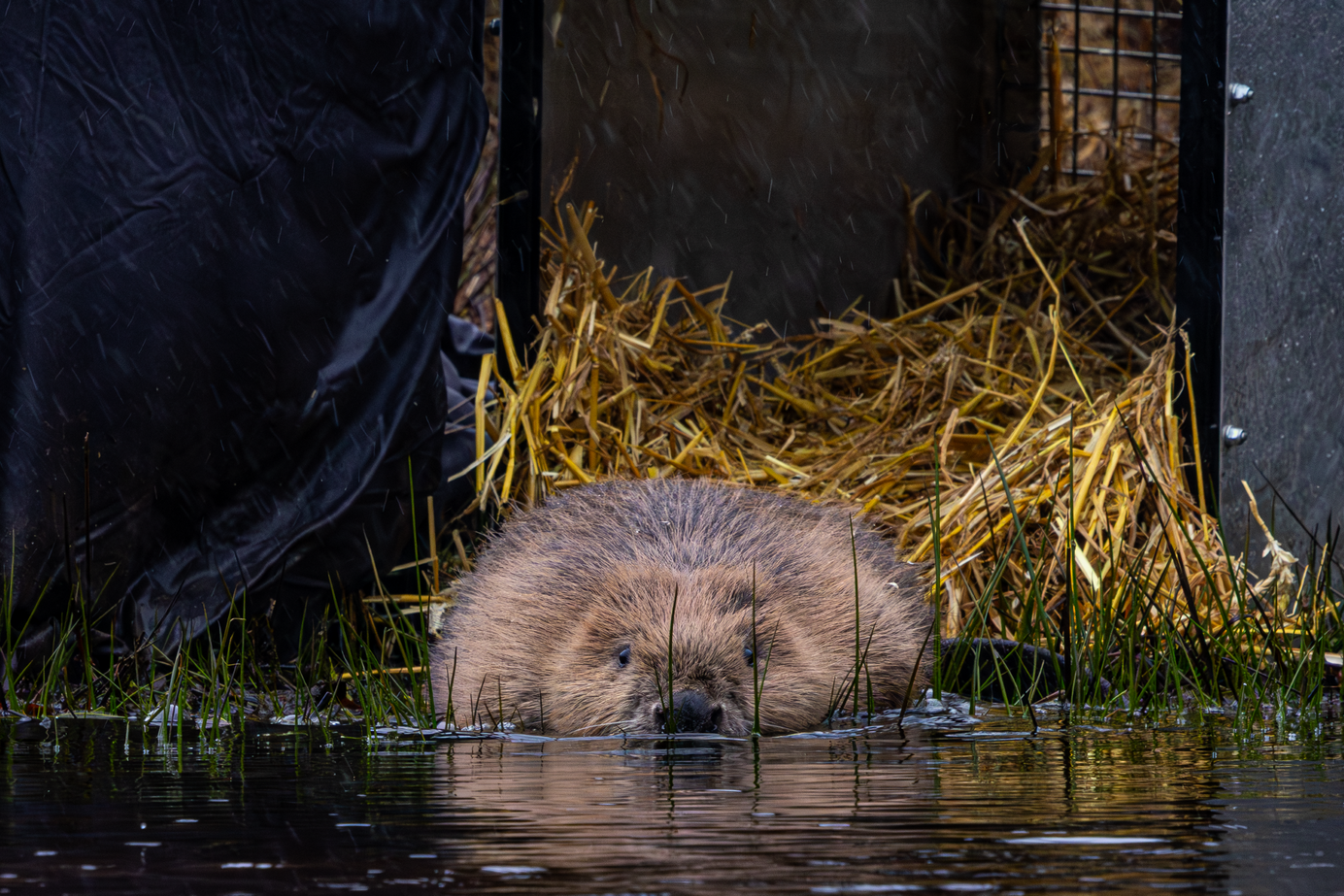
Beavers | The Welsh government has announced its support for the reintroduction of beavers. In a statement, Huw Irranca-Davies, the deputy first minister, spoke of the benefits that the species brings to ecosystems, and said that the focus would be on ‘renewed coexistence where wildlife can thrive alongside human communities’. Small numbers of beavers are currently present in Wales, but they are neither recognised as a native species nor afforded legal protection. People will now be encouraged to suggest legislative changes to safeguard these populations, while officials will engage with a multitude of stakeholders, recognising the potential for conflict. ‘This is great news from the Welsh Government – it can't happen fast enough,’ said Tim Birch of Wildlife Trusts Wales. The Beaver Trust encouraged the government to be ‘more proactive’ by providing clearer timelines. WalesOnline and the Daily Post were among those to cover the news.
Rewilding | Highlands Rewilding, the company run by solar entrepreneur Jeremy Leggett, has announced that it is selling three plots of land amounting to £11.1 million – the majority of its holdings – in an attempt to pay back the loan taken out for its most recent purchase. Leggett said that local communities would have first refusal on the purchase, but admitted that there was little time for them to raise the funds – the loan is due back by the end of January – and that in a worst-case scenario he would be forced to sell the land on the open market. He added that the company had ‘deliberately skated on thin ice’ when taking out the loan, leading to concern from some quarters. Nonetheless, at least one community is up for the challenge, with the Glen Urquhart Rural Community Association announcing that it would explore all options for purchasing all or part of the Bunloit estate, with the support of Trees for Life. The Scotsman has provided regular reports on the story.
Nature | Just under 3% of land in England is effectively protected for nature, according to Wildlife and Countryside Link, in its annual update on progress towards the target of protecting 30% of land and sea by 2030. This represents a decline on the previous year, when 3.11% of land was effectively protected. The drop is due to a steady decline in the number of sites of special scientific interest in good ecological condition. The amount of protected sea has risen slightly, from 8% last year to 9.92% this year. Richard Benwell, president of the charity, called on the government to deliver a ‘rapid rescue package for UK nature’, given the current state of ‘chronic neglect’. The Guardian covered the news. Separately, WWF released its own analysis, showing that the majority of countries are not fully honouring their 30x30 commitments, with only 10% having submitted their updated national plans on halting and reversing biodiversity loss.
In other news:
- A new initiative is providing £15m to local councils for improving access to nature in towns and cities.
- The UK will miss the UN’s deadline to publish a new national plan for tackling nature loss, according to Carbon Brief.
- The public consultation on Wales’ new national park will begin next week, reports the Leader.
- Senior Tories may push for the party to become pro-fracking, reports the Guardian.
Across the country
Sussex | The Knepp Estate may be beloved for its rewilding efforts, but it has long drawn criticism for continuing to host the Crawley & Horsham Hunt on its land. But no more. The estate recently updated its policy on trail hunting – the legal alternative to fox hunting – to announce that it was suspending the hunt ‘in the name of public safety’. Dense scrub, pockets of bog, free-roaming livestock and fallen trees meant that the land was no longer suitable for galloping horses, they wrote. Protect the Wild, which campaigned against the old policy, suggested that the decision had been influenced by ‘an outraged public, and by footage of wildlife chases, captured by West Sussex Sabs and others’ and called it a ‘massive victory’ for foxes and other wildlife. The Argus covered the news.
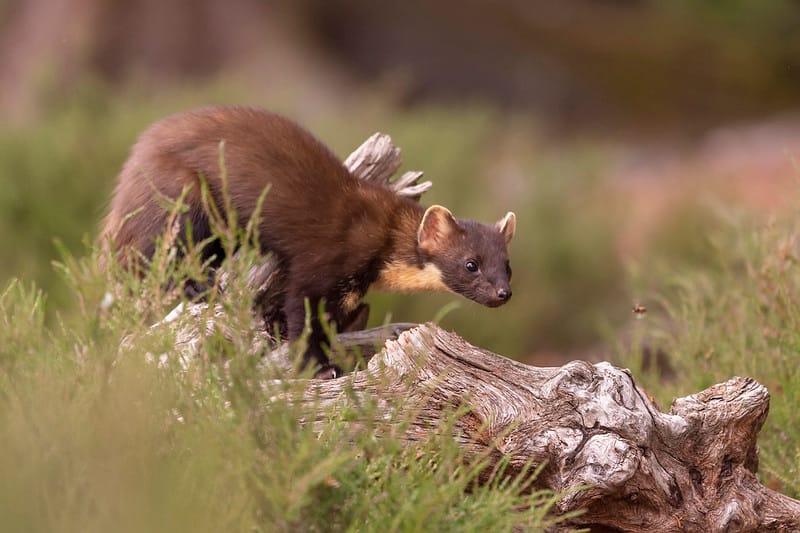
Dartmoor | Pine martens went extinct in the southwest of England more than a century ago, following centuries of habitat loss. Now, on Dartmoor at least, the animals are finally back. Eight females and seven males were released at secret locations during September, following two years of planning and consultation with local communities, as part of the Two Moors Pine Marten Project, led by the Devon Wildlife Trust in partnership with various other conservation organisations. A further release is planned for Exmoor in 2025. Each animal has been fitted with a radio collar and will be carefully tracked. The news was covered by the Guardian, the BBC and the Times.
Cambridgeshire | A project led by the Wildlife Trust for Bedfordshire, Cambridgeshire and Northamptonshire has uncovered some 1,300 hectares of previously unknown ancient woodland across the three counties. Katherine Flach, habitat survey officer, identified patches of forest that had been around since at least 1600 AD, consulting the existing Ancient Woodland Inventory and comparing it to old maps held by Cambridge University and the Cambridgeshire Archives. She also used LiDAR and ground surveys to explore any promising sites. Some of these pockets of precious habitat are near to urban centres and often publicly accessible. ‘Knowing where those really valuable biodiverse areas are means you can try and join up these landscapes and draw up buffers around these really important sites,’ said Flach. The BBC reported the news.
Elsewhere:
- Northumbrian Water is set to transform a patch of poor quality grassland in County Durham into a thriving habitat, reports the Northern Echo.
- Two beaver kits have been born on the Lowther Estate near Penrith in Cumbria, reports the BBC.
- Grey squirrels could soon be eradicated from Aberdeen as the native reds finally gain a foothold, reports the Times.
- An investigation has been launched after dead fish, blood and scales were pumped into a river in Fort William, the BBC reports.
- This week marked the one-year anniversary of the felling of the Sycamore Gap tree. A section of the trunk now forms part of an exhibition commemorating the famous sycamore.
- The discovery of a dead fox in Orkney, where the animal is not native, has sparked concern for other wildlife, reports BirdGuides.
- Manchester’s persistently rainy climate could provide a refuge for southern plant species as climate change worsens, reports the Guardian.
- The western cattle egret has bred at two new sites in West Sussex this summer, reports BirdGuides.
- Two species of butterflies have expanded their range throughout Scotland, in what is thought to be a response to climate change, according to Butterfly Conservation.
- Kent Wildlife Trust has released more choughs near Dover, reports the BBC.
- Around 70 endangered crayfish have been found dead in the River Wansbeck in Northumberland, reports the BBC.
- Chester Zoo has planted 19,000 new trees in a bid to combat climate change, reports ITV.
Reports
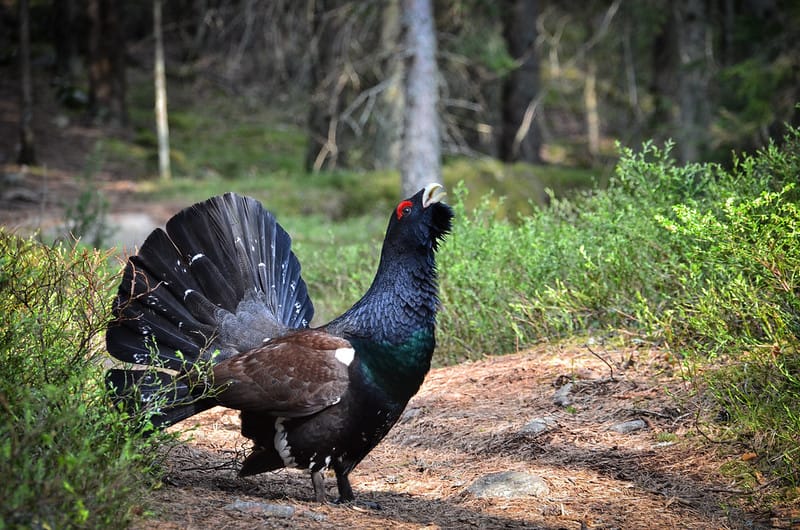
Capercaillie | The Cairngorms National Park Authority and NatureScot have published an emergency plan to save the capercaillie. Only 532 capercaillie survive in the UK today, all of them in Scotland, and the bird is set to go extinct within the next 30 years unless action is taken. The plan looks at how key habitats may be expanded and improved, ways to limit predation, the removal of fences and the reduction of human disturbance. It is also possible that the Scottish population could be bolstered by birds from outside the UK. Notably, the plan does not include the culling of pine martens, one of the capercaillie’s main predators, relying instead on the tactic of diversionary feeding. The success of the plan will depend upon the availability of both public and private funding, and the willingness of stakeholders to collaborate. The news was covered by the Times, the BBC and the Herald. Inkcap Journal has also covered the challenges of capercaillie conservation in a feature by Benedict Macdonald.
Parks | Scottish ministers have committed to designating a new National Park in Scotland by 2026, with Galloway as the proposed location. Following that news, ScotLink published a report showing how Scotland’s two existing national parks – the Cairngorms and Loch Lomond & The Trossachs – actually benefit the farmers who operate within them. These farmers have access to additional funding designed to help achieve the parks’ wider social, economic and environmental objectives, and can avail themselves of the enhanced marketing opportunities that come from working within famous landscapes. The two National Park Authorities have also helped farmers to diversify their income streams, through both accommodation and tourism offerings. Deborah Long, director of ScotLink, said that a key objective of National Parks is to ‘support farming and other food production’, recognising the long history of human management in these landscapes. The Herald covered the news.
Topsoil | New data, gathered across four decades by scientists at the British Geological Survey, has revealed the sorry state of the UK’s urban soils. The scientists found elevated levels of several elements, including antimony, arsenic, cadmium, calcium, copper, lead, tin and zinc, which are potentially harmful to humans. The data has been made publicly available via the UK Soil Observatory web portal. It is presented in map form, and can be compared with layers showing soil biodiversity, carbon, woodland and crops, among other things. It is the first time that such a large-scale dataset has been used to evaluate environmental pollution in the UK, and the information has the potential to inform research into the effects of soil chemicals on public health, as well as land use and food production.
Science
Birdsong | Soundscapes that include richer birdsong contribute to our wellbeing, according to an innovative study published in People and Nature. The authors, from the universities of East Anglia and Cambridge, hid speakers around English vineyards, creating a louder and more complex soundscape for visiting tourists. Those who experienced the enhanced birdsong subsequently reported that they had enjoyed the tour more, and felt more optimistic and relaxed, than those who heard only the ‘natural’ soundscape. The effect was particularly pronounced for visitors who engaged in pro-environmental behaviours, such as buying organic food. The findings show how biodiversity conservation can directly contribute to human happiness. The authors suggest that natural soundscapes should thus be recognised as natural capital, and their protection should be incorporated into conservation planning and policy. The findings are summarised in a blog.
Forests | Extinct megafauna had a significant role in structuring the vegetation of forests during the Last Interglacial, according to a study published in the Journal of Ecology. During this temperate period, hazel and yew trees were more abundant than during the pre-agricultural period of the Holocene. These differences cannot be explained by climatic factors alone, suggesting that some other major disturbance was at play. This was unlikely to have been fire, given that yew trees are sensitive to flames, leaving megafauna as the most likely culprit. The findings are significant for nature restoration and forest management today, write the authors, as ‘trophic rewilding with a more diversified megafauna likely better aligns with long-term ecological conditions, promoting more resilient and functionally diverse woodland ecosystems.’
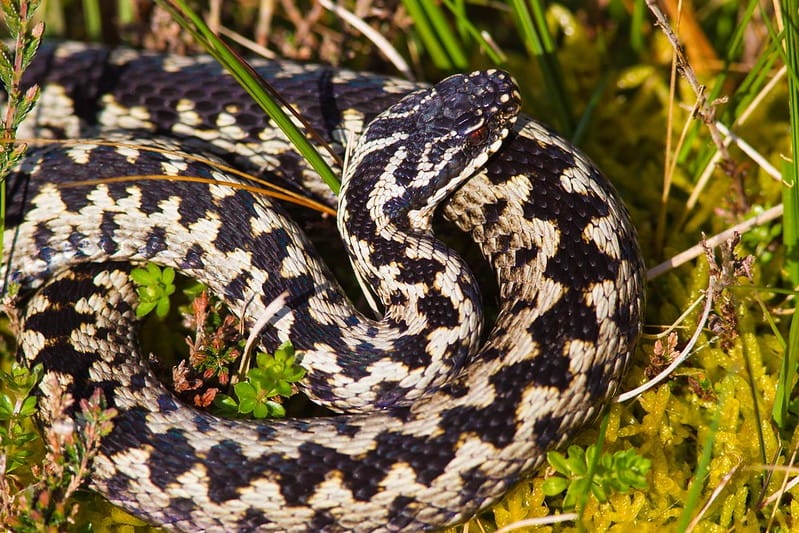
Adders | In 2015, researchers discovered a clutch of stillborn adders, still in their amniotic sac, at a site in eastern England. This population had been created through translocation in 1999, with the introduction of just seven individuals, and scientists wondered whether genetic inbreeding may have been responsible for the deaths. A study, published in The Herpetological Journal, reports evidence of reduced genetic diversity, although it highlights that the reintroduction has proven successful despite the low starter population. The study has wider implications for conservation, as adder populations become increasingly isolated due to habitat loss, fragmentation and human disturbance. ‘Population genetics can be used to understand the more long term outcomes of translocations in terms of reproduction and population growth,’ said Professor Trent Garner, researcher at ZSL’s Institute of Zoology.
Driftwood
Oysters | Using a range of historical documents, researchers have pieced together the vast and wonderful oyster reefs that once covered the European seabed. Today, the ocean is almost completely bereft of this ecosystem, with remnants stretching at most across a few square metres, due to overfishing, dredging and pollution. But old accounts from naturalists, newspapers and seafarers suggest that they once covered at least 1.7 million hectares from Norway to the Mediterranean – an area larger than Northern Ireland – in structures as high as a house, providing habitat for a wide range of fish and crustaceans, including stingray, seahorse and sturgeon. ‘We tend to think of our seafloor as a flat, muddy expanse, but in the past many locations were a three-dimensional landscape of complex living reefs,’ said Ruth Thurstan, of the University of Exeter, who co-led the research. The study was published in Nature Sustainability and covered by the Guardian.
Tuna | George Monbiot has been watching bluefish tuna leap from the ocean near his home in south Devon – a sight so unusual that some have been unable to believe it. Yet the water around Britain was once among the richest on Earth, he writes, hosting not only tuna but also whales, sharks and enormous fish. But, instead of protecting the tuna, it seems the government wants to catch it and serve it up on a dish. Monbiot takes aim at fisheries science – as distinct from marine ecology – as the discipline underpinning much of our flawed thinking around ocean biodiversity today, leading to wildlife populations being exploited till they crash. ‘As a general rule, though there are dissidents, fisheries science is not so much an academic discipline as a branch of accountancy,’ he writes.
Sound | Healthy soundscapes don’t just influence how humans experience the environment; they can literally catalyse the restoration of nature, too. In a fascinating article for The Conversation, Jake Robinson and Martin Breed of Flinders University write about how they have been playing high-frequency white noise to stimulate a fungus that promotes plant growth. It is not the first time that sound has been shown to have a beneficial impact – research from Australia has shown that playing the sounds of healthy reefs encourages baby oysters to settle and grow, for instance – but it is the first time that the theory has been applied to the soil. Next, the scientists want to explore the impacts of different sound patterns, creating a ‘biodiversity jukebox’, and whether undesirable noises have a negative impact on ecosystems.
Further reading:
- Natural England has released the latest iteration of its People and Nature Surveys for England.
- Patrick Barkham looks at how the presentation of wildlife has changed over one hundred years of Guardian Country Diaries.
- The Times has a short article on the benefits of rewiggling rivers.
- A feature in the Guardian looks at the pollution of UK rivers from antibiotics and other drugs.
Happy days
Lichen | An extremely rare lichen has been discovered at the Fairy Glen site of special scientific interest in Eryri. Porina atlantica has only ever been found on old oaks and rocks in southwest Ireland and, on one occasion, at another site in north Wales. The Fairy Glen site had recently undergone restoration work, with invasive species removed from the surroundings. ‘Control and removal of non-native invasive species reduces shading and competition with native species, helping the gorge provide ideal conditions for mosses, lichen, and ferns, which grow on boulders in the river, on trees and exposed rocky outcrops in the woodland,’ explained Rob Booth, biodiversity restoration officer for Natural Resources Wales. Nation.Cymru covered the news.

Subscribe to our newsletter
Members receive our premium weekly digest of nature news from across Britain.
Comments
Sign in or become a Inkcap Journal member to join the conversation.
Just enter your email below to get a log in link.