Bat Blame & Rainforest Restoration
The latest news on nature and conservation in Britain.
National news
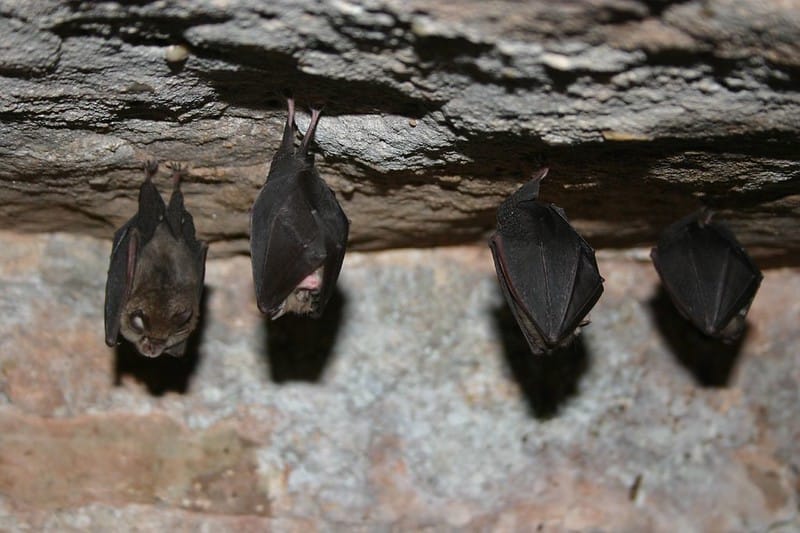
Bats | Environmentalists have reacted with dismay after the government blamed bats for slowing house building and infrastructure projects. As part of chancellor Rachel Reeves’ ‘radical shake-up’ of red tape, the Treasury said that guidance to protect bats would be simplified to promote growth. It stated: ‘It should not be the case that to convert a garage or outbuilding you need to wade through hundreds of pages of guidance on bats.’ The Times reported that Natural England will also drop its requirements for council planning officials to read guidance documents produced by the Bat Conservation Trust. In response, the Trust called the move ‘reckless and unnecessary’, and said it is part of a ‘wider push for deregulation at the expense of nature’. The news comes after Keir Starmer was accused by the Kent Wildlife Trust of ‘oversimplification’ after he claimed that a colony of distinguished jumping spiders was responsible for the blocking of 15,000 new homes in Kent. The Times and ENDS reported the news.
Nurdles | Wildlife organisations have said it is a ‘race against time’ to clear thousands of plastic pellets from the east coast before they infect local ecosystems. The RNLI first discovered a ‘sheen’ of nurdles – small lentil-sized pieces of plastic used to create most plastic products – on Sunday, floating in the ocean off the Norfolk coast. They were spilled during the oil tanker crash last week, leading to concerns that the nurdles may be tainted with other chemicals. Even if non-toxic, eating the nurdles can kill wildlife through choking or starvation. Nick Acheson, ambassador for the Norfolk Wildlife Trust, said it was a ‘very bad time of year’ for the pollution incident, as several bird species are currently nesting on the beaches, and hundreds of thousands of migratory birds are moving along the east coastline. A 'retrieval operation’ is currently being led by the coastguard. The news was widely covered in national outlets.
Birds | A survey of Welsh farms has revealed positive signs for several bird species of conservation concern. The project, which was run by Farming Connect and RSPB Cymru, was conducted between April and July of last year. It connected volunteers with farms participating in the Welsh government-funded initiative to monitor and survey farmland birds. Overall it identified 49 different bird species, with an average of 29 species per farm. Significantly, eight of the species identified are classified as birds of conservation concern in the UK – including the tree pipit, cuckoo, house sparrow and grey partridge – highlighting the vital role farmers play in supporting agricultural biodiversity. Biodiversity officer Lynfa Davies said the results were ‘encouraging’, and hoped that the information would inspire farmers to provide additional habitat to safeguard the species present and support new ones. FarmingUK and Business News Wales reported the story.
In other news:
- Natural England has shared its conclusions from the controversial hen harrier brood management trial. The Moorland Association summarised the findings here.
- Buglife has said that the rare strandline beetle may be extinct in England after a survey last year failed to confirm any sightings, reports the BBC.
- The Woodland Trust is looking for volunteers to help record Scotland’s ‘living legend’ ancient trees for the UK’s largest tree database, reports STV News.
- Environmental groups say the government has missed the deadline to make a decision on banning toxic lead shot, reports ENDS.
- Last year was another recordbreaking year for the UK’s loudest bird, the bittern, according to the RSPB. The BBC reported the story.
- Kemi Badenoch is dropping the Conservative party’s commitment to reach net zero by 2050, reports the Guardian. Carbon Brief fact-checked her speech here.
Across the country
Cornwall | A project led by the Woodland Trust has used drones to sow 75,000 native tree seeds in Cornwall and Devon. The trial, which is taking place across the hills of Bodmin, aims to help triple the area of temperate rainforest in the southwest by 2050. Rainforest once covered around 75% of Cornwall and Devon, according to the Trust, but only 10% of it remains. Species spread by the drones include pedunculate oak, alder, wild cherry, downy birch and hazel. The drones allow the Trust to cover areas more quickly, cheaply, and safely than planting by hand, especially in inaccessible areas. Project officer Sam Manning said they hope to see a success rate of seed to tree of at least 25% for the trial, which in turn could increase demand for conservation drones and ‘revolutionise woodland creation’. Positive News covered the story.
Sussex | The UK’s largest marine rewilding initiative in West Sussex is celebrating ‘remarkable’ results four years after it was first established. The Sussex Kelp Recovery Project was launched in 2021 after the implementation of a bylaw prohibiting near-shore trawling in a 302 sq km area between Shoreham-by-Sea and Selsey. Now, the kelp forest and its inhabitants are bouncing back thanks to the protection: researchers have reported increases in populations of lobster, brown crab, angel shark and short-snouted seahorse. The mussel beds have also expanded, while shallow-dwelling species such as Atlantic mackerel, sand eels and mullets are thriving. Local freediver Eric Smith, who has observed changes in the local seabed across 50 years, said he had witnessed ‘a dramatic increase in marine biodiversity’ recently. The BBC and ITV covered the story.
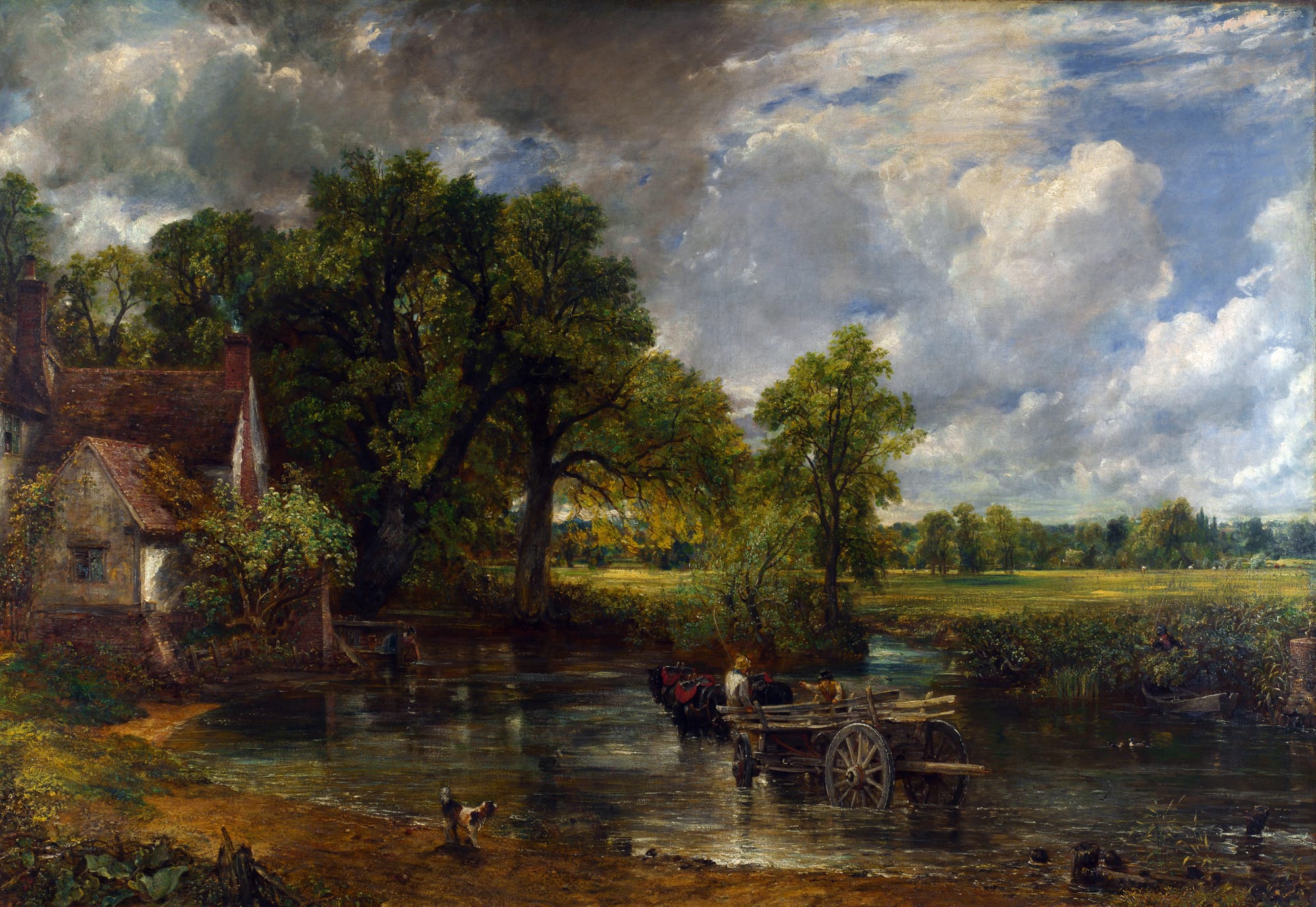
Devon | The iconic English painting The Hay Wain by John Constable captures a bucolic scene featuring black poplar: a tree once as common as oak and beech in Britain. Now, it is the rarest and most threatened tree species in the country, but a project by the National Trust is aiming to prevent its demise. The charity has planted a ‘breeding population’ of 80 black poplar trees on an area of restored floodplain at Killerton estate in east Devon. It hopes that, once established, this population will act as a ‘living gene bank’, with future cuttings going to planting projects across Britain. Ecologist Fi Hailstone explained that the species needs both male and female trees within 200 metres to pollinate each other: ‘With numbers in huge decline this is not something likely to happen in the wild, which is why we are stepping in to create a new breeding population,’ she said. The Guardian covered the story.
Elsewhere:
- An expert has warned that a proposed wind farm development in Sutherland could wipe out the local population of freshwater mussel, reports the National.
- Train company TransPennine Express has installed 50 bat and bird boxes across its stations to provide more space for wildlife, reports the Hull Daily Mail.
- Manchester Council has named a section of Southern Cemetery, the largest municipal graveyard in the UK, as a local nature reserve, reports the Manchester Evening News and BBC.
- Angela Raynor has scrapped a development plan for Portsea Island after the Hampshire Wildlife Trust raised concerns over the ecological damage it would cause, reports the BBC.
- Natural Resources Wales has finished work on restoring saltmarsh habitat along the Severn estuary in south Wales.
- The Shropshire Ornithological Society is asking for help to catalogue the rook nests across the county, reports the BBC.
- Natural England is working with the University of Exeter and Cornwall Birds to help reverse the decline of willow tits in Cornwall: read more here.
- The University of Edinburgh has started work on a project to plant 570,000 trees across its land in the Pentland Hills and Stirlingshire, reports the Herald.
- BrewDog is set to replace all 250,000 dead saplings at its ‘Lost Forest’ in the Highlands by next planting season, thanks to £2.7m in funding, reports the Herald and Scotsman.
- A wildlife charity has purchased the ‘unspoiled’ King’s Quay inlet on the Isle of Wight to protect it as a nature reserve, reports the BBC.
- The RSPB has said a planned hydro energy project next to Loch Awe in Argyll will destroy the habitat of endangered curlews, reports the Times.
- Offsetting company Environment Bank has released a herd of Exmoor ponies onto former farmland in Bolton to help restore its natural moorland habitats, reports the BBC.
- A disused railway line near Derby is due to be transformed into a traffic-free greenway, reports the Derby Telegraph.
- Nature recovery organisation Cumbria Connect has secured funding to expand and protect the temperate rainforest at Wild Haweswater in Cumbria, reports the BBC.
- Salmon numbers on the River Tweed are approaching record levels, reports the Herald.
Reports
Broads | Large populations of deer living in protected wetlands are causing ‘high levels of damage’, according to a report by the Broads Authority, which manages the Norfolk and Suffolk wetlands. Experts used thermal imaging to track the movements of deer, and estimated around 4,500 live in the Broads, mostly made up of Chinese water deer, red deer and muntjac. The report found that almost all fen areas studied showed significant levels of damage from deer, with tracks and wallows causing disruption to habitat structure and composure. Grazing was found to be harming fen plant communities and farmers’ crops, as well as reducing habitat for other species. The authors warned that there is a need for ‘immediate action’ to control numbers. The BBC covered the research.
Economy | The Green Alliance has published a report building on the landmark Dasgupta Review, which detailed the failings of economics to account for the true value of nature. This follow-up report goes on to suggest solutions to this fundamental flaw, recommending actions across three areas – the macroeconomy, microeconomy and political reform – to create a framework that factors nature into economic decision-making. Among the macroeconomic reforms, the report suggests that businesses should be required to report their impact on nature, in order to hold them to account and also motivate corporate leaders to invest in restoration. This would help with another goal, which is to replace GDP with a new prosperity indicator reflecting natural assets, as has been done in New Zealand and Canada. Other suggestions include developing natural capital markets, and exploring embedding rights for nature into law. The Independent covered the report.
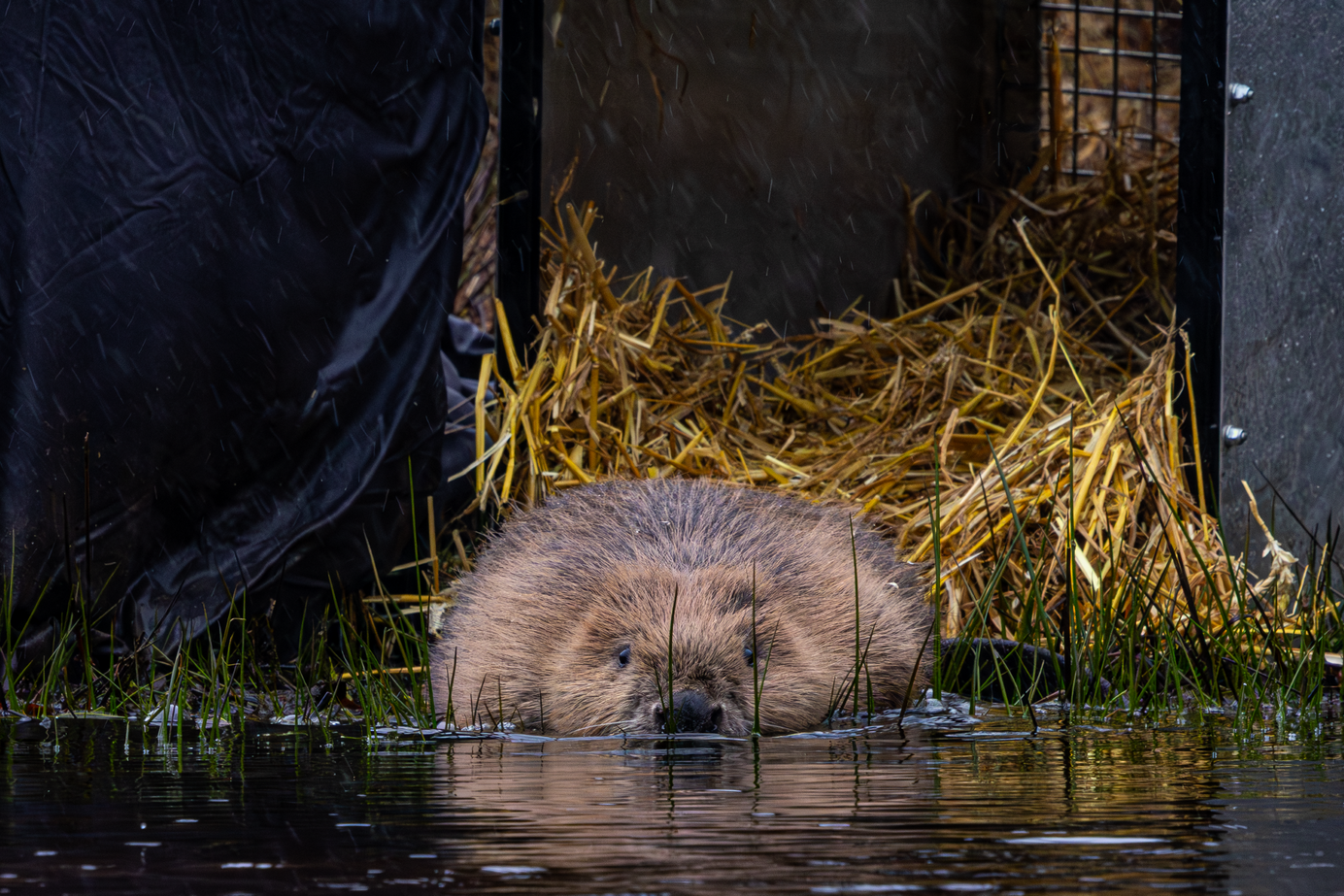
Farming | In 2019, Jim Lowther – owner of the Lowther Estate in Cumbria – decided to exchange intensive agricultural methods for a more nature-focused approach across 3,000 hectares of the estate. Now, the State of Nature at Lowther report reveals some ‘truly astonishing’ results. To help re-enliven the landscape, the team has restored 1,800 metres of river, reconnected 20 hectares of floodplain and created 15 hectares of wetland, the latter with the help of two reintroduced beavers. They have also planted 65,000 trees since 2022, grown and planted 15,000 wildflower plugs, and removed 75km of fencing. These efforts have resulted in huge increases in breeding birds and certain species of butterflies, while reintroduced water voles are thriving. Nature Recovery Lead Lee Schofield said: ‘Undoing the harm done over the course of centuries to our natural environment will be a very long game but we are off to a strong start.’ ITV and others covered the news.
Science
Pain | Looking at nature can help people feel less pain, according to a study in Nature Communications. Researchers from the universities of Exeter and Vienna gave 49 participants minor electric shocks to simulate pain while watching videos of natural scenes. Using neuroimaging, they found that not only did participants report less pain when viewing nature, but scans showed a change in the specific brain responses associated with processing pain. The pain-relieving effect was around half that of painkiller drugs. Co-author Dr Alex Smalley said the results served as ‘renewed evidence’ for the importance of protecting healthy natural environments, and also highlighted how virtual encounters can bring the ‘healing potential of nature to people when they can’t get outside’. The study is the first to provide evidence from brain scans that the pain-relieving benefits of nature are more than just a ‘placebo’ effect. The BBC and the Independent covered the research.
Trees | A study published in Nature has found that supposedly slow-growing tree species may actually be able to fix the most carbon in their biomass. An international team of scientists including Forest Research studied the growth of over 200 tree species planted in 160 experimental forests across the world. Previous research had shown that under controlled conditions, like greenhouse experiments, ‘acquisitive’ species – those capable of efficiently acquiring resources – generally grow quickest. However, the study found that ‘conservative’ tree species – those which are most efficient at conserving their resources – actually grow faster under real-world conditions in boreal and temperate forests, likely due to unfavourable conditions such as low soil fertility and cold climates. Elena Vanguelova of Forest Research said the findings are a ‘vital source of information for land managers when considering which species to plant to help mitigate climate change’.
Biodiversity | Targeted conservation efforts are saving species from extinction, even as overall biodiversity continues to deteriorate. This is the main finding from a study in Plos Biology, which draws on data from the IUCN Red List. Researchers from Cambridge, Oxford and Durham universities analysed data on more than 67,000 species, and found that almost all species that have moved from a more threatened to a less threatened category have benefited from some form of conservation. In particular, the study found some common success themes: many species lived in isolated areas, such as islands, where intensive efforts including habitat protection and reintroduction could be most effective. However, very few cases achieved full recovery, and the study also found that six times more species are declining than improving. The authors concluded that scaling up the extent and intensity of conservation efforts – particularly landscape-scale actions benefiting wide-ranging species – is urgently needed. Phys.org covered the research.
Driftwood
Poo Zoo | A feature in the Guardian explores emerging research which suggests that animal dung can be used to save endangered species from extinction. Led by researchers at the University of Oxford, the ‘Poo Zoo’ is based on the premise that, as well as being rich in undigested food, bacteria and bile, poo also contains cells from the species that deposited it. Some of these cells are still alive when deposited – at least when the dung is fresh. Professor Suzannah Williams said the research is ‘very, very early stages’, but was so far ‘very positive’, noting that the team has isolated live cells from both mouse and elephant dung. The idea is that these cells could be used to boost genetic diversity within populations through non-invasive methods, raising the possibility of reaching even the most elusive creatures. It comes with serious challenges, however – not least the sheer amount of dung required.
Gulls | Seagulls may have a reputation for stealing chips, but their diet is actually incredibly varied, according to a research project at the University of Salford. Run by ecologist Dr Alice Risley, the project – named Gulls Eating Stuff – asked members of the public to send photos of seagulls eating from around the world. The submissions showed the sheer variety of gulls’ diets: tasty morsels ranged from profiteroles to starfish, and guillemot eggs to an unfortunate mole. Risley said she had also seen evidence of gulls suckling milk from seals. One constant dietary staple, however, was earthworms, both for urban and rural populations. She said: ‘Hopefully what will come out of [the project] in terms of public education, it’s the gulls are not just scavengers, they’re predators. A lot of them are actually out there eating quite natural prey items’. The Guardian covered the research, and has a selection of images here.
Chefs | A growing number of British chefs are choosing to work in close collaboration with producers, according to an article in Wicked Leeks. Journalist Tomé Morrissy-Swan writes that the role of restaurant cooking is no longer simply about producing the best version of a dish: rather, sourcing food grown in environmentally friendly ways, and promoting responsible farming, are also gaining ‘powerful traction’ in the restaurant scene. This comes partly from consumer demand – diners increasingly want to know where their food is coming from – but also from chefs. For example, Lasse Petersen, executive chef of Llewelyn’s and Lulu’s in southeast London, has launched a series of dinners called Common Ground, which discuss the importance of transparency and integrity in the supply chain. He reckons chefs have a responsibility to ‘make people aware of what food actually costs’, and hopes the series will help bridge the gap between farmers and the general public.
Further reading:
- In Prospect Magazine, an article discusses the ‘very soil’ of moviemaking – and how earth is beginning to feature more heavily in the film industry.
- The ‘World Garden’ in Kent was imagined by botanist Tom Hart Dyke during his nine-month captivity in Colombia while hunting for orchids. Read more about the extraordinary story in the BBC.
- The Herald has launched a series on Scotland’s forests, looking at tree-planting targets and timber shortages.
- In the Guardian, journalist Kylie Mohr writes about why too many urban deer is an ‘impending disaster’ – and how we can be better neighbours to wildlife.
- A feature in Positive News spotlights a new London map which is helping cyclists to discover the city’s green spaces.
- In BBC Future, read about research into how drought-resistant ‘resurrection plants’ could help protect crops from increasing droughts.
- Natural England has a blog on how AI is being used to map and restore peatlands.
- A BBC article looks at several artifacts found underneath Edinburgh’s Botanic Garden, including a knife used for cutting peat and moss in the 1800s.
Happy days
Storks | The West Sussex village of Storrington was once known by the Saxons as ‘Estorchestone’: the ‘abode of the storks’. For most of the last 600 years these giant birds have been absent from the area after they went extinct in Britain, but now they are back, thanks to successful reintroduction efforts. Indeed, last year a record-breaking 53 white storks fledged from wild nests on the nearby Knepp Estate. Now the thriving population has attracted international attention: Storrington and Knepp have been jointly named as the UK’s first ‘European stork village’, becoming the 16th village in a continental network created by the EuroNatur foundation to combat habitat loss for the birds. The honor will be officially bestowed during Storrington’s first Stork & Wildlife Revival Festival, due to be held in May. Read more in the Guardian.

Subscribe to our newsletter
Members receive our premium weekly digest of nature news from across Britain.
Comments
Sign in or become a Inkcap Journal member to join the conversation.
Just enter your email below to get a log in link.